
Updated

AT-FI

Residency on your own income

Residency in Austriafor a family

A status for those who move to Austria and live on their own income. The family comes into one application, and after five years European Union long-term residency opens up. There are few places in the annual quota, so applications go in during the first days of January.

  • The conditions are checked against the Austrian Interior Ministry and the 2026 ASVG rates
  • Working since 2004
  • We run the quota filing, the residence card and the renewal
An Austrian residence card for the financially independent
from €2,617 a monthIncome for the applicant
The family togetherA spouse and children in the application
Permanent residence after 5 yearsEU long-term status

01 / About the program

How the status works

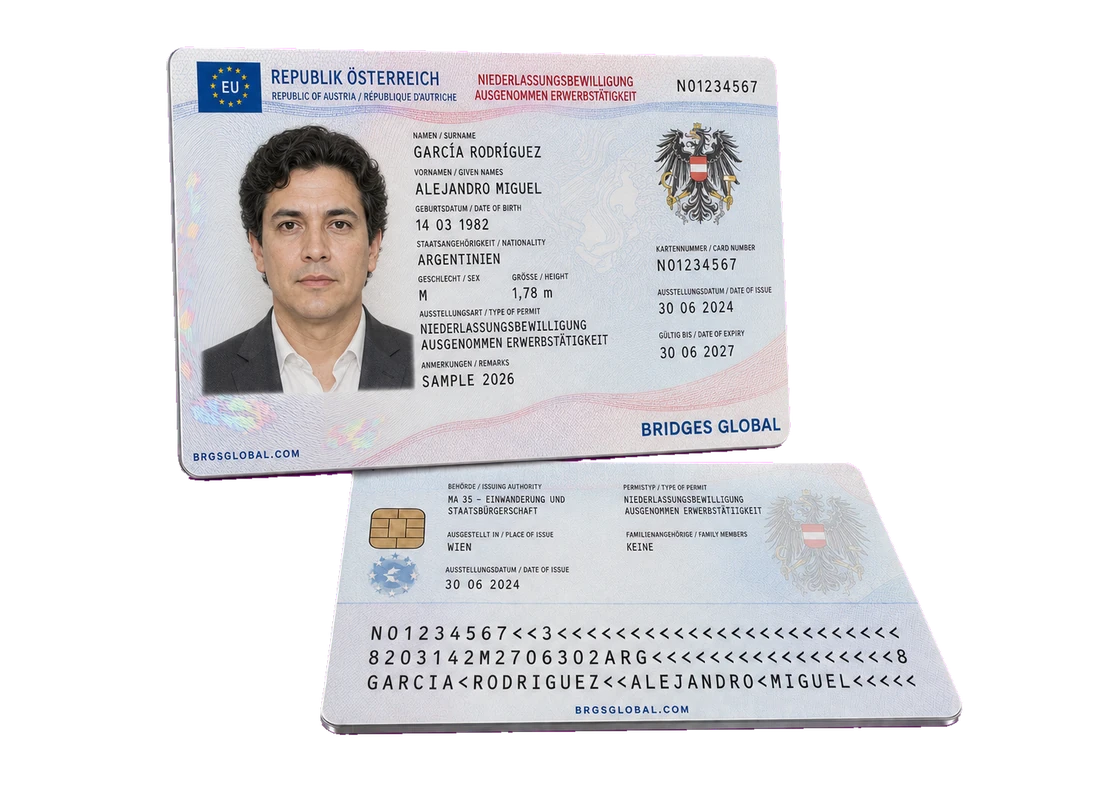
The Niederlassungsbewilligung — ausgenommen Erwerbstätigkeit is issued to those who settle in Austria and support themselves without working in the country. The key feature is the quota: the number of permits for the year is set by government regulation, and applications must go in as soon as it opens.

01

A quota place decides everything

Even a flawless file will not help if the year’s quota is exhausted. Applications are filed at the start of the year and places are allocated in order of receipt — the preparation is done in advance.

02

Income — double the ASVG rates

A regular income of at least twice the social insurance rate is needed: in 2026 that is €1,308.39 for a single person and €2,064.12 for a couple, so €2,616.78 and €4,128.24 a month respectively.

03

German before filing

Level A1 is evidenced by a certificate when the first application is filed, not after the move. That sets Austria apart from most European programmes.

04

You cannot work in Austria

The status expressly excludes employment in the country. The income must come from outside: a pension, rent, dividends or the profits of a foreign company.

02 / What you get

What the status gives you

Life in Austria

The right to live in the country, to enter and leave freely and to move around Schengen for up to 90 days in every 180.

A status for the family

A spouse and minor children receive the status together with the applicant. The income requirement rises for each participant.

Education and medicine

Children study in Austrian schools and the family arranges medical insurance covering all risks in the country.

The road to permanent residence

Five years of continuous residence open up long-term residency where the language and integration requirements are met.

The centre of Europe

Vienna consistently tops the quality-of-life rankings, and the country’s position makes travel around Europe easy.

Tax planning

A move means Austrian tax residency. The regime and its consequences are worked out before filing, together with a tax adviser.

A preliminary assessment

Calculate the budget for your family

Set out who is applying with you. With the calculation you get the full Austrian picture: the income against the ASVG rates, the order of filing for the quota, the timeline and a plan of action.

Who is applying for the residence permit?

Get the calculation

about a minuteno calls and no obligationsconfidential

  • The full calculation for your family composition
  • The timeline for each stage of the process
  • A plan of action: where to start
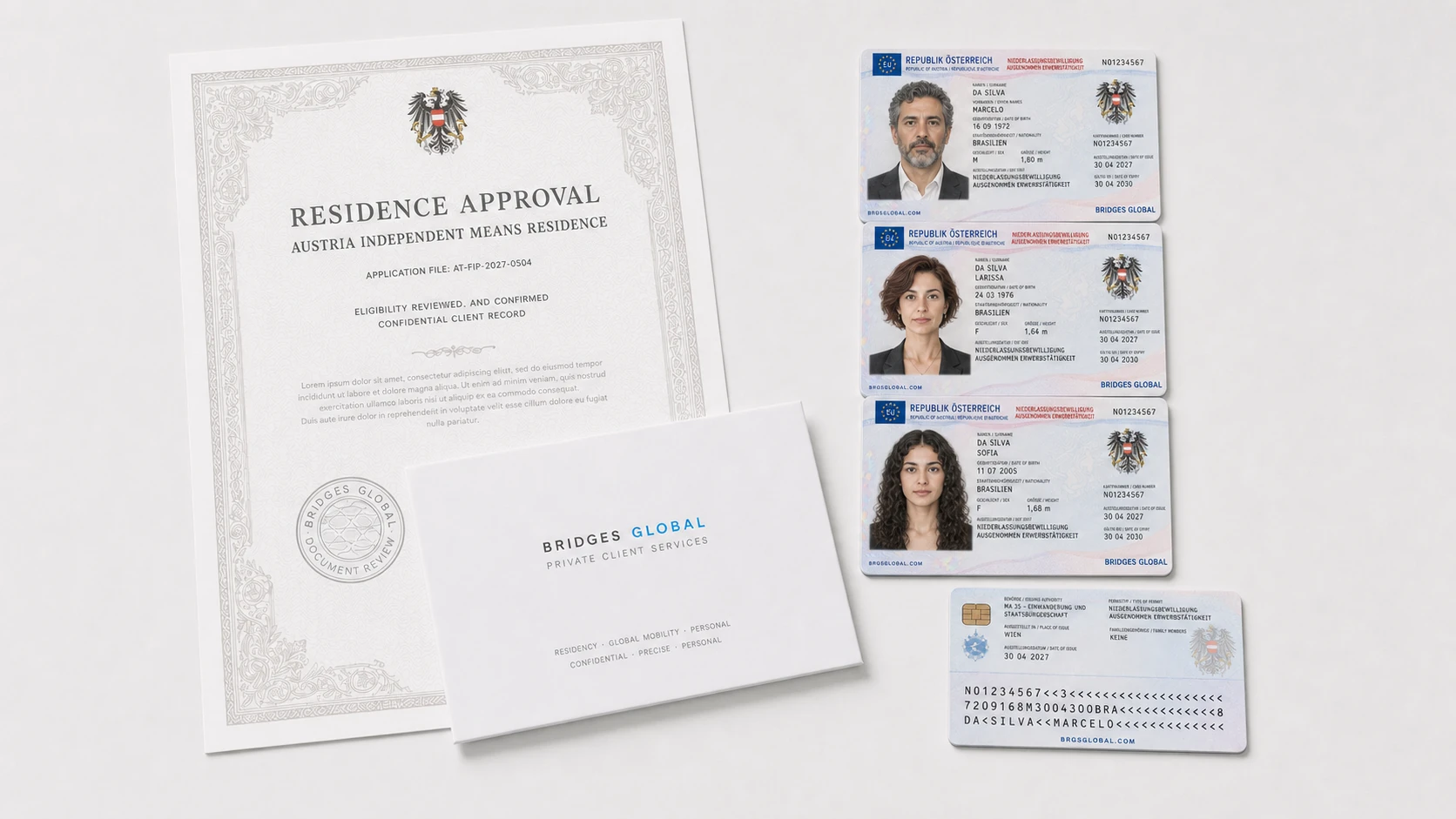
An Austrian residence card and a set of documents

03 / Why people apply

Why people arrange this status

Austria is chosen by those for whom quality of life, education and stability matter — and who are ready for strict formal requirements and the wait for a quota.

Quality of life

Medicine, safety, transport and the urban environment — Vienna has held the top of the world rankings for decades.

Education for the children

State schools, gymnasiums and universities at a moderate cost for residents.

A move with no investment

Austria has no investment programme: citizenship for exceptional services is a separate and rare story. Here it is income that is evidenced.

A central location

Direct flights and trains across Europe, convenient for those who carry on business outside the country.

A clear path to permanent residence

Five years of residence with the language and integration give the long-term status, and ten the right to naturalisation under the general qualifying period.

A strict but predictable order

The requirements are set out in figures and certificates. If the file meets them and there is a quota place, the decision is predictable.

04 / Travel

Where you can travel on the residence card

An Austrian residence card gives the right to live in the country and travel around Schengen, but no right to work.

Mode 01

Austria without limits

Residence, entry and exit for the whole term of the card. The status assumes actual residence in the country.

Mode 02

Schengen, 90 days in 180

Travel around the Schengen countries without a visa — up to 90 days in every 180.

Mode 03

Work is forbidden

Employment in Austria is excluded on this status. A change of ground requires a separate permit and, as a rule, a new quota place.

Mode 04

The rest of the world on your own passport

You travel to third countries on your passport of citizenship: that is what sets the visa regime, not the residence card.

Sources: the Settlement and Residence Act (NAG), the ASVG rates for 2026 and the Schengen Borders Code (Regulation (EU) 2016/399).

05 / The composition of the application

Who can obtain the status

Each adult takes a quota place of their own. Open a row to see the conditions.

  • Over 18
  • An income of at least twice the ASVG rate
  • A German language certificate at level A1 before filing
  • Housing in Austria and medical insurance
  • In a registered marriage
  • Also evidences German at level A1
  • Takes a separate quota place
  • The children of the applicant or the spouse
  • The language requirement does not apply
  • They raise the income required by double the child rate

06 / Cost

What income has to be evidenced

The requirement is measured from the ASVG social insurance rates and doubled. Below is the calculation on the 2026 rates.

A single applicant · double the ASVG rate

€31,401

≈ $36,000

Evidenced The whole term of the status

  • A pension, rent, income from assets or the profits of a foreign company
  • €2,616.78 a month — double the rate for a single applicant
  • The income must come from outside Austria
  • Work in Austria is forbidden on this status

The applicant and a spouse · double the rate for a couple

€49,539

≈ $57,000

Evidenced The whole term of the status

  • €4,128.24 a month — double the rate for a married couple
  • Both evidence German at level A1 before filing
  • A quota place is required for each applicant
  • Medical insurance is arranged for each person

A couple with a child · the couple’s rate plus a child

€54,384

≈ $63,000

Evidenced The whole term of the status

  • For a child the rate rises by €201.88 a month and is likewise doubled
  • The housing must match the family composition under local standards
  • Children are enrolled in the school for their place of residence
  • The language requirement does not apply to minors

The composition of the application

The main applicant
1
Spouse
0
Minor children
0

The calculation is given on the 2026 ASVG rates with the doubling the procedure requires. On top of the income come the state fees, the insurance, the housing and the support. A quota place is not guaranteed: the number of permits a year is limited.

07 / Comparison

Austria against the neighbouring options

Austria is the most demanding option in this section: only here are there a quota and a language requirement before filing.

AustriaSpainItalyPortugal D7Greece FIP
Income requirementfrom €31,401 a yearfrom €28,800 a yeara guide of €31,000from €11,040 a yearfrom €24,000 a year
An annual quotaYesNoNoNoNo
Language before filingGerman A1NoNoNoNo
The right to workNoNoNoYesNo
The qualifying period for citizenship10 years10 years10 years10 years7 years

The thresholds are given as at the date this page was updated. The Austrian quota is set each year by government regulation and may differ between federal states.

Full program comparison →

10 / How it works

How the process works

STEP 1

Assessing the chances and planning for the quota

We work out the income against the rates, assess the family composition and plan the filing for the moment the quota opens — usually early in the year.

STEP 2

The German language

We prepare the level A1 certificate in advance: without it the application is not accepted. How long it takes depends on your starting level.

STEP 3

The documents and the housing

Proof of income, a lease or ownership, insurance and police clearance certificates with an apostille and a translation.

STEP 4

Filing at a mission

The application is filed in person at an Austrian mission for the place of residence. The file then goes to the provincial authority.

STEP 5

The quota place and the decision

The authority checks the documents and allocates a quota place where one is available. The wait can take several months.

STEP 6

Entry, the card and the renewal

After approval an entry visa is arranged, then the residence card. The first renewal comes after a year, and later ones under the general rules.

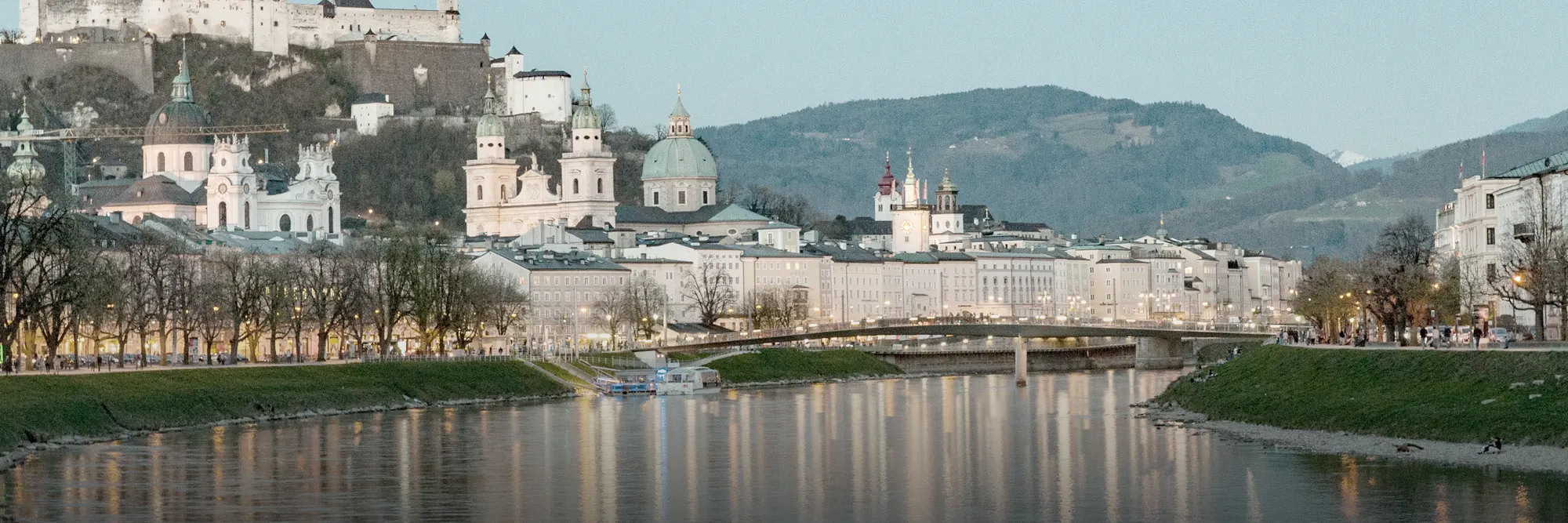
Salzburg and Hohensalzburg Fortress

Three things decide it here: the quota, the income against the rates and German before filing.

AustriaThe European Union and SchengenThe 2026 ASVG rates
Go through your situation

11 / Our role

Why people arrange this status with us

Austria does not forgive mistakes in timing: a missed quota means a year of waiting. We run the filing to the calendar, not to when the documents happen to be ready.

01

We plan for the quota opening

The file has to be ready by the moment the quota opens. We count the schedule back from that date, the language preparation included.

02

We calculate the income against the rates

The requirement is measured from the ASVG and doubled, and the rates change every year. We work out the current sum for your family composition.

03

We prepare the documents to the Austrian standard

The apostille, the sworn translation, proof of housing and insurance. The requirements as to form are strict and returns are costly in time.

04

We stay with you after the move

Registration of residence, renewal of the card, school for the children and preparation for long-term residency.

15 / Materials

Useful materials on Austria

Materials on the status for the financially independent: calculating the income, the quota and the order of filing.

The main materialPresentation

An Austrian residence permit without the right to work

The presentation gathers the essentials: the income requirements, how the quota works, the language certificate and the documents.

Inside:

  • how much income is required for your family composition
  • how the quota works and when to file
  • which German certificate qualifies
  • which documents will be needed
  • how the consideration works
  • what happens after the move
  • how work with BRIDGES is organised

PDF · free · current as of August 2026

A short check: whether the income meets the rates, whether you are ready to learn German and to wait for a quota.

The list for the applicant and each family member, marking what has to be translated and apostilled.

We calculate the income required, the budget for the move, the fees and the support.

All the materials are updated regularly by our team and are used when supporting BRIDGES clients.

16 / News

What matters to know

2026-01-01

The ASVG rates for 2026: €1,308.39 for a single person, €2,064.12 for a couple and €201.88 for a child. The income requirement is double the rate.

2026-08-11

The quota of permits is set each year by government regulation and shared out between the federal states: the filing is planned for the moment it opens.

Worth having

Download the Austria checklist

The short document we give clients before the start: the income against the rates, the quota, the language and the documents — in one list.

Inside the document

  • The income required by family composition
  • How the quota works and when to file
  • The current rates for 2026

We will send it after a short form - no call or obligation.

17 / Questions

Answers to common questions

A regular income of at least twice the ASVG rates. In 2026 the rate is €1,308.39 for a single applicant and €2,064.12 for a couple, so €2,616.78 and €4,128.24 a month respectively are required. For each child the rate rises by €201.88 and is likewise doubled.

The number of permits of this type for the year is limited by government regulation and shared out between the federal states. Applications are filed after the quota opens and considered in order of receipt: if the places run out you will have to wait for the next year.

Yes, level A1 is evidenced by a certificate when the first application is filed. That is a requirement before the move, not after — and it is what most often shifts the filing date.

No. The status expressly excludes employment in the country. The income must come from abroad: a pension, rent, dividends or the profits of a foreign company.

A spouse and minor children. Each adult takes their own quota place and evidences the language; the income requirement rises for each participant.

The first residence card is issued for a year and then renewed. After five years of continuous residence the long-term status opens up where the language and integration requirements are met.

Yes, the status is designed for actual residence. A long absence puts renewal and the path to long-term residency in question.

On moving, yes, with all the reporting obligations. Austria applies a progressive scale, so the tax consequences are worked out before filing, not after the move.

From preparing the language and the documents to the residence card usually takes six months or more. The key factor is when the quota opens and whether places are free.

There are no restrictions on citizenship, but the checks on the source of funds and banking compliance are stricter here than in southern Europe. We go through that part before filing.

INITIAL ASSESSMENT

Tell us what outcome your family needs

We will design a solution for your case, choose the country and the right status, and take the whole process through to the result.

Or message us on WhatsApp or Telegram

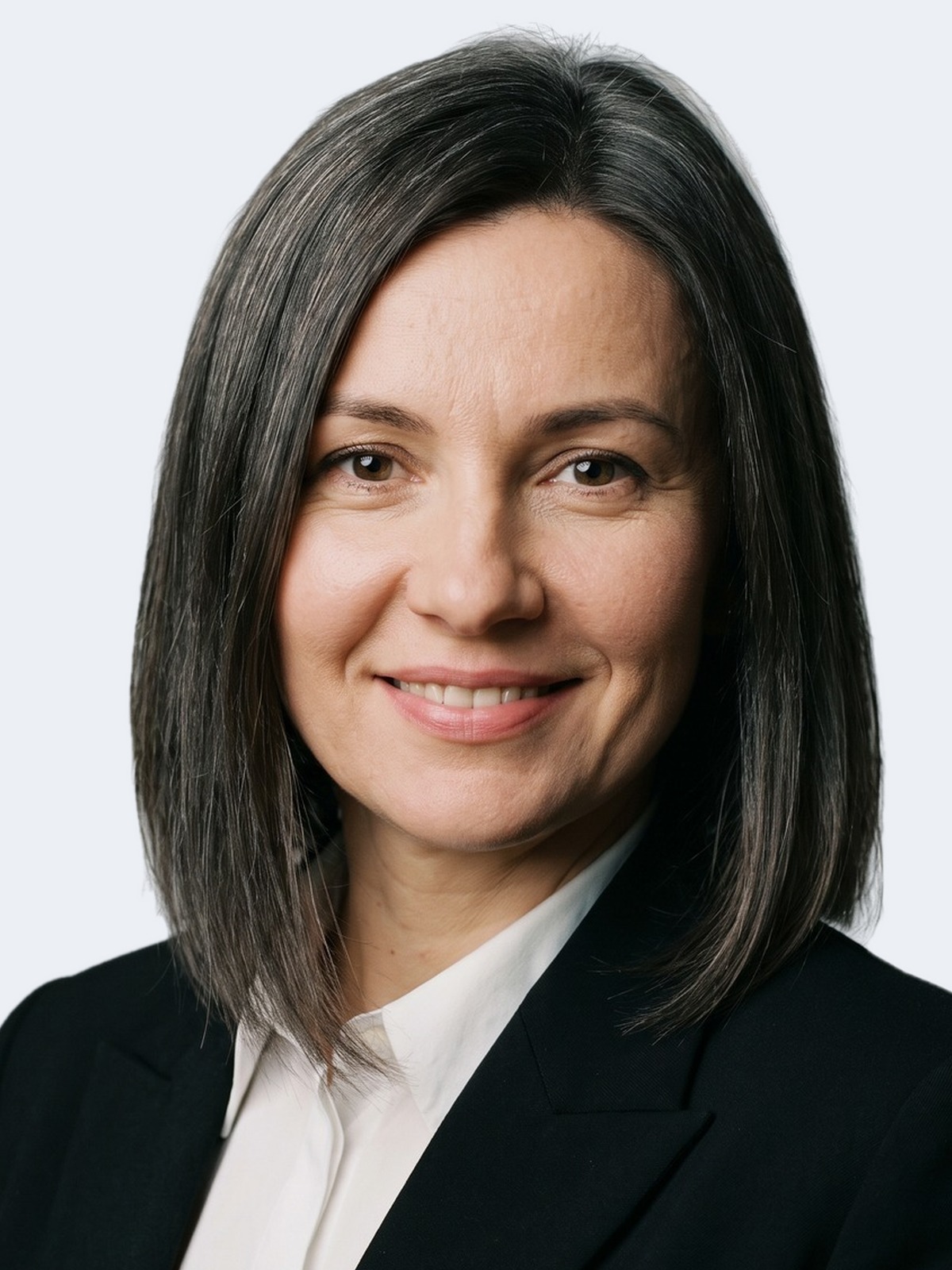
Anna Kovalevskaya, lead lawyer at BRIDGES GLOBAL
Anna KovalevskayaLead lawyer, citizenship and residency, 12 years of practice