
Updated: June 2026

Case study · Bulgaria · Citizenship

How Three Generations of One Family ObtainedBulgarian Citizenship in a Single Application

When an entire family line wants to formalize Bulgarian roots - from the senior generation to a university student - there is a temptation for each person to apply separately, which is expensive and risky. Mikhail gathered six people from three generations at once: himself, his wife, three children (including a twenty-year-old student), and his seventy-three-year-old mother. We explain step-by-step how we compiled a unified family file and processed the entire family line through a single coordinated application.

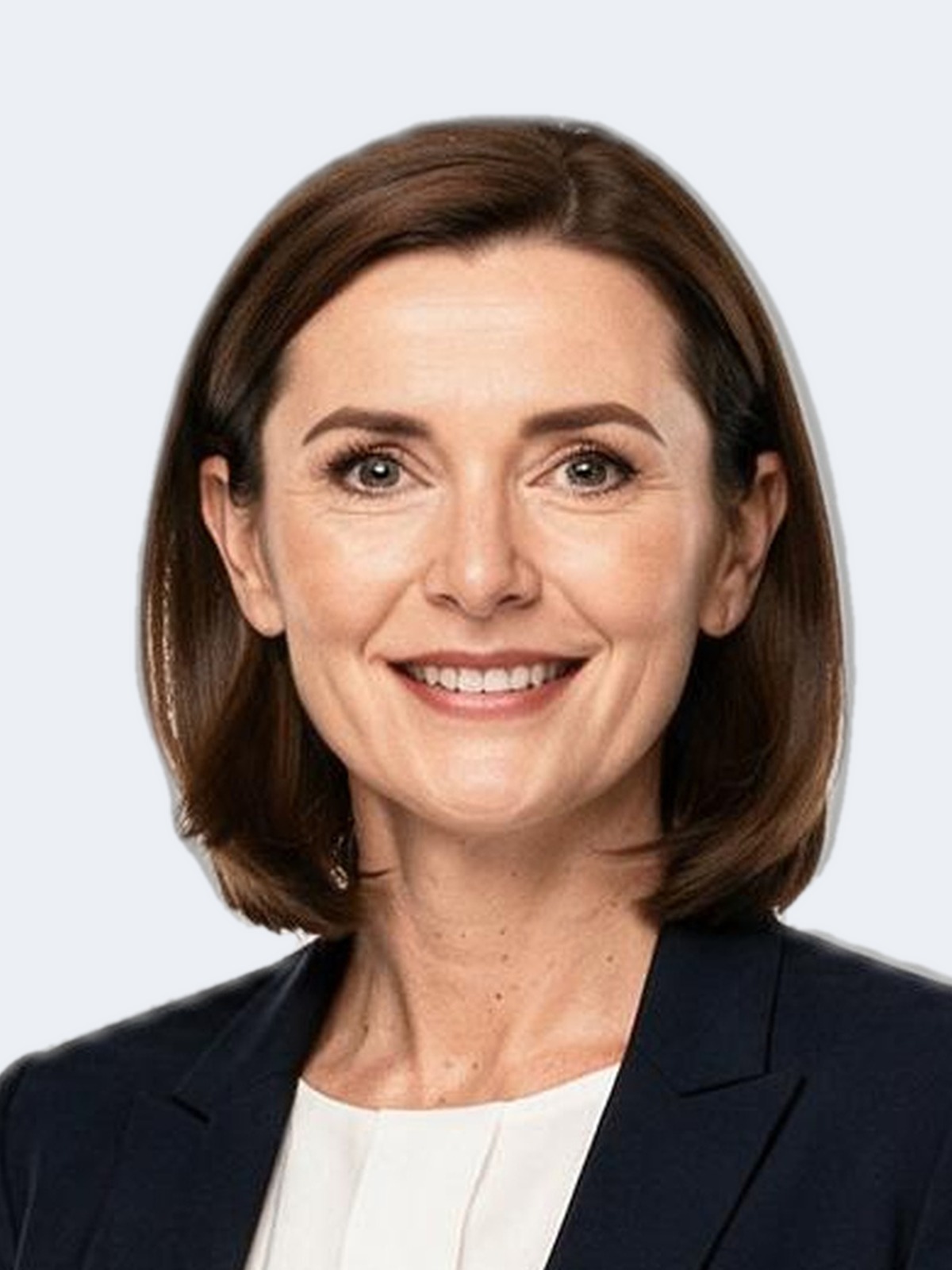
Anna KovalevskayaAnna KovalevskayaHead of Legal, BRIDGESReading time9 min readVerificationReviewed by an expert

This case is based on a real matter. The name and certain identifying details have been changed to protect confidentiality.

BRIDGES client story - How Three Generations of One Family Obtained Bulgarian Citizenship in a Single Application
Contents

Case at a glance

Situation, solution and outcome in seven lines

Clients
Mikhail (48), wife, three children (including a 20-year-old student), and mother (73) - 6 persons
Generations
Three - from mother to grandchildren
Objective
Bulgarian citizenship by descent for all six individuals
Program
Bulgaria, citizenship by descent (by Bulgarian roots, EU passport)
Error Avoided
Six separate applications - more expensive and with risk of inconsistencies
Solution
Unified family file, common ancestral line, coordinated application
Result
Entire family line submitted in a single operation

Client story

Client Story

Where they started

The Mikhail family wanted to formalize Bulgarian roots for everyone at once: himself, his wife, three children, and his mother - six people, three generations, from his seventy-three-year-old mother to his twenty-year-old student son. Each had their own basis, but the root was common - the Bulgarian line in the family.

Why the standard route did not work

The first temptation in such cases is for each person to apply individually. It seems simpler. In reality, it is the most expensive and risky approach: the same ancestor documents are ordered multiple times, the lineage is proven anew for each person, and inconsistencies easily arise - when relatives have the same data recorded or proven differently, raising questions for the Ministry of Justice.

What BRIDGES had to solve

But one family has one genealogy. Bulgarian descent, proven through a common ancestral root, applies to all descendants through direct lines. It is more logical to prove the roots once and carefully distribute them across the family branches than to prove the same thing six times, risking discrepancies.

Why a standard answer would not do

A particular subtlety involved the twenty-year-old student - already an adult: he needed to be properly included in the joint application without being lost. The family contacted BRIDGES, understanding that six parallel cases made less sense than one cohesive family file, where the common ancestral root benefits the entire family.

There are six of us - myself, my wife, three children, and my mother - three generations. Initially, we thought each would apply separately, but Anna advised against it: it would cost three times more and we could get confused about what was proven for whom. She compiled one family file for the entire family from our common Bulgarian root, carefully distributed it across our lines, and did not lose even our adult student son. We submitted everyone together, without running around and without inconsistencies. That is how it should be - as a family.


Mikhail, 48 · Mikhail, Head of FamilyThe name and certain identifying details have been changed to protect confidentiality.

What Was at Risk

What Was at Risk

When an entire family line formalizes roots, six separate applications are more expensive, take longer, and are riskier. Ancestor documents are ordered multiple times, the lineage is proven anew for each person, and inconsistencies easily arise when relatives have the same data proven differently. One family has one genealogy, and proving it logically should be done once.

Ordering the same ancestor documents multiple times;

  1. 01Proving the common ancestral root anew for each of the six individuals;
  2. 02Obtaining inconsistencies in data between relatives;
  3. 03Raising questions from the Ministry of Justice due to discrepancies;
  4. 04Losing the adult student by processing him incorrectly.

The logic of the solution

How the matter progressed: from checks to result

The chart is built from the facts of this matter and shows the logic of the work without decorative or unverified data.

BasisStage 1

We identified the person through whom the ancestry line runs and proceeded from there. The Bulgarian line ran through the senior generation, so this ancestor became the foundation of the entire case. We ordered and obtained documents for the common root once - for the entire family, not separately for each of the six persons. This immediately eliminated multiple orders for the same documents.

  • 01
    Stage 2

    We compiled a unified document set of ancestors. Instead of each person ordering the same archival records, we obtained a single comprehensive set through the ascending line and used it for everyone. The complexity lay in ensuring that each generation's documents served as evidence simultaneously for multiple applicants from different generations - we requested documents in a format suitable for the unified case.

  • 02
    Stage 3

    We traced the common root down the family branches. From the senior ancestor, we constructed lines downward: to Mikhail, to his wife (on her own basis), to their three children, to the mother. Each generation was linked with birth certificates, obtaining missing ones through civil registries, creating one unified genealogical tree rather than six separate chains.

  • 03
    Stage 4

    We carefully processed the adult student. The twenty-year-old son is already an adult and could not simply be "attached" to his parents. We processed him in the unified file as an independent applicant on the same proven root, preserving his rights and maintaining the overall structure. This is a subtle point where families often stumble.

  • 04
    Stage 5

    We standardized the data for all applicants. Names, surnames, and dates could vary in spelling across generations; we verified them once and applied them to all six persons so that relatives' information aligns perfectly without discrepancies - inconsistencies between family members most often trigger questions from authorities.

Takeaway. Conclusion: one family has one genealogy. Proving the common ancestral root once and distributing it across family branches is cheaper, more coherent, and more reliable than six separate applications, and adult children must be processed as independent applicants.

How we solved the case

How we solved the case

The work was split into verifiable stages so that every conclusion rested on documents.

  1. 01

    Stage 1

    We identified the person through whom the ancestry line runs and proceeded from there. The Bulgarian line ran through the senior generation, so this ancestor became the foundation of the entire case. We ordered and obtained documents for the common root once - for the entire family, not separately for each of the six persons. This immediately eliminated multiple orders for the same documents.

  2. 02

    Stage 2

    We compiled a unified document set of ancestors. Instead of each person ordering the same archival records, we obtained a single comprehensive set through the ascending line and used it for everyone. The complexity lay in ensuring that each generation's documents served as evidence simultaneously for multiple applicants from different generations - we requested documents in a format suitable for the unified case.

  3. 03

    Stage 3

    We traced the common root down the family branches. From the senior ancestor, we constructed lines downward: to Mikhail, to his wife (on her own basis), to their three children, to the mother. Each generation was linked with birth certificates, obtaining missing ones through civil registries, creating one unified genealogical tree rather than six separate chains.

  4. 04

    Stage 4

    We carefully processed the adult student. The twenty-year-old son is already an adult and could not simply be "attached" to his parents. We processed him in the unified file as an independent applicant on the same proven root, preserving his rights and maintaining the overall structure. This is a subtle point where families often stumble.

  5. 05

    Stage 5

    We standardized the data for all applicants. Names, surnames, and dates could vary in spelling across generations; we verified them once and applied them to all six persons so that relatives' information aligns perfectly without discrepancies - inconsistencies between family members most often trigger questions from authorities.

  6. 06

    Stage 6

    We submitted a unified file to the Ministry of Justice. Since 2026, Bulgarian descent is confirmed directly with the Ministry of Justice, and we submitted one connected family file for the entire family, not six separate ones. Any clarifications were resolved immediately for all. Three generations proceeded toward EU passports in one coordinated operation - based on one proven Bulgarian ancestral root.

Expert comment

When an entire family comes - three generations, six persons - my first advice is against separate applications by each person. It may seem simpler, but it costs three times more and is risky: the same ancestor documents are ordered multiple times, and family members easily end up with inconsistencies - someone's name is recorded differently, a date doesn't match, and the Ministry of Justice raises questions. A family has one shared genealogy. I prove the root once - through the senior lineholder - and carefully distribute it down the lines to children and grandchildren. I separately monitor adults: a twenty-year-old student cannot simply be "attached" to parents; he must be processed as an independent applicant without losing rights. For Mikhail's family, we compiled one unified family file for the entire family and submitted it all at once. For me, each such case is about the family passing through as a whole, leaving no one behind.

Anna Kovalevskaya, Head of Legal, BRIDGESAnna KovalevskayaHead of Legal, BRIDGES

Outcome

What the client received

What was required
How we did it · Result
Citizenship for the entire family
Single unified family file · Six persons in one application
Not ordering documents multiple times
Unified set of ancestor documents · One order for the entire family
Processing an adult student
As an independent applicant · Rights preserved
Avoiding inconsistency
Verified uniform data · No discrepancies
Avoiding inconsistency
Verified uniform data · No discrepancies

The situation: six persons from three generations - from a 73-year-old mother to a 20-year-old student - wanted Bulgarian citizenship through a common ancestral root, and separate applications threatened high costs and inconsistency. What we did: proved the common root once through the senior lineholder; compiled a unified document set of ancestors; distributed the root across family branches into one genealogical tree; carefully processed the adult student as an independent applicant; standardized the data for everyone and submitted a unified file to the Ministry of Justice. What clients received: the entire family was submitted for EU citizenship in one coordinated operation.

Practical takeaway

What matters in a similar situation

  • Conclusion: one family has one genealogy. Proving the common ancestral root once and distributing it across family branches is cheaper, more coherent, and more reliable than six separate applications, and adult children must be processed as independent applicants.
  • Three generations of Mikhail's family proceeded toward EU passports together - one proven Bulgarian ancestral root worked for the seniors, children, and grandchildren alike.

FAQ

Questions people ask in a similar situation

01Is it more advantageous to apply for Bulgarian citizenship as an entire family at once?

Yes, if the root is common. A unified family file proves the genealogy once and distributes it across branches - this is cheaper, more coherent, and without the risk of inconsistency compared to separate applications by each family member.

02Why are separate applications riskier?

Ancestor documents are ordered multiple times, common lineage is proven anew for each applicant, and it is easy to obtain different spellings and dates among relatives - this raises questions from the Ministry of Justice and delays the case.

03How to include adult children in the application?

An adult cannot simply be attached to parents - they are processed as an independent applicant on the same proven lineage. This is a delicate point, but it allows you not to lose an adult child in a combined application.

04Who is the basis for a family case by descent?

The senior holder of the lineage. Bulgarian descent is proven from them and traced through direct lines to children and grandchildren in a single line, reconstructing missing generations through civil registry offices.

05Does everyone need to pass a residency requirement or language test?

No. Applicants by descent are exempted from residency requirements and language examinations regardless of generation. The main requirement is to prove common lineage and unblemished descent lines for all applicants.

06Does the entire family want to obtain Bulgarian roots at once?

We will compile a unified family file: prove the common lineage once, trace it through lines to children and grandchildren, and carefully process adults - so the entire family proceeds to EU passports in one coordinated submission.

About the author

Anna Kovalevskaya

Author: Anna Kovalevskaya

Head of Legal, BRIDGES

I have worked with citizenship and residency matters in European countries for 12 years. Programme requirements and application practices change, so I assess each matter against the current rules, the applicant's immigration history, family composition and the documents supporting the legal basis for the application.

I lead matters from the preliminary assessment through to the grant of status. In complex situations, I identify the circumstances that may affect the review, establish the legal logic of the application and oversee the consistency of the supporting documents at every stage.

During the consultation, you will receive an assessment of the available legal grounds, a clear understanding of the chosen route and a list of issues that should be resolved before filing. Once the engagement begins, I oversee the application and the key decisions of the BRIDGES team.

Prepared on the basis of BRIDGES practice and reviewed by a subject-matter expert.

Discuss your situation with Anna

We will review your situation and propose a solution

Describe your task in a few words. We will study your situation, assess the legal and practical options and propose the next step based on your goals, documents and country.

Confidential · no obligations · answered by the relevant specialist

Or message us on WhatsApp or Telegram

Anna KovalevskayaHead of Legal, BRIDGES
Anna Kovalevskaya, Head of Legal, BRIDGES

Names and certain details have been changed to protect client confidentiality. The result described reflects one specific situation and is neither a public offer nor a guarantee of a similar outcome. Programme terms are stated as of 2026 and may change - please confirm current parameters with a BRIDGES consultant.