Residency · Portugal
Life in Porto in 2026: Districts, Prices, Atmosphere, Pros and Cons for Relocation

Updated: June 2026·12 min read·Expert reviewed
Terms and costs verified: June 2026
Contents
Porto is Portugal's second-largest city and for many relocating individuals a more authentic alternative to expensive, tourist-saturated Lisbon. It offers the same EU and Schengen country, the same ocean and mild climate, but with a more genuine atmosphere, lower prices, and denser historical fabric - the Douro River, port wine cellars, narrow streets of the old center. In this guide we break down everything: how residents live in districts from tourist Ribeira to premium Foz by the ocean, what approximate rental prices are in 2026, how the job market and IT scene stand, and what Porto's real drawbacks are - from rainfall to hills.
Why Porto Instead of Lisbon
When it comes to relocating to Portugal, everyone instinctively thinks of Lisbon. But in recent years Porto has quietly become an independent center of attraction for those moving to live, not to vacation. The logic is simple: it's the same country - an EU and Schengen zone member, the same Atlantic Ocean, the same mild climate and leisurely pace - but the prices, tourist density, and overall city feel are noticeably different.
Porto is smaller than Lisbon and more compact: it's easier to get by without a car, easier to establish a walkable lifestyle, easier to integrate into the local community. The city does not try to please everyone at once - it remains granite-hewn, working-class, wine-focused, somewhat austere in appearance and very warm in essence. Many relocating individuals note that Porto is where they felt the true Portugal, not an Instagram postcard version.
It is important to understand the flip side: Porto is not a smaller copy of the capital. There are fewer international companies, fewer job openings with English requirements, more modest infrastructure for very large business operations. Therefore, the choice between the two cities is not "better/worse," but a question of your life scenario. Our separate analysis helps compare the capital option for life in Lisbon, and the overall picture across the country - an article on the best places to live in Portugal.
City Atmosphere: Granite, Douro River, and Port Wine
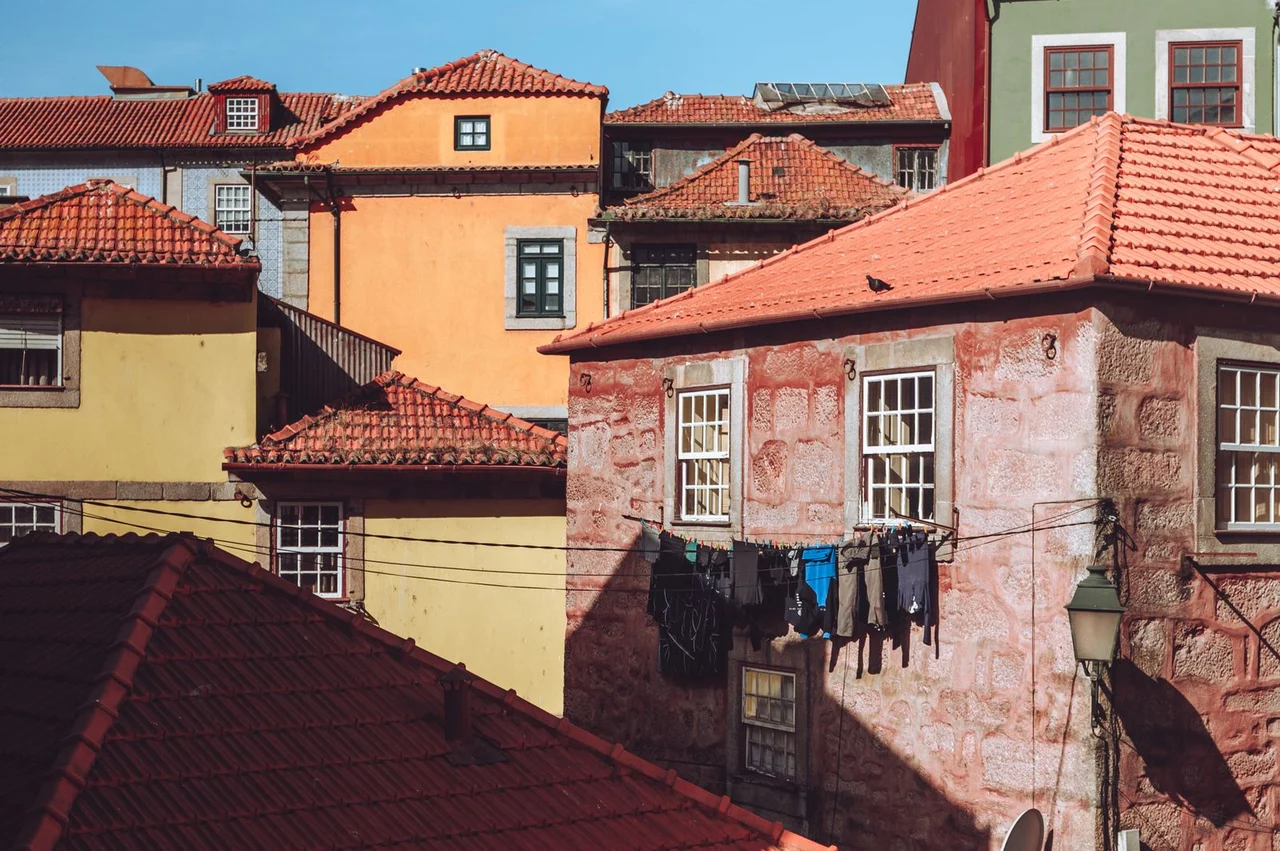
Porto is a city with character. It is easily recognized by the dark granite facades, azulejo tiles, steep descents to the river, and bridges spanning the Douro gorge. This is not a beach resort or a glossy showcase: real everyday life thrives here, markets, small family cafes, craft workshops.
The heart of the city is the Ribeira waterfront and the Douro River, along which legendary port wine cellars stand. Port wine itself is aged on the other bank, in Vila Nova de Gaia, and wine culture permeates the city: tastings, cellars, Douro Valley vineyards a couple of hours' drive away. For many, this is part of the charm - to live where wine is not marketing, but a way of life.
Atmospherically, Porto combines the incompatible: the student energy of the oldest university, working northern solidity, artistic bohemia of new districts, and a growing international layer. The pace of life is more relaxed than the capital's, people are friendlier and less exhausted by tourism - although the center is also packed with guests in high season. This is a city you do not fall in love with at first sight of its facade, but one you grow into for years.
Porto Districts: Character and Rent (Table)
Choosing a district in Porto is half the success of relocation. The city is compact, but districts vary greatly in character, noise, prices, and demographics. We've compiled the key ones in one table, and below we analyze each in detail. All rental amounts are approximate ranges for 2026 for a typical apartment; actual price depends on area, condition, and specific street.
| Porto District | Character | Rent (Approximate, 2026) |
|---|---|---|
| Ribeira / Baixa | Historic center, tourism, postcards and noise | from 900-1300 euros |
| Foz do Douro | Premium by the ocean, quiet, expensive, for families | from 1200-1800 euros |
| Boavista | Business and residential, business center, concert hall | from 900-1300 euros |
| Cedofeita | Art quarter, youth, galleries, cafes | from 800-1100 euros |
| Vila Nova de Gaia | Across the river, port wine cellars, cheaper than the center | from 700-1000 euros |
| Matosinhos | Seaside suburb, fishing, surfing, more affordable | from 650-950 euros |
This table is a starting reference point, not a price list. Rental rates in Porto have been rising in recent years, and exact rates should be verified before moving. If you plan to buy rather than rent property, study separately our guide on real estate in Porto.
Ribeira and Baixa: historic center and its price
Ribeira is the Porto from postcards: colorful houses clinging to each other above the river, narrow alleys, boats on the Douro. Together with the upper part of the center, Baixa is the city's tourist and historic core, a UNESCO World Heritage site.
Living here means living inside a landmark. The advantages are obvious: you're in the heart of the city, everything is walkable, views like from a movie, restaurants and life around the clock. But these very advantages become drawbacks for permanent residence:
- Tourist flow. During high season the center is packed, noisy, crowded, and some apartments operate as short-term rentals.
- Old housing stock. Beautiful historic houses often mean steep stairs without elevators, soundproofing and heating problems.
- Price for location. Rental rates here are among the highest in the city - you pay for the view and address.
Ribeira and Baixa are perfect for those who want to fully experience the spirit of the city and don't mind tourist hustle - for example, for the first year to get your bearings. For quiet family life for years to come, most eventually move to more residential neighborhoods.
Foz do Douro: premium by the ocean
Foz do Douro is where the Douro River flows into the Atlantic, and simultaneously Porto's most prestigious residential neighborhood. Here the city ends and the ocean begins: waterfront, lighthouses, restaurants with views of the waves, respectable villas and expensive apartments.
Foz is chosen by those for whom air, space, and location prestige matter:
- Ocean and waterfront. Walks along the Atlantic, sea air, sunsets - all this is part of daily life, not a weekend outing.
- Peace and safety. A quiet, green, respectable neighborhood valued by families with children.
- Premium segment. Here are the city's highest rental rates and purchase prices - payment for prestige and seaside location.
The downside is distance from the historic center and business districts: getting to Ribeira or Boavista takes longer, and without a car or good route planning, living is less convenient. Foz is the choice of those who prioritize ocean environment quality and are willing to pay for it, including travel time.
Boavista: business and residential heart of the new city
If Ribeira is old Porto, then Boavista is its modern, business side. Around the famous oval boulevard and the Casa da Musica concert hall are concentrated offices, banks, hotels, shops and plenty of quality housing.
Boavista attracts those who need balance between work and comfort:
- Business infrastructure. Companies and offices are concentrated here - convenient for those working in local business, not just remotely.
- Modern housing. More new and renovated homes with elevators, parking, normal layouts - unlike the old center.
- Connectivity. Good transport accessibility, metro, proximity to different parts of the city.
In atmosphere, Boavista is less postcard-like and more "urban," business-oriented - not a place to go for photos, but very practical for living. Rental rates here are comparable to the center, but you get modern residential standards. This is one of the most rational options for those relocating for work and wanting comfortable accommodation without tourist crowds.
Cedofeita and Vila Nova de Gaia: art district and opposite shore
Cedofeita is Porto's creative, youthful face. The former craft quarter has transformed into an art district with galleries, independent shops, third-wave coffee shops, vintage stores and vibrant cultural life. It attracts youth, the creative class, students and those relocating for whom atmosphere and activity matter more than quiet.
Cedofeita's advantages are atmosphere and central location at slightly friendlier prices than the core itself. Disadvantages are liveliness and noise, especially evenings and weekends. This is a neighborhood for those who want to be in the thick of city life.
A completely different story is Vila Nova de Gaia, formally a separate city on the southern Douro shore, directly opposite Ribeira. This is where the famous port wine cellars stand, and from the waterfront opens the best view of historic Porto.
- Cheaper than the center. With excellent views and proximity to the city, Gaia rental rates are roughly lower than the other shore.
- Views and wine. Living with a panorama of old Porto and wine cellars nearby is a special pleasure.
- Connection to the city. BRIDGES and metro connect Gaia to the center; the journey takes just minutes.
Gaia is a frequent compromise for those wanting to live near the center but pay less and have more space.
How much does life in Porto cost: approximate budget
The main practical question is how much money you need to live. First, disclaimer: all figures below are approximate ranges for 2026, the rental market fluctuates, and specific budget depends on neighborhood, lifestyle and family size. But you can understand the order of magnitude.
Estimated monthly expenses in Porto:
- 1-bedroom apartment rental in the city center - approximately 700-1,000 euros; higher in the premium Foz area, lower in suburbs.
- 2-3 bedroom apartment rental for a family - approximately 1,100-1,700 euros depending on the district.
- Utilities and internet - approximately 100-180 euros per month.
- Groceries per person - approximately 250-350 euros.
- Transportation - public transport pass approximately 40-50 euros.
- Cafes and restaurants - business lunch approximately 9-15 euros; dinner at an average establishment noticeably cheaper than in the capital.
Key point: Porto is approximately 20-35% more affordable than Lisbon, particularly in rent and everyday expenses - this is its main practical advantage. Detailed breakdown for the entire country is in our article on cost of living in Portugal. To properly plan your entire relocation - from visa to logistics - see the guide on relocation to Portugal.
"When clients ask me whether to choose Lisbon or Porto, I always bring the conversation back to their actual life scenario. If someone works remotely or runs an online business, values peace and quiet, and wants to pay approximately 25% less on rent than capital rates - Porto almost always wins. But I warn about two things. First - climate: Porto is noticeably rainier and more humid, and those who depend on sunshine need to experience this beforehand, not discover it after the fact. Second - employment: there are fewer local job openings here than in Lisbon, so you should verify employment opportunities before moving. And my main advice - don't choose a district based on beautiful photos. Come, live for a month or two in short-term rental, walk through Foz, Cedofeita and Gaia on foot - and only then sign a long-term lease. You choose a city not with your eyes, but with the rhythm of your own life."
Porto climate: mild, but rainier than Lisbon
Climate is one of the factors that relocating people underestimate, and rightly so. Porto is located north of Lisbon and closer to the Atlantic, so its weather offers mildness in exchange for rain.
What you should know:
- Mild winters. Severe frosts do not occur; winter temperatures typically stay above freezing; snow is rare. However, homes are often poorly heated and damp - you should be prepared for this.
- Warm summers. Summers are warm and comfortable, without scorching heat; ocean breezes provide relief. For many, this is a plus compared to the heat of southern Portugal.
- Rain and humidity. The main characteristic - Porto is noticeably rainier and more humid than Lisbon, especially from late autumn through spring. Gray skies and prolonged rain are common here.
If you tolerate rainy, overcast weather poorly and depend on sunshine, this should be weighed beforehand. Conversely, many enjoy the mild northern climate without excessive heat - it is individual. However, do not expect Mediterranean sunshine year-round in Porto: this is the Atlantic, cooler and more humid north.
Employment, IT and startup scene
In terms of employment, Porto is a growing city, but still lags behind the capital in number of opportunities. This is the second caveat for those relocating not to remote work, but seeking local employment.
Labor market overview:
- Growing IT and startup scene. Porto is actively developing as a technology hub: international company offices are opening, technology parks and coworking spaces are expanding, industry events are held. The city deliberately attracts IT professionals and entrepreneurs.
- Fewer job openings than in Lisbon. However, in absolute number of positions, especially those requiring English and with international companies, Porto still lags behind the capital. The choice of employers is narrower.
- Remote work and freelancing. For those working for foreign companies or running online businesses, Porto is an almost ideal base: lower expenses, good environment, digital nomad visa D8 as a legal basis.
The summary is straightforward: if you are a remote worker, entrepreneur, or have independent income - Porto shines in full glory. If you are counting on local employment, study the market beforehand and realistically assess the number of suitable vacancies - there are fewer than it appears from the outside.
Porto's pros and cons for relocation: assessment
Let us gather everything into a sober balance. Porto is a wonderful city to live in, but there are no perfect places, and it is important to move with open eyes.
Porto advantages:
- Cheaper than Lisbon—approximately 20-35% lower on rent and living costs.
- Authentic, unpretentious atmosphere; genuine Portugal.
- Ocean, Douro River, wine culture, and port wine within reach.
- Compact layout—convenient to live without a car; everything is close by.
- Mild, temperate climate and clean Atlantic air.
- Growing IT scene and comfortable infrastructure for remote work.
- EU and Schengen member—freedom to travel throughout Europe.
Porto's drawbacks:
- Fewer job opportunities and international companies than in Lisbon.
- Rainier and more humid—grey skies prevail during most of the cold season.
- Hilly terrain—steep inclines are unfamiliar and difficult for people with limited mobility.
- Tourist pressure on the historic center during peak season.
- Aging residential buildings with heating and moisture problems.
- Rising rental prices in recent years.
If these drawbacks are not critical for you, Porto can become one of the most comfortable and humane European cities to live in. The key is to choose it consciously, aligned with your scenario.
Who should choose Porto, and who should choose Lisbon instead?
Let us summarize the practical conclusion on city selection. Porto and Lisbon are not competitors on a "better/worse" basis, but two different lifestyles in one country.
Choose Porto if you:
- Value authenticity, tranquility, and more affordable prices.
- Work remotely, freelance, or run an online business.
- Are relocating with family and seeking a cozy, human-centered environment by the ocean.
- Are not critically dependent on sunshine and are comfortable with rain.
- Want a compact city where you can live without a car.
Lisbon may be more convenient if you:
- Seek maximum job vacancies and international employers.
- Want a warmer and drier climate.
- Need the most developed infrastructure, air connectivity, and business environment.
Many people relocating ultimately choose Porto for the combination of European quality of life and more reasonable pricing. However, the final decision is always individual and depends on employment, budget, family composition, and personal priorities. Detailed materials on life in Lisbon and the best places to live in Portugal will help you compare both scenarios in detail. life in Lisbon and best places to live in PortugalOfficial information about the country and services for residents can always be verified on the state portal. gov.pt.
We will help you plan your relocation to Porto
City and district selection is only the tip of the relocation iceberg. Next come visa requirements, tax residency, banking, apartment rental or purchase, documents for the entire family. A mistake at the start - an incorrectly chosen residence permit type or miscalculation of income - can cost you months and stress. We handle residency permit acquisition and relocation to Portugal comprehensively: we select the appropriate pathway (D7, D8, investment), prepare documents, file applications, and support your family on-site.
Discuss Porto relocation with a BRIDGES GLOBAL expert - we will analyze your situation, calculate your budget, and recommend the optimal pathway for your specific life scenario.
How to choose a neighborhood and avoid mistakes: an expert's perspective.
Over years of managing relocations to Portugal, we see the same typical mistakes in city and neighborhood selection. Let us address them so you do not waste time and money.
- Renting housing long-term sight unseen. Do not sign a long-term contract from abroad based on photos. It is better to arrive and live in short-term rental for a couple of months to understand the neighborhood firsthand.
- Underestimating climate. The rainy north is not for everyone. If sunshine is critical to you, verify this in practice, not from pictures.
- Counting on local employment without studying the job market. Porto has fewer job openings than Lisbon. If you are not relocating for remote work, assess the real demand for your profession in advance.
- Ignoring terrain and aging housing stock. Steep hills and buildings without elevators are common issues. Families with children and elderly residents should pay particular attention to this.
- Selecting a city separately from visa and tax considerations. A city is only part of your relocation. Residence permit type, income, and tax residency should be planned together.
The main principle is strategy first, neighborhood selection second—not the other way around.
Frequently asked
Questions people ask before deciding
01Is Living in Porto Cheaper Than Lisbon in 2026?
Yes, approximately. Porto is considered noticeably more affordable than the capital—roughly 20-35% lower for rent and general living expenses. One-bedroom apartment rental in central Porto is approximately 700-1000 euros versus significantly higher rates in Lisbon. All figures are approximate: the market is fluid, and the exact amount depends on the district and area.
02Which Porto District Is Best to Choose for Living?
It depends on priorities. Foz do Douro—premium by the ocean, quiet and expensive, convenient for families. Boavista—business-oriented and modern, convenient for those working in local business. Cedofeita—art district for youth and the creative class. Vila Nova de Gaia on the opposite bank—cheaper than the center with excellent views. Ribeira—the most touristy and atmospheric.
03How Much Is Apartment Rental in Porto?
Approximate for 2026: one-bedroom in the center—700-1000 euros per month; in premium Foz higher; in suburbs like Matosinhos lower. Family apartment with 2-3 bedrooms—approximately from 1100-1700 euros. These are ranges, not fixed rates: exact prices are better verified directly before relocation.
04What Is the Climate in Porto?
Mild maritime: winters without severe frosts, summer warm but not hot thanks to the ocean. The main feature—Porto is noticeably rainier and more humid than Lisbon, especially from autumn to spring. Gray skies and prolonged rain are not uncommon here, and homes often have weak heating and tend to be damp.
05Is There Work in Porto for Foreigners?
Yes, but there are fewer vacancies than in Lisbon, especially with English and in international companies. Meanwhile, Porto is actively growing as an IT and startup center. The city is ideal for remote workers, freelancers, and entrepreneurs. If you are counting on local employment, the market should be studied in advance.
06Is Porto Part of the EU and Schengen?
Yes. Porto is Portugal's second-largest city, and Portugal is a full-fledged member of the European Union and the Schengen Zone. This is a significant advantage for travel: with Portuguese residence permit or citizenship, freedom of movement throughout Europe is open, unlike, for example, Cyprus, which is not yet in Schengen.
07How Does Porto Differ from Lisbon in Atmosphere?
Porto is smaller, more compact, more authentic, and quieter. It is a granite northern city with the Douro River, Port wine cellars, and a more intimate environment. Lisbon is larger, livelier, warmer, and drier, with more developed business infrastructure. Many consider Porto itself the true, unglamorous Portugal.
08Is It Convenient to Live in Porto Without a Car?
Yes, the city is compact, with metro, buses, and pedestrian accessibility to most districts. Without a car it is quite comfortable, especially if living in central districts. The nuance—hilly terrain: steep inclines can be tiring, and in remote Foz it is less convenient without a car due to distances.
09Which Porto District Is the Most Expensive?
Foz do Douro - a district at the mouth of the Douro River where it flows into the ocean. It is Porto's most prestigious residential area with the highest rental rates and purchase prices. People choose it for the ocean views, spaciousness, quiet, and safety - but they pay a premium for prestige and seafront location, accepting the distance from the city center.
10What are the main disadvantages of living in Porto?
The main drawbacks are fewer job opportunities than in Lisbon, a wetter and more humid climate, hilly terrain with steep inclines, tourist congestion in the historic center during peak season, and an aging housing stock with heating issues. Rental prices have also risen noticeably in recent years.
11Is it worth renting accommodation in Porto's historic center?
For your first year to get a feel for the city - yes. But for a long, peaceful life, the center (Ribeira, Baixa) is not suitable for everyone: tourist crowds, noise, old buildings without elevators, high rents. Many eventually relocate to more residential neighborhoods - Boavista, Foz, or across the river to Gaia.
12How do you properly choose a neighborhood in Porto before relocating?
Do not sign a long-term rental contract blindly based on photos. Ideally, visit and spend a couple of months in short-term rental accommodation, exploring neighborhoods on foot - Foz, Cedofeita, Boavista, Gaia. And plan your move to the city in conjunction with visa requirements, income, and tax residency: first develop your relocation strategy, then choose your neighborhood.
Transparency
How this material was prepared
- Author
- Irena Sokolovska, head of Europe Office, BRIDGES
- Terms and costs last verified
- June 2026
- Sources
- official government authorities of the relevant country and state publications
- Methodology
- government minimum requirements are stated separately from due diligence charges, state fees, legal and banking costs
Sources and methodology
Figures, terms and timelines are checked against official sources as of June 2026. Link availability verified in August 2026. Third-party blogs and agent websites are not used as a source of programme terms.
- [1]Agência para a Integração, Migrações e Asilo (AIMA)Residence permits and how to applyaima.gov.pt/en
- [2]Portal das FinançasTax regimes and obligations of residentswww.portaldasfinancas.gov.pt
Methodology: tables and charts state government minimum investment requirements; due diligence charges, state fees, legal, banking and other costs are calculated separately and are not included in the minimum thresholds.
About the author
Related materials
What to read next
 ArticlePortuguese citizenship by descent in 2026: by parents, grandparents and birth
 ComparisonResidence permit for investment in 2026: Greece, Portugal or UAE - what to choose
 AnalysisWhat is due diligence and why the Caribbean is rejecting applications
Personal programme selection is conducted by Anna Kovalevskaya, Head of Legal, BRIDGES.
Residency in Portugal: timelines and requirements
Grounds, document list, presence requirements and what is needed for renewal.