Residency
How to become a digital nomad: a step-by-step plan for beginners in 2026
Updated: June 2026·12 min read·Expert reviewed
Terms and costs verified: June 2026
Contents
Being a digital nomad is not a bohemian lifestyle but a specific professional strategy: work remotely, live where you want, pay tax at an optimal rate. By 2026 more than 35 million people worldwide have taken this route. This article sets out a step-by-step plan for anyone considering the move: from the source of income and the choice of country to the first month in a new place and the typical mistakes that cost money and nerves.
What a digital nomad is in 2026
A digital nomad earns money online and is not physically tied to one place of residence or an office. It is not a synonym for traveller or freelancer: many successful digital nomads are permanent employees of corporations in the United States, Germany or the United Kingdom, simply working remotely. The defining feature is that the work is done entirely over the internet, and it makes no material difference to the employer or client where in the world that happens.
According to the MBO Partners State of Independence 2026 report, there are more than 35 million active digital nomads worldwide — people who deliberately move between countries while working. A further 50 to 60 million describe themselves as semi-nomads: they live in one city but regularly leave for one to three months and work remotely. For comparison, in 2019 there were around 7 million. The pandemic of 2020 and 2021 and the mass shift to remote work moved the paradigm irreversibly.
The common specialisms and indicative income ranges in 2026:
- Software developer (backend, frontend, full-stack, iOS/Android) — $60,000 to $200,000 and above a year
- UX/UI designer, product designer — $40,000 to $120,000 a year
- Product manager, CPO — $80,000 to $200,000 a year
- Marketer (SEO, PPC, content marketing, social) — $30,000 to $100,000 a year
- Copywriter, UX writer, editor — $25,000 to $80,000 a year
- Consultant (management, financial, IT audit) — $60,000 to $300,000 and above a year
- Online teacher, trainer, coach — $20,000 to $100,000 a year
- Data analyst, data scientist, ML engineer — $60,000 to $200,000 a year
- DevOps and cloud engineer — $80,000 to $180,000 a year
One qualification worth making: being a digital nomad does not necessarily mean a luxurious life with a beach every day. It is a professional model that demands discipline, self-organisation and the ability to build working processes outside an office. Most successful nomads settle into a stable routine within a year or two, often staying six to twelve months in one place — it is simply a different place each year.
Step 1: the source of income, before you leave
The key rule, broken by 70% of beginners: do not leave until you have a stable remote source of income of at least $2,500 to $3,000 a month. Moving without income turns a digital nomad into an ordinary traveller with dwindling savings and rising anxiety. There are three models that work.
Model 1: remote employment. The most stable option, preserving social guarantees (paid leave, insurance, sick pay) with full freedom of movement. Many large companies in the United States, Germany, the Netherlands, the United Kingdom and Canada have long recruited staff worldwide. Where to look:
- LinkedIn — the "Remote" filter plus your specialism. Apply first to companies that already have distributed teams, which you can see from the locations of other staff in their profiles.
- Remote.co — a specialist job board of remote positions only, with each vacancy checked manually.
- We Work Remotely — one of the oldest resources, particularly strong on IT roles in the United States.
- Otta and Wellfound (formerly AngelList) — for Series A and later start-ups and tech companies.
- Himalayas.app, Remote OK and Remotive — aggregators of remote vacancies with filters by country and salary.
Model 2: freelancing. It takes time to build a client base (three to six months to stable income) but it gives full independence. Upwork is the largest platform and works for developers, designers, copywriters, translators and marketers. Complete your profile fully on registration, add a portfolio and start with small projects to gather the first reviews. Toptal selects the top 3% of specialists, with rates from $50 to $100 an hour and a competitive entry process. Fiverr suits standardised services (logos, translations, basic websites). The minimum working rate for a confident start is $30 to $50 an hour.
Model 3: your own product or a micro-agency. A subscription SaaS product, an online course, a micro-agency of two or three people. This takes six to eighteen months to launch and reach stable income, but it gives maximum freedom and scalability. We do not recommend starting with this model from scratch at the moment of the move — better to develop it alongside your current source of income.
The financial readiness test: three months of expenses in reserve (six is better) plus stable income from $2,500 a month for at least the last three consecutive months. The move only makes sense once both conditions are met.
Step 2: choosing a country to match your goals
Choosing the first country is a balance of four factors: ease of entry and legalisation, the tax burden, the cost of living and the long-term prospects. There is no universally right answer, only the optimal answer for your situation.
Georgia — the best start without a visa. Citizens of Russia, Ukraine, Belarus, Kazakhstan and EU countries may stay in Georgia for up to 365 days a year without a visa. Opening a TBC Bank account takes a day and needs only a travel passport. Tax on foreign income is 0% where the conditions are met. Rent in Tbilisi is $400 to $700 a month. It is the only destination you can move to as an experiment after one or two weeks of preparation. The drawback: no route to European citizenship.
Portugal — the route to an EU passport. The D8 visa for remote workers, income from €3,280 a month, the NHR / IFICI tax regime at 20% and citizenship after five years. An excellent choice if the long-term goal is an EU passport for you and your children. It requires a consular appointment booked two to four months ahead. The cost of living is higher than Georgia but lower than the UAE.
The UAE — zero tax, but high costs. There is no personal income tax at all. A freelance licence and residence cost $3,000 to $5,000 as a one-off. A comfortable monthly budget is $3,500 to $5,000 for one person. A good choice on income of $100,000 a year and above, particularly where a 0% tax burden matters in absolute terms.
A decision matrix by priority:
- A fast start without bureaucracy → Georgia (or Armenia)
- An EU passport as the goal → Portugal (five years)
- Maximum tax optimisation → Georgia (0%) or the UAE (0%)
- A family with children → Portugal or the UAE
- A budget under $1,500 a month → Georgia, Serbia, Armenia
- A preference for Asia on income of $80k a year and above → the Thai LTR
Step 3: tax residence — settle it before you leave
Tax planning is one of the most important subjects, and most beginners ignore it until an unpleasant surprise arrives in the form of a demand for additional tax or a penalty. Here are the key rules for Russian citizens; the logic is similar for Kazakhstan, Belarus and Ukraine, but the detail differs, so check with a tax lawyer.
The 183-day rule. In Russia an individual is a tax resident if they spend more than 183 days in the country during any 12 consecutive months. If you have spent more than 183 days abroad in a year, you cease to be a Russian tax resident for that tax period. That triggers a chain of consequences you should be ready for in advance.
The non-resident rate is 30%. If you are a non-resident of Russia but continue to receive income from Russian sources — a salary from a Russian company, rent from Russian property, dividends from Russian companies — income tax is charged at 30% instead of the usual 13%. This matters critically for anyone who has moved but has not changed their source of income. On a salary of RUB 200,000 a month, the difference between 13% and 30% is RUB 34,000 a month, or RUB 408,000 a year — a real loss.
Notifying the Ministry of Internal Affairs of foreign residence. On obtaining a foreign residence permit or another document confirming the right to permanent residence abroad, a Russian citizen must notify the Ministry within 60 days. The notification is filed in person at a public services centre or sent by post from abroad. The penalty for breach is administrative, at RUB 500 to 1,000 for the fact itself, with liability of up to RUB 220,000 or community service for systematic evasion.
Confirming your non-resident status. Formally you cease to be a resident automatically after 183 days abroad. For documentary proof when dealing with foreign tax authorities, however, it is worth obtaining a certificate from the Russian tax service confirming that you are not a Russian tax resident, issued on application.
Double taxation treaties. Russia has treaties in force with Georgia, Portugal, Cyprus, Serbia, Thailand and most countries popular with remote professionals. Correctly structured, the same income will not be taxed twice. The operative words are "correctly structured": these treaties are complex, and interpreting them alone often leads to mistakes. Consult a tax lawyer specialising in international personal taxation before making a final decision.
Step 4: the banking infrastructure of a digital nomad
One of the main practical barriers for professionals from the CIS is banking: sanctions restrictions, closed SWIFT channels and Visa and Mastercard cards from Russian banks that do not work abroad. In 2026 several reliable solutions exist, tested by thousands of people who have already moved.
TBC Bank (Georgia) — the best option to start with. A personal account is opened the same day at any branch in Tbilisi, Batumi or another city. All you need is a travel passport and a Georgian SIM card, which can be bought for $2 at the airport. There is no minimum deposit. The bank issues Visa and Mastercard cards that work worldwide, with certain exceptions for sanctioned jurisdictions. SWIFT transfers in USD, EUR and GBP work without restriction. The mobile app is available in Russian and English and is stable and capable. For citizens of Russia, Ukraine, Kazakhstan and other CIS countries the account is opened without difficulty — it is standard practice for the bank.
Bank of Georgia. The second most popular option, slightly stricter on first opening: it sometimes asks about the purpose of the account and the source of income. In return it offers a wider product range — investment accounts, term deposits in lari at high rates and mortgages for non-residents. A good secondary account alongside TBC.
Wise (formerly TransferWise). A multi-currency account with real banking details in USD (a US account), EUR (an IBAN), GBP (a UK account), AUD, CAD and more than 50 other currencies. Conversion fees run from 0.4% to 1%, far below bank rates. Ideal for receiving payments from foreign clients and employers. It opens online in 10 to 15 minutes. One important limitation: registration from a Russian IP address may be blocked, so register while already abroad or through a VPN with an IP in another country.
Revolut. Useful for travel: free conversion up to a limit ($1,000 a month on the free plan), instant issue of a virtual card and a convenient app. The physical card is sent by post. The limitations: a number of CIS citizens meet problems with identity verification, and accounts are sometimes frozen on unusual transactions. Use it as a secondary account, not as your main one.
A Cypriot bank. For anyone doing business with European clients who needs an IBAN in the EU. Opening takes two to four weeks and requires detailed documentation on the business, the source of funds and the company structure. Holding Cypriot residence simplifies the process considerably.
The golden rule: always hold at least two working cards in entirely different banking systems — one main (TBC or Wise) and one backup (Revolut or another bank). No bank is immune to sudden freezes, technical failures or a change in sanctions policy.
Step 5: documents before departure
Many beginners underestimate how critical proper document preparation is. The absence of a single piece of paper in another country can block an account opening, a tenancy or a visa application — and obtaining it from abroad is slow, expensive and often requires going home.
Travel passport. Check the expiry date now: it should have at least two years to run from the intended departure, and for most visa programmes at least 12 months beyond the planned end of your stay. If it expires within two years, obtain a new one before leaving. A new passport takes a month through the standard procedure or ten days on an expedited basis for an additional fee. Make several good copies of the main page, and keep scans in cloud storage.
Taxpayer number. Needed for tax matters in Russia, including the notification to the Ministry of Internal Affairs and the tax return. If for some reason you do not have one, obtain it online through the Gosuslugi portal; it takes a few days.
Social insurance number. Not critical for an immediate move, but it will be needed for a number of financial operations and dealings with Russian state bodies later.
Apostilles on key documents. If you plan to apply for a visa or residence, open an account at a foreign bank or have your qualifications recognised abroad, you will need apostilled documents. The apostille is affixed by the Ministry of Justice or an authorised public services centre. The documents worth apostilling in advance:
- Your degree certificate and the transcript of marks
- The certificate of no criminal record
- Your birth certificate
- Your marriage or divorce certificate, where applicable
- Your children's birth certificates, if they are coming with you
The apostille takes 5 to 30 working days depending on the document and the workload. A notarially certified translation into English adds one to three days at any notary's office.
Notification of foreign residence. Complete the notification form in advance (it is available on the ministry's website) so that you know what information it requires, and file it within 60 days of obtaining residence. It can be sent from abroad by registered post.
Medical insurance. Arrange an international policy before departure — in the destination country it may be more expensive or harder to obtain. Insurers worth considering are AXA, Cigna International, Allianz Care and ERV. The minimum cover for hospitalisation is $100,000. Check that the policy covers COVID-19, flare-ups of chronic conditions and emergency evacuation.
Step 6: the first 30 days in a new place
The first month is the most important and the most intense. It lays the foundation of your life in the new country. Do not try to solve everything in the first week — set priorities week by week.
Week 1: reconnaissance and testing the district. Take an Airbnb or hotel in the district you selected in advance from maps and reviews. The first seven days are for reconnaissance, not for settling in. Explore the infrastructure on foot: the nearest supermarkets, cafes suitable for working, the pharmacy, transport routes. Test the internet speed in the flat with Speedtest (upload as well as download). Test local SIM cards from different operators for mobile speed in your area. Do not rush into a long tenancy — make sure the district suits you psychologically: noise levels, distances to the places you need, the sense of safety.
Week 2: finding long-term housing. Go to Facebook Marketplace and the specialist Facebook groups — every city has active communities with hundreds of listings. Local estate agencies often hold properties that never reach the internet. With an active approach, the search takes three to seven days. On negotiation: paying two to three months in advance usually secures a discount of 10 to 15% off the asking price. Always view the flat in person and check the internet connection — ask for the router to be switched on and run a speed test.
Week 3: infrastructure and banking. Buy a local SIM card with a data package (Magti or Geocell in Georgia, NOS or MEO in Portugal, AIS or DTAC in Thailand, du or Etisalat in the UAE). Find a co-working space: test two or three, most offer a free trial day. Open a bank account — at TBC Bank in Georgia this happens the same day. If required, register your address for utilities or for the later residence application.
Week 4: routine and community. Establish a stable working pattern: fixed hours and a fixed place, whether a co-working space or a desk at home. The shift to remote work often comes with a loss of structure, so a firm schedule matters critically in the first four to six weeks. Find the local community: Meetup.com, Telegram groups (Chiang Mai Digital Nomads, Tbilisi Nomads, Lisbon Expats) and Reddit (r/digitalnomad and the city subreddits). Networking in person brings not only support and advice but potential clients, partners and simply friends in an unfamiliar city.
The typical beginner mistakes and how to avoid them
Most mistakes come not from ignorance but from haste, underestimating detail or trying to save money in the wrong places. Here are the most common and most expensive.
- Failing to notify the authorities of foreign residence. Many overlook this in the rush of moving. The administrative penalty is RUB 500 to 1,000, but systematic breach, or several undeclared residence permits, can bring criminal consequences. The deadline is 60 days from obtaining residence, and the notification can be sent from abroad by registered post with an inventory of contents.
- Working on a tourist visa. In most countries work — even remote work, even for a foreign employer — formally requires a permit or the corresponding visa. In practice catching a freelancer with a laptop in a cafe is extremely difficult, but when renewing a visa, dealing with an immigration office or during sweeps of co-working spaces it becomes a real problem, with deportation and an entry ban of three to ten years.
- Keeping all your money in Russian banks. The sanctions risk is real and unpredictable. Visa and Mastercard cards from Russian banks have not worked abroad since March 2022, and new restrictions can be introduced at any time without warning. Diversify: part of your funds at TBC Bank or Wise, part in EUR or USD cash, part accessible through cryptocurrency as a fallback.
- Having no backup internet. The provider in a rented flat can fail at the worst possible moment — during an important call or as a deadline approaches. Always keep a mobile hotspot (a router or a phone with tethering) with a local SIM and an adequate data package, at least 20 to 30 GB a month.
- Underestimating the cost of the first month. Costs in the first month are objectively higher than the standard budget: an Airbnb or hotel until you find a flat costs one and a half to two times more than permanent housing; the deposit is usually one to three months' rent; there are one-off purchases (kitchenware, adapters, household items); and there is the SIM, the bank account and the first shopping trips. Allow one and a half to two times your standard monthly budget for the first 30 days.
- Ignoring the tax consequences of losing Russian residence. The 30% non-resident rate on Russian-source income is not a theoretical problem but a real one that thousands of people who have moved encounter. Plan the change of income source, or your employer's arrangements, before the 183 days elapse.
- Leaving without a financial cushion. A minimum of three months of expenses in reserve, ideally six. Clients delay payment, employers change terms, unforeseen medical costs arise — these are all real scenarios. A cushion gives you time to make the right decisions without panic.
The minimum equipment set and a monthly budget
A digital nomad is first and foremost a professional who needs reliable working infrastructure. Here is the minimum viable set of equipment and subscriptions.
Equipment (one-off costs):
- Main laptop: a MacBook Air M3 (from $1,100) or a ThinkPad X1 Carbon (from $1,200) — light, powerful, reliable. This is not the place to economise: your laptop is your main working tool and your only source of income.
- A backup plan: either a second inexpensive laptop ($300 to $400 second-hand) or cloud access to a working environment (AWS, Paperspace, Shadow PC). A broken main laptop with no backup means one to three days of downtime for repair or delivery.
- A mobile hotspot: a TP-Link M7350, Huawei E5788 or similar supporting local SIMs — $50 to $80. Backup internet when the main connection fails.
- Noise-cancelling headphones: Sony WH-1000XM5 or Bose QC45 — $200 to $350. Critical for working from cafes, co-working spaces and airports.
- A compact mouse and a folding laptop stand — $20 to $40. They prevent neck problems when working from different places.
Services and subscriptions ($50 to $80 a month in total):
- Cloud storage: Google Drive (from $3 a month for 100 GB) or iCloud (from $1 a month for 50 GB). All working files belong in the cloud, never only on the device.
- VPN: ExpressVPN ($8 a month), NordVPN ($5) or Mullvad ($5). Needed for secure connections over public wi-fi and to work around geographical blocks.
- Task manager: Notion (free for one user) or ClickUp (free plan). Record every task, project and meeting.
- Invoicing: Wave (entirely free, suited to freelancers), Zoho Invoice (free up to 1,000 invoices) or FreshBooks ($15 a month). Bill clients professionally.
- Communications: Slack for team work, Telegram for everything else, Zoom or Google Meet for calls.
- Password manager: 1Password ($3 a month) or Bitwarden (free). Critical when you live with a large number of accounts.
An indicative monthly budget, with Tbilisi as the benchmark:
- Rent for a one-bedroom flat: $450 to $700
- Food (restaurants and groceries): $300 to $500
- Transport (metro and taxis): $80 to $120
- Co-working, where needed: $80 to $150
- International medical insurance: $60 to $100
- Services and subscriptions: $50 to $80
- Leisure, sport and culture: $100 to $200
- A reserve for the unforeseen: $100 to $200
- Total: $1,220 to $2,050 a month — a very comfortable life in Tbilisi on income of $3,000 a month, with the ability to save $950 to $1,780 every month
For comparison, a similar standard of living costs $2,500 to $3,500 a month in Lisbon, $2,800 to $4,000 in Barcelona, $3,500 to $5,000 in Dubai and $1,500 to $2,500 in Bangkok. That is precisely why Tbilisi is the ideal entry point: you learn to live as a remote professional at minimal risk and cost, and then move on to wherever the greater strategic sense lies — Portugal for an EU passport, the UAE for zero tax or Thailand for the way of life.
Frequently asked
Questions people ask before deciding
01What income do you realistically need to start life as a digital nomad?
From $2,500 to $3,000 a month — the minimum comfortable threshold for a start.
02Which country works best as a first step?
Georgia, thanks to visa-free entry, which removes the main bureaucratic barriers at the outset.
03After how many days is Russian tax residence lost?
After 183 days outside the country. A non-resident then pays income tax at 30% instead of the standard 13%.
04Which bank account is easiest to open at the start?
TBC Bank in Georgia or Wise — both are convenient for receiving international payments.
05How many people already work as digital nomads?
According to the MBO Partners State of Independence 2026 report, more than 35 million worldwide, with a further 50 to 60 million describing themselves as semi-nomads who regularly leave to work remotely for one to three months.
06Which specialisms are easiest to monetise remotely?
Developer, designer and marketer — the professions in greatest demand for remote work.
07How much validity should my passport have before the move?
At least two years. Anything shorter can cause problems when applying for visas and residence permits.
Transparency
How this material was prepared
- Author
- Sofia Mendes, investment Programs Expert, BRIDGES
- Terms and costs last verified
- June 2026
- Sources
- official government authorities of the relevant country and state publications
- Methodology
- government minimum requirements are stated separately from due diligence charges, state fees, legal and banking costs
Sources and methodology
Figures, terms and timelines are checked against official sources as of June 2026. Link availability verified in August 2026. Third-party blogs and agent websites are not used as a source of programme terms.
- [1]EUR-LexOfficial texts of European Union legislationeur-lex.europa.eu/homepage.html
- [2]European Commission - Migration and Home AffairsEntry and residence rules in the EUhome-affairs.ec.europa.eu/index_en
Methodology: tables and charts state government minimum investment requirements; due diligence charges, state fees, legal, banking and other costs are calculated separately and are not included in the minimum thresholds.
About the author
Related materials
What to read next
 ComparisonAntigua and Barbuda or Grenada: Family Passport for Large Families in 2026
 AnalysisWhat is due diligence and why the Caribbean is rejecting applications
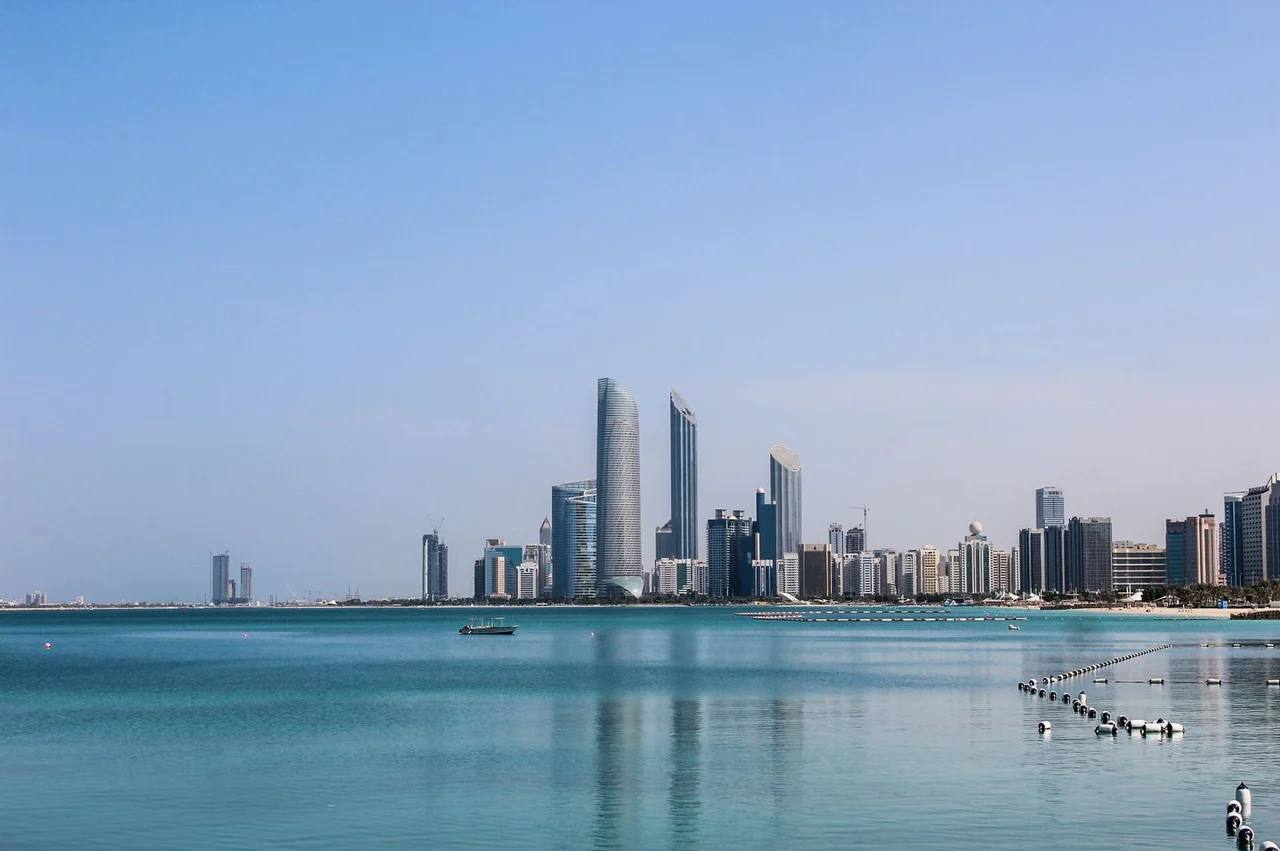 ArticleLife in Abu Dhabi in 2026: how it differs from Dubai, areas, prices, for families
Personal programme selection is conducted by Anna Kovalevskaya, Head of Legal, BRIDGES.
Residency programmes: timelines and requirements
Grounds, document list, presence requirements and what is needed for renewal.