Residency · Greece
Greece residence permit 2026: types, how to get one, from the Golden Visa to the digital nomad

Updated: June 2026·13 min read·Expert reviewed
Terms and costs verified: June 2026

Contents
A residence permit in Greece is a legal residency in an EU and Schengen country with the right to live by the sea, travel freely across Europe, and reach permanent residence and a passport in 5-7 years. There are several bases: the Golden Visa for real estate investment, the digital nomad visa for remote workers, financially independent person status on passive income, student, work, and family reunification. In this overview we break down all types of Greece residence permits: how they differ, how much money and time is needed, who each path suits, and what getting a Greece residence permit looks like for Russians in 2026.
What a Greece residence permit is and why it's needed
A residence permit in Greece is an official permission to live in the country longer than an ordinary tourist trip. Greece is a member of both the European Union and the Schengen area, so a residence permit here gives noticeably more than in non-Schengen countries: you can not only live in Greece itself, but freely travel across all of Schengen with no separate visas - up to 90 days in every 180.
Behind the dry wording is a quite concrete set of opportunities. Here's what a Greece residence permit gives in 2026:
- Legal residencein an EU country with a warm climate, the sea, and developed infrastructure.
- Freedom of movement across Schengen- 26 countries with no border control.
- Family coverage- most bases allow including the spouse, children, and often parents.
- Access to healthcare and education- schools, universities, the healthcare system.
- The road to permanent residence and citizenship- after 5 years EU long-term resident status, after 7 years you can apply for a passport.
It's important to separate two concepts right away.Visa(for example the national D visa) - this is the entry document you use to get into Greece to arrange the status.Residence permits- this is the residence permit itself, the resident card issued within the country. In most scenarios you first get the D visa at the consulate, enter, and then file for the residence card on the spot.
Types of Greece residence permits: an overview table of “type - basis - term”
Greece has no single universal residence permit - there are several different bases, each with its own requirements. To avoid confusion, let's bring all the main types of Greek residence permits together into one table. Further in the article we'll break each down in more detail, with links to separate guides.
| Residence permit type | Basis | Term and renewal |
|---|---|---|
| Golden Visa | A real estate investment (from 250,000 €) or capital/funds/bonds | 5 years, renewable as long as the investment is maintained |
| Digital nomad | Remote work for foreign clients, income from 3,500 €/month | 1 year, then renewal for 2 years |
| Financially independent (FIP) | Stable passive income from 3,500 €/month | 3 years, renewable |
| Student | Enrollment at a Greek university or college | 1 year, renewed for each year of study |
| Work | Employment with a Greek employer (with a permit) | 1-2 years, tied to the contract |
| Family reunification | A close relative - a resident or citizen of Greece | Matches the sponsor's status term |
As you can see, the bases fall into two large groups:investment and income-based(the Golden Visa, digital nomad, FIP - when you support yourself) andclassic(study, work, family). The main investment path most wealthy families come to Greece for is the Golden Visa, and we'll start with it.
Golden Visa: a Greece residence permit through a real estate purchase
The Golden Visa is the flagship route and the most sought-after answer to how to get a Greece residence permit with no tie to work or study. The scheme is straightforward: you invest a certain amount in Greek real estate and get a residence permit for 5 years for the whole family, with no obligation to live in the country permanently. This is the classic Greece residence permit through a real estate purchase.
Since 2024 three investment thresholds have applied, which remain in 2026 as well:
- 250 000 €- a discounted threshold. Applies only to two scenarios: conversion (turning a commercial property into residential) or restoring a landmark building. Available in any region.
- 400 000 €- the standard threshold for most of Greece's regions: much of the Peloponnese, Crete, mainland areas, small islands with a population up to 3,100.
- 800 000 €- premium zones: Attica (Athens), central Thessaloniki, Mykonos, Santorini, and islands with a population over 3,100.
Important technical conditions: the property must bea singleand with an areaat least 120 m²(for the 400,000 and 800,000 € thresholds), the deal is one, for one property. There are also real estate alternatives: investments in investment funds (from 350,000 €), a bank deposit, or government bonds (from 400,000-500,000 €).
A strict restriction is worth remembering separately:short-term rental (Airbnb) of a property bought for the Golden Visa is prohibited.A violation risks residence permit revocation and a fine. Long-term rental of a year or more is allowed. We break down all the details of thresholds, regions and pitfalls in a separate article onGreece's Golden Visa for real estate.
The digital nomad visa: a residence permit for remote workers
If you don't have half a million for real estate but have stable remote income, Greece offers a great option - the Digital Nomad visa and residence permit. This is a status for those working for foreign employers or clients from anywhere in the world, who want to live in Greece.
Key conditions in 2026:
- Income from 3,500 € a monthfrom sources outside Greece - remote work, freelancing, your own online business.
- Family surcharges- roughly +20% to the threshold for a spouse and +15% for each child.
- Term- first a residence permit for 1 year, then renewal for 2 years.
- A ban on working within Greece- income must be only from foreign sources, local employment isn't allowed under this status.
An additional bonus: digital nomads who become Greek tax residents can apply for a benefit - a reduced tax rate on Greek employment and entrepreneurial income in the first years. At the same time, it's worth understanding that nomad status assumes Greece really becomes your primary place of living, even if there's no strict rule on the number of days. Details on thresholds, documents, and renewal - in the guide onGreece's digital nomad visa.
Financially independent person (FIP): a residence permit on passive income
Financially Independent Person (FIP) status is a close relative of the nomad visa, but with an important difference. Where the nomad actively works remotely, FIP is designed for those living onpassive income: rentiers, retirees, investors, people with income from rent, dividends, interest, and savings.
What's needed for this type of Greece residence permit:
- Confirmed stable passive income- a benchmark from 3,500 € a month (the threshold has risen in recent years, we always confirm the current figure before filing).
- Family surcharges- about +20% for a spouse and +15% for each child.
- Residence permit term - 3 years, with the option to renew.
- A ban on employment in Greece- like the nomad, income mustn't depend on work within the country.
FIP is a calm option for those who've already built up capital and want to simply live in Greece, without dealing with Golden Visa real estate or active remote work. Many choose exactly this path as a first step, and then, after living there several years, move on to permanent residence. If you're considering Greece seriously and long-term, it makes sense to also weigh the investment route right away: a Golden Visa real estate investment gives not just a residence permit, but a working asset. It's convenient to compare the bases with each other in the general overviewtypes of Greek visas and residence permits.
Student, work residence permit, and family reunification
Besides the investment and income-based bases, there are three classic paths to a Greece residence permit - through study, work, and family. They're less popular with wealthy applicants, but suit certain situations perfectly.
- The student residence permit.Issued upon enrollment at a Greek university or college. An acceptance letter, proof of tuition payment or a scholarship, and proof of funds for living are needed. Term - 1 year, renewed for each year of study. Study time counts toward residence tenure, but usually with a reduced coefficient for naturalization.
- The work residence permit.Tied to an employment contract with a Greek employer, who arranges the permit to hire the foreigner. Term usually 1-2 years, status depends on the contract. Since 2026 sponsor employers' obligations have tightened: the company must monitor the employee's status and report changes in working conditions.
- Family reunification.Available to close relatives of residents and citizens of Greece. The spouse of a Greek citizen gets a 5-year residence permit; in other cases the term usually matches the sponsor's status. Documents proving family relationship and confirmation that the sponsor can support the family and provide housing are needed.
What these bases have in common is that they're tied to a specific circumstance - a place of study, an employer, or a relative. As soon as the circumstance changes (studies end, the contract is terminated), the status needs reissuing. So for those wanting an independent and stable status, the investment and income-based routes are more reliable.
Conditions and cost: what's needed to get a Greece residence permit
Let's bring together what's generally required to get a residence permit in Greece under any basis, and what costs are worth budgeting for besides the main investment or income confirmation. Exact amounts depend on the route, but the basic set of requirements is common.
General conditions for most bases:
- A valid international passportand the national D visa (for entry to arrange the status).
- Confirmation of the basis- an investment, income, university enrollment, an employment contract, or family relationship.
- Medical insurance, covering your stay in Greece.
- A police clearance certificateand a clean immigration history.
- AFM tax number- needed for real estate deals and many operations.
- Confirmation of funds for living- depending on the basis.
Approximate additional costs (beyond the investment or income confirmation): state duties for processing and the residence card, notary and lawyer services for real estate deals, document translations and apostilles, insurance. For real estate, the transfer tax (3.09% of value) and the annual ENFIA property tax are added. Golden Visa review timelines in 2026 are roughly 6-9 months.
An important 2026 update: the residence permit is no longer “backdated”. The status's validity is now counted from the date the card is issued, not the filing date - worth accounting for when planning. Greece has also started merging visas and permits into a single document (Single Permit), simplifying the former two-step system.
A residence permit in Greece for Russians: what to know in 2026
Let's separately break down the most common question - how things stand with a Greece residence permit for Russians. It's important to speak here, with no embellishment: some procedures for Russian citizens have become more complicated since 2022, and this needs to be accounted for in advance.
Key points for Russians in 2026:
- A Schengen visa for short-term entryis still issued, but more strictly than before: multiple-entry visas are given less often, documents are checked more thoroughly. A national D visa for a specific basis is needed for residence.
- Golden Visa.Accepting new applications from Russian citizens for the investment residence permit is restricted amid the EU sanctions regime. Those who already have an active status or a connection through family or business can consider available legal paths. Any work is done strictly within the legal field, with enhanced verification of the source of funds and no sanctions circumvention.
- Family and other bases.Reunification with a resident relative, studies, and certain work scenarios remain accessible if conditions are met.
The main rule for Russians is not to look for alternative schemes, but to build the status transparently. Enhanced compliance on the source of funds is now the norm for all wealthy applicants, and competent document preparation resolves most issues. We assess each client's situation and only take on what really passes legally.
From a residence permit to permanent residence: EU long-term resident status
A residence permit isn't the endpoint, it's the first floor. Having lived in Greece long enough and legally, you can move to permanent residence - EU long-term resident status.
How this works:
- Term - 5 yearsof continuous legal residence in Greece. Short absences are allowed, but there are limits: generally no more than 6 consecutive months and no more than 10 months total over the five years.
- EU long-term resident statusgives expanded rights: equal treatment with citizens in many areas - access to work, education, social security, and, under certain conditions, the ability to move to other EU countries.
- Cardissued for 5 or 10 years and renewed.
An important nuance here: the Golden Visa formally doesn't require permanent residence, so “golden visa” holders who rarely visit the country don't get closer to permanent residence by residence tenure. To reach long-term resident status, you need to actually live in Greece. For those planning a real relocation, not just a fallback status, it's worth building a strategy aimed at permanent residence right away. A detailed breakdown of conditions and timelines - in the article onGreece's permanent residence.
From permanent residence to citizenship: naturalization and an EU passport
The final goal for many is Greek citizenship, meaning a full EU passport. The path to it lies through naturalization, and this is no longer about money, but about years of actual life in the country.
Main naturalization parameters:
- A residency requirement of 7 yearsof legal residence for most applicants. For EU citizens, recognized refugees, and spouses of Greek citizens (with a shared child) the term is reduced to 3 years.
- An exam on knowledge of the realities- the so-called knowledge certificate for naturalization (PEGP): Greek language at levelB1, plus history, geography and the basics of the country's civic structure.
- Stable incomeand a clean criminal record.
- Actual residence- about 183 days a year, actual presence, not a status on paper.
Greece allows dual citizenship, so giving up your previous passport usually isn't required. Getting citizenship is a marathon: the language and the test have to be learned in advance, and review takes time. But the reward is full EU citizenship with the freedom to live, work, and study in any EU country. All bases and nuances - in the guide onGreek citizenship.
Taxes for Greek residents: what changes with status
When getting a residence permit, and especially becoming a Greek tax resident (183+ days a year), it's important to understand the tax picture - so as not to run into surprises. Let's say upfront: the residence permit status by itself doesn't automatically make you a tax resident, the key factor is where you actually live.
Main 2026 rates and regimes:
- Income tax- a progressive scale, a top rate of up to 44%.
- Corporate tax - 22%.
- VAT- a standard rate of 24%.
- The ENFIA property tax- annual, depends on the property's value and characteristics.
- Property transfer tax- 3.09% on purchase.
There are attractive discount regimes for wealthy relocators:
- Non-dom flat tax- a flat tax100,000 € a yearon all worldwide income (condition - an investment from 500,000 € over 3 years), valid for up to 15 years, +20,000 € per family member.
- The pensioner regime- a rate7%on foreign income and pension for 15 years.
This makes Greece interesting not just for living, but also for tax planning. Specific calculations are always individual and depend on your income structure, so it's better to work out the tax side together with the investment route, not separately.
Which Greece residence permit to choose: a comparison for different goals
Let's draw a practical conclusion - which Greece residence permit suits your specific goal. There's no universal answer, it all depends on what you have (capital, income, work, studies) and what you want.
- You want to invest money and get status for the whole family with no obligation to live in the country- your Golden Visa for real estate option. It's both a residence permit and a working asset.
- Work remotely for foreign clients- the digital nomad visa. A minimum of investment, only a stable income is needed.
- You live on passive income, savings, rent, or a pension- financially independent person (FIP) status.
- Going to study- a student residence permit, which can later be converted to another status.
- Got a job at a Greek company- a work residence permit through an employer.
- You have a close relative who's a resident or citizen of Greece- family reunification.
If you're looking at Greece strategically - as a country for life, business, and a future EU passport - real estate and the Golden Visa almost always become the starting point: it's the most predictable and independent status. It's convenient to lay out all the options and compare them with your starting data in the general overviewtypes of Greek visas and residence permits.
Common mistakes and how to avoid them: an expert's view
Over years of practice we've seen that applicants for a Greece residence permit are tripped up not by rare mishaps, but by the same typical missteps. Let's list them so you don't lose time and money.
- Choosing the wrong basis.A person arranges the expensive Golden Visa, even though their income would easily qualify for FIP or the nomad visa - and unnecessarily overpays hundreds of thousands of euros.
- Buying “the wrong” property for the Golden Visa.A property smaller than 120 m², an unsuitable region for the chosen threshold, trying to rent it out short-term - all of this leads to problems with the status.
- The illusion that the Golden Visa automatically leads to permanent residence.Without actual residence, long-term resident status and citizenship don't get closer.
- A gap in legal status.An expired card or a missed renewal zeroes out accumulated residence tenure.
- Underestimating the tax side and timelines.Tax residency and real processing timelines need to be planned in advance.
The main thing is not to choose the route “by eye” and not to skimp on working out the strategy. A well-chosen basis saves both money and years. Current requirements and forms are always worth checking on the official portalof Greece's Ministry of Migration and Asylum (migration.gov.gr).
Not sure which country and status to choose?
We will compare suitable residency programs on budget, timelines and stay requirements - with a full cost calculation for your family.
Free of charge, we reply right away, no obligation.
Bottom line: how to get a Greece residence permit in 2026
A Greece residence permit is the entry into life in an EU and Schengen country, with the sea, a mild climate, and a clear road to permanent residence and a passport. The main thing is to correctly choose the basis for your situation, and in 2026 there are several: the Golden Visa for real estate, digital nomad, financially independent person, student, work, and family reunification.
To sum up the whole logic briefly: for wealthy families who want a reliable and independent status with an eye to the future, the main path is real estate investment through the Golden Visa, giving a residence permit for 5 years for the whole family with no obligation to live in the country permanently. For those with income but no large capital, the nomad and FIP visas work great. And after 5 years of actual residence permanent residence opens up, and after 7 years - EU citizenship.
a caveat for Russians: some procedures have become more complicated since 2022, accepting new Golden Visa applications is restricted by the sanctions regime, but legal paths remain - with transparent confirmation of the source of funds and no alternative schemes whatsoever. The best strategy is not to rush an independent choice, but to first calmly lay out the options, calculate the money and timelines, and only then act. Then getting a Greece residence permit will go predictably and with no lost years.
Frequently asked
Questions people ask before deciding
01What types of residence permits does Greece have in 2026?
There are six main bases: the Golden Visa (a residence permit for a real estate investment from 250,000 €), the digital nomad visa (remote income from 3,500 € a month), FIP financially independent person status (passive income from 3,500 € a month), a student residence permit, a work residence permit, and family reunification. The main investment path for wealthy families is the Golden Visa.
02How do you get a residence permit in Greece through a real estate purchase?
Through the Golden Visa program. You need to invest in Greek real estate: 250,000 € for converting or restoring a landmark, 400,000 € in most regions, or 800,000 € in premium zones (Athens, central Thessaloniki, Mykonos, Santorini). The property must be a single one, from 120 m². In return you get a residence permit for 5 years for the whole family with no obligation to live in the country permanently.
03How much does the most accessible Greece residence permit cost?
Without large real estate investments, the most accessible paths are the digital nomad visa and financially independent person status. No capital is needed there, it's enough to confirm income from 3,500 € a month (plus family surcharges). Student and work residence permits also require no investment, but are tied to studies or an employer.
04Can Russians get a Greece residence permit in 2026?
Yes, legal paths remain, but : some procedures have become more complicated since 2022. The Schengen visa is issued more strictly, a national D visa is needed for residence. Accepting new Golden Visa applications from Russian citizens is restricted by the EU sanctions regime; work is done strictly legally, with enhanced verification of the source of funds and no sanctions circumvention. Family bases and study remain accessible.
05Do you need to live in Greece permanently on a residence permit?
Depends on the basis. The Golden Visa barely requires presence - you can hold the status while rarely being in the country. But the digital nomad and FIP visas assume Greece becomes your primary place of living. Switching to permanent residence and citizenship requires actual residence regardless - about 5 years continuously for permanent residence.
06How does the digital nomad visa differ from FIP status?
The digital nomad actively works remotely for foreign clients, while FIP (financially independent person) lives on passive income - rent, dividends, interest, pension. The income threshold is similar for both (from 3,500 € a month), but the nomad is first given a residence permit for 1 year with renewal for 2 years, while FIP gets 3 years right away.
07After how many years can a Greece residence permit lead to permanent residence?
After 5 years of continuous legal residence you can apply for EU long-term resident status. Short absences are allowed within limits: generally no more than 6 consecutive months and no more than 10 months total over the five years. It's important to actually live in the country - formally holding the Golden Visa without residing isn't enough.
08When can you get Greek citizenship?
Through naturalization after 7 years of legal residence for most applicants (3 years for EU citizens, recognized refugees, and spouses of Greek citizens with a shared child). You need to pass an exam on knowledge of the realities: Greek language at level B1 plus history, geography, and civic structure. Greece allows dual citizenship.
09Can you rent out property bought for the Golden Visa?
Short-term rental (Airbnb and similar) of a property bought for the Golden Visa is prohibited - a violation risks residence permit revocation and a fine. Long-term rental of a year or more is generally allowed. This is an important restriction to consider when choosing the investment property.
10What tax benefits are there for Greek residents?
There are two attractive regimes for wealthy relocators. The non-dom flat tax - a flat tax of 100,000 € a year on all worldwide income (condition - an investment from 500,000 € over 3 years), for up to 15 years, plus 20,000 € per family member. For retirees - a 7% rate on foreign income and pension for 15 years.
11How long does it take to arrange a Greece residence permit?
Depends on the basis. Golden Visa review in 2026 takes roughly 6-9 months. An important update: from 2026 the residence permit's validity is counted from the date the card is issued, not the filing date. Greece is also merging visas and permits into a single document (Single Permit), simplifying the procedure.
12Which Greece residence permit should you choose if you're planning a serious relocation?
For a serious relocation aimed at permanent residence and an EU passport, real estate and the Golden Visa usually become the optimal starting point: it's the most predictable and independent status, giving a residence permit for the whole family and a working asset. In parallel, actual residence and tax residency need to be planned right away, in order to reach permanent residence and citizenship in 5-7 years.
Transparency
How this material was prepared
- Author
- Martina Veber, head of Case Processing, BRIDGES
- Terms and costs last verified
- June 2026
- Sources
- official government authorities of the relevant country and state publications
- Methodology
- government minimum requirements are stated separately from due diligence charges, state fees, legal and banking costs
Sources and methodology
Figures, terms and timelines are checked against official sources as of June 2026. Link availability verified in August 2026. Third-party blogs and agent websites are not used as a source of programme terms.
- [1]Ministry of Migration and Asylum of GreeceResidence permits, including the investor permitmigration.gov.gr/en
- [2]Enterprise GreeceConditions of the investor programmewww.enterprisegreece.gov.gr/en
Methodology: tables and charts state government minimum investment requirements; due diligence charges, state fees, legal, banking and other costs are calculated separately and are not included in the minimum thresholds.
About the author
Related materials
What to read next
 ArticleGreek citizenship by descent in 2026: by roots, parents, grandparents
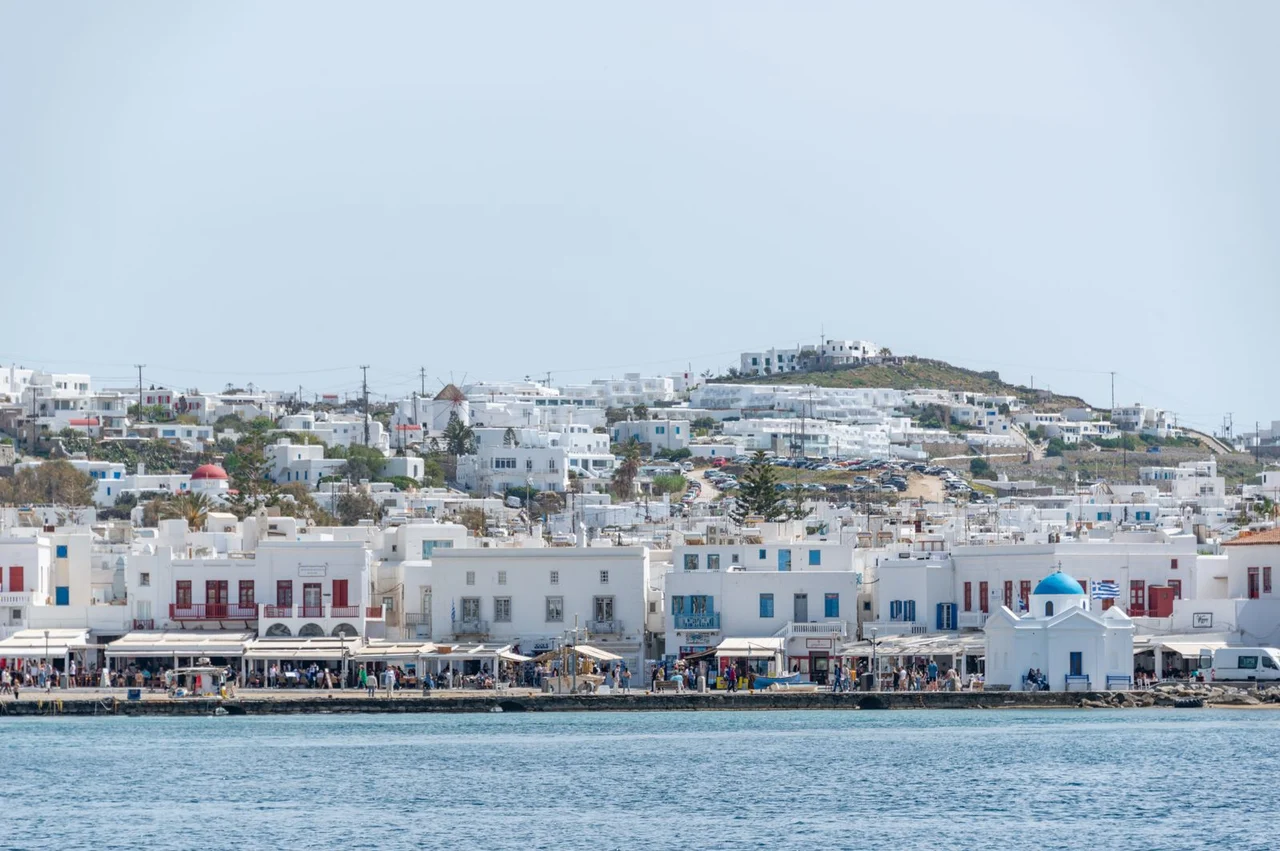 ComparisonGolden Visa of Greece or Caribbean citizenship 2026: EU residence permit versus second passport
 AnalysisWhat is due diligence and why the Caribbean is rejecting applications
Personal programme selection is conducted by Anna Kovalevskaya, Head of Legal, BRIDGES.
Residency in Greece: timelines and requirements
Grounds, document list, presence requirements and what is needed for renewal.