Living abroad · Cyprus
The best areas and cities of Cyprus for foreigners to live

Updated: June 2026·11 min read·Expert reviewed
Terms and costs verified: June 2026
Contents
Cyprus is a small island, but choosing to live here changes everything. Dear cosmopolitan Limassol and quiet British Paphos are two different worlds. The capital Nicosia without tourists and the seaside Larnaca with affordable prices are also the complete opposite. The right city saves money, simplifies life and makes moving comfortable. In this guide, we look at the five main cities of Cyprus: who is suitable for each, how much rent and living costs, which areas within the city to choose. The figures are current for 2026.
How to choose a city in Cyprus
Cyprus has five major cities: Limassol, Nicosia, Larnaca, Paphos and the Protaras-Ayia Napa area. Each is designed for its own audience. Protaras and Ayia Napa are summer resorts; in winter there is almost no one there. The remaining four cities are suitable for permanent residence.
The choice depends on three factors: budget, lifestyle and purpose of moving. If you work in business or IT, look at Limassol. If you want silence and nature - Paphos. If proximity to the airport and average prices are important - Larnaca. If you want real Cypriot life without tourists - Nicosia.
Limassol: the business center of the island
Limassol is the most dynamic and expensive city in Cyprus. IT companies, financial firms, and large international offices are concentrated here. The Russian-speaking diaspora is very large - according to some estimates, from 30 to 50 thousand people from the CIS live here.
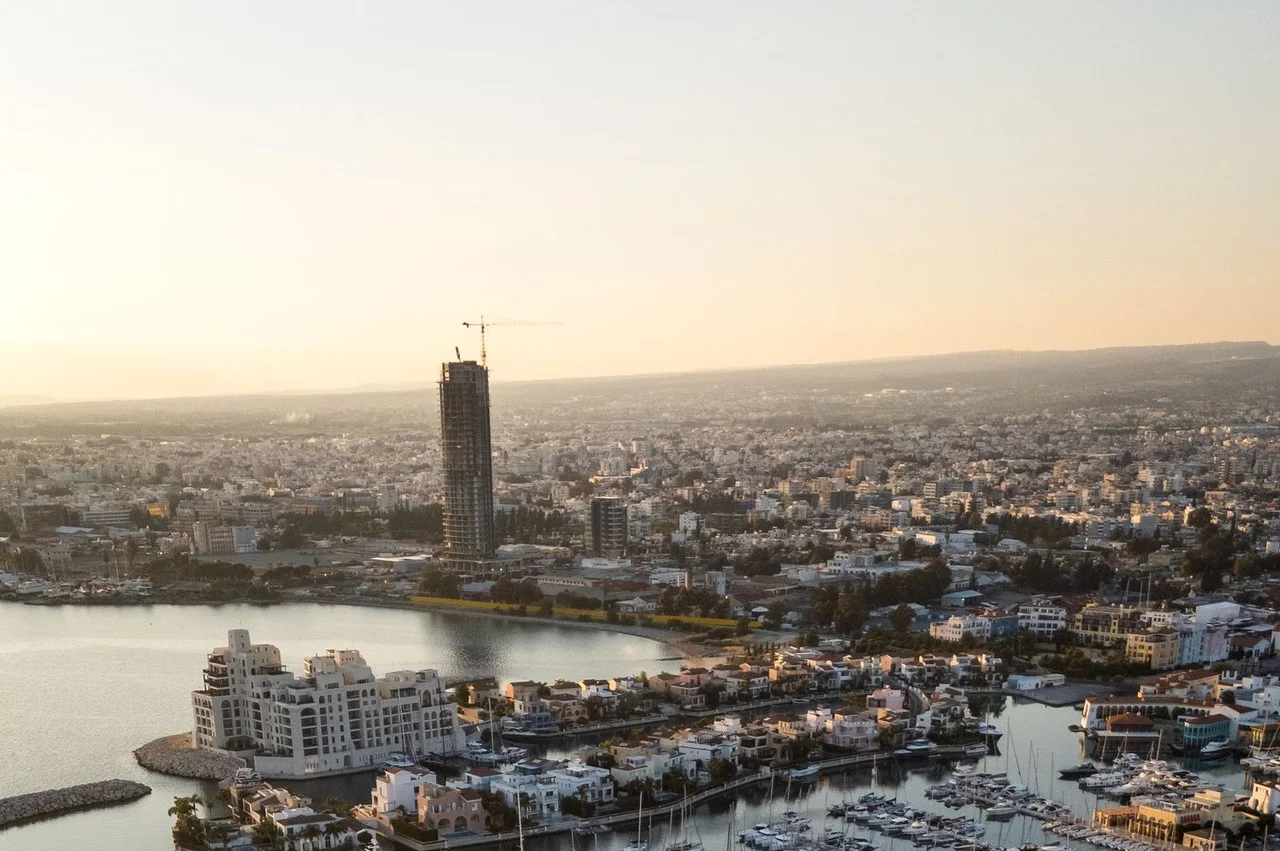
The city is divided into several private zones. Marina - a new prestigious quarter by the sea, luxury apartments, restaurants, promenade. Old Town (Agios Nikolaos) - historical center, coffee shops, taverns, more European atmosphere. Germasogeia - eastern part, quiet streets, family neighborhoods, closer to the mountains. Limassol Del Mar - ultra-premium by the water.
The infrastructure in Limassol is the best on the island. International schools, private clinics, shopping centers, a wide selection of restaurants. Traffic jams during rush hour are a standard problem. Parking in the center is difficult.
Limassol is suitable: entrepreneurs, IT specialists, families with children, those who value an active city life.
Prices in Limassol
| Expense item | Price |
|---|---|
| Rent 1BR (center) | €1,000-1,400/month |
| Rent 2BR (center) | €1,200-2,000/month |
| Rent 3BR (center) | €1,800-3,500/month |
| Rent 1BR (dormitory area) | €700-950/month |
| Rent 2BR (dormitory area) | €950-1,400/month |
| Purchase 2BR (Marina) | €400 000-800 000 |
| Groceries for two per month | €400-600 |
| Cafe, lunch for one | €12-20 |
| Restaurant for two | €50-90 |
| Transport (bus, one-time) | €1,50 |
| Housing and communal services (water, electricity) | €120-200/month |
| Internet | €25-40/month |
| Medical insurance | €80-200/month |
Limassol is the most expensive city in Cyprus. Rent in prestigious areas is comparable to European capitals. The living budget for a family of two is from €3,000 per month.
Pathos: silence, pensioners and the British
Paphos is the westernmost major city of Cyprus. Many British pensioners and expats from Northern Europe live here. The pace of life is slower, the atmosphere is calmer. The city is small - about 90 thousand inhabitants.
Paphos is divided into Kato Paphos (Lower Paphos, by the sea) and Pano Paphos (Upper Paphos, old town). Kato Paphos - tourist promenade, restaurants, hotels. Pano Paphos - local life, markets, taverns for Cypriots. For permanent residence, many choose the University Area or Chloraka - quiet residential areas with sea views.
Prices here are significantly lower than Limassol. Rent 2BR - from €750 to €1,100. Food and restaurants are 15-20% cheaper. Disadvantage - the choice of work is limited. Pathos is well suited for remote work, retirement or passive income.
There is an airport in Paphos, but there are fewer flights. The main airport of the island is in Larnaca. It is about 70 km along the highway to Limassol, about an hour's drive.
Pathos is suitable: pensioners, remote workers, families with children, those who want a quiet life by the sea.
Larnaca: airport, beaches, average prices
Larnaca is the third largest city in Cyprus and the main air gateway of the island. The international airport is located literally within the city - the terminal from most residential areas is 10-15 minutes by car.
The city is often underestimated. Larnaca is not as glamorous as Limassol, and not as cozy as Paphos, but the prices are average, the beaches are good, and the infrastructure is well developed. Phinikoudes promenade is a pleasant place for walks. The Mackenzie area near the airport is popular with young people and expats. Center and Skala are historical areas with traditional taverns.
Larnaca is actively developing. New residential complexes are being built, co-working spaces are appearing. Some companies, not wanting to pay Limassol prices, open offices here.
The downside is the noise from airplanes in some areas. When choosing an apartment, it is worth checking the direction of the runway.
Larnaca is suitable: those who fly frequently, families on a limited budget, people who need a balance between price and quality.
Nicosia: the capital without tourists
Nicosia is the only divided capital in the world. The southern part is the Republic of Cyprus, the northern part is the unrecognized Turkish Republic of Northern Cyprus. The border runs right through the city.
Nicosia is not a resort. There is no sea here, no promenade with taverns. But this is the real business and administrative center of the country. The government, ministries, large Cypriot banks are all here. If you work with government agencies or local companies, Nicosia is logical.
Life in Nicosia is cheaper than in Limassol and more Cypriot in spirit. There are fewer foreigners, Cypriot Greek can be heard everywhere. Strovolos area is a large residential area, good for families. City center (Old Nicosia, inside the walls of the Venetian fortress) - historical, pedestrian, cafes and restaurants. Aglangia and Latsia are quiet residential areas with good schools.
Minus - it is very hot in summer. The temperature in July-August reaches 40°C, but there is no sea. Many Nicosians head to the coast on weekends.
Nicosia is suitable: people working with Cypriot companies and government agencies, those who prefer an authentic way of life.
Protaras and Ayia Napa: seasonal only
Protaras and Ayia Napa - the eastern part of the island, the most popular summer resorts. Turquoise sea, white sand, hotels and clubs. From June to September, life is in full swing here. From October to April there is silence. Most restaurants and shops are closed.
It is uncomfortable to live here permanently. There are no large schools, medical centers, or variety of work. Supermarkets are modest. There is almost no public transport.
However, some families choose Protaras for the summer seasons or invest in rental properties. Rental income is high during the season. Buying a villa in Protaras can be an interesting investment.
Protaras and Ayia Napa are suitable: for summer holidays and seasonal rental investments. Not the best choice for permanent residence.
Cost of living comparison by city
| Expense item | Limassol | Pathos | Larnaca | Nicosia |
|---|---|---|---|---|
| Rent 1BR (center) | €1 000-1 400 | €650-900 | €700-950 | €700-950 |
| Rent 2BR (center) | €1 200-2 000 | €750-1 100 | €850-1 300 | €800-1 200 |
| Rent 3BR (center) | €1 800-3 500 | €1 100-1 800 | €1 200-2 000 | €1 100-1 900 |
| Products (two, month) | €400-600 | €350-500 | €350-520 | €350-500 |
| Lunch at a cafe | €12-20 | €10-15 | €10-16 | €10-15 |
| Housing and communal services (2BR, month) | €120-200 | €100-170 | €110-180 | €100-170 |
| Internet | €25-40 | €22-35 | €22-35 | €22-35 |
| Medical insurance (adult) | €80-200 | €70-180 | €70-180 | €70-180 |
| Taxi (5 km) | €8-12 | €7-10 | €7-10 | €7-10 |
Milk in the supermarket - €1.20-1.60 per liter. Bread - €1.20-1.80 per loaf. Chicken fillet - €6-9 per kg. Eggs (12 pcs.) - €2.50-3.50. Vegetables and fruits at the market are 30-40% cheaper than in the store.
Budget for a family of two without rent: €1,400-2,000 per month depending on the city. With 2BR rental: from €2,200 (Paphos) to €4,000 (Limassol, center).
Do you want to move to Cyprus? We will analyze your case for free.
Get a free consultation“I hear the question “which city to choose” in Cyprus every day. And every time the answer is different. Limassol is not just a city, it is a separate ecosystem. It has everything: business contacts, an international environment, international schools, active life. But you pay for it - both in money and in pace. Pathos is the complete opposite. Quiet, green, cheaper. Many clients who initially chose Limassol because of its reputation moved to Paphos a year later - because they realized that peace of mind was more important to them. Larnaca is currently undervalued. The airport is nearby, the prices are reasonable, the beaches are good. I see the interest of young families shifting there. Under the permanent residence program, it is important to understand: your status does not tie you to a specific city. You can obtain permanent residence by purchasing property in Paphos and live in Limassol - the law allows this. The main thing is to choose the right object from a legal point of view. Here you need the help of a specialist who knows the local market from the inside.”
Cyprus for Russian speakers
The Russian-speaking diaspora in Cyprus is one of the largest in Europe. In Limassol alone, according to various estimates, from 30 to 50 thousand people from Russia, Ukraine, Belarus, and Kazakhstan live. After 2022, the flow has increased significantly.
In Limassol there are Russian-language schools, kindergartens, and Russian-speaking doctors. Russian-language WhatsApp groups and Telegram channels help with housing, work, and everyday issues. There are supermarkets with familiar products - buckwheat, cottage cheese, kefir - in several chains.
There are also many people from the CIS in Paphos, but fewer. In Larnaca and Nicosia the diaspora is more modest and there is less infrastructure in Russian.
An important point: after 2022, Cypriot banking has become significantly more complicated for citizens of Russia and Belarus. A number of banks refuse to open an account. Nevertheless, there are solutions - it is worth consulting about this in advance, before moving.
Best areas for families with children
Limassol and Paphos are best suited for families with children. Each has its own advantages.
Limassol has a wide selection of international schools. The Grammar School Limassol, Heritage Private School, Pascal English School are all expensive but strong educational institutions. Cost - from €6,000 to €14,000 per year. Germasogeia and Agios Athanasios (eastern part of Limassol) have quiet residential areas with parks, good for families.
Life is calmer in Paphos. The child can safely go out into the yard, there is less traffic, nature is closer. There are international schools, but the choice is more limited. The Chloraka and Empa areas are good options for family life.
Nicosia has good infrastructure for families. The Strovolos area is considered family-friendly - quiet, with parks and schools. Prices are lower than Limassol. Of the minuses - there is no sea, it is very hot in summer.
Best areas for business and work
For business, Limassol is definitely the first choice. Large IT companies operate here: Wargaming, eToro, Nexus, dozens of fintech firms. Class A office buildings are concentrated in the Mesa Geitonia and Agios Athanasios areas. The business district is actively expanding.
Limassol Technological Park (Limassol Tech Hub) is an informal cluster of IT companies. There are coworking spaces and offices for rent here to suit any budget. Office rent 50 sq.m. - from €800 to €2,500 per month depending on the class and location.
Nicosia is the second business center. Cypriot banks, law firms, and insurance companies operate here. If your business is connected to the local market, Nicosia is more convenient. Office rent is cheaper than in Limassol.
Larnaca is gaining momentum as an alternative to Limassol. Office prices are lower, the airport is nearby. A number of companies deliberately choose Larnaca to reduce operating costs.
Transport and getting around the island
Public transport in Cyprus is poorly developed. There are buses, but they run rarely and on an inconvenient schedule. OSEA intercity buses run between cities; tickets cost €5-8. Travel time Limassol - Larnaca is about 1.5 hours.
A car in Cyprus is a necessity, not a luxury. Living without a car is difficult, especially with children. Drive on the left (British heritage). Rules for the exchange of foreign rights: EU rights are changed automatically, Russian and Ukrainian - through an exam.
Taxi and Bolt operate in all cities. Trip within Limassol - €7-15. Transfer from Larnaca airport to Limassol - €50-70 by taxi, €10-12 by bus.
Car rental: from €300 to €600 per month. MTPL insurance - €300-500 per year. Gasoline - about €1.65-1.80 per liter. Parking in Limassol is paid in the center, €0.50-1.50 per hour.
Infrastructure and quality of life
Cyprus is an EU country with European infrastructure standards. Electricity is reliable. Drinking water from the tap is not available everywhere - many people buy bottled water or install a filter. The Internet is fast: fiber optics are available in all major cities, speeds up to 1 Gbit/s.
Medicine is divided into public and private. The GESY system (analogous to compulsory medical insurance) has been covering residents of Cyprus since 2020. Contributions are about 2.65% of income. With GESY you can visit doctors, but there are queues. For fast service without queues - private clinics. Consultation with a specialist in a private clinic - €50-120.
The climate is a serious plus. About 320 sunny days per year. Winter is mild: in January-February in Limassol +14-16°C during the day. Summer is hot: July-August +33-38°C. The Troodos Mountains are cooler - people go there in the summer to escape the heat.
The crime rate is low. Cyprus is one of the safest countries in Europe. Leaving your car open or your wallet on the table is the norm for locals here. The island is considered very safe for women and families with children.
According to Numbeo, Cyprus safety index is about 68 out of 100 (high level).
Permanent residence and residence permit of Cyprus for foreigners
For long-term residence in Cyprus you need legal status. There are several options.
Permanent residence under the investment program (Regulation 6(2)) is one of the most accessible routes. The minimum threshold is €300,000 for a new property. Lifetime status. Does not require permanent residence - it is enough to visit the island once every two years. Details on the program page: Cyprus permanent residence by investment.
Residence permit through work or business is the standard path for those who work in a Cypriot company or open their own. Work permits are issued through the Department of Labor.
Digital Nomad Visa - for remote employees of foreign companies. Confirmed income from €3,500 per month, insurance, rental housing.
Student visa - for those entering Cypriot universities. The University of Cyprus, the European University of Cyprus, the University of Nicosia are the largest universities in the country.
Do you want to move to Cyprus? We will analyze your case for free.
Get a free consultationBottom line: which city to choose
| Who are you | We recommend | Why |
|---|---|---|
| Entrepreneur/IT | Limassol | Business center, ecosystem, diaspora |
| Remote employee | Paphos or Larnaca | Cheaper, sea, calm |
| Family with children (budget) | Nicosia or Larnaca | Prices are lower, there are schools |
| Family with children (comfort) | Limassol | Best infrastructure |
| Pensioner | Pathos | Silence, nature, many British people |
| Rental Investor | Limassol or Protaras | High demand and profitability |
| Working with government agencies | Nicosia | All ministries are here |
Cyprus is small. From Limassol to Paphos is an hour's drive. From Larnaca to Nicosia - 45 minutes. If you wish, you can live in one city and regularly visit another. Many expats do just that.
- Cypriot permanent residence vs Cypriot citizenship: what to choose
- Cyprus Permanent Residency Law: Regulation 6(2)
- Northern Cyprus Citizenship (TRNC): what yes
- How much does Cyprus citizenship cost
- Cyprus permanent residence or Turkish residence permit: what to choose
- Investing in Cyprus real estate: guide
Frequently asked
Questions people ask before deciding
01Which city in Cyprus is the cheapest to live?
Paphos and Nicosia are about 20-30% cheaper than Limassol. Rent 2BR in Paphos - from €750, in Nicosia - from €800. In Limassol, the same apartment will cost from €1,200.
02Where in Cyprus are the most Russian speakers?
In Limassol. It is estimated that 30-50 thousand people from the CIS live here. There are Russian-language schools, kindergartens, doctors and entire neighborhoods with Russian-language infrastructure.
03Is it possible to live in Cyprus without a car?
Difficult. Public transport works, but irregularly. In the center of Limassol or Paphos you can get by by taxi and Bolt. For families with children, a car is practically necessary.
04Which area of Limassol is the best to live?
Depends on priorities. Germasogeia - quiet, family-run, with mountains nearby. Marina - prestigious, by the sea, expensive. The Old Town (Agios Nikolaos) is central, European in spirit. Agios Athanasios - business and residential balance.
05Is Cyprus safe to live in?
Yes, it is one of the safest EU countries. The Numbeo safety index is about 68 out of 100. The level of street crime is low. The island is considered very comfortable for women and families with children.
06What budget do you need to live in Cyprus?
For one person without rent - from €1,200 per month. With rent 1BR - from €1,800-2,200 depending on the city. For a family of two with rent 2BR - from €2,500 (Paphos) to €4,000 (Limassol, center).
07Is it worth living in Protaras or Ayia Napa?
For permanent residence - no. These are summer resorts; in winter, most establishments are closed. There are no good schools or medical centers. An interesting option as a summer home or rental investment.
08Which city should you choose for a family with children?
Limassol - the best infrastructure, international schools from €6,000 to €14,000 per year. Pathos - tranquility and nature, there are schools, the choice is more modest. Nicosia is cheaper, good schools, but there is no sea and it is very hot in summer.
09How to obtain permanent residence in Cyprus?
According to the investment program (Regulation 6(2)), you need to invest at least €300,000 in new real estate. The status is for life and does not require permanent residence - it is enough to visit Cyprus once every two years. More details on the program page.
10Is it possible for a Russian citizen to open an account in a Cypriot bank?
After 2022 it became more difficult. A number of banks refuse or require an extensive package of documents. Nevertheless, there are solutions - some banks are more loyal to residents with permanent residence. It is better to consult in advance.
11Does health insurance work in Cyprus?
Residents of Cyprus can use the GESY system, an analogue of compulsory medical insurance. Contributions are about 2.65% of income. For quick service without queues - private clinics, consultation with a specialist €50-120.
12Which city in Cyprus is best for business?
Limassol is the undisputed leader. IT companies, fintech, and international offices are concentrated here. Nicosia is the second choice for working with local government agencies and banks. Larnaca is gaining popularity as a more affordable alternative.
About the author
Related materials
What to read next
 ArticleCyprus citizenship by descent: right of blood in 2026
 ComparisonNorthern and Southern Cyprus: Key Differences and Where to Buy Real Estate in 2026
 AnalysisWhat is due diligence and why the Caribbean is rejecting applications
Personal programme selection is conducted by Anna Kovalevskaya, Head of Legal, BRIDGES.
Moving to Cyprus: what to settle first
Housing, schooling, healthcare, accounts and taxes - the order and what takes longest.
