Citizenship · Saint Kitts and Nevis
Saint Kitts Citizenship Requirements in 2026: Who Qualifies and on What Terms
Updated: June 2026·9 min read·Expert reviewed
Terms and costs verified: June 2026
Contents
Saint Kitts and Nevis citizenship is awarded for investments. No relocation required, remote processing, within 4-6 months. Sounds simple? In reality, the country vets each applicant very thoroughly - this is the oldest program of its kind in the world, and they take it seriously. Therefore, there is a clear list of requirements for applicants. Age, clean reputation, transparent source of funds. In this article, we will break down all conditions in plain language: who exactly qualifies, what needs to be prepared, and who will be denied immediately.
In Brief: What You Need to Obtain Saint Kitts Citizenship
Saint Kitts and Nevis is a small island nation in the Caribbean. Since 1984, it has operated a citizenship by investment program (CBI - Citizenship by Investment). You invest money in the country and receive a passport. No relocation and no lengthy waiting periods.
But money is not everything. The country evaluates the individual. There are specific requirements that must be met.
Here is a brief checklist of what is needed:
- Age of 18 years or older (for the primary applicant).
- Clean reputation and absence of criminal convictions.
- Transparent and legal source of funds.
- Good health (medical certificate).
- Willingness to undergo rigorous vetting and interview.
- Investment amount (contribution or real estate).
Next, we will examine each point individually. In simple terms.
Age: From What Age Can You Apply
The primary applicant must be 18 years old or older. This is the person who makes the investment and submits documents for the entire family.
However, family members can be added to the application at almost any age. Children, spouse, sometimes parents and grandparents - they are all included as dependents (people you support).
An important note about children. If a child is 16 years old or older, they must also undergo interview and vetting procedures on equal terms with adults. This does not apply to young children.
Those typically included in one application: spouse, children, parents, and grandparents. Each has specific conditions regarding age and financial dependency on the applicant.
For more information on who can be included and on what terms, we have written a separate article on family. We have broken down all relatives in detail there.
Reputation and Criminal Record: The Primary Requirement
This is the most important requirement. Saint Kitts accepts only individuals with a clean background.
What a clean background means in practice:
- No criminal convictions.
- No open criminal cases.
- No connections with criminal activity or sanctions lists.
- You do not pose a threat to national security.
To confirm this, you collect certificates of good conduct. Not only from your home country. You need certificates from all countries where you lived for more than one year in the past 10 years.
Does it sound strict? It is. But that is the strength of a Saint Kitts passport. The country has maintained high standards for decades, so its citizens are trusted worldwide.
One important nuance. Even minor issues from the past should not be hidden. Inspectors will find them anyway, but a concealed fact becomes fraud in your application—and that is a certain refusal. Honesty from the start works in your favor.
Source of funds: where your money comes from.
The country must understand where your investment funds come from. This is called source of funds verification.
The money must be and legal. For example:
- Salary and savings.
- Business income.
- Sale of property or stocks.
- Inheritance.
- Dividends and investments.
Each source requires documentation. Bank statements, contracts, tax returns, income certificates. Simply saying "this is my money" will not work—you must show the path of the funds.
This is not nitpicking. This is how the country protects its reputation and screens out money laundering. The clearer your financial history, the easier and faster the approval will be.
Practical advice: gather financial documents in advance. If some documents are lost or never existed, it is solvable—but recovery takes time. It is better to start before submission than to delay the process midway.
Medical requirements: health certificate.
Each applicant submits a simple medical certificate. A physician completes it.
The certificate confirms that you do not have serious infectious diseases that are dangerous to society. Often a test for HIV is included—this is standard practice for such programs.
Do not worry. This is not a thorough medical examination and not grounds for refusal for a healthy person. A routine formality that everyone goes through.
The certificate must be recent—usually no more than a few months old at the time of submission. Fresh dates are important, otherwise you will be asked to redo the document.
Each person in the application submits a medical certificate: the main applicant, adult family members, and children. The format for children is simpler, but a certificate is still required.
If you have a chronic illness, this is not grounds for refusal. The program looks only at diseases dangerous to others. Your personal health does not affect the decision.
Strictest verification and mandatory interview.
Saint Kitts is known for the strictest verification among all Caribbean programs. This is an advantage, not a disadvantage—this is precisely why the passport is valued.
The due diligence verification is conducted by independent international agencies. They study your biography, business, finances, and connections. Everything you wrote in your application is double-checked against their databases.
As of July 19, 2023, one more rule was added: Interviews became mandatory.Previously, a person could simply have their documents checked. Now the main applicant and all family members aged 16 and over must undergo an interview—in person or via video call.
The interview is conducted by the immigration service itself (CIU—Citizenship by Investment Unit) or a firm hired by it. There is nothing to fear: questions about you, your business, and reasons for obtaining citizenship. If everything is —there will be no problems. The cost of the interview is already included in the verification fee.
"In my years of working with Saint Kitts, I have noticed one thing: people fear strict verification, and for no reason. Strict verification is not an obstacle—it is protection. It is precisely because of it that a Saint Kitts passport opens so many doors worldwide. If you have a clean history and a clear source of funds—you have nothing to fear from an interview and due diligence. On the contrary, strict scrutiny benefits a person: they join the circle of verified individuals. What really matters is not to rush with submission. The most unfortunate refusals happen when someone submits documents without understanding their situation. There was an old visa refusal that they forgot to mention. Or the source of funds is described in two words, without documents. This is easy to fix in advance. That is why my main advice is always the same: first a quiet preliminary check, and only then official submission. This saves both money and months of time."
Do you need to live on the islands?
No. You do not need to live on Saint Kitts either before obtaining a passport or after.
This is one of the main conveniences of the program. You do not relocate, do not learn the language, do not take exams on knowledge of the country. The entire process is conducted remotely through a licensed agent.
You do not even need to travel to the islands to submit documents. You can take your interview via video call from your home country.
This is convenient for those who want a second passport "just in case"—for freedom of movement and a backup plan—but continue to live and work at home.
After receiving the passport, you are not bound by anything either. There is no requirement to spend a certain number of days on the islands per year, no residency reports. The passport simply exists and works.
And one important thing to remember: citizenship and taxes are different things. By obtaining a passport, you do not automatically become a tax resident of Saint Kitts. Where you pay taxes depends on where you actually live.
Who will not be able to obtain citizenship.
Now about who will be refused. It is better to know this in advance than to waste time and money on verification.
Citizenship will be refused if:
- You have a criminal conviction or an open criminal case.
- You were previously refused a visa to a country with which Saint Kitts has a visa-free regime (and you did not obtain that visa afterwards).
- You provided false information in your application.
- The source of your funds cannot be confirmed or raises questions.
- You are on international sanctions lists.
Another common reason for refusal is a carelessly completed application. Contradictions in dates, missed work periods, forgotten trips. All of this raises questions with inspectors and delays the process. That is why the application should be completed thoughtfully, with a specialist.
A separate important topic is citizenship of certain countries. By Saint Kitts law, there is a list of states whose citizens are completely excluded from the program. This is covered in the next section.
Russian and Belarusian Citizens: Discussion About the Ban
Let us be direct: Russian and Belarusian citizens currently cannot obtain Saint Kitts and Nevis citizenship. This is enshrined in law.
The document is called SRO 27 of 2023 (Citizenship by Investment Exclusion Order). It was issued on July 27, 2023. It excludes citizens of six countries from the program: Russia, Belarus, Iran, Iraq, Afghanistan, and North Korea.
The ban is strict with no exceptions. It applies not only to those residing in these countries, but also to Russian and Belarusian citizens worldwide—including dual citizens.
We discuss this openly and do not offer any sanctions workarounds. This is illegal and dangerous. If you hold a Russian or Belarusian passport, you should explore other citizenship programs for a second citizenship. We can help you select a legitimate and lawful option tailored to your situation—simply contact us.
Choosing Your Path: Contribution or Real Estate
One of the requirements is to make the investment itself. You have two options to choose from.
Option 1: Contribution to the State Fund (SISC) Sustainable Island State Contribution is a non-refundable contribution to country development. The fastest and simplest option. Amount: from USD 250,000 per individual or family of up to four persons.
Option 2: Real Estate Purchase You purchase an approved property. Minimum: from USD 325,000 for a share in a project or apartment; from USD 600,000 for a standalone house. Real estate must be held for a minimum of 7 years, after which it can be sold.
Which path to choose depends on your goal. If you want lower costs and speed—choose the contribution. If you want to recover part of the funds through asset sale—consider real estate. We detailed exact amounts and all additional fees in our article on citizenship cost.
Ready to discuss your situation and identify the right path? Contact us —we will review it at no charge.
Requirements Table: What Each Means
We have compiled all conditions into one table. This makes it easier to see the complete picture.
| Requirement | What This Means in Practice |
|---|---|
| Age 18 or older | Primary applicant must be an adult; family members of almost any age may be included |
| Clean criminal record | Character references from all countries of residence for the past 10 years |
| Source of funds | Documents showing fund origin: business, salary, inheritance |
| Health status | Current medical certificate, often including HIV test |
| Due diligence and interview | Due diligence by independent agencies plus interview (as of 2023) |
| Investment | Contribution from USD 250,000 or real estate from USD 325,000 |
| Country of citizenship | Must not be on the exclusion list (Russia, Belarus, etc., per SRO 27/2023) |
| Residency requirement | Not required—entire process conducted remotely |
Quick Checklist: Are You Eligible?
Let us assess your eligibility. Answer these questions.
- Are you 18 years old or older?
- Do you have no criminal record or pending cases?
- Can you document the source of your funds?
- Are you in good health and able to obtain a medical certificate?
- Are you not a citizen of Russia, Belarus, Iran, Iraq, Afghanistan, or North Korea?
- Do you have the investment amount (from USD 250,000)?
If your answer is "yes" to all questions—you likely qualify. You can proceed.
If any answer is "no"—do not be discouraged. Some points have solutions. For example, you can prepare documentation of fund sources if they are currently incomplete. For Russian and Belarusian citizens, we can help identify an alternative program. The key is to discuss your situation with an expert before starting.
This checklist is a quick self-assessment, not a final verdict. Only a preliminary evaluation by a specialist who reviews your complete documents and history provides the definitive answer.
Which documents to prepare in advance.
Once requirements are clear, the question arises: what to collect? The complete list is extensive, but you can prepare the basics ahead of time.
Usually required:
- Foreign passport and domestic passport.
- Birth certificate.
- Marriage certificate (if married).
- Certificate of no criminal record.
- Medical certificate.
- Documents on source of funds – bank statements, contracts, declarations.
- Photos and completed application forms.
Many documents must be translated and notarized (legalized). This takes time, so it is better to start collecting early.
A separate set of documents is prepared for each family member. The more people in the application, the more paperwork – this is normal. Some documents have expiration dates, such as certificates of no criminal record, so these are obtained closer to submission rather than six months in advance.
A complete and accurate checklist with explanations for each point is collected in an article about documents. Check it out before you start.
How much time and effort will this take.
The main concern is that the process is long and tedious. In reality, it is faster than it seems.
Timeline in numbers:
- Document collection – from 2 to 6 weeks (depends on you).
- Submission and review – approximately 4–6 months.
- Passport issuance – after approval, within several weeks.
A licensed agent handles most of the work. You collect documents and attend an interview – specialists handle the rest.
Citizenship passes to children and grandchildren – you obtain it once and for life. Remember: citizenship and taxes are different things. Saint Kitts does not tax worldwide income, but whether to pay taxes here is for you and your tax advisor to decide.
What will be required from you in terms of capacity and peace of mind? Less than you think. Collect documents, answer interview questions, and wait for the result. No exams, relocations, or years of waiting.
How to start and avoid mistakes.
If you have read this far and see that you qualify – here is a simple first step.
Do not submit documents blindly. First undergo a preliminary check. This is when a specialist reviews your situation in advance and tells you : you will qualify or not, and what should be prepared.
This way you won't lose money on a review or nerves on a rejection. One past visa refusal or unclear source of funds is better to clarify before submission, not after.
You can learn the general overview of the program – amounts, timelines, family, passport – on our Saint Kitts and Nevis citizenship page. To discuss your specific situation, write to us – we will help you proceed without errors.
Want to dive deeper into the program itself and both investment routes? Read a detailed guide to Saint Kitts citizenship through investment.
Frequently asked
Questions people ask before deciding
01From what age can you obtain Saint Kitts citizenship?
The main applicant must be at least 18 years old. Family members - children, spouse, parents - can be added at almost any age as dependents.
02Do you need to live in Saint Kitts to obtain a passport?
No. You do not need to live there before or after. The entire process takes place remotely, including video interviews.
03Is it true that the background check is very strict?
Yes, Saint Kitts conducts the strictest checks in the Caribbean. But for a person, this is an advantage: thanks to this, the passport is valued worldwide.
04What is the mandatory interview?
As of July 2023, all applicants aged 16 and over undergo an interview - either in person or by video. It is conducted by the immigration service or its partners. Questions are about you and your business.
05Can Russian citizens obtain Saint Kitts citizenship?
No. Under SRO 27/2023, Russian and Belarusian citizens are excluded from the program without exception. We will help you find another legitimate program.
06What documents are needed to prove the source of funds?
Bank statements, contracts, tax returns, income certificates, documents on property sales or inheritance. You need to show where the money came from.
07Will a previous visa denial cause problems?
It may cause problems if you were denied a visa to a visa-free country for Saint Kitts citizens and subsequently did not obtain one. This should be clarified before submitting your application.
08How much money is needed for citizenship?
Minimum from 250,000 USD - this is a contribution to the state fund for a family of up to four people. Real estate is more expensive: from 325,000 USD. Plus fees and verification charges.
09How long does the entire process take?
Usually 4-6 months for verification plus several weeks for document collection and passport issuance.
10Do you need to take exams or learn the language?
No. There are no language exams or country knowledge tests. This is one of the program's conveniences.
11Is citizenship passed on to children?
Yes, Saint Kitts citizenship is passed on to children and subsequent generations. You obtain it once and for all.
12Where should you start?
With a preliminary assessment. A specialist will evaluate your situation in advance and tell you whether you will qualify and what should be prepared before official submission.
Transparency
How this material was prepared
- Author
- Darya Melnik, senior Investment Programs Advisor, BRIDGES
- Terms and costs last verified
- June 2026
- Sources
- official government authorities of the relevant country and state publications
- Methodology
- government minimum requirements are stated separately from due diligence charges, state fees, legal and banking costs
Sources and methodology
Figures, terms and timelines are checked against official sources as of June 2026. Link availability verified in August 2026. Third-party blogs and agent websites are not used as a source of programme terms.
- [1]St Kitts and Nevis Citizenship by Investment UnitOfficial conditions of the programmeciu.gov.kn
Methodology: tables and charts state government minimum investment requirements; due diligence charges, state fees, legal, banking and other costs are calculated separately and are not included in the minimum thresholds.
About the author
Related materials
What to read next
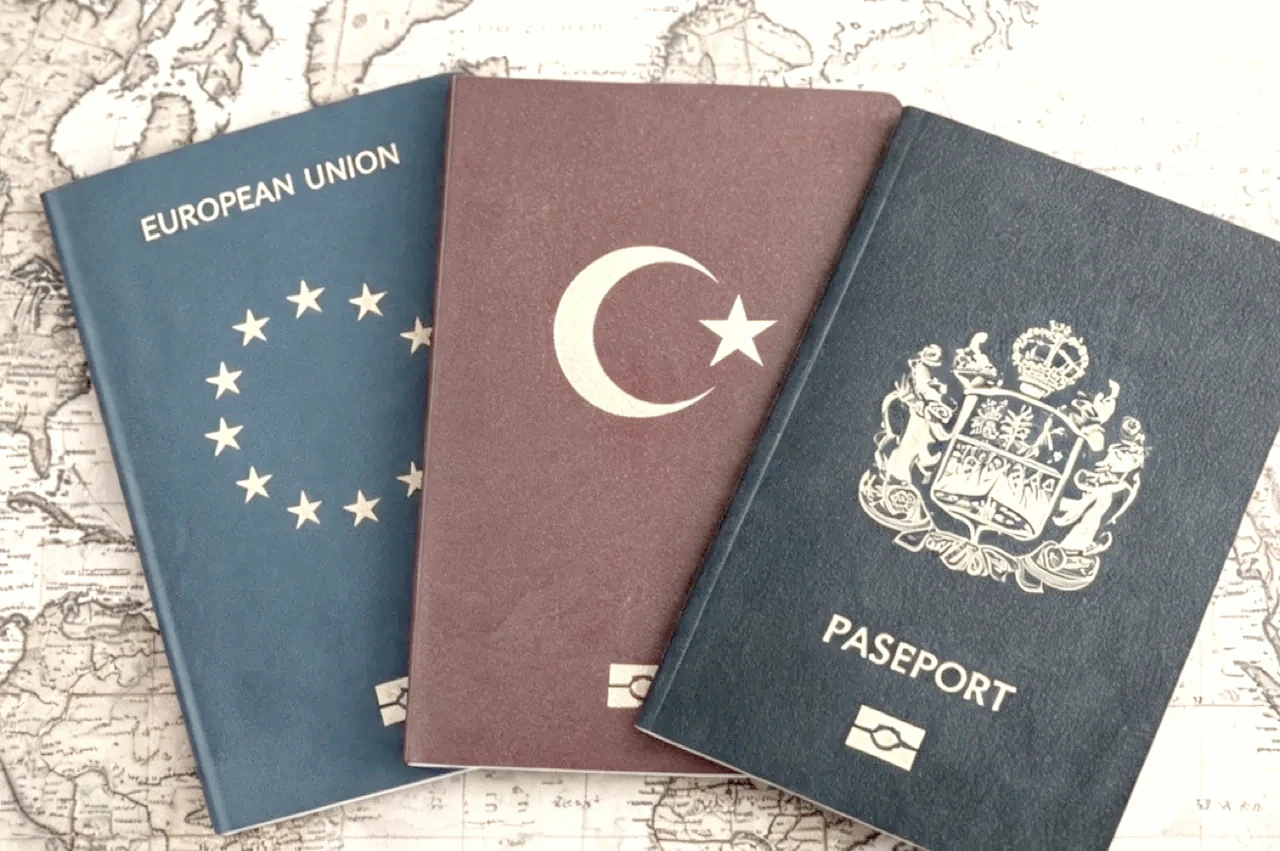 ComparisonMalta, Türkiye or St. Kitts: which passport gives more visa-free travel in 2026
 AnalysisWhat is due diligence and why the Caribbean is rejecting applications
 ArticlePros of St. Kitts citizenship in 2026: how a passport is useful
Personal programme selection is conducted by Anna Kovalevskaya, Head of Legal, BRIDGES.
Comparison of five Caribbean programmes
Amounts, timelines, family composition and requirements in one table.