Citizenship · Saint Kitts and Nevis
6 reasons for denial of St. Kitts citizenship: what is checked most strictly
Updated: June 2026·9 min read·Expert reviewed
Terms and costs verified: June 2026

Contents
St. Kitts and Nevis issues one of the strongest Caribbean passports - visa-free to Schengen, Great Britain, and more than 150 countries. But the program has been running since 1984 and has accumulated a reputation that it defends more rigorously than any of its competitors. Four independent agencies screen each applicant. A refusal here is not just a refusal: it is recorded and will appear in future applications in other countries. We look at six reasons why people get rejected and what you need to know in advance.
Why does St. Kitts refuse more often than others?
Caribbean citizenship programs are generally considered loyal. This is true for most of them - but not for St. Kitts. The program is the oldest in the world, and the country values the reputation of the passport. After a series of international scandals in the 2010s, the government tightened checks to levels many applicants did not expect.
Now this is not one inspection body, but four independent agencies that work in parallel. They don't know each other's conclusions until the final meeting. Any discrepancy in data is a reason for an in-depth investigation.
Amendments to SRO 27/2023 closed the program for citizens of Russia and Belarus completely. This is not discussed or dealt with through third countries: citizenship by birth is verified separately from a valid passport.
Below are six specific reasons for refusal. Not abstract ones, but those that real applicants face.
More details about the program itself: Saint Kitts citizenship by investment.
Reason 1: Previous refusal in any country
This is the most common reason - and the most unexpected for applicants. People think: “Portugal was denied five years ago, it’s a different country.” St. Kitts doesn't think so.
The program application requires you to declare any denial of a visa or citizenship in your lifetime. Any - American visa, Schengen waiver, investment residence permit program. If you do not indicate a waiver and the agency finds it, it is an automatic disqualification for concealing information. And not for the refusal itself, but for the attempt to hide it.
This refusal is not an automatic sentence. They study it: what country, what year, what is the reason, what has changed since then. But the hidden refusal closes the case without appeal.
Practical advice: compile a full list of all visa and residency applications over the past 15 years. Including those you are unsure about. It is better to declare what is unnecessary than to miss what is real.
Reason 2. Links with sanctioned jurisdictions
Agencies check not only you personally, but also your business network. If among the partners, shareholders or contractors there are persons or companies from the sanctions lists, this is a red flag.
This is not just about direct violations. The transit of funds through the jurisdiction under sanctions or participation in structures affiliated with such persons is sufficient. OFAC, EU, UN, UK FCDO lists are checked.
Particular attention is paid to business in countries with high levels of corruption according to the Transparency International index. Having a company, for example, in certain jurisdictions requires a detailed explanation of the commercial logic.
What to do: Conduct an independent compliance audit of your corporate structure in advance. If there are potentially sensitive connections, they should be documented and explained before submission - not in response to reviewers' requests.
Read also: a complete guide to the St. Kitts program.
Reason 3. PEP status and proximity to power
PEP is a politically exposed person. Deputy, official, head of a state company, judge, general. As well as their spouses, children and close relatives, they automatically receive the status of “connected PEP”.
St. Kitts does not prohibit PEP applicants from participating in the program, but the requirements for them are fundamentally higher. The source of funds must be verified down to the last dollar. Declarations, tax reports, audited financial statements of companies - all for the last 5-7 years.
Officials of authoritarian regimes or persons close to government structures of countries under international sanctions are a different story. Here, refusal is practically predetermined regardless of the quality of other documents.
If you have ever held a public position, you must declare this. The statute of limitations doesn't work here the way people used to think.
Reason 4. The source of funds does not match the income
This is a technical but very common reason. The applicant shows $400,000 for investment, but his official income for the last three years is $60,000 per year. The gap requires an explanation.
Agencies are building an accumulation model. They take declared income, subtract expenses, and assess the feasibility of accumulated capital. If the model does not converge, additional documents are requested. If the explanation is not convincing - refusal.
Typical problems: cash without a bank trace, real estate sales without documents, gifts from third parties without explanation of the relationship, cryptocurrency without transaction history.
What helps: bank statements for 3-5 years, tax returns, documents on the sale of assets, loan agreements with confirmed repayment. The more complete the story, the fewer questions there are.
Reason 5: Negative media mentions and investigations
Agencies conduct media monitoring in all major languages. They are looking for mentions of the name of the applicant, his companies, partners in the context of fraud, corruption, tax evasion, money laundering.
Of particular importance are materials from OCCRP, investigations by national journalists, and leak databases - Panama Papers, Pandora Papers, FinCEN Files. The presence of a name there is not an automatic refusal, but a mandatory reason for a deep explanation.
An important nuance: agencies check not only incriminating materials. Sustained suspicions in the public space are enough. If journalists wrote about schemes where your company was mentioned, this will be included in the report.
Tip: Before applying, do your own search for your name in English, in your native language and in the languages of the countries where your business operates. It is better to know about the problem in advance than to receive an unexpected question from inspectors.
Reason 6. Errors in biometrics and data mismatch
This sounds like a technical detail, but in practice it leads to delays and failures. This problem is especially common for applicants with multiple passports or name changes.
What they check: The name matches exactly on all documents (birth certificate, passports, bank accounts, corporate documents). The date of birth is the same everywhere. Biometric data - fingerprints, photos - correspond to previous applications in other countries.
Common mistakes: transliterating a name differently in different documents, changing a surname after marriage without completely updating all documents, old documents with a maiden name without a notarial link.
If you have passports from different countries, they all must be declared. The hidden passport discovered by the agency is considered an attempt at deception. This is an automatic opt-out and listing for information sharing with other jurisdictions.
How does the St. Kitts passport work: visa-free access and opportunities.
What exactly does St. Kitts test: DD mechanics
St. Kitts uses a four-tier due diligence system. This is not just one inspector who looks at the documents. This is a parallel work of independent agencies, the results of which are compiled into a single report.
Level 1 - initial check. The licensee agent carries out basic verification of documents and makes an initial risk assessment. At this stage, obvious inconsistencies are eliminated.
Level 2 - specialized DD agency. An independent company checks international databases: sanctions lists, PEP registers, judicial databases, media monitoring. Work is carried out in all major languages.
Level 3 - second independent agency. St. Kitts is sure to commission a second independent report. The agencies do not know each other's findings. A discrepancy between reports is an automatic trigger for investigation.
Level 4 - CIU government body. Citizenship by Investment Unit analyzes all materials and makes the final decision. At this level, it is possible to interview the applicant - in person or by video.
Biography 10 years. The applicant provides a detailed biography for the last 10 years: places of residence, employers, businesses, trips. Any gap is a question.
Social media. Agencies check the public profiles of the applicant and his relatives. Publications, communications, comments - everything is analyzed for non-compliance with declared data or reputational risks.
“St. Kitts is the only Caribbean program where four independent due diligence agencies operate in parallel. They do not coordinate with each other until the final report is deliberate: discrepancies in conclusions are a signal for investigation. This is why trying to present information in a favorable light rather than in its entirety is more dangerous here than in other jurisdictions. The program doesn't want to know the best version of your story, but the accurate one. Applicants who understand this logic and prepare documents accordingly will navigate the process predictably and without surprises. Those who expect that they won’t find something are usually mistaken.”
Program Cost: Full Cost Breakdown
The main rule: count the full amount, not just the principal payment. The difference between the contribution and the actual costs for a family can be $40,000-60,000.
| Expense item | Sum | Repayment |
|---|---|---|
| SISC fee (family 4, non-refundable) | $250 000 | Irreversible |
| SISC fee alt. (tourist properties) | $325 000 | Returns through sale |
| Due diligence, lead applicant | $10 000 | Irreversible |
| Due diligence, spouse | $7 500 | Irreversible |
| Due diligence, child 16+ | $4 000 | Irreversible |
| Passport fee (x4 people, ~$350/person) | $1 400 | Irreversible |
| Notary and apostille | ~$2 000 | Irreversible |
| Translations of documents | ~$1 200 | Irreversible |
| Bank transfer fee (~1%) | ~$2 500-3 250 | Irreversible |
| Agent's fee | By agreement | Irreversible |
Total per 1 applicant (SISC): fee $250,000 + DD $10,000 + passport $350 + notary/translations ~$3,200 + bank ~$2,500 = about $266,000.
Total for family 4 (SISC): fee $250,000 + DD $10,000 + $7,500 + $4,000 + $4,000 + passports $1,400 + notary/transfers ~$3,200 + bank ~$2,500 = about $282,600 plus agent.
Detailed calculation for your situation: cost of citizenship of St. Kitts.
Want to check the odds before you submit?
Free consultationTo whom the program is completely closed
After the adoption of SRO 27/2023, St. Kitts closed the program for citizens of Russia and Belarus. This is not a temporary measure or a matter for discussion. The closure applies to citizens by birth, even if the person has a third-country passport.
Citizenship of a third country, including through other Caribbean programs, does not remove the restriction. Agencies verify country of birth and citizenship by descent separately from current documents.
Apart from Russia and Belarus, it is almost impossible to obtain approval for citizens of countries under complex international sanctions: Iran, North Korea, and a number of others. The list of high-risk countries is updated regularly.
If you are a citizen of a country at risk, the right step is not to look for workarounds, but to clarify the situation with a licensed agent before spending money on preparing documents.
Typical mistakes when preparing documents
In addition to the six main reasons for refusal, there is a set of technical errors that delay the process or create reasons for additional questions.
Incomplete biography. People miss short periods of work or travel - “it’s three months, it doesn’t matter.” Everything is important to inspectors. The gap in the biography requires explanation.
Old documents without updating. A 30-year-old birth certificate without a notarized translation into English. Marriage or divorce documents without an apostille. This is not a reason for refusal, but a reason for request and delay.
Different versions of the name. Ivan Petrov in a Russian passport, Ivan Petrov in a bank, Iwan Petroff in an old document - all this must be connected with notarial explanations.
Corporate documents do not cover the entire chain. If you own a company through a holding company, you need documentation for each legal entity in the chain, and not just for the operating company.
How to prepare correctly: a practical plan
Good preparation for the St. Kitts application begins 6-12 months before submission. Not in two. For six.
Step 1. Make a complete chronology for 10 years: work, business, travel, visa applications, any contacts with government agencies in different countries.
Step 2. Test yourself through the same databases that agencies use: OpenSanctions, PEP registries, Aleph OCCRP, media search in all languages of your business activity.
Step 3. Prepare a documented history of the source of funds: bank statements, tax returns, documents on the sale of assets - all for 3-5 years.
Step 4. If there have been visa or program denials in the past, document them, including the reasons and subsequent changes to your situation.
Step 5. Involve a licensed agent early on, not just for the final submission. Preliminary risk assessment is not an extra expense, but protection against loss of DD contributions in case of failure.
Alternatives for difficult cases
If a preliminary assessment shows a high risk of failure in St. Kitts, this is not the end of the road. Other Caribbean programs have different screening standards and may be better suited to your specific situation.
St. Lucia and Dominica also require significant DD, but do not use four parallel agencies. For some profiles, this reduces the risk of failure for a similar program cost.
Vanuatu is historically faster and more accessible, but you need to understand passport restrictions - visa-free travel to Schengen was abolished in 2022, an important difference with St. Kitts.
Grenada is interesting for its E-2 contract with the US - for applicants with US business plans this may be a priority argument even with a slightly higher fee.
The optimal choice depends on your specific situation. The correct approach is to first evaluate the profile, then choose the program, and not vice versa.
What to do if you have already received a refusal
The refusal of St. Kitts is a serious, but not final result. It's important to understand a few things.
Firstly, the refusal is recorded and is subject to mandatory declaration in future applications of other programs. Trying to hide it is worse than the fact of refusal itself.
Secondly, the reasons for refusal are not always communicated directly. But an experienced agent can help restore the probable cause based on indirect evidence: at what stage the refusal came, what documents were requested again.
Thirdly, a re-application is possible - but only after the real reason for the refusal has been eliminated. Applying again without changing the situation almost always gives the same result.
If the refusal is due to a technical error in the documents, this can be resolved. If there is a reputational issue, you need a separate strategy, which is better to build with legal support.
More details about the program: Citizenship of Saint Kitts and Nevis.
Bottom line: when to apply and when to wait
St. Kitts is the right choice for people with a clean profile, a transparent source of funds and a willingness to undertake serious documentary preparation. The passport is worth it: Schengen, UK, over 150 countries - this is one of the best Caribbean results.
It is worth applying if: the source of funds is fully documented, there are no serious gaps in the biography, there are no connections with sanctioned persons, there are no refusals that you want to hide.
It is better to wait and prepare if: there are undeclared assets, a complex corporate structure without documentation, recent mentions in the media, unresolved tax issues.
The main principle of working with this program: prepare as if the examiners already know the answers to all the questions and just want to make sure that you tell the truth. This is not so far from reality.
Frequently asked
Questions people ask before deciding
01Is it possible to apply for St. Kitts citizenship if you were previously denied a Schengen visa?
Yes, but the refusal must be declared in the application form. The mere fact of a visa refusal is not an automatic basis for refusal to enter the program. The reason for the refusal is checked and whether the situation has changed. Hiding a refusal is already an automatic refusal in the program.
02Is the program closed for Russian citizens forever?
SRO 27/2023 closed the program for citizens of Russia and Belarus without specifying a revision period. As of today, yes, the program is not available. Having a second passport from another country does not change this status: citizenship by birth is verified.
03How long does the review process take from submission to approval?
The standard period is from 3 to 6 months. Requests for additional documents lengthen the process. The program does not formally provide for urgent expedited procedures in the same way as some other Caribbean jurisdictions.
04Do I need to come to St. Kitts in person?
There is no mandatory requirement for physical presence. The entire process is completed remotely through a licensed agent. In some cases, the CIU may request a video interview, but this is not a required part of the standard procedure.
05What is SISC and how is it different from real estate?
SISC - Sustainable Island State Contribution, a non-refundable contribution to the state fund. This is the simplest option: no asset management, no market risks. Real estate is an investment from $325,000 in a tourist attraction that can be sold after 7 years, but it requires management and carries market risk.
06Are children included in the main applicant's application?
Yes. Children under 18 years of age are automatically included. Children between 18 and 30 years of age may be included as dependents provided they are unmarried and financially dependent on the applicant. Each child over 16 years of age undergoes separate due diligence with a fee of $4,000.
07Can parents be included in the application?
Yes, parents age 55 or older can be included as dependent family members. For each of them, due diligence is also carried out and the appropriate fee is charged. Additional contributions are calculated individually.
08What happens to citizenship if a real estate investment is sold ahead of schedule?
Citizenship is revoked. The minimum holding period for real estate to maintain citizenship is 7 years for tourist real estate. Selling before this date will result in loss of status. This is an important difference from the non-refundable SISC contribution.
09Does St. Kitts check other countries when issuing visas?
A number of countries, when reviewing visa applications, request information about refusals in other citizenship programs. Data sharing between jurisdictions is increasing. The refusal of St. Kitts is not private information that need not be mentioned.
10How can I check if my name is on the sanctions list?
Main open databases: OpenSanctions.org (consolidated list of more than 100 sources), OFAC SDN List (USA), EU sanctions list, UK Sanctions List. Checking against these databases is the minimum first step before any use of the program.
11Do you need an agent or can you apply yourself?
According to the rules of the program, applications are accepted only through licensed intermediary agents. Direct submission from an individual is not provided. The choice of agent is important: only licensed representatives accredited by the CIU of St. Kitts.
12Is current citizenship still valid after receiving a St. Kitts passport?
This depends on the laws of your country. St. Kitts does not require renunciation of previous citizenship. But a number of countries do not recognize second citizenship or require notification. This is a legal issue under the laws of the country of your current citizenship.
Transparency
How this material was prepared
- Author
- Klara Rihter, head of Compliance and Due Diligence, BRIDGES
- Terms and costs last verified
- June 2026
- Sources
- official government authorities of the relevant country and state publications
- Methodology
- government minimum requirements are stated separately from due diligence charges, state fees, legal and banking costs
Sources and methodology
Figures, terms and timelines are checked against official sources as of June 2026. Link availability verified in August 2026. Third-party blogs and agent websites are not used as a source of programme terms.
- [1]St Kitts and Nevis Citizenship by Investment UnitOfficial conditions of the programmeciu.gov.kn
Methodology: tables and charts state government minimum investment requirements; due diligence charges, state fees, legal, banking and other costs are calculated separately and are not included in the minimum thresholds.
About the author
Related materials
What to read next
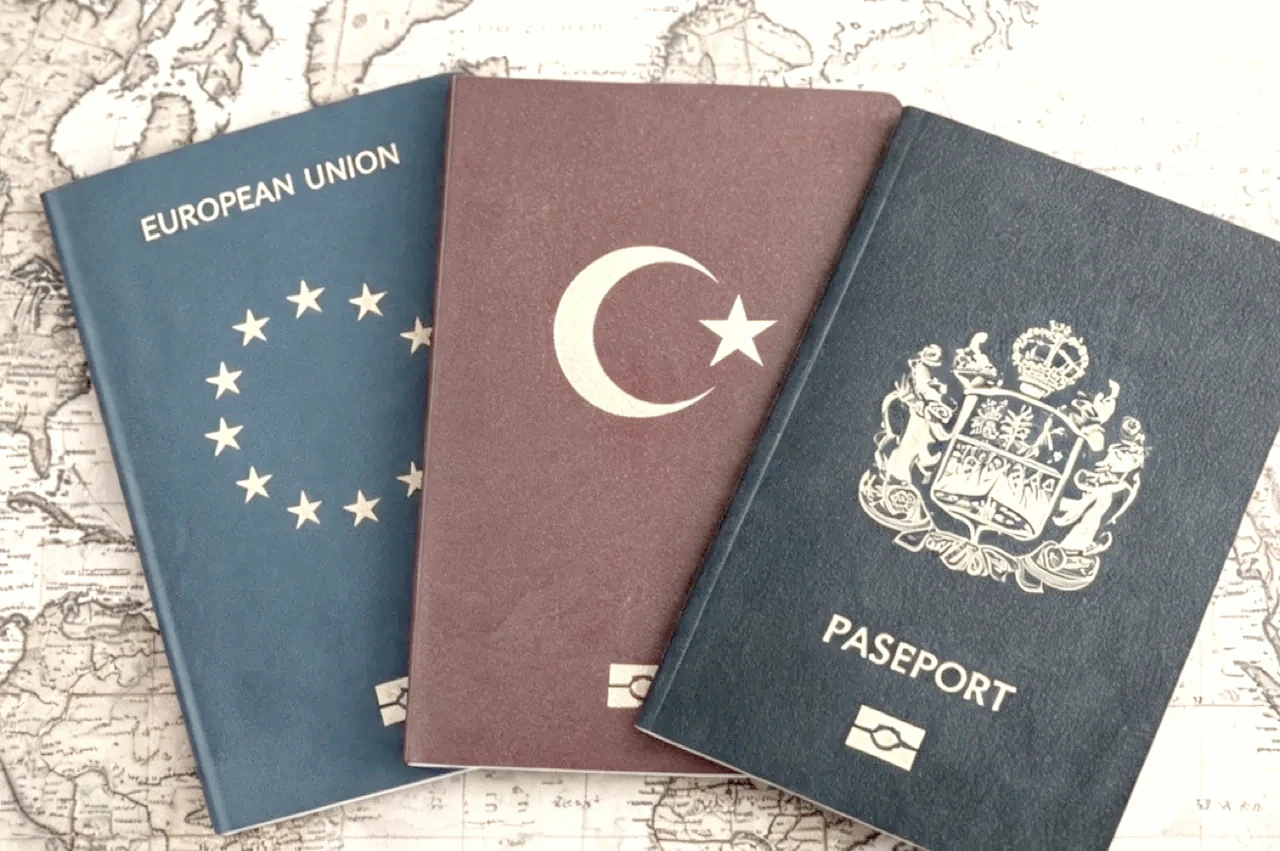 ComparisonMalta, Türkiye or St. Kitts: which passport gives more visa-free travel in 2026
 AnalysisWhat is due diligence and why the Caribbean is rejecting applications
 ArticlePros of St. Kitts citizenship in 2026: how a passport is useful
Personal programme selection is conducted by Anna Kovalevskaya, Head of Legal, BRIDGES.
Comparison of five Caribbean programmes
Amounts, timelines, family composition and requirements in one table.
