Residency · Italy
Real estate prices in Italy 2026: by region and housing type

Updated: June 2026·11 min read·Expert reviewed
Terms and costs verified: June 2026
Contents
Italy is a country of contrasts in real estate too. In the same state, an apartment in central Milan and a stone house in a Calabrian village differ in price by dozens of times. So the question 'how much does an apartment in Italy cost' without specifying the region hardly makes sense. In this overview we've laid out real estate prices in Italy by region and housing type: where it's expensive, where it's affordable, roughly how much a square meter and a whole property will cost, how resale differs from a new build, and whether 1-euro houses really exist. The figures are given as benchmarks for 2026 - the market is alive, and the exact amount is always named by the specific property.
Real estate prices in Italy: the overall picture for 2026
In short: the average price per square meter of housing in Italy in 2026 holds roughly at about 2,200 euros. But this average figure is deceptive - it combines elite Milan and quiet southern villages, between which the difference is five to six times. It's more useful to look not at the country average, but at the specific region, city, and even district.
The overall market trend is moderate growth. By industry analysts' estimates, in 2026 average prices are gaining roughly about 4 percent a year, with large cities getting pricier the most. Milan and Rome pull the market up (roughly plus 6-7 percent year over year), while old unrenovated housing in small towns and rural areas is getting cheaper or staying flat.
An important caveat for those looking for real estate as a path to a residence permit: Italy has no 'golden visa for real estate.' Buying an apartment or house on its own doesn't give the right to a residence permit - this is a separate topic we cover below and in our article onItaly's investor visa.
The North and large cities: where real estate in Italy is most expensive
The country's most expensive address is Milan. Italy's business capital, fashion, finance, international companies - all of this keeps prices high. Roughly a square meter in Milan costs from 4,000 to 5,500 euros on average, and in central districts it easily exceeds 11,000 euros. The gap between a modest residential district and the historic center is three to four times within one city.
Rome is noticeably cheaper than the fashion capital: the average price is roughly about 3,000 euros per square meter. This is still above the country's average, but prestigious historic districts here too cost several times more than the outskirts.
Venice and Florence also stay in the 'expensive' city group - roughly above 3,300-4,000 euros per square meter. Bologna follows (roughly about 2,700 euros per sqm) and is considered one of the most dynamic markets. Turin and Genoa are noticeably more affordable than their northern neighbors, which makes them attractive for those who want a big city without Milan's price tags.
Southern Italy: where real estate is cheap
If the North is about premium, the South is about affordability. The cheapest real estate in Italy is concentrated here, and the difference with Milan is striking.
Calabria is the absolute leader in affordability. The average price is roughly about 950-1,000 euros per square meter, and in individual villages stone houses go for even 400-600 euros per meter. On the Calabrian coast - in towns like Tropea or Scalea - a house by the sea can be found roughly for 50,000-130,000 euros.
Sicily is close in price level: roughly about 1,000 euros per square meter on average across the region, and in provincial towns like Caltanissetta - even lower. Molise - a quiet little-known region - is also in the lower part of the price scale (roughly about 1,000 euros per sqm).
Apulia (the 'heel' region with white trulli) and Abruzzo are pricier, but still remain affordable: roughly from 1,400 euros per square meter in Apulia and comparable in Abruzzo, where a small apartment can be found roughly for 60,000-90,000 euros. More on affordable options - in our breakdown ofcheap real estate in Italy.
Tuscany, Liguria, and the Center: the golden mean and prestige
The central regions are a separate story, where the price depends on the place's reputation as much as on the square footage.
Tuscany on average holds roughly about 2,600 euros per square meter, but within the region the spread is huge. In the province of Lucca roughly from 3,600 euros per meter, while in Arezzo housing can be found roughly from 1,500 euros. The hills of Florence and the famous wine-growing Chianti are expensive (roughly 5,600-5,900 euros per sqm), and elite seaside resorts like Forte dei Marmi break the ceiling - roughly 8,000-12,000 euros per square meter.
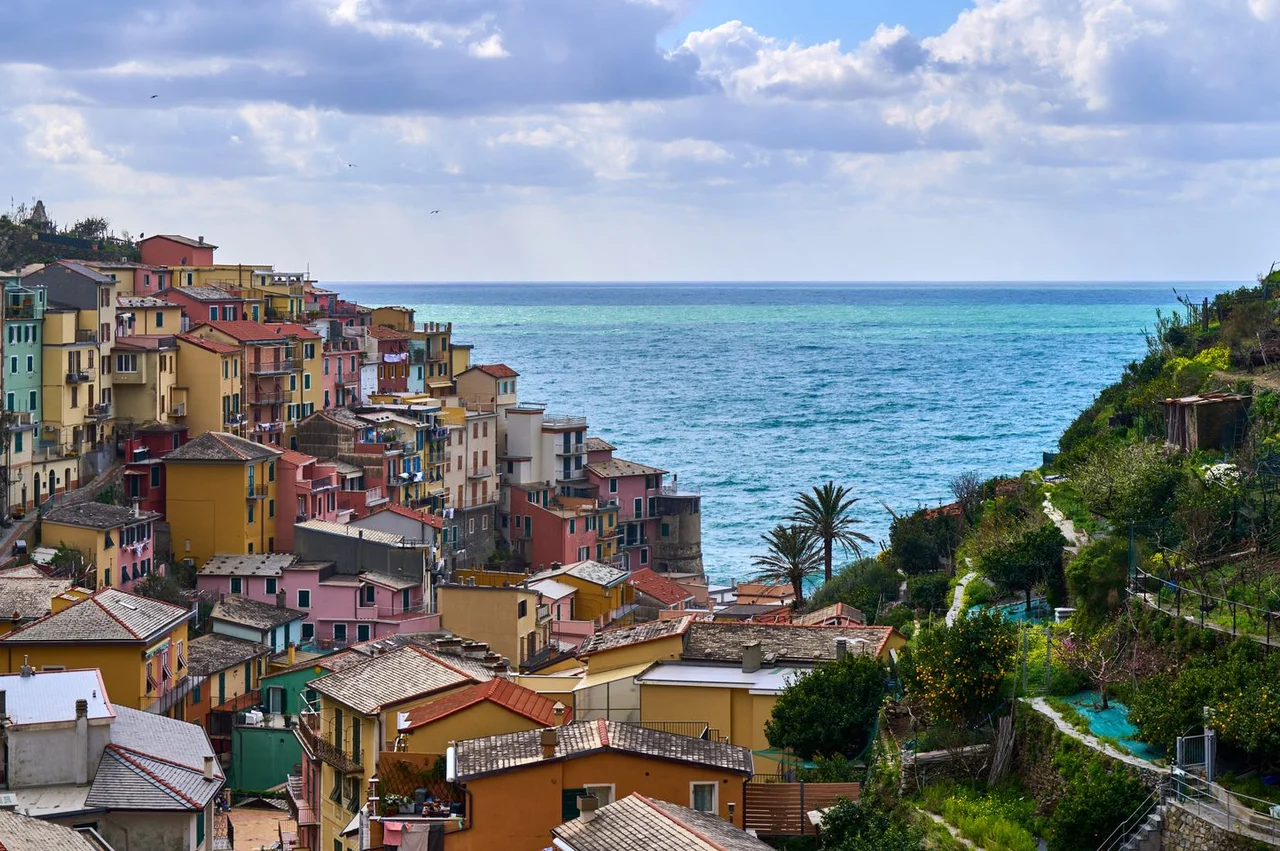
Liguria with its picturesque coast - roughly about 2,700 euros per square meter on average, but coastal gems like Cinque Terre and Portofino cost several times more.
A separate category is the lakes. Como, Garda, Maggiore attract international capital, and villas by the water with a view and land easily go into the premium segment of 8,000-12,000 euros per square meter and above. This is a second-home market for wealthy buyers. If you're specifically interested in the sea and coast, see our article onreal estate in Italy by the sea.
We will find the right basis for residency in Italy
We calculate the budget and timing for your family and list the documents you need.
Real estate prices in Italy by region: an approximate table
To make it clearer, we've put the benchmarks into one table. The figures are averages by region for 2026, a real deal always depends on the specific property, condition, and exact location.
| Region / zone | Roughly per sqm | Level |
|---|---|---|
| Milan | 4,000-5,500 € (center - up to 11,000 €) | Maximum |
| Venice, Florence | 3 300-4 000 €+ | High |
| Lakes Como, Garda; Forte dei Marmi | 8 000-12 000 €+ | Premium resort |
| Rome | about 3,000 € | Above average |
| Tuscany (on average) | about 2,600 € | Medium-high |
| Liguria (on average) | about 2,700 € | Medium-high |
| Bologna | about 2,700 € | Medium-high |
| Naples | 2 400-2 500 € | Medium |
| Apulia (on average) | about 1,400 € | Affordable |
| Sicily, Molise | about 1,000 € | Affordable |
| Calabria | 950-1,000 € (villages - from 400 €) | Minimum |
The main thing is clear: between the most expensive and most affordable region the difference is roughly five to six times. So the choice starts not with the price per meter, but with the question 'why and where do you need Italy.'
How much does an apartment in Italy cost: examples by budget
Let's move from meters to clear amounts per property. How much an apartment in Italy costs depends first of all on the region, and only then on the square footage and condition.
A budget up to 60,000-80,000 euros. This is the South: a small apartment or a modest house in Sicily, Calabria, Molise, in provincial towns of Abruzzo. Often this is resale housing, sometimes needing repair.
A budget of 100,000-200,000 euros. A wide selection opens up here: an apartment on the southern coast, a house in Apulia, mid-level housing in small towns of the Center, a modest apartment on the outskirts of Rome or Naples.
A budget of 250,000-500,000 euros. A decent apartment in Rome, Bologna, Florence, a house in Tuscany outside the most prestigious zones, options in good districts of large cities.
A budget from 500,000 euros and up. Central Milan, prestigious addresses in Florence and Venice, villas by the lakes and on the elite coast. Here the price is limited only by the desired level.
These are benchmarks: the same budget will give a spacious house with a garden in the South, and a compact studio in central Milan.
Resale or new build: what to look at
The Italian market is mostly resale housing. A country with centuries of building history, and most of the supply is buildings that are decades, or even hundreds of years old. New builds in the usual sense are few, and mostly concentrated around large cities.
Resale housing gives atmosphere and character - stone walls, old floors, views you can't rebuild. But for this you have to pay with attention to condition: wiring, heating, energy efficiency, sometimes full renovation. Old unrenovated stock in small towns is considered a weak segment in 2026 - bringing it up to modern standards is often pricier than the potential price growth.
New builds and well-renovated energy-efficient apartments in big cities, on the contrary, are among the fastest-growing segments - roughly plus 4-6 percent a year, and premium new projects in Milan even more. They're pricier upfront, but give predictability and lower upkeep expenses.
A simple rule: in the South and villages it's more logical to look at atmospheric resale housing within a renovation budget, and in large cities as an investment - renovated or new energy-efficient housing.
1-euro houses: truth and pitfalls
The famous Italian 1-euro houses aren't a myth or an advertising trick. The program is real: municipalities of dying-out villages (borghi) sell abandoned houses symbolically for one euro to save the settlements from decline. The idea was born in the Sicilian town of Salemi back in 2008 and has since spread to dozens of villages across the country.
But the one-euro price is just the entry. The buyer takes on the obligation to renovate the house within a set term. Usually a reconstruction project needs to be submitted within 6-12 months and works completed within 2-3 years, preserving the building's historic appearance (demolishing and rebuilding isn't allowed). The municipality requires a deposit of roughly 3,000-10,000 euros, returned after the renovation - and if the deadline is missed, the deposit is lost, and the house itself can return to the town.
The real budget for such a purchase is far from a euro. Accounting for paperwork, taxes, specialists' services, and the renovation itself, the final amount roughly comes to 80,000-300,000 euros and more. This is a path for those who love restoration and are ready to invest, but definitely not a way to 'buy a house in Italy for pennies.'
“The most common buyer mistake is looking at a pretty price per meter in isolation from two things: the property's real condition and your own goal. A house for 30 thousand euros in a Calabrian village and an apartment for 600 thousand in central Milan aren't 'cheap' and 'expensive,' they're simply different life scenarios. Before calculating a budget, I always advise answering yourself: is this a second home for vacations, a rental investment, or a base for relocation. The answer determines the region, the type of housing, and whether a separate residence status is even needed for the purchase. And separately I'll stress: buying real estate in Italy doesn't automatically open a residence permit - this is a common misconception people lose both time and money on. Meters and the right to live in the country are arranged under different rules, and they need to be tied into a single strategy from the very start, not retroactively, once the deal is already closed.”
What affects the price: location, condition, renovation
For the same amount in Italy you can buy completely different properties. Understanding the price factors helps avoid overpaying and disappointment.
Location is factor number one. The North is pricier than the South, cities are pricier than villages, the center is pricier than the outskirts, the coast and lakes are pricier than the interior. The difference between regions is several times over, and this is the strongest thing driving the price.
Condition and energy efficiency. Move-in-ready housing with modern wiring and heating costs more than the same square footage 'needing renovation.' The building's energy class increasingly affects the price - inefficient old housing loses appeal.
The type and character of the property. A condominium apartment, a detached house, a historic villa, a rural estate - each has its own logic of price and upkeep. A sea view, a terrace, a garden, parking add value.
Expenses beyond the purchase price. Purchase taxes (registration fee or VAT for new builds), the notary, agent services are added to the price itself. This is worth budgeting from the start - more in our article onreal estate taxes in Italy.
Foreigners buying real estate: what's important to know
Foreigners can buy real estate in Italy - this is common practice. The reciprocity principle applies: a citizen of a country that in turn allows Italians to buy can purchase. Russia has such reciprocity, so the purchase is legally possible for Russians.
It's important to understand two things. First: buying real estate on its own doesn't give the right to reside in Italy - the country has no 'golden visa for square meters.' Housing can be bought and owned, but for long-term residence a separate status is needed: the investor visa, the visa for the financially independent, a work permit, or another residence permit.
Second: for citizens of Russia and the CIS, entry requires a Schengen visa, and deals proceed with enhanced verification of the origin of funds. Everything strictly within EU legislation, with no circumvention of sanctions. Russian legislation, meanwhile, allows a second citizenship and ownership of foreign real estate - it's just important to remember that owning a house in Italy doesn't automatically make you its tax resident.
Technically the deal goes through a notary (rogito), who checks the property's cleanliness and registers the transfer of title. This is a reliable but formalized procedure, where the help of an Italian law specialist saves time and nerves.
Trends and forecast: getting pricier or cheaper
Where the Italian real estate market is heading in 2026. The overall picture is steady moderate growth, but very uneven across the country.
Analysts roughly expect average price growth of about 4 percent a year. The drivers are large cities: Milan gains roughly plus 7 percent, Rome - about plus 6-7 percent. Bologna is growing confidently (roughly plus 6 percent year over year). Florence and Naples are more moderate (roughly plus 2.5-3 percent), Turin and Bologna are calmer in individual segments.
But unrenovated old stock in small towns and rural areas will most likely stay weak - there the costs of bringing housing up to energy standards often exceed the price growth. That is, the market is stratifying: strong cities and quality housing get pricier, weak stock in the interior stays flat.
By transaction volume the market is expected to be active - roughly about 800,000 deals a year, which speaks of healthy demand from families and investors. For a buyer this means: good properties in strong locations don't sit around, while haggling is more realistic in weak segments.
How much to budget for a purchase: final benchmarks
Let's put it all together so it's clear what budget to aim for based on your goal.
I want a cheap second home or dacha. Look at the South - Calabria, Sicily, Molise, the coast. Roughly from 50,000-130,000 euros for a house, accounting for resale renovation. 1-euro houses are an option for restoration enthusiasts with a renovation budget from 80,000 euros.
I want housing in a good city to live in. Rome, Bologna, Florence, Naples - roughly from 200,000 to 500,000 euros for a decent apartment in a normal district.
I want prestige and an investment. Central Milan, villas by the lakes, the elite coast of Tuscany and Liguria - roughly from 500,000 euros and up to any level.
And the main thing to remember: add purchase taxes, the notary, and the agent to the property's price, and for living in the country - a separate status plan. Buying square meters and the right to live in Italy are two different tasks, better solved together and in advance.
Discuss buying real estate and status in Italy
Expert comment
Buying real estate in Italy is a decision at the intersection of two different questions, and an expert helps not to mix them up. Below is a specialist's view on how to approach choosing a price and region.
We will send a document checklist for your case
Leave your details: we will put together documents and timelines for your family.
Real estate and status in Italy: how to connect the two
Buying an apartment and getting the right to live in Italy are, as we've already covered, two separate tasks. But it's sensible to solve them together: a correctly chosen strategy allows both acquiring housing and building legal status in the country.
For those who specifically want to relocate or get a residence permit, Italy has several legal paths - the investor visa, the visa for financially independent people with passive income, visas for remote specialists, and others. Real estate in these scenarios often becomes part of the picture (housing for residence is needed almost always), but doesn't replace the status itself. We've collected all the options on the program pagea residence permit and investments in Italy.
Our task is to help you solve the question of getting a residence permit and properly build the real estate purchase into the overall plan, taking into account taxes and compliance. And exactly where to live and which region to choose for the house is always your personal decision, and we'll help you make it consciously.
Frequently asked
Questions people ask before deciding
01How much does a square meter of real estate in Italy cost on average in 2026?
Roughly about 2,200 euros per square meter on average across the country. But the average figure means little: in Milan it's roughly 4,000-5,500 euros, and in Calabria - about 950-1,000 euros per meter. The price always depends on the region, city, and district.
02In which region of Italy is real estate the cheapest?
The most affordable real estate is in the South. The leader is Calabria (roughly about 950-1,000 euros per square meter, and in villages stone houses even from 400-600 euros per meter). Close in level are Sicily and Molise - roughly about 1,000 euros per meter.
03How much does a whole apartment in Italy cost?
Depends on the region. In the South a small apartment or house can be found roughly for 50,000-130,000 euros. A decent apartment in Rome, Bologna, or Florence - roughly 250,000-500,000 euros. Central Milan and villas by the lakes - from 500,000 euros and up.
04Where is real estate in Italy most expensive?
The most expensive city is Milan (roughly 4,000-5,500 euros per meter, the center - up to 11,000). Also in the premium segment are elite resorts like Forte dei Marmi and villas by lakes Como and Garda - roughly 8,000-12,000 euros per square meter and above.
05Is it true that Italy sells houses for 1 euro?
Yes, the program is real: dying-out villages sell abandoned houses symbolically for one euro. But the buyer must renovate the house within a term (usually 2-3 years), pays a deposit of roughly 3,000-10,000 euros, and the real budget with renovation comes to 80,000-300,000 euros and more.
06Does buying real estate give the right to a residence permit in Italy?
No. Italy has no 'golden visa for real estate.' Buying housing on its own doesn't give the right to reside. For long-term residence a separate status is needed: the investor visa, the visa for the financially independent, a work permit, or another residence permit.
07Can foreigners and Russians buy real estate in Italy?
Yes. The reciprocity principle applies, and Russia has it, so the purchase is legally possible for Russians. Deals proceed with enhanced verification of the origin of funds, strictly within EU legislation, with no circumvention of sanctions. A Schengen visa is needed to enter.
08What's more advantageous to buy - resale or a new build?
Depends on the goal. In the South and villages, atmospheric resale housing within a renovation budget makes sense. In large cities, as an investment, renovated or new energy-efficient housing wins - it's pricier upfront, but grows in value and is cheaper to maintain.
09How much does real estate in Tuscany cost?
On average across Tuscany roughly about 2,600 euros per meter, but the spread is huge. In Arezzo housing can be found roughly from 1,500 euros, while the hills of Florence and Chianti cost 5,600-5,900 euros. Elite Forte dei Marmi - roughly 8,000-12,000 euros per meter.
10Is real estate in Italy getting pricier or cheaper?
Overall it's getting moderately pricier - roughly about 4 percent a year, but unevenly. Large cities grow the most (Milan plus 7 percent, Rome about 6-7). While unrenovated old housing stock in the interior stays flat or gets cheaper.
11What expenses are added to the purchase price?
Purchase taxes (registration fee for resale or VAT for new builds), the notary's services (rogito), and the agent's commission are added to the property's price itself. These expenses should be budgeted from the start so the final amount isn't a surprise.
12Does buying a house in Italy make you a tax resident of the country?
No. Owning real estate in Italy doesn't automatically make you its tax resident - this is determined by other rules (actual residence, center of interests). Citizenship, residency status, and tax residency are three different things important not to confuse.
Transparency
How this material was prepared
- Author
- Igor Venc, real Estate Managing Director, BRIDGES
- Terms and costs last verified
- June 2026
- Sources
- official government authorities of the relevant country and state publications
- Methodology
- government minimum requirements are stated separately from due diligence charges, state fees, legal and banking costs
Sources and methodology
Figures, terms and timelines are checked against official sources as of June 2026. Link availability verified in August 2026. Third-party blogs and agent websites are not used as a source of programme terms.
- [1]Investor Visa for ItalyConditions of the investor visainvestorvisa.mise.gov.it
- [2]Ministry of Foreign Affairs of ItalyConsular services and visaswww.esteri.it/en/servizi-consolari-e-visti
Methodology: tables and charts state government minimum investment requirements; due diligence charges, state fees, legal, banking and other costs are calculated separately and are not included in the minimum thresholds.
About the author
Related materials
What to read next
 ArticleItalian citizenship by birth in 2026: children, jus soli and reality
 ComparisonAntigua and Barbuda or Grenada: Family Passport for Large Families in 2026
 AnalysisWhat is due diligence and why the Caribbean is rejecting applications
Personal programme selection is conducted by Anna Kovalevskaya, Head of Legal, BRIDGES.
Buying property in Italy: what to check
Title, encumbrances, outstanding debts and what to look for in the contract.