Living abroad · Turkey
Education and schools in Turkey for foreign children
Updated: June 2026·10 min read·Expert reviewed
Terms and costs verified: June 2026
Contents
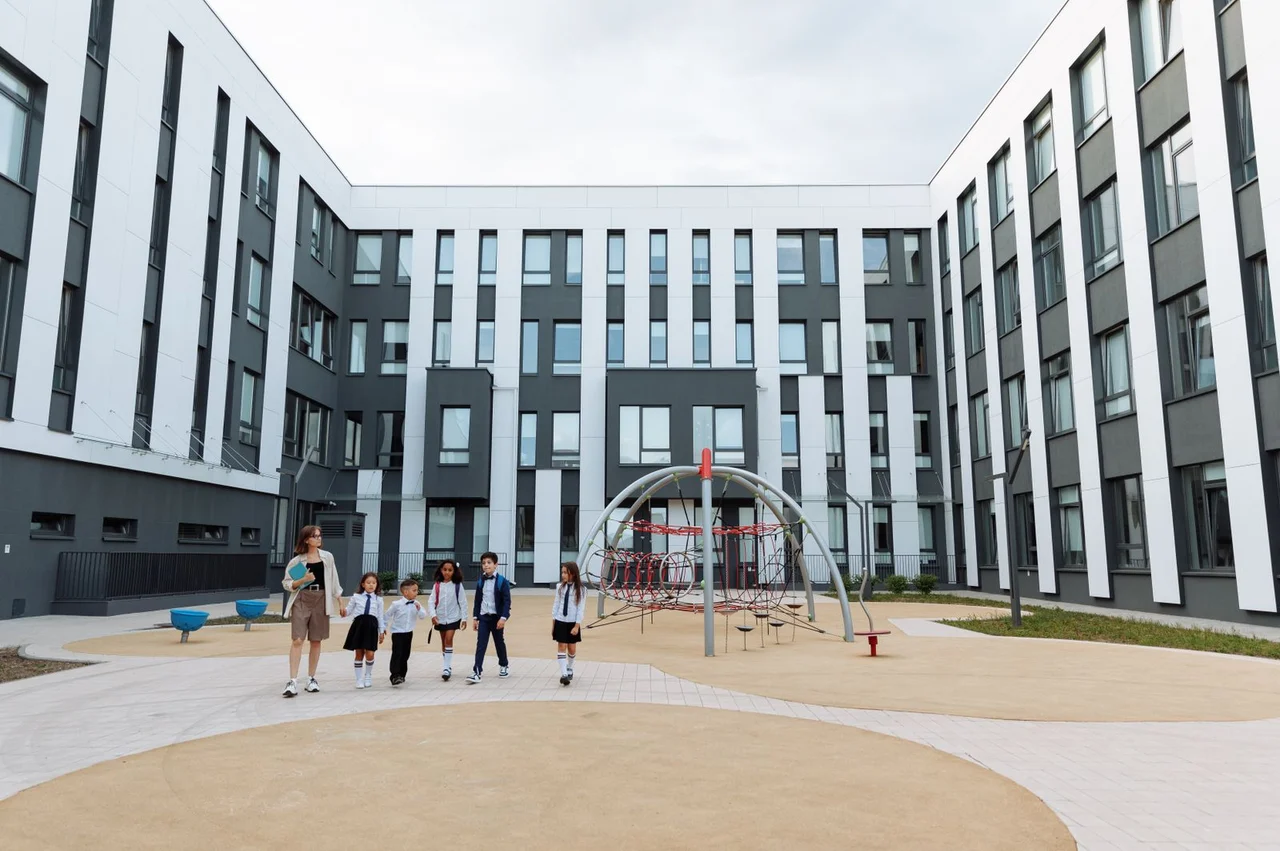
Türkiye attracts thousands of families from Russia, Ukraine, Kazakhstan and other CIS countries. Education for children is one of the first questions parents ask. Good news: the system works. Public schools are free and accept foreign children. Private and international schools provide instruction in English, German or Russian. Turkish universities are included in world rankings and are recognized in dozens of countries. This guide includes specific prices, school names, enrollment rules, and pros and cons of Turkish education.
How the education system works in Turkey
Education in Turkey is divided into four levels: preschool (from 3 years), primary school (grades 1-8), secondary school (grades 9-12) and higher education. Compulsory education lasts 12 years. The state funds schools fully.
The Ministry of National Education (Milli Egitim Bakanligi, MEB) oversees programs and standards throughout the country. Education in public schools is conducted only in Turkish. This is the main thing to consider when choosing. Private Turkish and international schools operate in parallel. In large cities - Istanbul, Ankara, Antalya - there is a large choice. In small provinces there are almost no international options.
Public schools: free and Turkish
Children of foreigners with a residence permit (RP) have the right to free education in a public school. There are no restrictions on citizenship. Documents regarding registration at the place of residence and residence permit are required. Registration takes place through the district education department (ilce milli egitim mudurlugu).
The main barrier is the Turkish language. Most children who arrive without knowing the language spend the first year adapting. Children under 10-12 years old master Turkish in 6-9 months. It's more difficult for teenagers. Schools are officially required to provide language support, but in practice this depends on the individual principal and the school's resources.
The advantage of a public school is full integration into the local environment. The child receives real Turkish language, local friends, and an understanding of culture. This is valuable if the family plans to stay for a long time.
International Schools: Best Options
For families who do not want to immerse their children in the Turkish environment right away or plan to return to their homeland, international schools are the best choice. Training is conducted in English, they give international certificates (IB, A-Level, AP), recognized in Europe, the USA and other countries.
Robert College (Istanbul) - one of the oldest and most prestigious colleges in the country, founded in 1863. The competition is high, training is in English, a strong academic program. Cost: about $15,000-20,000 per year.
Istanbul International Community School (IICS) - accredited international school, IB program, children from dozens of countries. Cost: $12,000-18,000 per year.
British International School Ankara - British program, GCSE and A-Level certificate. Cost: $10,000-16,000 per year. A good choice for families focused on British universities.
MEF International Schools (Istanbul) - several campuses, IB program, modern infrastructure. Cost: $12,000-17,000 per year.
Enka Schools (Istanbul) - strong reputation, bilingual training Turkish/English. Cost: $8,000-14,000 per year.
Private Turkish schools: the golden mean
Private Turkish schools (ozel okul) occupy a niche between state and international ones. Training is conducted in Turkish, sometimes with enhanced English. The classes are smaller, the level of teaching is higher, and the infrastructure is better than in public schools.
Cost: from $3,000 to $8,000 per year depending on the city and the reputation of the school. In Antalya and Izmir, private schools are cheaper than in Istanbul. The program is built according to the state MEB standard, so there are no problems when transferring to a public school.
Many families from the CIS use this scheme: the first 1-2 years - a private Turkish school for adaptation, then - an international or public school of your choice.
Russian-language schools in Turkey
There is a large Russian-speaking diaspora in Antalya. There are several private schools teaching in Russian here. Some work according to Russian educational standards, which allows them to continue their studies upon return without loss. Cost: $2,500 to $5,000 per year.
There are fewer Russian-language schools in Istanbul, but there are tutors and online formats for the Russian curriculum. Some families do a combination: the child goes to a Turkish or international school, and additionally studies Russian language and mathematics online.
If a family is considering returning to Russia or another CIS country, it is worth considering the issue of certification in advance. A number of Russian online schools issue official certificates for distance learning.
Kindergartens: preschool education
State kindergartens (anaokulu) accept children from 3 to 6 years old. They are free for children of Turkish citizens, for foreigners they are often also free if they have a residence permit, but there are fewer places. Registration through the district education department.
Private kindergartens operate in any major city. Cost: from $200 to $600 per month. International at international schools: $600-1,200 per month.
The quality of public gardens varies greatly. In large cities, in central areas, the level is acceptable. In small towns, it is better to choose a private option if your budget allows.
Cost of education in Turkey: table
| Type of educational institution | Cost per year | Language of instruction |
|---|---|---|
| Public school | For free | Turkish |
| State kindergarten | For free | Turkish |
| Private kindergarten | $2 400 - 7 200 | Turkish/English |
| Private Turkish school | $3 000 - 8 000 | Turkish (+ enhanced English) |
| Russian speaking private school | $2 500 - 5 000 | Russian |
| International School (IB/British) | $10 000 - 20 000 | English |
| State University | $300 - 1 200 | Turkish/partial English |
| Private university | $3 000 - 15 000 | English/Turkish |
Additional costs. Public school uniform: about $50-$100 per year. Textbooks in public schools are provided free of charge. In private - included in the price or paid separately ($100-300 per year). Transport (school bus, service): $50-120 per month.
We will find the right basis for residency in Turkey
We calculate the budget and timing for your family and list the documents you need.
Universities in Turkey: top and recognition of diplomas
Turkish universities are increasingly included in world rankings. Diplomas are recognized in most countries in Europe, Asia and the Middle East. For Russia and CIS countries: recognition passes through nostrification (apostille + translation + submission to Rosobrnadzor).
Bogazici University (Istanbul) - technical and humanities faculties, training in English. QS ranking - top 600 in the world.
Middle East Technical University (METU, Ankara) - the strongest engineering university in the country, teaching in English. Particularly known in physics, chemistry, mathematics and architecture.
Koc University (Istanbul) - a private university with a global reputation, programs in English. Cost: about $10,000-14,000 per year.
Sabanci University (Istanbul) - a strong private university, teaching entirely in English. Cost: $8,000-12,000 per year.
Istanbul University and Ankara University - largest state universities, wide choice of specialties, cost: $300-800 per year.
“The issue of education for children is one of the key ones when moving. In Turkey, the system works predictably: with a residence permit, a child is enrolled in a public school without unnecessary approvals. The language barrier is real, but we can overcome it - children under 12 years old adapt in one school year. For families who plan to spend 3-5 years in Turkey and return or continue to Europe, I usually recommend an international school with an IB program. Yes, it is more expensive, but the IB certificate opens doors to universities around the world without nostrification procedures. If the goal is full integration and Turkish citizenship for children, then a private Turkish school with strong English. Medical education deserves special attention: students from the CIS choose Turkey for its price-quality ratio, and their diplomas are then successfully confirmed in Germany and other European countries. The main thing is to study in advance the recognition procedure of the country where you plan to work.”
Medical education in Turkey for foreigners
Türkiye has become a popular destination for international medical students. Tuition at a state university medical school: $1,500 to $5,000 per year. This is 5-10 times cheaper than in Europe. At the same time, the level of training is recognized in many countries.
Training is conducted in Turkish. An international student must first complete a one-year language course. Some programs at private universities are conducted in English.
Diplomas from medical faculties of Turkish universities are recognized in EU countries with confirmatory exams (in Germany you need to pass the Approbation). For CIS countries - standard nostrification.
The best medical universities: Hacettepe University (Ankara), Istanbul University - Cerrahpasa, Ege University (Izmir).
The best cities for families with children
Istanbul - maximum choice of schools of all types. There are international schools, Russian-speaking communities, strong universities. Cons: high cost of living, traffic, big city with a fast pace. Best areas for families: Besiktas, Kadikoy, Bakirkoy.
Antalya - a favorite place for families from the CIS. Warm climate, lower cost of living, Russian-language schools. There are fewer international schools, but there are private Turkish and Russian ones. The Konyaalti area is especially popular among those who have moved.
Ankara - the capital, calmer and cheaper than Istanbul. There is British International School, METU for students. Russian-language infrastructure is less developed.
Izmir - third largest city, Mediterranean climate, calmer rhythm. There are private international schools and good universities. Prices are lower than Istanbul.
Bursa - industrial and cultural center, good price/quality ratio. Suitable for those who do not want to live in a metropolis, but value infrastructure.
Enrolling a child in school: documents and procedure
The following documents are required to enroll in a public school.
The first is a residence permit (residence permit) of the child or parents. The second is a birth certificate with an apostille and a translation into Turkish. Third - educational documents (report card, certificate) with translation. Fourth - a medical certificate of vaccinations.
Translation of documents is carried out by a sworn translator (yeminli tercuman) - this is a mandatory requirement. Registration takes place through the district education department (ilce milli egitim mudurlugu) at the place of registration. The school is assigned to the address of residence.
Registration for international and private schools is direct - through the admissions office. Most require a knowledge test and an interview. Additionally, you need a letter of recommendation from your previous school.
If a child does not speak Turkish, the public school is required to provide language support (Turkce dil destegi). In practice, you need to request it in writing to the school administration.
Residence permit for children and students
Children of foreigners with a residence permit in Turkey automatically receive the right to study in public schools. No separate permission is needed - a parent’s residence permit is sufficient.
A child over 18 years old can apply for a student residence permit (ogrenci ikamet izni) upon enrollment in a Turkish university. This is one of the simplest types of residence permit. Needed: letter of enrollment, insurance policy and proof of tuition payment.
For children under 18 years of age, a residence permit is issued jointly with their parents as a dependent. The cost of a residence permit for a child is $50-100 per year (state fee). Read more about the conditions of residence permit and Turkish citizenship on the page Turkish citizenship by investment programs.
Tax benefits and scholarships for education
Turkey offers tax deductions for education expenses for tax residents. If you officially work in Turkey and pay income tax, part of the expenses for a private school for your child can be included in your declaration. The deduction is up to 10% of the declared income.
There are government scholarships (Turkiye Burslari) for foreign students. The program covers tuition, accommodation and a monthly stipend. The competition is high. Submit online via turkiyeburslari.gov.tr, the deadline is usually February.
A number of Turkish universities offer their own discounts for international students. You need to check with the admissions office of a particular university.
Pros and cons of education in Turkey
Pros. Public education is free and available to all children with a residence permit. Wide choice of private and international schools in major cities. Strong universities with international recognition. Medical education is cheap and high quality. Warm climate and safe environment for children. There is a large Russian-speaking community in Antalya.
Cons. Public schools operate only in Turkish - the language barrier is real. Good international schools are expensive. In small cities the choice is sharply narrowed. Recognition of diplomas in a number of countries requires additional procedures. High study load in the Turkish system: competitive exams (LGS, YKS) create pressure on students.
We will find the right basis for residency in Turkey
We calculate the budget and timing for your family and list the documents you need.
How to choose a school: practical recommendations
A few questions will help you make your choice.
How long does the family plan to live in Turkey? If 1-2 years - private Turkish or international school with IB certificate. If permanently - public or private Turkish for full integration.
In which country will the child continue his education? If in Europe or the USA, you need an international certificate (IB, A-Level). If he returns to Russia, he will attend an online school according to the Russian program in parallel with the Turkish one.
Child's age. Children under 8-10 years old can be safely sent to public school - they will master Turkish quickly. For teenagers aged 13-14, the language barrier is more difficult; it is better to choose an international or private one with English.
Before moving, it is a good idea to contact several schools directly to request an open house and check availability. At popular international schools in Istanbul, the waiting list can be several months.
For current cost of living data in Turkey, see Numbeo.
Frequently asked
Questions people ask before deciding
01Can a foreigner's child study in a Turkish public school for free?
Yes. Children of foreigners with a residence permit have the right to free education in public schools in Turkey. You need a residence permit, translated and notarized documents about birth and previous education.
02What language is taught in public schools in Turkey?
Only in Turkish. There are no exceptions. If the child does not know Turkish, the school is obliged to provide language support - request it in writing from the administration.
03How much does an international school in Istanbul cost?
From $10,000 to $20,000 per year. Istanbul International Community School - about $12,000-18,000. Robert College - elite level, $15,000-20,000. Plus transportation: $50-120 per month.
04Are there Russian-language schools in Turkey?
Yes, there are several private Russian-language schools in Antalya. Cost: $2,500-5,000 per year. There are fewer Russian-language schools in Istanbul, but there are tutors and Russian online schools with official certificates.
05Is a diploma from a Turkish university recognized in Russia and Europe?
In Russia - through the nostrification procedure (apostille + translation + submission to Rosobrnadzor). In Europe it depends on the country and specialty. A medical diploma in Germany requires an Approbation. The IB school certificate is recognized without additional procedures.
06What are the best universities in Turkey for international students?
Bogazici University and METU (Ankara) - top public sector, QS rating. Koc and Sabanci (Istanbul) are the best private ones. Tuition in English, private cost: $8,000-14,000 per year.
07Why do international students choose medical faculties in Turkey?
Tuition costs range from $1,500 to $5,000 per year. This is 5-10 times cheaper than in Europe. The level of training is recognized in most countries. Popular medical universities: Hacettepe (Ankara), Istanbul University - Cerrahpasa, Ege (Izmir).
08Do I need a separate residence permit for a child when studying in Turkey?
Children under 18 years of age receive a residence permit as dependents of their parents. After 18 years of age, upon admission to a Turkish university, a student residence permit is issued. It requires an acceptance letter, insurance and proof of payment.
09Which city is better for a family with children - Istanbul or Antalya?
Depends on priorities. Istanbul - the maximum choice of international schools, but more expensive and larger. Antalya has a warm climate, Russian-language infrastructure, lower cost of living, but fewer international schools.
10What is Turkiye Burslari and how to get a scholarship?
This is a government scholarship program for international students. Covers tuition, accommodation and monthly payments. Submit online at turkiyeburslari.gov.tr, the deadline is usually February. The competition is high.
11How to enroll your child in a public school in Turkey?
Contact the district education department (ilce milli egitim mudurlugu) at your place of registration. Needed: residence permit, birth certificate with apostille and translation, report card or certificate with translation, vaccination certificate.
12How to obtain Turkish citizenship and what rights does it give to children?
Read more about Turkey's citizenship by investment program at brgsglobal.com/citizenship/turkey/. Children included in the investor's application receive citizenship along with their parents. This gives them all the rights of citizens, including free education in public schools and universities.
About the author
Related materials
What to read next
 ArticleTurkish citizenship by investment in 2026: complete guide
 ComparisonCaribbean or Turkey: Citizenship for Contribution or Real Estate in 2026
 AnalysisWhat is due diligence and why the Caribbean is rejecting applications
Personal programme selection is conducted by Anna Kovalevskaya, Head of Legal, BRIDGES.
Moving to Turkey: what to settle first
Housing, schooling, healthcare, accounts and taxes - the order and what takes longest.