Living abroad · Hungary
Life in Hungary: a analysis of the pros and cons
Updated: June 2026·9 min read·Expert reviewed
Terms and costs verified: June 2026

Contents
Hungary is a country that surprises at first sight. Budapest is one of the ten most beautiful capitals in Europe. Thermal baths, Gothic architecture, affordable prices - all this attracts those moving from Russia, Ukraine and Kazakhstan. But behind the beautiful façade there are also complications. Hungarian is one of the most difficult languages in the world. The political situation under the Orbán government raises questions. Medicine is noticeably inferior to Western European medicine. In this article we analyze the real picture without embellishment. You will find out how much life costs in Budapest and the province, how the bureaucracy works, what awaits families with children. And most importantly, how to legally stay in the country for a long time: through a residence permit for an investor (Guest Investor) or an EU passport based on Hungarian roots.
Hungary for moving: the big picture
Hungary is a Central European country and a member of the EU since 2004. It is interesting for those moving from outside the EU for several reasons. Firstly, relatively low prices by EU standards. Secondly, Budapest is a really beautiful and convenient city. Thirdly, there are two large programs for foreigners: an investor’s residence permit and a passport based on Hungarian roots.
However, Hungary is not an ideal country. There is a complex language, difficult politics and winter with frosts. It is important to understand both sides before deciding to move.
Pros of living in Hungary
EU passport through Hungarian roots. This is perhaps the main magnet. If you have Hungarian ancestors, you can obtain EU citizenship through the repatriation program. The program is very broad: it is enough to confirm Hungarian origin along any line of kinship. This opens up the right to live, work and study in any EU country.
Budapest is one of the most beautiful cities in Europe. The architecture, the Danube embankments, the historical center under UNESCO protection - all this is not an exaggeration. The city is convenient for life: a developed metro, trams, bicycle paths.
Thermal culture and health. Hungary is a world leader in thermal springs. The baths are open all year round and are cheap: entrance to the state complex is €15-20. This really affects the quality of life.
Affordable prices for the EU. Groceries, housing rent and restaurants are noticeably cheaper than in Germany, Austria or France. A family of three lives on €1,500-2,200 per month in the capital.
Strong universities. Budapest University of Technology (BME), Semmelweis University, Central European University (CEU) are recognized educational institutions. There are programs in English.
Safety. Hungary is among the top 30 safest countries according to the Global Peace Index. The level of street crime in Budapest is low by European standards.
Central location. From Budapest in 2-3 hours drive - Vienna, Bratislava, Krakow. Convenient for business trips in Europe.
Disadvantages of living in Hungary
Hungarian is one of the most difficult languages in the world. It is not similar to any Slavic or Germanic language. Grammar with 18 cases, agglutinative structure - this is not an exaggeration. Most government agencies and provincial residents speak only Hungarian. Without language, life outside of Budapest is very difficult.
Political situation. The Orbán government has consistently limited the independence of the media and courts since 2010. This is recorded by European institutions. Some foreigners consider this a problem, some do not. Fact: The political climate here is different from Western Europe.
Medicine is below Western standards. Public hospitals are overburdened and underfunded. Queues are the norm. Informal “tips” to doctors (hálapénz) are formally prohibited, but do occur in practice. Private clinics work better, but are more expensive.
Corruption. According to Transparency International's Corruption Perceptions Index, Hungary is one of the worst in the EU. This is noticeable in business and government agencies.
Cold winter. In January the temperature drops to -5...-10°C. Snow is the norm. If you are used to a Mediterranean climate, winter in Hungary will seem long.
No sea. Hungary is a landlocked country. The nearest resort is Croatia (3-4 hours drive). Lake Balaton is beautiful, but it is not a substitute for the sea.
The province lives differently. Outside of Budapest and Debrecen, the infrastructure is dramatically simpler. There is almost no English. The pace of life is slower, the choice of work is less.
Hungary for Russians, Ukrainians and Kazakhstanis
For non-EU citizens, Hungary is attractive primarily for two things: accessibility and the opportunity to obtain an EU passport.
Language barrier. Russian and Ukrainian will not help here as much as in Bulgaria or Serbia. But in Budapest many young people speak English. In tourist areas it is not difficult to explain yourself.
Diaspora. There is a Russian-speaking community in Budapest, but it is small compared to Berlin or Prague. Russian-language schools and clubs exist, but the choice is limited.
Banking restrictions. After 2022, it has become more difficult for Russian citizens to open an account in a Hungarian bank. OTP Bank and Raiffeisen Hungary consider applications but require proof of residence. It’s easier with a Ukrainian or Kazakh passport.
Visa regime. Citizens of Russia and Belarus enter with a visa. Citizens of Ukraine and Kazakhstan - visa-free (short-term). For long-term stay you need a residence permit.
Mentality. Hungarians are a reserved people. They do not rush to meet foreigners. But they are reliable and straightforward when they get to know you better.
Cost of living in Hungary 2026
Hungary is noticeably cheaper than Western Europe, but more expensive than the Balkans. Below are the actual numbers for 2026.
| Expense item | Budapest | Regions (Debrecen, Miskolc) |
|---|---|---|
| Rent 1BR (center) | €700-900/month | €350-500/month |
| Rent 2BR (center) | €1,000-1,400/month | €500-750/month |
| Rent 3BR (center) | €1,400-2,000/month | €700-1,000/month |
| Products for 1 person/month | €250-350 | €200-280 |
| Lunch in a cafe (1 person) | €8-14 | €5-10 |
| Dinner at the restaurant (2 people) | €30-55 | €20-35 |
| Transport (monthly subscription) | €22 | €15-18 |
| Housing and communal services (apartment 70 sq.m.) | €100-180 | €80-140 |
| Internet (100 Mbit/s) | €12-18 | €10-15 |
| Medical insurance (basic) | €50-120/month | €50-120/month |
| Kindergarten (public) | free (for residents) | free (for residents) |
| International school | €8,000-18,000/year | rarely eat |
| Buying a car (used) | €5 000-15 000 | €5 000-15 000 |
| Car insurance (CASCO) | €600-1,200/year | €500-1,000/year |
Individual prices for products in the store: milk 1 liter - €0.90-1.20; bread (0.5 kg) - €0.80-1.20; chicken fillet (1 kg) - €3.50-5.00; eggs (10 pcs.) - €1.80-2.50; potatoes (1 kg) - €0.60-1.00.
Total: a family of three in Budapest spends €1,500-2,200 per month without rent. With rent 2BR - €2,500-3,600.
Comparison with Moscow: rent and products are approximately at the same level (when converted to euros in 2026), but transport in Budapest is more expensive, but the quality of service is European.
We will find the right basis for residency in Hungary
We calculate the budget and timing for your family and list the documents you need.
Housing in Hungary: rent and purchase
The most popular area for foreigners in Budapest is the V, VI and VII districts (Pest, center). It’s more expensive here, but more convenient: restaurants, transport, English-speaking environment.
Quieter and family-friendly areas are the II and XII districts (Buda). Greenery, mountains, parks. Rent is 20-30% lower than the center. The downside is that it takes longer to get to the center.
Buying an apartment: €2,500-5,000 per sq.m. in the center of Budapest, €1,200-2,500 in the provinces. Foreigners can buy housing, but purchasing land requires permission from the authorities.
Medicine in Hungary
State healthcare is financed through social contributions. If you have a residence permit and are officially employed or pay contributions, you have the right to public medicine.
In practice: queues are long, equipment in public hospitals is outdated. Doctors are qualified, but the system is overloaded.
Private clinics are on another level. Medicover and Duna Medical Center clinics operate according to Western standards. A visit to a specialist doctor - €50-100. Many foreigners choose private medicine even if they have public insurance.
The best hospitals in Budapest: Semmelweis University, Military Hospital (Honvedkórház), Medicover Clinic. Dentistry in Hungary is one of the best and most affordable in Europe: people from Austria and Germany come here specifically for dental treatment.
Education in Hungary
Public schools are free, education is in Hungarian. For children of foreigners who do not know the language, this is a difficult start.
International schools in Budapest: Budapest British International School (€12,000-18,000/year), American International School of Budapest (€15,000-20,000/year), Britannica International School (€10,000-15,000/year). IB and Cambridge programs are recognized throughout the world.
Higher education: Budapest University of Technology (BME) and Semmelweis University are ranked in European rankings. There are programs in English for foreign students. The Stipendium Hungaricum scholarship program gives foreigners the opportunity to study for free.
Transport and movement
Budapest is one of the best cities in Europe for public transport. Metro (3 lines), trams, buses, trolleybuses - all operate from 4:30 to 23:00. Night buses replace the metro. Monthly subscription - €22. By EU standards - very cheap.
A car in Budapest is not mandatory. Parking in the center is paid (€1-3/hour), there are traffic jams. Outside the city, you need a car.
International flights: Liszt Ferenc Airport (BUD) - Wizz Air hub. Direct flights to dozens of European cities. Low-cost airlines fly to London, Berlin, Rome for €30-80.
Taxi: Bolt and Uber operate in Budapest. A trip around the city - €5-15. Cheaper than in Western European capitals.
Security and legal environment
According to the Global Peace Index, Hungary is in the top 30 most peaceful countries in the world. Street crime is low. Tourist pickpocketing does happen in central Budapest, but it is not a systemic problem.
According to the Numbeo index, safety in Budapest is rated 60-65 out of 100 - this is above average for Europe. Families with children feel calm.
Areas with increased attention: VIII district (Józsefváros) - historically difficult, although now actively gentrifying. Metro stations at night require vigilance.
The legal environment is a member of the EU, so basic European regulations apply. But the European Commission records violations of the independence of the courts. For business, this creates additional risks in controversial situations.
For families with children and single women, Hungary is a safe country by European standards.
“Hungary is an interesting case among European countries. People often come with a question about Guest Investor, and in the conversation it turns out that their grandmother is from Transcarpathia. Then the picture changes completely: instead of a residence permit - an EU passport, and a completely different horizon opens up. The repatriation program in Hungary is one of the most extensive in Europe. In most cases, it is possible to prove Hungarian origin through grandparents if you have documents. According to Guest Investor, it is important to understand one thing: buying an apartment and obtaining a residence permit are not the same thing. Residence permits are granted only through regulated real estate funds. It's a little more complicated than it seems, but the mechanism has been worked out. Budapest as a city of life is underrated. For €1,500-1,800 a month, a family lives comfortably in the center of a European capital. This is difficult to find in Western Europe. Among the disadvantages, I would highlight not the language or politics, but medicine. The government system is tired. If you are moving for a long time, budget €100-150 per month for private insurance or a clinic. This is not an option, but a reality.”
Climate: what to expect by season
Hungary has a temperate continental climate. Four distinct seasons.
Spring (March-May). Temperature +8...+20°C. Mild, sometimes rainy. One of the best times to live.
Summer (June-August). +25...+35°C. It is hot, sometimes up to +38°C in July. Swimming at Balaton is the norm. Humidity is below Mediterranean.
Autumn (September-November). +5...+18°C. Picturesque, rainy. Harvest, new harvest wine (furmint, tokaj).
Winter (December-February). -5...-10°C, snow. For those accustomed to the Mediterranean climate, this is a difficult period. For people from Russia or Ukraine, it’s a normal winter.
In general, the climate is easily tolerated. There are about 200 sunny days a year. This is more than in Berlin or London.
How to live legally in Hungary: residence permit and citizenship
For long-term residence you need one of the statuses.
Investor residence permit (Guest Investor Visa). The minimum investment is €250,000 through a regulated real estate fund. Important: direct purchase of an apartment under this program does not provide a residence permit. Only mutual funds approved by Hungarian regulators. The residence permit period is 10 years, renewable. Accommodation requirements are minimal.
Citizenship by Hungarian roots. If you have Hungarian ancestors (Hungarian ancestry on any line), it is possible to apply for EU citizenship through the repatriation program. The program is broad: applications are accepted for grandparents, and in some cases further. Duration - from 6-9 months if documents are available.
Worker residence permit. If you have an employment contract with a Hungarian employer. Standard European procedure.
Student residence permit. Upon admission to a Hungarian university.
More about the program Investor residence permit in Hungary - on the BRIDGES GLOBAL program page.
We will find the right basis for residency in Hungary
We calculate the budget and timing for your family and list the documents you need.
Taxes for foreigners in Hungary
Hungary is an attractive tax jurisdiction within the EU.
Income tax (SZJA). The flat rate of 15% is one of the lowest in Europe. Applies to income earned in Hungary.
VAT (ÁFA). The standard rate is 27%. This is the highest VAT in the EU. Affects the cost of goods and services.
Tax on dividends. 15% + social contribution 13% (up to a certain limit). Total up to 28%.
Tax residency. Occurs when staying more than 183 days a year. Hungary then taxes global income. Important to consider when tax planning.
Agreements for the avoidance of double taxation. Hungary has signed agreements with most countries, including Russia (the agreement was suspended by the Russian Federation in 2023), Kazakhstan and Ukraine.
Work and business in Hungary
The Hungarian labor market is one of the most developed in the region. Unemployment is about 4%. Salaries are higher than in the Balkans, but lower than in Austria or Germany.
The average gross salary in 2026 is about €1,500-1,800/month (in IT and finance - €2,500-4,000+). After tax and contributions in hand - €1,200-1,500.
Large employers in Hungary: Samsung SDI, Audi, BMW, GE, IBM, Deutsche Telekom. Budapest has a strong IT sector. Startups develop through the venture ecosystems Prezi and LogMeIn (founded by Hungarians).
For business: Hungary offers a corporate income tax of 9% - the lowest in the EU. This attracts holding structures and production.
Who is Hungary suitable for and who is not?
Hungary is right for you if you:
- Looking for an affordable life in a beautiful European city
- Have Hungarian roots and want an EU passport
- Invest from €250,000 and want a long-term residence permit
- Work remotely and appreciate the combination of price and quality
- Ready to learn Hungarian (at least basic level)
Hungary probably won't suit you if you:
- Want a warm Mediterranean climate all year round?
- Looking for a country with an English-speaking environment outside the capital
- Do you need Western European level medicine without private expenses?
- The Western liberal political environment is important to you
Read more about options for obtaining status on the page Residence permit for an investor in Hungary.
Frequently asked
Questions people ask before deciding
01Is it possible to buy an apartment in Budapest and obtain a residence permit?
No. Direct purchase of an apartment does not provide a residence permit under the Guest Investor program. A residence permit is issued only for investments of €250,000 or more in real estate mutual funds approved by Hungarian regulators.
02How difficult is it to learn Hungarian?
Very difficult. Hungarian belongs to the Finno-Ugric language group and has no common roots with Slavic or Germanic languages. You can live in Budapest in English, but to work and live in the provinces, the language is necessary.
03How to get an EU passport through Hungarian roots?
It is necessary to confirm Hungarian origin through any line of kinship - through parents, grandparents. The repatriation program is broad. After submitting documents and checking them, citizenship is issued in 6-9 months. BRIDGES GLOBAL assists with document review and application submission.
04Is it safe to live in Budapest?
Yes, Budapest is a safe European city. According to the Global Peace Index, Hungary is in the top 30 most peaceful countries. Serious crime rates are low. Pickpocketing does happen in tourist areas, but it is not a systemic threat.
05What kind of medicine in Hungary is better or worse than Russia?
Public medicine in Hungary is overloaded: queues, outdated equipment. Private clinics (Medicover, Duna Medical Center) operate at a good European level. Dentistry is one of the best in Europe in terms of price and quality.
06Do you need a car in Budapest?
No. Public transport in Budapest is one of the best in Central Europe: metro, trams, buses. A monthly subscription costs €22. For trips outside the city and around the regions, a car is convenient, but not necessary.
07How much does it cost to rent an apartment in Budapest 2026?
1BR in the center - €700-900/month, 2BR - €1,000-1,400/month, 3BR - €1,400-2,000/month. In provincial cities (Debrecen, Miskolc) it is 40-50% cheaper.
08How can a foreigner open an account in a Hungarian bank?
For citizens of Ukraine and Kazakhstan, this is a relatively standard procedure if they have a residence permit. For Russian citizens after 2022 it is more difficult: OTP Bank and Raiffeisen are considering applications, but require documents about legal stay in Hungary.
09What taxes does an individual pay in Hungary?
Flat income tax of 15% is one of the lowest in the EU. VAT - 27% (the highest in the EU, affects prices of goods). Tax residency arises when residing for more than 183 days per year.
10Is it possible to study in Hungary in English?
Yes. A number of programs at the Budapest University of Technology (BME), Semmelweis University and other universities are conducted in English. There is a state scholarship program Stipendium Hungaricum for foreign students.
11Is there a sea in Hungary?
No. Hungary is a landlocked country. The most popular body of water is Lake Balaton (summer resort, swimming, surfing). The Croatian Adriatic coast is 3-4 hours away.
12How long does it take to obtain an investor’s residence permit in Hungary?
Guest Investor Visa is issued on average 2-4 months after the investment in the fund is completed. The investment itself through a real estate fund requires preliminary due diligence and takes another 4-8 weeks. BRIDGES GLOBAL accompanies the process from choosing a fund to receiving a resident card.
About the author
Related materials
What to read next
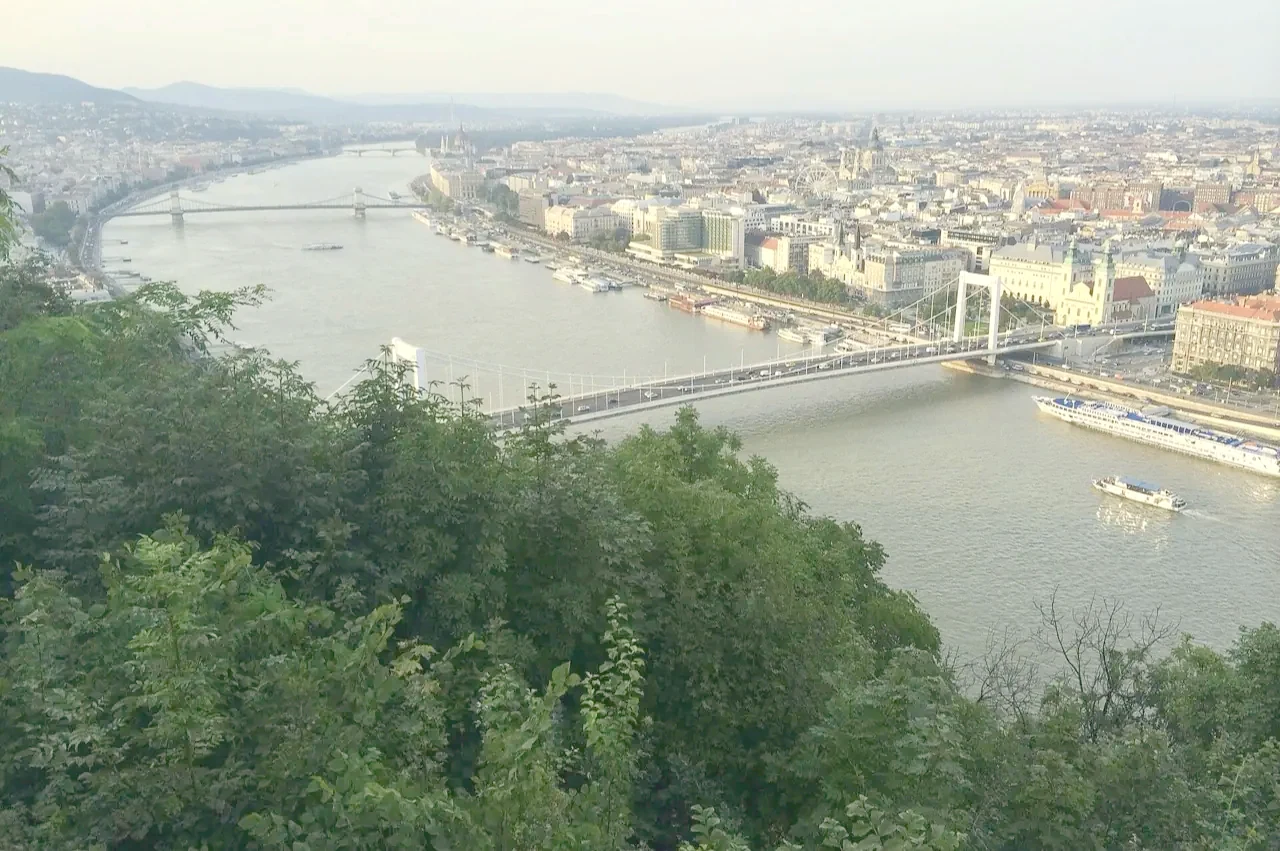 ArticleHungarian Citizenship 2026: All Ways to Obtain an EU Passport
 ComparisonCitizenship of Bulgaria or Hungary: EU passport by roots
 AnalysisWhat is due diligence and why the Caribbean is rejecting applications
Personal programme selection is conducted by Anna Kovalevskaya, Head of Legal, BRIDGES.
Moving to Hungary: what to settle first
Housing, schooling, healthcare, accounts and taxes - the order and what takes longest.