Citizenship · Italy
Italian citizenship through naturalization in 2026: 10 years, language, conditions

Updated: June 2026·11 min read·Expert reviewed
Terms and costs verified: June 2026
Contents
Naturalization in Italy is a long but predictable path to an EU passport for those living in the country permanently. The basic residence requirement is 10 years; for EU citizens, 4 years; for people of Italian descent and those born in Italy, 3 years. Beyond this period, Italian language proficiency at B1 level is verified, along with stable income over recent years, a clean criminal record, and genuine integration. The decision is made by the Italian Ministry of Interior, and applications are reviewed in approximately 24-36 months. Italian citizenship through naturalization is not a passport purchase: you first need a residence permit and permanent residence, followed by years of legal residence. This article covers how many years you need to live in Italy for citizenship, what naturalization conditions apply in 2026, and what steps comprise the process.
What is naturalization in Italy and who is it suitable for
Naturalization is obtaining citizenship through long-term and continuous legal residence in the country. Unlike citizenship by descent (jure sanguinis) or marriage, the basis here is the fact that a person has lived in Italy for years, pays taxes, knows the language, and has become part of local life.
This path is suitable for those who have already moved to Italy and maintain legal status: working, running a business, living on passive income, or studying and then staying. Italy is a member of the European Union and the Schengen Area, so an Italian passport provides freedom of residence and work throughout the EU. This is why naturalization in Italy appeals to those building a long-term life in Europe, rather than seeking a quick second passport.
It is important to understand : naturalization is a marathon. Many years pass between relocation and citizenship application, and throughout this entire period you must maintain legal status without long gaps. However, the result is full EU citizenship with voting rights and the ability to transfer the status to children.
How many years to live in Italy for citizenship
The residence period depends on where you are from and whether you have a connection to Italy. The basic requirement for citizens of non-EU countries is 10 years of continuous legal residence. This is the most common scenario for citizens from Russia and other CIS countries.
For citizens of other EU countries, the period is shorter—4 years. For people of Italian descent (for example, whose grandfather or grandmother were Italian citizens) and for those born in Italy, the requirement is reduced to 3 years. There is a separate category for refugees and stateless persons, for whom special periods are provided.
The key word is continuity. Residence must be formally registered: with a residence permit, registration of place of residence (residenza), and actual presence in the country. Long absences and breaks in status nullify accumulated seniority, so you must count carefully from the very first residence permit.
Conditions for naturalization in Italy: language, income, reputation
Residence period is only the foundation. For an application to be approved, you must meet all naturalization conditions in Italy.
Language. Since 2018, it is mandatory to confirm knowledge of Italian at B1 level according to the Common European Framework of Reference (CEFR). This is a confident conversational level: you understand speech, conduct conversations on everyday topics, and read documents. Certificates are issued by accredited centers recognized by the Italian Ministry of Foreign Affairs.
Income. You must demonstrate stable legal income over the past three years. The benchmark is approximately no less than 8,264 euros per year for a single person and approximately 11,362 euros for a family applicant, plus an allowance for each dependent (verify current thresholds for your application year). Income is confirmed through tax declarations.
Reputation. A clean criminal record in both Italy and the country of previous residence is a mandatory requirement. Serious offenses result in rejection. Overall integration is also considered: tax payment and absence of migration law violations.
When to discuss a plan with an expert
Naturalization stretches over years, and an error at the start—incorrect residence permit type, break in residence, careless tax declarations—can cost you several lost years. Therefore, the path to Italian citizenship through residence should be planned in advance: what status to obtain upon relocation, how to accumulate residence without breaks, when to take language tests, and how to prepare an income dossier.
The BRIDGES GLOBAL team addresses issues of obtaining residence permits, permanent residence, and Italian citizenship for specific situations—investments, passive income, remote work, or family grounds. You decide where to live; our task is to establish a legal route to the required status. Schedule a consultationto get an analysis of your specific case.
First, Residence Permit and Permanent Residence: where the path begins
Italian citizenship through residence is impossible without two previous steps - a residence permit and then long-term residency. You can apply for naturalization only after accumulating legal residence time, and this period starts with a residence permit.
The first step is to obtain a residence permit under one of the grounds: employment, business, investments, passive income, or studies with subsequent employment. A residence permit is issued for a specific period and can be renewed. After 5 years of continuous legal residence, you can obtain the status of EU long-term resident (permanent residence) - it is indefinite, requires proof of income and Italian language at A2 level.
We discuss the indefinite status in detail in the article about Italian Permanent ResidencePermanent residence is not the final stage but an important milestone on the path to a passport: years of residence with both a residence permit and permanent residence are combined in the total residency requirement for naturalization.
Living in Italy and want citizenship? We will help you get it
We will send a step-by-step plan and timeline for your case.
Category, residency requirement, and conditions: summary table
To make it clearer, we will consolidate the grounds and timeframes in one table. Remember: to all categories, additional requirements for B1 language proficiency, income, and criminal record clearance apply.
| Applicant category | Residency requirement | Key condition |
|---|---|---|
| Non-EU country citizens | 10 years | Continuous legal residence |
| EU country citizens | 4 years | Legal residence in Italy |
| Persons of Italian descent | 3 years | Documented connection to Italy (for example, an Italian grandfather) |
| Born on Italian territory | 3 years | Fact of birth in Italy |
| Through marriage to an Italian citizen | 2 years in Italy (3 years abroad) | Period halved if there are common children; B1 language proficiency required |
Marriage is a separate and faster ground; we discuss it in detail in the article on Italian citizenship through marriage.
B1 Language: what exactly you need to pass
Language requirement is often underestimated, but for good reason - without a B1 certificate, your application will simply not be accepted. B1 level means confident command of everyday Italian: you understand your interlocutor, can communicate in shops, banks, government offices, read simple texts, and write basic letters.
Certificates are issued by accredited examination centers - CILS (University for Foreigners of Siena), CELI (University for Foreigners of Perugia), PLIDA (Dante Alighieri Society), and Roma Tre. These certificates are recognized by the Italian Ministry of Foreign Affairs and are suitable for citizenship purposes.
Those who have already completed Italian school or university, or have a document on an integration agreement at the appropriate level, are exempt from the exam. For everyone else, it is better to start learning the language in advance - a couple of years before submission, so you can approach the exam calmly and not delay the process.
Income and financial capacity
Italy wants to see that the new citizen is capable of supporting themselves and will not become a burden on the budget. Therefore, proof of income is one of the key requirements for naturalization in Italy.
Income is reviewed for the last three tax years. Approximate thresholds: approximately 8,264 euros per year for a single applicant, approximately 11,362 euros for a family, plus approximately 516 euros for each dependent. These are minimum guidelines - in practice, it is better to have a buffer, and specific amounts should be verified for the year of submission.
Income is confirmed by Italian tax returns. This means that simply living in Italy is not enough - you need to be in the tax system, correctly declare income, and pay taxes. A clean tax history over the years of residence works in your favor: it demonstrates real integration and financial discipline.
"Over the years of practice, I see one clear pattern: naturalization in Italy is won not by those who run fastest to submit, but by those who built a careful residence history from day one. The most frustrating rejections and delays are not due to lack of years, but due to details: interrupted residence permit, gaps in tax declarations, language certificate obtained at the last moment. That is why I always advise planning the entire path in advance as a single 10-year project. Choose the right ground for the residence permit, keep your taxes in perfect order, avoid long gaps in residence, and start learning Italian well before the exam. Then you will approach the finish line with a complete file, and the review will proceed without unnecessary requests. Italian citizenship through residence is a marathon, and the winner is the one who distributed their effort wisely throughout the entire distance, not one who sprinted on the final lap."
How to submit an application: procedure step by step
An application for citizenship through naturalization is submitted online through the Italian Ministry of Interior portal (Ministero dell'Interno). The process is fully electronic but requires careful document preparation in advance.
The basic package includes: birth certificate with apostille and translation, criminal record clearance certificate from country of origin and from Italy, tax returns for three years, B1 certificate, proof of legal residence and registration (residenza). All foreign documents must be legalized (apostille) and translated by a certified translator.
After the application is uploaded, it is reviewed by the prefecture of the place of residence, then the file goes to the Ministry of Interior. According to current regulations, the review period is up to 24 months; in complex cases, it is extended to 36 months. After a positive decision, the applicant takes an oath of loyalty to the Republic, and from that moment, he or she becomes an Italian citizen.
How long to wait and why it takes so long
Let us be : naturalization in Italy is not a quick process, and it is important to understand this from the very beginning. Even after accumulating 10 years of residence, the review of the application itself takes approximately 24-36 months. Actual timeframes in 2026 most often fit within 2-3 years, depending on the workload of the specific prefecture and the completeness of documents.
Long timeframes are explained by the volume of checks: the Ministry of Interior verifies the legality of the entire residence period, tax history, absence of criminal convictions in several countries, and authenticity of documents. The more carefully the file is compiled and the cleaner the residence history, the fewer requests and delays there will be.
If you calculate the full path - years to accumulate the residency requirement plus review time - you are talking about a significant period of one's life. Therefore, for those to whom speed is important, it is worth comparing in advance naturalization with other scenarios of obtaining status in Italy. We have compiled an approximate timeline in the article on timeframes for obtaining Italian citizenship.
Alternatives to naturalization: descent, marriage, investments
Naturalization is not the only path to an Italian passport, and sometimes other grounds turn out to be faster or more appropriate.
By descent (jure sanguinis). If you have Italian roots, this can be a direct path to citizenship without a residency requirement. However, in 2025, a major reform took place: the right by blood was significantly limited - now it typically applies only if your parent or grandparents were born in Italy, rather than distant ancestors. Details are in the review about Italian citizenship.
By marriage. Marriage to an Italian citizen provides a much shorter path - 2 years of residence in the country or 3 years abroad, with a 50% discount if you have children.
Through investment. Italy has no direct investment citizenship, but there is an investor visa that provides residence permit and initiates accumulation of the residency requirement for future naturalization. We discuss this separately in the article about Italy's investor visa.
Special features for Russians and CIS citizens
For nationals from Russia and CIS countries, naturalization in Italy follows the standard 10-year residency requirement applicable to citizens of non-EU countries. First, you need a Schengen visa and legal entry, then registration of residence permit on your chosen grounds.
All steps are carried out strictly within EU and Italian legislation, with enhanced compliance and source of funds verification - without circumventing any restrictions. This is normal practice for investment migration: transparent documentation and legal origin of funds only accelerate the process.
Russia permits dual citizenship, requiring only notification to the Interior Ministry (approximately within 60 days of obtaining a foreign passport). It is important to remember the tax nuance: citizenship does not equal tax residency. Where you pay taxes is determined by actual residence and center of life interests, not by passport.
Common mistakes that cost years
Since this involves a multi-year process, the cost of errors is particularly high. Let us review the mistakes that most often set applicants back.
Gaps in residence. Long absences, expired residence permit renewal, loss of residenza - all of this nullifies or interrupts accumulated service. Continuity must be preserved.
Careless taxes. Undeclared income or gaps in tax history create problems during financial viability checks. Clean declarations for all years are mandatory.
Delaying language study. A B1 certificate cannot be obtained in a week. If you start learning the language close to submission, you can delay the entire process by a year or more.
Incomplete file. Missing apostille, incorrect translation, outdated certificate of good conduct - each minor detail results in a request and months of waiting. Documents should be prepared in advance and checked twice.
What an Italian passport provides after naturalization
The result of a long journey is full European Union citizenship, and it is worth it. An Italian passport is one of the strongest in the world for freedom of movement.
An Italian citizen has the right to freely live, work, and conduct business in any EU country, as well as in Norway, Iceland, Liechtenstein, and Switzerland. Access opens to European education and healthcare on equal terms with locals, the right to vote in Italian and European Parliament elections.
Citizenship is passed to children and retained for life - it does not need to be renewed and cannot be lost due to prolonged absence from the country, unlike residence permit. This is a status that remains with the family forever. This is why many consciously go through the entire long naturalization process - for the sake of a sustainable future for their children in Europe.
Documents for Italian citizenship? We will send the list
We will send a document checklist for your case.
Darya MelnikSenior Investment Programs Advisor, BRIDGES
Expert view: how to navigate the path without losses
Naturalization forgives the patient and punishes those who rush in the final stretch but were careless at the beginning. The main advice is to treat each year of residence as part of a single file that will one day reach the desk of an Interior Ministry official.
Before starting, it is worth assessing which grounds for status suit you best - investment, passive income, remote work - and choosing the residence permit that is easiest to renew and that will not interrupt your residency requirement. Parallel to accumulating the required period, it makes sense to maintain ideal tax history and begin learning the language several years before submission. Then by the time you have accumulated the required residency period, you will already have on hand both a B1 certificate, clean declarations, and continuous service - and you only need to gather documents.
Share this article
Frequently asked
Questions people ask before deciding
01How many years do you need to live in Italy for citizenship through naturalization?
The basic requirement for non-EU citizens is 10 years of continuous legal residence. For EU citizens - 4 years, for persons of Italian origin and those born in Italy - 3 years. For marriage to an Italian citizen, the period is shorter - 2 years in the country.
02Do you need to know Italian for naturalization?
Yes, since 2018 a B1 level certificate on the Common European Framework is mandatory. It is issued by accredited centers (CILS, CELI, PLIDA, Roma Tre), recognized by the Italian Ministry of Foreign Affairs. Those who have graduated from an Italian school or university are exempt.
03What income is required for Italian citizenship through residence?
You must demonstrate stable income for the past 3 years: approximately from 8,264 euros per year for a single person, around 11,362 euros for a family applicant plus an allowance for dependents. Confirmed by tax declarations. Check the thresholds for the year of application.
04How long does it take to review a citizenship application?
Under current rules, the review period is up to 24 months, in complex cases it is extended to 36. In practice in 2026, this is most often 2-3 years depending on the workload of the prefecture and completeness of documents.
05Can you get Italian citizenship immediately, without a residence permit?
No. Naturalization requires accumulating years of legal residence, and they begin with a residence permit. First a residence permit is issued, after 5 years - a long-term residence permit (long-term resident of the EU), and all this seniority is summed up into the total requirement.
06Does buying real estate in Italy give you the right to citizenship?
No. Italy has no golden visa for real estate, and purchasing property in itself does not give either a residence permit or citizenship. Real estate can be confirmation of housing for other programs, but it is not a basis for status.
07Do you need to renounce Russian citizenship?
Italy permits dual citizenship, renouncing your previous passport is not required. Russia also allows second citizenship, requiring only notification to the Ministry of Internal Affairs approximately within 60 days after receiving a foreign passport.
08What is considered an interruption of the residence period?
Long trips outside the country, expired residence permit renewal, loss of registration at place of residence (residenza). Any such break can reset or interrupt accumulated seniority, so the continuity of status must be protected from the first year.
09How does naturalization differ from citizenship by descent?
Naturalization is based on long-term residence in Italy, while citizenship by descent (jure sanguinis) is based on Italian roots. In 2025, the right by descent was significantly restricted: now it usually applies if a parent or grandparents were born in Italy.
10Does Italian citizenship mean I pay taxes in Italy?
No. Citizenship does not equal tax residency. Where you pay taxes is determined by actual residence and the center of your life interests, not your passport. You can be a citizen of Italy and a tax resident of another country.
11What documents are needed to apply for citizenship?
Birth certificate with apostille and translation, certificates of good conduct from country of origin and from Italy, tax declarations for 3 years, B1 certificate, confirmation of legal residence and registration. Foreign documents are legalized and translated by a sworn translator.
12Can you speed up the path to Italian citizenship?
The basic requirement cannot be reduced, but you can choose a shorter basis - marriage or Italian descent, if applicable. Speeding up the review is helped by a perfectly assembled file without gaps. Alternative scenarios should be discussed with an expert in advance.
Transparency
How this material was prepared
- Author
- Darya Melnik, senior Investment Programs Advisor, BRIDGES
- Terms and costs last verified
- June 2026
- Sources
- official government authorities of the relevant country and state publications
- Methodology
- government minimum requirements are stated separately from due diligence charges, state fees, legal and banking costs
Sources and methodology
Figures, terms and timelines are checked against official sources as of June 2026. Link availability verified in August 2026. Third-party blogs and agent websites are not used as a source of programme terms.
- [1]Investor Visa for ItalyConditions of the investor visainvestorvisa.mise.gov.it
- [2]Ministry of Foreign Affairs of ItalyConsular services and visaswww.esteri.it/en/servizi-consolari-e-visti
Methodology: tables and charts state government minimum investment requirements; due diligence charges, state fees, legal, banking and other costs are calculated separately and are not included in the minimum thresholds.
About the author
Related materials
What to read next
 GuideThe best areas and cities in Italy for foreigners to live
 ComparisonAntigua and Barbuda or Grenada: Family Passport for Large Families in 2026
 AnalysisWhat is due diligence and why the Caribbean is rejecting applications
News+6 stories on 25 October
Related news
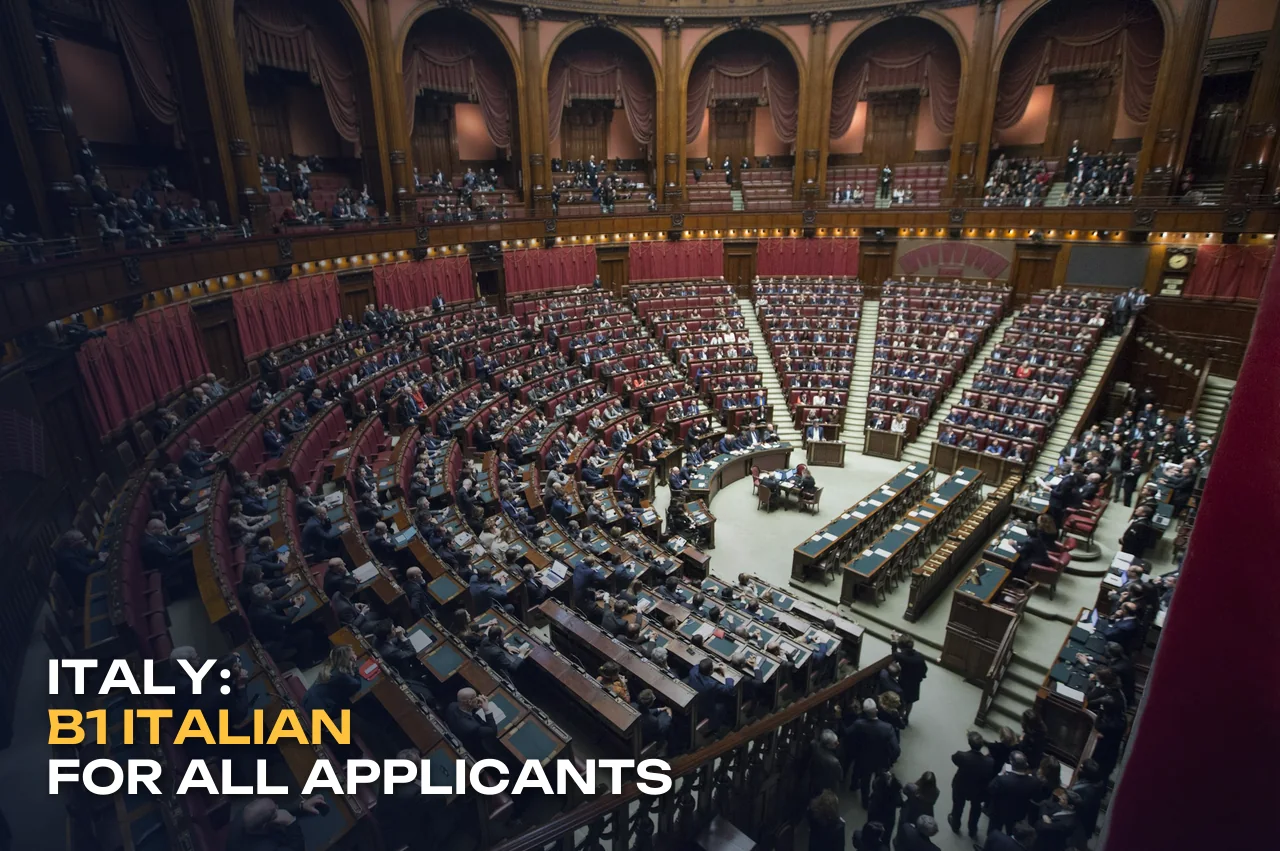 Italy · 25 OctItaly debates a citizenship bill: B1 certificate for all applicants and new grounds for revocation
 Saint Kitts and Nevis · 25 OctSaint Kitts and Nevis: citizenship for children and grandchildren of citizens born abroad after 1983
 European Union · 25 OctEU visa waiver for the Gulf states: the Council has started the process, but visas are still required
Personal programme selection is conducted by Anna Kovalevskaya, Head of Legal, BRIDGES.
Citizenship of Italy: preparation checklist
Documents prepared in advance, source of funds checks and where applications usually fail.
