Updated: June 2026

Case study · Turkey · Citizenship

How a Family with Adopted Children Obtained Turkish Citizenshipby Including All Children in a Single Application

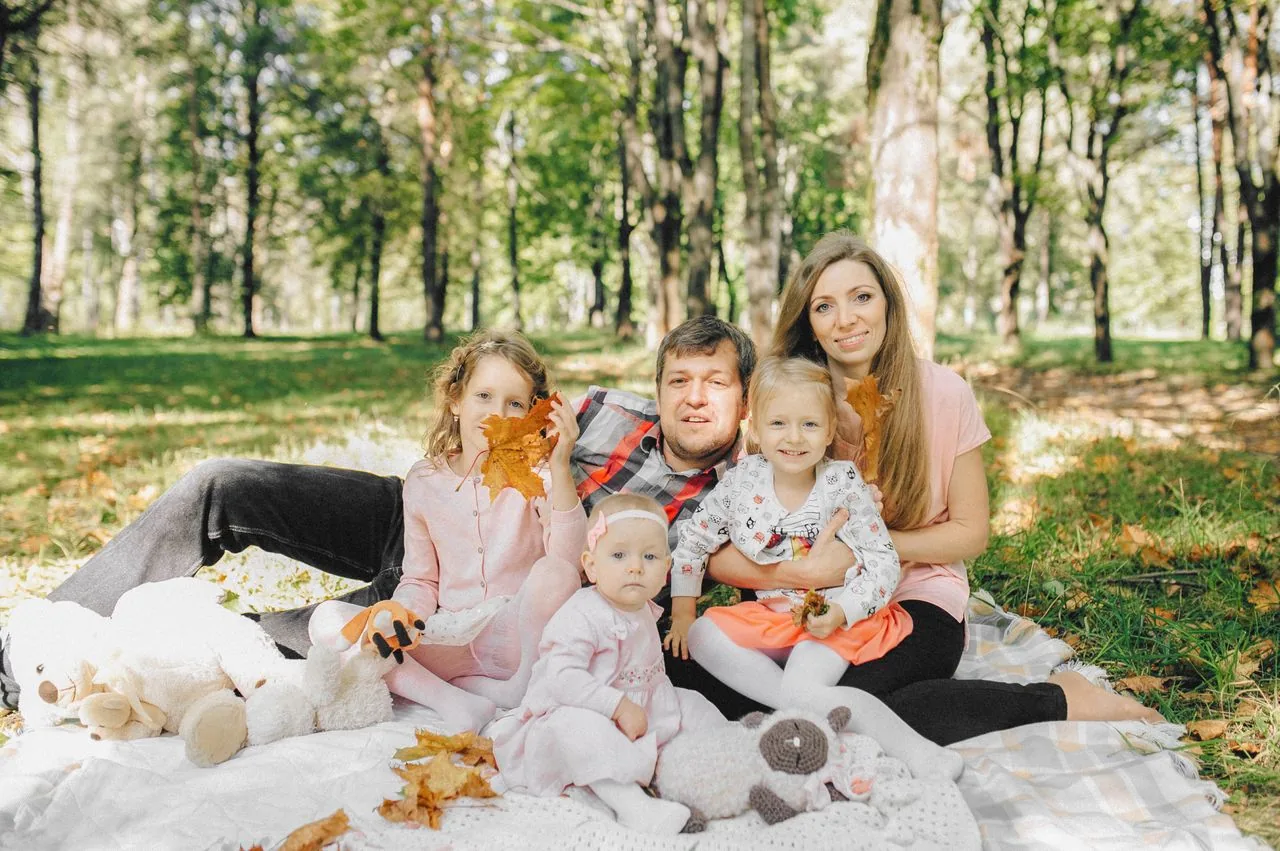
For parents, there are no "biological" and "adopted" children - there are simply their children, and they want all of them to receive new passports together. Andrey and Svetlana are raising four children: two biological and two adopted. When applying for Turkish citizenship through investment, they feared one thing - that the adopted children would be treated differently from the biological children, or not included at all. We will explain step by step how we confirmed the adoption relationship and processed all four children in a single application.

Anna KovalevskayaAnna KovalevskayaHead of Legal, BRIDGESReading time9 min readVerificationReviewed by an expert

This case is based on a real matter. The name and certain identifying details have been changed to protect confidentiality.

BRIDGES client story - How a Family with Adopted Children Obtained Turkish Citizenship by Including All Children in a Single Application
Contents

Case at a glance

Situation, solution and outcome in seven lines

Clients
Andrey and Svetlana, four children (two biological, two adopted)
Objective
Turkish citizenship through investment for the entire family
Concern
adopted children would not be included equally with biological children
Program
Turkey, Citizenship by Investment (Turkish Citizenship by Investment)
Legal Issue
to confirm adoption as the basis for including the children
Solution
to legalize adoption documents and process all children in a single application
Result
Turkish passports for all four children

Client story

Client Story

Where they started

Andrey and Svetlana have four children. Two were born into the family, and two were adopted several years ago - and for the parents there is no difference whatsoever: all four are growing up together, share one surname, and are one family. When the question of second citizenship arose, there was one condition: either all children receive passports, or there is no point.

Why the standard route did not work

The Turkish citizenship by investment program includes minor children in the application - this was the basis for including all four. However, the parents had a nagging question: does this apply to adopted children in the same way as to biological children? Would it be possible that biological children would be listed, while adopted children would be asked to apply separately or be refused altogether?

What BRIDGES had to solve

The subtlety here is not in the program itself, but in the documents. For a biological child, the relationship is proven by a birth certificate - a simple and familiar document. For an adopted child, the basis is adoption documents, and they must be properly executed and legalized for another country so that the Turkish authorities recognize the child as a family member of the applicant without reservation.

Why a standard answer would not do

The family approached BRIDGES precisely with this concern: to avoid losing the adopted children along the way. Our task was not simply to apply for citizenship, but to ensure that for the Turkish authorities, all four children were equally and indisputably the children of this family.

We have four, two adopted, and for us they are all equally ours. The biggest fear was that the biological children would be listed for citizenship, but the adopted ones would not, as if they were strangers. Anna immediately said: the children are equal, we just need to properly formalize the adoption for the Turkish authorities. She legalized all the documents, and our adopted children were included in the application equal to the biological ones. All four received passports together - the way it should be.
Andrey · Svetlana, Mother of Four ChildrenThe name and certain identifying details have been changed to protect confidentiality.

What Was at Risk

What Was at Risk

The program includes minor children of the applicant in citizenship, and the law does not distinguish between biological and adopted children. However, they are proven differently: a biological child through a birth certificate, an adopted child through adoption documents, which must be properly legalized for another country. The weak point is not in the law, but in the documents.

adopted children would not be recognized as family members without correct documents;

  1. 01biological children would be included, while adopted children would be asked to apply separately;
  2. 02adoption documents would not be accepted without legalization for Turkey;
  3. 03the case would be delayed due to questions about the status of the adopted children;
  4. 04the family would be separated in the process instead of going through it together.

The logic of the solution

How the matter progressed: from checks to result

The chart is built from the facts of this matter and shows the logic of the work without decorative or unverified data.

BasisStage 1

We immediately addressed the main concern and reframed the task. The parents feared that adopted children would "not be accepted"; we explained that all children have equal right to inclusion, and the work needed to be done with the documents. This shifted the situation from "what if they refuse" to "we need to properly execute the paperwork" - a concrete and solvable task, not a lottery.

  • 01
    Stage 2

    We collected and verified adoption documents. The basis of kinship for adopted children is precisely these documents, and we gathered their complete set: the adoption decree, updated birth certificates listing Andrei and Svetlana as parents. The complexity was in ensuring that the adoption was finalized and legally incontrovertible, without open questions that could emerge later.

  • 02
    Stage 3

    We legalized the documents for the Turkish side. An adoption document issued in one country must be legalized for another country (certified so it is recognized abroad) and officially translated. This was where the main technical work lay: we conducted legalization and sworn translation so that the Turkish side would accept the kinship of adopted children without reservation, just as it accepts a biological child's birth certificate.

  • 03
    Stage 4

    We consolidated all children into one family package. To ensure the application read as a case of one family, we structured all four children's documents in a unified framework: biological children through birth certificates, adopted children through legalized adoption documents, but in one package and under one surname. No division into "primary" and "supplementary" children.

  • 04
    Stage 5

    We structured the qualifying investment for the family. In parallel, we handled the investment basis of the program itself and confirmed the source of funds so that the financial aspect would not delay the family aspect. Citizenship by investment rests on two pillars - investment and family composition - and we prepared both simultaneously.

Takeaway. Conclusion: adopted and biological children are equal in the right to citizenship - the difference is only in documents. Properly legalized adoption makes an adopted child's kinship as incontrovertible as a biological child's birth certificate.

How we solved the task

How we solved the task

The work was split into verifiable stages so that every conclusion rested on documents.

  1. 01

    Stage 1

    We immediately addressed the main concern and reframed the task. The parents feared that adopted children would "not be accepted"; we explained that all children have equal right to inclusion, and the work needed to be done with the documents. This shifted the situation from "what if they refuse" to "we need to properly execute the paperwork" - a concrete and solvable task, not a lottery.

  2. 02

    Stage 2

    We collected and verified adoption documents. The basis of kinship for adopted children is precisely these documents, and we gathered their complete set: the adoption decree, updated birth certificates listing Andrei and Svetlana as parents. The complexity was in ensuring that the adoption was finalized and legally incontrovertible, without open questions that could emerge later.

  3. 03

    Stage 3

    We legalized the documents for the Turkish side. An adoption document issued in one country must be legalized for another country (certified so it is recognized abroad) and officially translated. This was where the main technical work lay: we conducted legalization and sworn translation so that the Turkish side would accept the kinship of adopted children without reservation, just as it accepts a biological child's birth certificate.

  4. 04

    Stage 4

    We consolidated all children into one family package. To ensure the application read as a case of one family, we structured all four children's documents in a unified framework: biological children through birth certificates, adopted children through legalized adoption documents, but in one package and under one surname. No division into "primary" and "supplementary" children.

  5. 05

    Stage 5

    We structured the qualifying investment for the family. In parallel, we handled the investment basis of the program itself and confirmed the source of funds so that the financial aspect would not delay the family aspect. Citizenship by investment rests on two pillars - investment and family composition - and we prepared both simultaneously.

  6. 06

    Stage 6

    We processed the entire family as one case through to passports. We submitted the application for everyone at once and managed it so that the children moved as a unified group. As a result, all four received Turkish citizenship - both biological and adopted - together with their parents, exactly as the family wanted from the beginning.

Expert comment

This case is about how the law cares about documents, while the family cares about feelings, and my work is to connect them. Andrei and Svetlana were terrified that adopted children would be left out. I always explain to such parents: the program does not divide children into biological and adopted; all minor children have equal right to inclusion. The only difference is in what proves kinship: for a biological child - a birth certificate, for an adopted child - adoption documents. And these must be impeccably legalized for Turkey, otherwise kinship will "hang in limbo." We did this: we executed the adoption in such a way that the Turkish side accepted the adopted children without a single question. All four received passports together. For me, every such case is about a family passing through whole, without losing anyone.

Anna Kovalevskaya, Head of Legal, BRIDGESAnna KovalevskayaHead of Legal, BRIDGES

Outcome

What the client received

What was required
How we did it · Result
Include adopted children on equal terms
work with adoption documents · children equal in the case
Recognition of kinship in Turkey
legalization and translation of documents · adoption accepted without reservation
Unified family composition
one package for all children · without division
Citizenship for everyone
one application with investment · passports for all four
Citizenship for everyone
one application with investment · passports for all four

What was: a family with two biological and two adopted children feared that the adopted children would not be included in Turkish citizenship on equal terms with the biological ones. What we did: reframed the task from "what if they refuse" to "properly execute the documents"; collected and verified adoption documents; legalized and translated them for the Turkish side; consolidated all children into one family package; in parallel, executed the investment and source of funds. What clients received: Turkish passports for all four children and parents in one case.

Practical takeaway

What matters in a similar situation

  • Conclusion: adopted and biological children are equal in the right to citizenship - the difference is only in documents. Properly legalized adoption makes an adopted child's kinship as incontrovertible as a biological child's birth certificate.
  • Andrei and Svetlana passed through as a complete family, without being divided into "biological" and "adopted" - exactly as they understand the word "children."

FAQ

Questions people ask in a similar situation

01Are adopted children included in Turkish citizenship by investment?

Yes. The program includes minor children of the applicant regardless of whether they are biological or adopted. The only difference is in the documents that prove kinship.

02How is the kinship of an adopted child proven?

Through adoption documents - the adoption decree and updated birth certificates listing the adoptive parents. For another country, they must be legalized and officially translated.

03What does it mean to legalize an adoption document?

To certify it so that a foreign state recognizes the document as valid and to attach a certified translation. Without this, the Turkish authorities may not accept the kinship of the adopted child.

04Can biological children be included while adopted children are not?

With properly executed adoption documents - no: all children have equal status. The risk of separation arises only from incorrect or non-legalized documents, not from the adoption itself.

05Do all children obtain citizenship simultaneously?

Yes, if they are included as a single family unit in one application. Then both biological and adopted children proceed together with their parents, without separating anyone into a separate case.

06Do you want Turkish citizenship for your entire family, including adopted children?

We will verify kinship of all children, legalize the adoption documents for the Turkish authorities, and process your family as one case - so that both biological and adopted children receive passports together with you.

About the author

Anna Kovalevskaya

Author: Anna Kovalevskaya

Head of Legal, BRIDGES

I have worked with citizenship and residency matters in European countries for 12 years. Programme requirements and application practices change, so I assess each matter against the current rules, the applicant's immigration history, family composition and the documents supporting the legal basis for the application.

I lead matters from the preliminary assessment through to the grant of status. In complex situations, I identify the circumstances that may affect the review, establish the legal logic of the application and oversee the consistency of the supporting documents at every stage.

During the consultation, you will receive an assessment of the available legal grounds, a clear understanding of the chosen route and a list of issues that should be resolved before filing. Once the engagement begins, I oversee the application and the key decisions of the BRIDGES team.

Prepared on the basis of BRIDGES practice and reviewed by a subject-matter expert.

Discuss your situation with Anna

We will review your situation and propose a solution

Describe your task in a few words. We will study your situation, assess the legal and practical options and propose the next step based on your goals, documents and country.

Confidential · no obligations · answered by the relevant specialist

Or message us on WhatsApp or Telegram

Anna KovalevskayaHead of Legal, BRIDGES
Anna Kovalevskaya, Head of Legal, BRIDGES

Names and certain details have been changed to protect client confidentiality. The result described reflects one specific situation and is neither a public offer nor a guarantee of a similar outcome. Programme terms are stated as of 2026 and may change - please confirm current parameters with a BRIDGES consultant.