Updated: June 2026

Case study · Hungary · Residence permit

How to Reunite an Elderly Father with Children in theEU When Austria Denies Ascending Relatives

Reunification with adult children for an elderly father is one of the most difficult in European migration: countries reluctantly admit ascending relatives. Boris's children had long lived in the EU, while he, elderly and alone at home, could not move to them: Austria, where part of the family lived, almost always denies ascending relatives. We explain step by step how we proved dependency and selected a route through Hungary, reuniting the family.

Anna KovalevskayaAnna KovalevskayaHead of Legal, BRIDGESReading time9 min readVerificationReviewed by an expert

This case is based on a real matter. The name and certain identifying details have been changed to protect confidentiality.

BRIDGES client story - How to Reunite an Elderly Father with Children in the EU When Austria Denies Ascending Relatives
Contents

Case at a glance

Situation, solution and outcome in seven lines

Client
Boris, elderly father; adult children living in the EU
Objective
Relocate to children, reunite in the EU
Barrier
Austria is extremely reluctant to grant residence permits to ascending relatives
Program
Hungary, Residence Permit (residence status in the EU)
Key Factor
Prove financial and household dependency on children
Solution
Route through Hungary + proof of dependency
Result
Father obtained EU residence permit, family reunited

Client story

Client's Story

Where they started

Boris's children had spent years building their lives in Europe and wanted one thing - to bring their elderly father who remained alone at home to live with them. The desire is understandable and human, but in European migration it is precisely this that is resolved most difficultly.

Why the standard route did not work

Reunification with ascending relatives - parents, grandparents - countries permit extremely cautiously. Austria, where part of the family lived, is almost closed for elderly parents: requirements for dependency and income are strict, denials are the norm. Attempting to push through the Austrian door specifically meant an almost guaranteed dead end.

What BRIDGES had to solve

At the same time, Boris had real, not fabricated dependency on his children: age, absence of independent sufficient income, need for care and support. This dependency needed to be not just stated, but demonstrably shown - and a country needed to be selected that actually processes such a route.

Why a standard answer would not do

The family turned to BRIDGES, understanding that the task was not to convince Austria, but to find a working reunification route in the EU and gather convincing proof of dependency to support it.

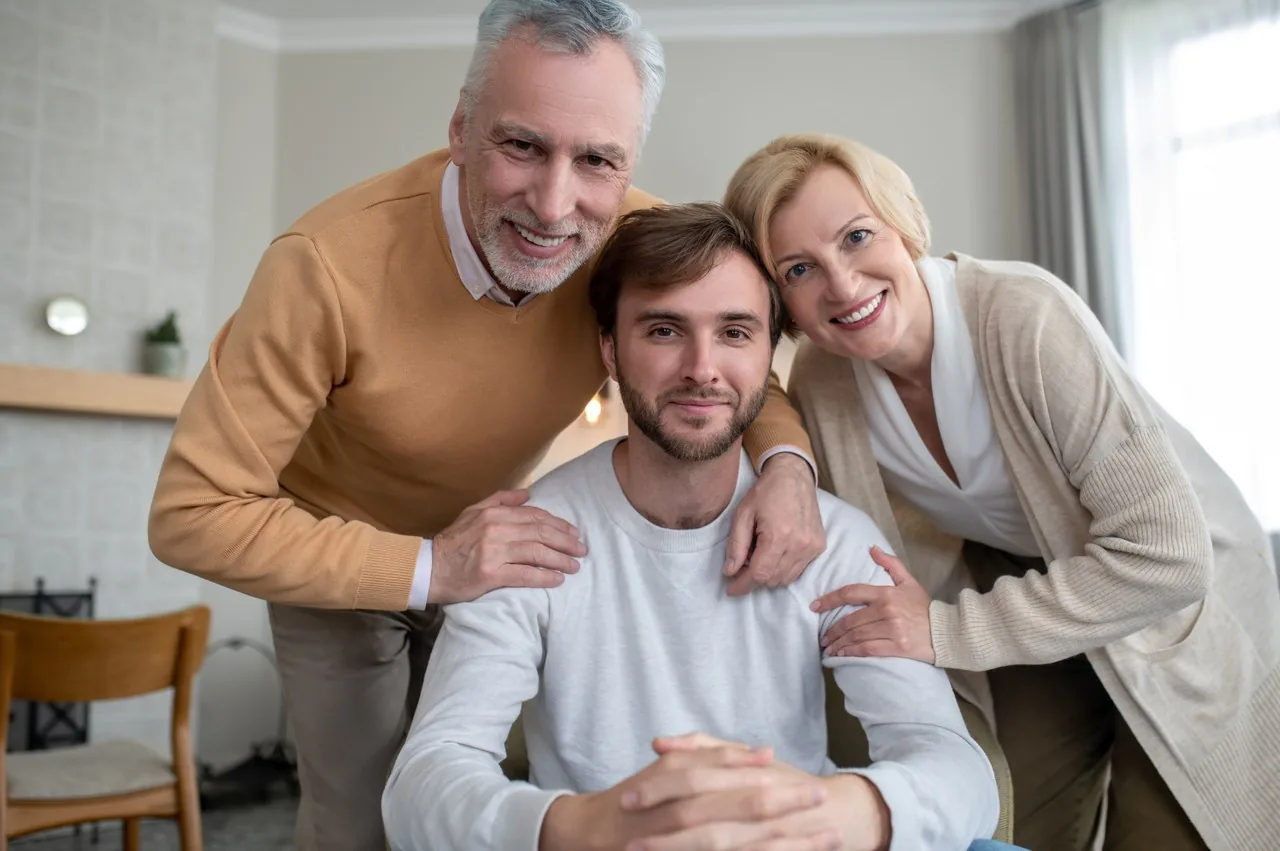
We wanted to bring our father to Europe with us, but Austria almost always denies ascending relatives - it was a dead end. Anna did not try to push through that wall: she proved that our father was genuinely dependent on us and conducted reunification through Hungary. Now Dad is with us, legally, in the EU. For us it was not about documents, but about having the whole family together again.

Boris · Boris's DaughterThe name and certain identifying details have been changed to protect confidentiality.

What Was at Risk

What Was at Risk

Reunification with elderly ascending relatives is the most difficult category: countries admit them reluctantly, and Austria almost never does. Attempting to push through a closed door is a dead end. The solution lies in proven dependency and selection of a route that actually processes such reunification.

Almost guaranteed denial for ascending relative status in Austria;

  1. 01Strict requirements for dependency and income with virtually no real chances;
  2. 02Years of attempts in a country that almost never admits this category;
  3. 03Leaving an elderly father alone at home without a legal path to his children;
  4. 04Weak, unconvincing proof of dependency without proper preparation.

The logic of the solution

How the matter progressed: from checks to result

The chart is built from the facts of this matter and shows the logic of the work without decorative or unverified data.

  1. 01
    Stage 1

    We assessed why Austria was a dead-end for Boris: reunification with ascending relatives is permitted extremely rarely, with strict criteria for dependency and income - and we abandoned the losing option

  2. 02
    Stage 2

    We confirmed the father's actual dependency on his children: we documented Boris's financial support by his children, absence of his own sufficient income, age and need for care - substantive proof, not mere declaration

  3. 03
    Stage 3

    We selected the reunification route through Hungary, where relocation of an elderly dependent father to his children is actually feasible, and verified applicability to this specific family

  4. 04
    Stage 4

    We compiled a comprehensive dependency file meeting Hungarian immigration authority requirements: evidence of financial support, family documents with apostille and certified translation, confirmation of housing and financial means of the receiving party

  5. 05
    Stage 5

    We filed the reunification application and guided it through the procedure, addressing authority requests with additional dependency evidence

Takeaway. The solution came not from persistence at an almost-closed Austrian door, but from proven dependency and a correctly chosen route. What seemed impossible became a solvable task

How we solved the problem

How we solved the problem

The work was split into verifiable stages so that every conclusion rested on documents.

  1. 01

    Stage 1

    We assessed why Austria was a dead-end for Boris: reunification with ascending relatives is permitted extremely rarely, with strict criteria for dependency and income - and we abandoned the losing option

  2. 02

    Stage 2

    We confirmed the father's actual dependency on his children: we documented Boris's financial support by his children, absence of his own sufficient income, age and need for care - substantive proof, not mere declaration

  3. 03

    Stage 3

    We selected the reunification route through Hungary, where relocation of an elderly dependent father to his children is actually feasible, and verified applicability to this specific family

  4. 04

    Stage 4

    We compiled a comprehensive dependency file meeting Hungarian immigration authority requirements: evidence of financial support, family documents with apostille and certified translation, confirmation of housing and financial means of the receiving party

  5. 05

    Stage 5

    We filed the reunification application and guided it through the procedure, addressing authority requests with additional dependency evidence

  6. 06

    Stage 6

    We obtained EU residence permit for Boris - the elderly father legally relocated to his children, and the family was reunited in Europe

Expert comment

Family reunification is why I practice this profession, and cases with elderly parents are the most touching and most challenging. Ascending relatives are admitted reluctantly, and Austria admits them almost never - it is pointless to fight that door. I always work from the individual: Boris had genuine dependency on his children, it had to be proven, not merely stated, and processed through a country that permits such reunification. We selected Hungary and compiled a comprehensive file. For me, this passport in the case file is not a document, but a father reunited with his children

Anna Kovalevskaya, Head of Legal, BRIDGESAnna KovalevskayaHead of Legal, BRIDGES

Outcome

What the client received

What was required
How we accomplished it · Outcome
Reunite father with children
Route through Hungary · Relocation completed
Circumvent Austria's refusal of ascending relatives
Country permitting family reunification · Dead-end eliminated
Prove dependency
Comprehensive file of financial support and care · Dependency confirmed
Legalize father in EU
Residence permit through family reunification · Status obtained
Legalize father in EU
Residence permit through family reunification · Status obtained

Boris obtained EU residence permit and relocated to his children: the Austrian dead-end with ascending relatives was circumvented through the Hungarian route, and the father's actual dependency on his children was proven through a comprehensive file. The family was legally reunited in Europe

Practical takeaway

What matters in a similar situation

  • The solution came not from persistence at an almost-closed Austrian door, but from proven dependency and a correctly chosen route. What seemed impossible became a solvable task
  • The case demonstrates: reunification with an elderly father is possible even where one country almost always refuses. Proof of actual dependency and selection of a route that permits such reunification are decisive

FAQ

Questions people ask in a similar situation

01Why is it difficult to relocate an elderly father to the EU?

Family reunification with ascendant relatives is permitted by countries with caution and stringent requirements regarding dependency and income. Austria admits this category extremely rarely.

02What does it mean to prove dependency?

To demonstrate documentally that an elderly parent is genuinely dependent on their children: financial support from them, absence of sufficient personal income, age, and care requirements. This requires substantive evidence, not merely a declaration.

03Why the route through Hungary?

Because Hungary permits family reunification of an elderly dependent parent with their children when dependency is proven, unlike Austria, which has effectively closed this category.

04What documents are required?

Proof of financial support for the parent from the children, family documents with apostille and certified translation, evidence of accommodation and financial means of the sponsoring party, and documentation of dependency and care needs.

05Is reunification guaranteed?

The immigration authority makes the decision. With genuine dependency, a complete file, and the correct route selected, the chances are high, but no consultant can provide a guarantee.

06Do you wish to bring your elderly parent to the EU with you?

We will establish genuine dependency and select a family reunification route that permits it—for example, through Hungary—to legally reunify your family in a jurisdiction where another country would refuse.

About the author

Anna Kovalevskaya

Author: Anna Kovalevskaya

Head of Legal, BRIDGES

I have worked with citizenship and residency matters in European countries for 12 years. Programme requirements and application practices change, so I assess each matter against the current rules, the applicant's immigration history, family composition and the documents supporting the legal basis for the application.

I lead matters from the preliminary assessment through to the grant of status. In complex situations, I identify the circumstances that may affect the review, establish the legal logic of the application and oversee the consistency of the supporting documents at every stage.

During the consultation, you will receive an assessment of the available legal grounds, a clear understanding of the chosen route and a list of issues that should be resolved before filing. Once the engagement begins, I oversee the application and the key decisions of the BRIDGES team.

Prepared on the basis of BRIDGES practice and reviewed by a subject-matter expert.

Discuss your situation with Anna

We will review your situation and propose a solution

Describe your task in a few words. We will study your situation, assess the legal and practical options and propose the next step based on your goals, documents and country.

Confidential · no obligations · answered by the relevant specialist

Or message us on WhatsApp or Telegram

Anna KovalevskayaHead of Legal, BRIDGES
Anna Kovalevskaya, Head of Legal, BRIDGES

Names and certain details have been changed to protect client confidentiality. The result described reflects one specific situation and is neither a public offer nor a guarantee of a similar outcome. Programme terms are stated as of 2026 and may change - please confirm current parameters with a BRIDGES consultant.