Residency · Spain
The digital nomad visa in Spain: the Digital Nomad Visa in 2026
Updated: June 2026·10 min read·Expert reviewed
Terms and costs verified: June 2026
Contents
Spain introduced its digital nomad visa under the Startup Law (Ley de Startups) in January 2023 — and immediately became one of the most discussed destinations in the remote-work community. The Beckham Law gives a flat tax rate of 24% for six years instead of a progressive scale rising to 47%, and the route to Spanish citizenship takes ten years. Barcelona, Malaga and Alicante appear consistently in European rankings of cities for remote professionals. Below is a full account of the programme: requirements, tax, documents and the real cost of living.
Requirements for the applicant: who qualifies
The Spanish digital nomad visa (Visado para Trabajo a Distancia) is governed by article 14 of the Startup Law (Ley 28/2022). The core requirement is that you work remotely for an employer or clients registered outside Spain, and that no more than 20% of your income comes from Spanish sources.
The key selection criteria:
- Employment relationship: a current employment contract with a foreign company (with at least three months of service with that employer) or evidence of a stable relationship with foreign clients as a freelancer.
- Income: at least €2,520 a month net, which is 200% of the Spanish minimum wage (€1,134 a month in 2024). For every additional family member included in the application, add 75% of the minimum wage (about €850).
- Education: a higher education degree or documented professional experience of at least three years in a relevant field. Spanish consulates usually accept apostilled diplomas without requiring formal recognition.
- Clean record: no criminal convictions in Spain or in your country of residence over the past five years, evidenced by an apostilled certificate.
- Residence status: the applicant must not be in Spain unlawfully at the time of filing.
The requirement that the employer has existed for at least a year deserves separate attention. Start-ups registered less than twelve months ago formally do not qualify as proof of employment. If you work for a recently incorporated company, discuss this with an immigration lawyer in advance.
Self-employed applicants may file for this visa if they have several clients abroad and none of them is a Spanish company or a Spanish-resident individual accounting for more than 20% of their income.
Documents: the full list, with the detail that matters
The document pack for the Spanish digital nomad visa is substantial. We recommend starting to assemble it two to three months before the intended filing date.
The mandatory pack:
- Travel passport — valid for at least one year beyond the intended date of entry, with two blank pages.
- Visa application — form EX-09, completed in Spanish.
- Photographs — two, in biometric format.
- Employment contract or client contracts — stating the position, the salary or fee and the option of remote work, with a certified translation into Spanish.
- Three months of bank statements — confirming regular income. The statements are translated into Spanish. A balance of €10,000 or more is desirable.
- Medical insurance — valid in Spain, with cover from €30,000 and no deductible. Insurers commonly used by non-residents are Cigna Global, Allianz Care and AXA International.
- Certificate of no criminal record, apostilled. It is valid for 90 days from issue, and a certified translation into Spanish is mandatory.
- A tenancy agreement in Spain or a hotel or apartment booking covering at least two months. In practice consulates accept a preliminary agreement.
- Education diploma with an apostille and translation, or documents evidencing professional experience.
All foreign documents drawn up in a language other than Spanish or English require an official sworn translation (traductor jurado). A page costs €20 to €40.
The Beckham Law: 24% tax for six years
The Beckham Law is the popular name for the Especialidad Fiscal Aplicable a Trabajadores Desplazados a Territorio Español. The regime acquired its nickname from David Beckham, who used it after moving to Real Madrid in 2003.
What the regime does: for the first six years of tax residence in Spain, an individual pays a flat 24% on income up to €600,000 a year, with income above that threshold taxed at 47%. The standard progressive Spanish income tax rate runs up to 47% on high incomes (45% federal plus up to 5% regional).
The conditions for applying the Beckham Law:
- You were not a Spanish tax resident during the previous five years.
- The move to Spain is connected with an employment relationship or economic activity.
- The application is filed within six months of registration with the Spanish social security authorities.
Filing is made on modelo 149 to the Spanish tax authority (AEAT). Once approved, you receive a tax certificate for the special regime and file an annual return on form 151 — the simplified form, rather than the standard form 100.
A practical calculation: on income of €6,000 a month (€72,000 a year), the standard tax burden would be roughly €22,000 to €25,000. Under the Beckham Law it is €72,000 × 24% = €17,280. That is a saving of €5,000 to €8,000 a year, or €30,000 to €48,000 over six years.
One point worth stating clearly: the Beckham Law still covers both Spanish and foreign income, on the worldwide basis that applies to residents. Unlike Greece, Spain does not apply the territorial principle — you pay tax on your worldwide income, but at a preferential rate. For income up to €600,000 that remains more favourable than the standard progression.
From visa to residence: the stages of legalisation
The Spanish route is structured in clear stages with predictable timings.
Stage 1 — the D visa (the first year): filed at a Spanish consulate. Once approved, you receive a one-year visa on which you enter Spain. Within 30 days of arrival you must register with the municipality (padrón municipal) and obtain an NIE (Número de Identidad de Extranjero), the foreigner's identification number.
Stage 2 — the residence card (three years): after entering on the D visa, the applicant is entitled to file for residence inside Spain through the Oficina de Extranjería. The first residence permit is issued for three years and is then extended for a further two.
Stage 3 — permanent residence (after five years): after five years of continuous lawful residence in Spain you are entitled to permanent residence (autorización de residencia permanente). The requirements are no long breaks in residence (no more than six consecutive months), no criminal offences and sufficient income.
Stage 4 — citizenship (after ten years): the standard route to Spanish citizenship is ten years of lawful residence, one of the longest terms in the EU. The requirements are the DELE A2 Spanish language test, the CCSE test on Spanish culture and society, no criminal record and integration into Spanish society.
There is an exception: for citizens of Latin American countries, the Philippines, Equatorial Guinea, Portugal and Andorra, the term for citizenship is reduced to two years. Russian citizens do not have that privilege — for them the standard ten years applies.
Barcelona, Malaga, Alicante: where to live
Spain offers contrasting options: expensive metropolitan centres and considerably more affordable cities on the Mediterranean coast.
Madrid: the capital, the largest business centre and the best-connected city in the country. A one-bedroom flat in the centre rents for €900 to €1,500 a month. The cost of living is comparable to Berlin or Amsterdam. A good base for anyone who values urban pace and international networking.
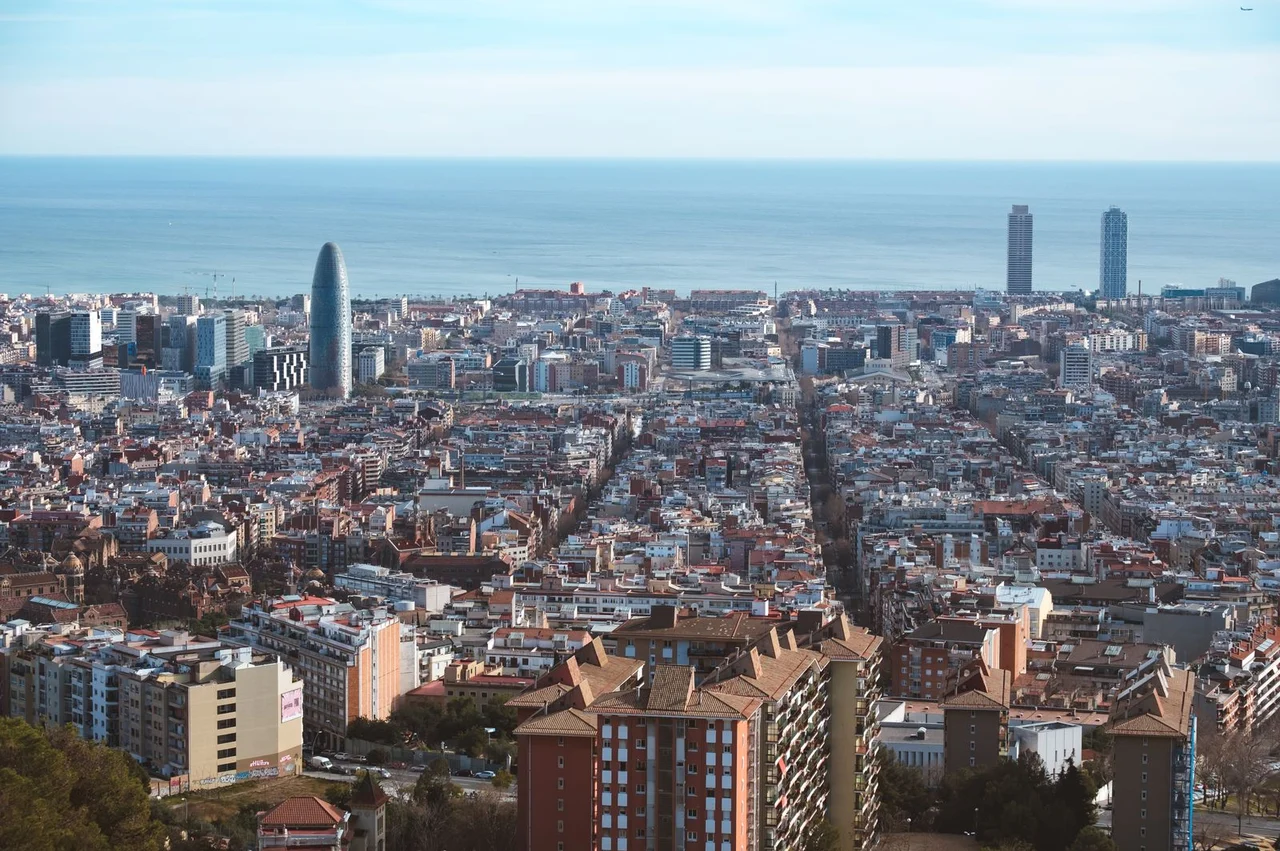
Barcelona: traditionally popular with remote professionals. The climate is milder than Madrid's, the sea is close and the architecture is world class. Rent runs from €800 to €1,400 in the central districts (Eixample, Gràcia). The drawback is petty theft: pickpocketing is a genuine problem for visitors and new arrivals alike.
Malaga: the fastest-growing city for remote professionals in Spain. Rent is €600 to €1,000 and the climate delivers 320 sunny days a year. The city has established itself as "Málaga Valley", a technology hub where Amazon, Google and Vodafone have opened offices, with a well-developed co-working infrastructure.
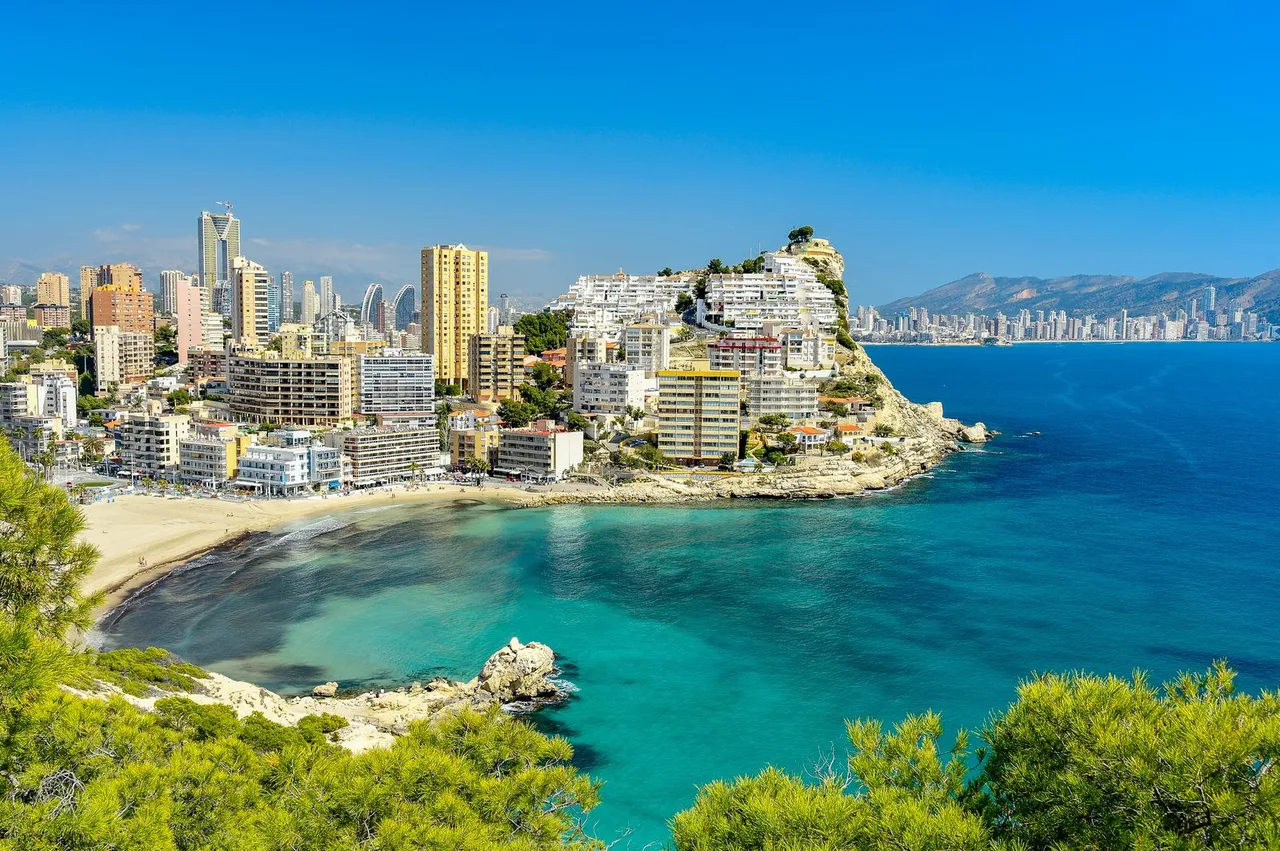
Alicante: more affordable still, with rent from €500 to €900. The beaches are close (Postiguet is within the city) and AVE high-speed trains connect it with the rest of Spain. There is less networking, but it is noticeably calmer.
Bilbao: an unconventional but interesting option for anyone drawn to Basque culture and Gehry's architecture. It rains, but the environment is clean, the infrastructure developed and rent runs from €700 to €1,100.
An average budget in Spain (Malaga or Alicante) is €1,800 to €2,500 a month. In Madrid or Barcelona it is €2,500 to €3,500.
Consulates: where to file from the CIS
Spanish consulates accept digital nomad visa applications under the standard appointment system.
Belgrade (Serbia) is the most convenient filing point for Russian citizens living in Serbia. The Spanish embassy accepts every category of application. The wait for an appointment is three to six weeks. Serbia requires no visa from Russian citizens, which makes Belgrade accessible as a filing point.
Istanbul (Turkey) hosts the Spanish Consulate General. Istanbul is a large consular hub and the load is heavy: the wait for an appointment is four to eight weeks, so book well in advance.
Tbilisi (Georgia) hosts the Spanish embassy and is available to citizens of Russia, Kazakhstan and Ukraine. Capacity is lower than in Istanbul, but the queue is usually shorter at two to four weeks.
Moscow: the Spanish embassy operates as normal. There are, however, no direct flights from Moscow to Spain, which can make the logistics awkward for anyone who has already left Russia.
Documents are filed in person at every consulate. The consular fee is €80. Once approved, the visa is issued within five to seven working days of the positive decision. The full review period runs from 20 to 30 working days.
Advantages and limitations: a realistic view
The Spanish programme is one of the best developed in the EU, but it has features you should understand before filing.
The strengths:
- The Beckham Law delivers a real tax saving over six years at any high level of income.
- A high quality of life: the Mediterranean climate, the food, the safety.
- Developed infrastructure for remote professionals, particularly in Malaga and Barcelona.
- Spanish opens a market of more than 500 million people in Latin America.
- A route to an EU passport, even if it takes ten years.
- National healthcare is available to residents through the social security system.
The limitations:
- The strict 20% rule: if Spanish clients come to account for more, you have to change the type of permit. That is a genuine constraint on growing a business inside Spain.
- Bureaucracy: the Spanish administrative system is slow, and appointments at state offices can take weeks.
- The cost of living is several times higher than in Georgia or Armenia.
- Citizenship after ten years is the longest term in the EU for applicants from the CIS; Portugal and Greece are shorter.
- The DELE A2 and CCSE examinations for naturalisation require preparation.
Spain suits professionals earning €5,000 a month or more who want EU residence with a tax advantage and a high quality of life. On income of €2,500 to €4,000 the gain from the Beckham Law is comparatively modest, and competing options are worth weighing — Portugal (where the Non-Habitual Resident regime changed substantially in 2024) or Greece.
How to prepare for filing: a practical plan
Proper preparation reduces the risk of refusal and speeds up the process.
Three to four months ahead: order the certificate of no criminal record — in Russia this is issued by the Ministry of Internal Affairs and takes up to 30 days. At the same time, ask your employer for an official letter confirming the remote format of the work, your position and your salary.
Two to three months ahead: obtain the apostille on the criminal record certificate and on your diploma. Find a sworn translator (traductor jurado) in your home country or at the filing point; a full pack costs €200 to €400 to translate. Arrange international medical insurance.
One month ahead: book the consular appointment. Arrange housing in Spain, at least a provisional apartment booking for two months. Prepare bank statements for the last three months, stamped by the bank.
The week before filing: check every document against the consulate's official checklist. Make sure each one is translated, apostilled where required and still in date. The criminal record certificate is valid for 90 days, so watch that deadline.
After entering Spain you have 30 days to register with the municipality and file the residence application. We recommend engaging a local gestor, a documents specialist: the cost starts at €300 and the time saved is measured in weeks.
Frequently asked
Questions people ask before deciding
01Can I file for the Spanish digital nomad visa from Russia without leaving?
Partly. The Spanish embassy in Moscow operates as normal and accepts documents, but there are no direct flights from Russia to Spain, which complicates the logistics after approval. Many applicants file through Belgrade, Istanbul or Tbilisi, where the onward flight is not a problem.
02Do I have to live in Spain permanently at the visa and residence stage?
Yes. This is an immigration status, not a tourist one. To obtain permanent residence after five years you cannot interrupt your residence for more than six consecutive months. Digital nomad status does not mean unrestricted freedom of movement.
03Does the visa work for couples and families?
Yes. A partner and children are included in the application, but the income requirement rises: each additional family member adds 75% of the Spanish minimum wage (about €850) to the base threshold of €2,520 a month.
04My income is in roubles — is that a problem?
Not technically, but the euro equivalent at the date of filing is what counts. The €2,520 threshold is evidenced by three months of bank statements translated into Spanish by a sworn translator (traductor jurado).
05Can I work with Spanish clients at the same time?
Only to a limited extent. No more than 20% of income may come from Spanish sources; above that you need a different type of permit rather than the digital nomad visa.
06What is the NIE and when do I need to obtain it?
The NIE (Número de Identidad de Extranjero) is the Spanish foreigner's identification number. It is obtained within 30 days of entry, together with registration at your place of residence (padrón municipal). Without an NIE you cannot open an account, sign a tenancy agreement or apply for residence.
07How long does the application take?
Officially 20 to 30 working days from filing, plus five to seven working days to issue the visa after approval. The consular fee is €80.
08Do I need Spanish for the visa?
Not for the visa itself. For citizenship after ten years you must pass the DELE A2 language test and the CCSE test on Spanish culture and society; unlike applicants from Latin America, Russian citizens have no exemption.
09What does the Beckham Law give and how long does it last?
A flat tax rate of 24% on income up to €600,000 a year, instead of a progressive scale rising to 47%, for the first six years of tax residence. On income of €72,000 a year the saving is €5,000 to €8,000 annually.
10Can I work for several foreign clients at once?
Yes, that is the normal position for a freelancer. The condition is the same: no more than 20% of income in total from Spanish sources, with the rest from foreign employers or clients.
Transparency
How this material was prepared
- Author
- Sofia Mendes, investment Programs Expert, BRIDGES
- Terms and costs last verified
- June 2026
- Sources
- official government authorities of the relevant country and state publications
- Methodology
- government minimum requirements are stated separately from due diligence charges, state fees, legal and banking costs
Sources and methodology
Figures, terms and timelines are checked against official sources as of June 2026. Link availability verified in August 2026. Third-party blogs and agent websites are not used as a source of programme terms.
- [1]Ministerio de Inclusión, Seguridad Social y MigracionesResidence statuses and how to applywww.inclusion.gob.es/web/migraciones
- [2]Ministerio de Asuntos ExterioresConsular services and visaswww.exteriores.gob.es/es/Paginas/index.aspx
Methodology: tables and charts state government minimum investment requirements; due diligence charges, state fees, legal, banking and other costs are calculated separately and are not included in the minimum thresholds.
About the author
Related materials
What to read next
 ComparisonGreece or Spain in 2026: golden visa, residence permit, taxes, real estate - what to choose
 AnalysisWhat is due diligence and why the Caribbean is rejecting applications
 ArticleGolden Visa Испании: ВНЖ через инвестиции 2026
Personal programme selection is conducted by Anna Kovalevskaya, Head of Legal, BRIDGES.
Residency in Spain: timelines and requirements
Grounds, document list, presence requirements and what is needed for renewal.
