Residency · Portugal
Tourism in Portugal 2026: what to see - Lisbon, Sintra, Porto, the Algarve, and Madeira

Updated: June 2026·12 min read·Expert reviewed
Terms and costs verified: June 2026
Contents
Portugal is a country impossible to cover in one trip: there's pastel Lisbon with a rattling tram over the hills, Sintra's fairy-tale palaces, Porto's wine cellars over the Douro river, the Algarve's turquoise caves, and Madeira's levadas amid the ocean. This practical regional guide will suggest what to see in 2026, in which season to chase each impression, what to try from local cuisine, and what visa a tourist from Russia needs. right away: the country is an EU and Schengen member, so a Schengen visa will be needed for the trip, and it's better to plan the itinerary for spring or autumn.
Portugal at a glance: why people come back
Portugal is compact by European standards, but the density of impressions here is off the charts. From north to south the country changes beyond recognition: granite, wine, rainy Porto - and sunny, beachy, relaxed Algarve; imperial Lisbon - and quiet fishing villages; the mainland - and two ocean archipelagos, Madeira and the Azores. In a week you can realistically see two to three key spots with no rush, in two - assemble a full mosaic of the country.
An important advantage over other southern destinations: Portugal is an EU and Schengen Area member, and entry with a Schengen visa opens not just it, but neighboring countries too. At the same time prices here are noticeably kinder than in France or Italy, and the Atlantic coast gives that same wild beauty absent from the calm Mediterranean.
Climate is a separate argument for the country. Summer is dry and warm, winter is mild, and the off-season is almost the ideal time to visit. We keep a detailed month-by-month breakdown in our article onPortugal's climate and weather, and it's worth checking before buying tickets.
Lisbon: hills, tram 28, and the Belem district
The capital is loved for being both majestic and homey at once. Lisbon spreads across seven hills over the mouth of the Tagus river, and it's exactly the terrain that sets its character: steep streets, miradouro viewpoints at every turn, creaky funiculars, and the legendary yellow tram 28, which winds through the old quarters like an attraction through a living city.
What to definitely see in Lisbon:
- Belem- a grand waterfront quarter with the Belem Tower and the magnificent Jeronimos Monastery, monuments of the Age of Discovery. This is also the birthplace of authentic pastel de nata.
- Alfama- the oldest, Moorish-patterned district: a maze of alleys, hanging laundry, evening taverns with live fado - Portugal's romance of longing and love.
- Baixa and Chiado- the lower town with Comercio Square by the river, shopping streets, and historic cafes.
- Tram 28- not just transport, but a separate attraction: the route runs through Graca, Alfama, and Estrela.
Budget at least two to three days for Lisbon. If you're eyeing the city as more than a tourist, check our guide onlife in Lisbon- it covers both districts and everyday life.
Sintra: Pena Palace, Regaleira, and romantic hills
Half an hour's drive from Lisbon hides the country's most fairy-tale city - Sintra. Cool wooded hills, morning fog, and a scattering of palaces made it the summer residence of Portuguese kings and aristocracy, and today - a UNESCO site and a mandatory stop on any itinerary.
Sintra's main spots:
- Pena Palace- a calling card: a bright yellow-and-red romantic castle atop a hill, an eclectic mix of styles, surrounded by a huge park with exotic plants.
- Quinta da Regaleira- an estate with a mystical park, grottoes, underground tunnels, and the famous "Initiation Well" - a spiral shaft descending underground.
- The Moorish Castle- ancient fortress walls along a hill ridge with ocean views.
- The National Palace of Sintra- right in the city center, with two characteristic white conical chimneys.
A timing tip: the peak visiting period is June-September, and at this time queues and slots for Pena Palace and Regaleira sell out in days. It's better to go in the off-season (April-May or October-November), on a weekday, booking palace tickets online in advance. One full day lets you see two to three sites with no rushing.
Porto: Ribeira, port wine cellars, and the Douro river
The country's second city is its wine and granite soul. Porto is starker and more atmospheric than Lisbon: dark stone, azulejo tiles, steep descents to the Douro river, and famous bridges, among which the two-tier Dom Luis I Bridge is the city's most recognizable silhouette.
What to see in Porto:
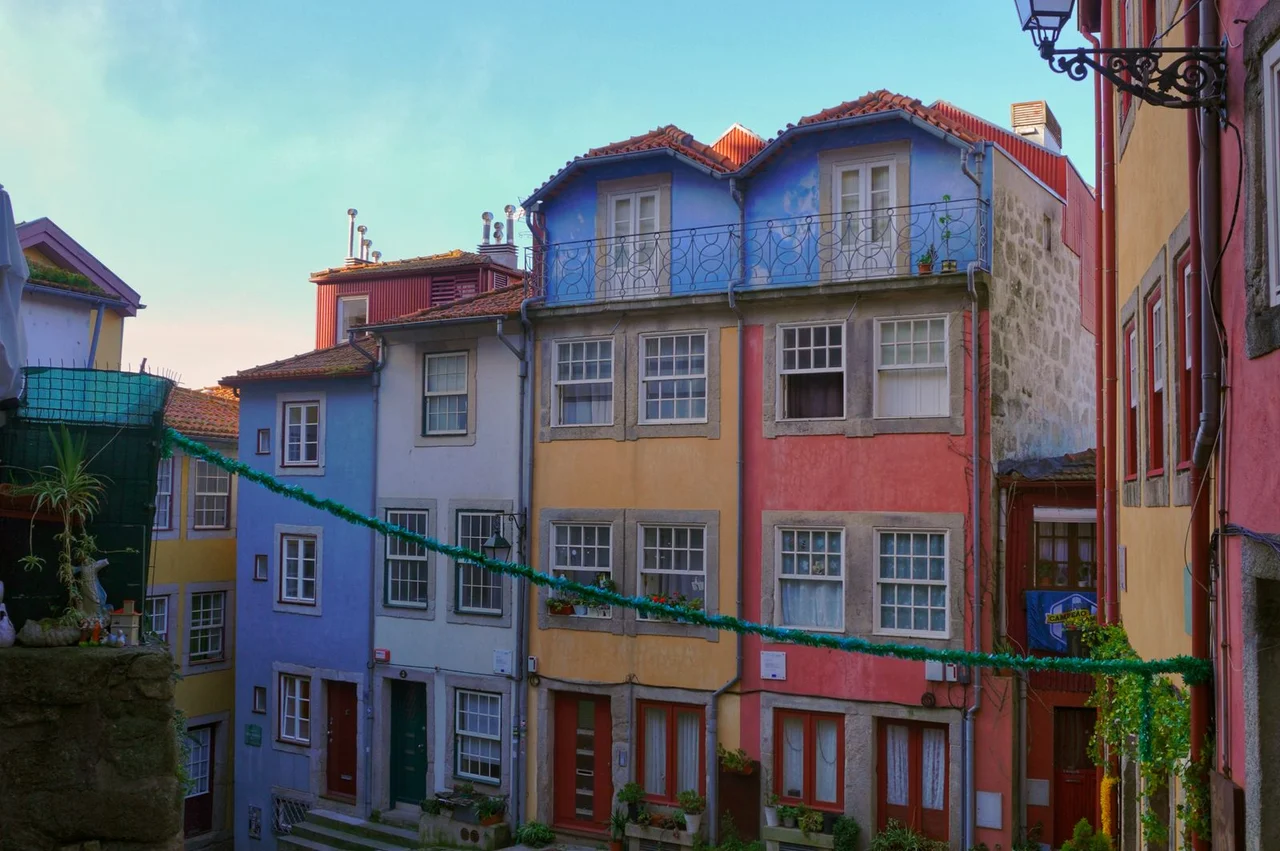
- Ribeira- an old waterfront quarter with colorful houses along the promenade, a UNESCO site, and the heart of evening life.
- Port wine cellars- located on the other bank, in the Vila Nova de Gaia district. It's exactly here that the fortified wine ages in oak barrels; almost all the famous houses offer tours with tastings.
- Lello Bookshop, Sao Bento stationwith azulejo panels, the Clerigos church with a viewing tower.
From Porto it's convenient to head tothe Douro river valley- terraced vineyards, a UNESCO site, and port wine's birthplace. People go there by train along the river, by car, or on a river cruise - one of Europe's most picturesque routes. If the city really caught your interest, check our guide onlife in Porto.
The Algarve: beaches, cliffs, and Benagil Cave
The south coast is postcard Portugal: golden and honey-colored cliffs, turquoise water, a warmed Atlantic, and hundreds of beaches for any taste. The Algarve is the country's main beach destination, and the season here is longer than on the mainland: swimming is comfortable from late May through September.
The region's landmark spots:
- Benagil Cave- Europe's most photographed sea cave, with a natural "window" in the ceiling and a beach inside. It's important to know the new rules: since 2024, to protect the grotto, you can only get inside with an organized tour (boat, kayak, or SUP board), landing on the sand inside is banned, and viewing time is limited - around a couple of minutes for motorboats and a few minutes for kayaks.
- The beaches of Lagos and Albufeira- Praia da Marinha, coves with arch cliffs, the Seven Hanging Valleys trail.
- Cape Sao Vicente- Europe's southwestern tip with a lighthouse over a cliff.
- Faro and Olhao- the Ria Formosa natural park with lagoons and islands.
The best time for the Algarve is late spring and September: the sea is already or still warm, and there are no August crowds. For those thinking about more than a vacation, our guide is useful onlife in the Algarve.
Madeira and the Azores: levadas, volcanoes, and the ocean
Portugal's Atlantic islands are a separate universe many come to the country for. If the mainland is about cities and beaches, Madeira and the Azores are about wild nature, trekking, and the ocean's quiet.
Madeira- an evergreen volcanic island a bit over a thousand kilometers from Lisbon, nicknamed the "island of eternal spring" for its mild climate year-round. The main feature -levadas, old irrigation canals along which walking trails run through laurel forests (laurisilva, a UNESCO site), to waterfalls and mountain peaks. The capital Funchal, the Cabo Girao viewpoint over a cliff, tasting madeira - the island's fortified wine, and the Monte cable car.
The Azores- nine green islands amid the ocean: the Sete Cidades crater lakes, thermal springs, whales and dolphins offshore, hydrangeas along the roads. This destination is for those wanting untouched nature and ready for changeable ocean weather.
Direct flights to the islands go from Lisbon and Porto. Madeira's season is year-round, but spring and autumn are more comfortable for trekking; on the Azores whales are best observed from April to September.
Gastronomy: pastel de nata, seafood, and wine
Food in Portugal is a full-fledged reason to travel, not an add-on to it. The cuisine here is simple,, and generous: an emphasis on fresh fish, seafood, olive oil, and baked goods.
What to definitely try:
- Pastel de nata- a custard tart in a crispy flaky shell, sprinkled with cinnamon. The reference ones are served in the Belem district in Lisbon, but they're loved throughout the country.
- Bacalhau- dried salt cod, the number one national product; they say the Portuguese have a recipe for every day of the year.
- Fresh seafood- grilled sardines (especially in summer), octopus, shrimp, ameijoas clams.
- Francesinha- Porto's hearty "sandwich" under melted cheese and beer sauce.
- Wines- port wine from the Douro Valley, vinho verde green wine from the north, madeira from the island, Alentejo table wines.
Coffee culture is also its own: a small strong espresso here is called a "bica". And lunch at a simple tasca tavern with a daily menu will be inexpensive and feed you better than any tourist restaurant.
Practical tips for tourists: money, transport, safety
A few things that make traveling around Portugal noticeably more comfortable and help avoid typical pitfalls.
- Money.The currency is the euro, cards are accepted almost everywhere, but cash is useful in small taverns and markets. Tips aren't mandatory, rounding up the bill is the norm.
- Transport.Between major cities there are convenient trains and buses. In Lisbon and Porto get a transport pass, it saves on the metro, trams, and funiculars.
- Language.In tourist spots they explain in English, but basic "obrigado" (thank you) and "bom dia" (good day) are met warmly.
- Safety.The country is calm, the main risk is pickpockets in Lisbon's tourist crowds and on tram 28. Keep documents and your phone on you.
- Outlets- European type C/F, 230V; travellers from the UK or the US will need an adapter.
And also: budget a day buffer. Queues in Sintra, limited Benagil slots, transfers between regions - all this eats time, and a tightly minute-packed itinerary quickly falls apart. It's better to see less, but with no rush.
An expert's view: how not to ruin the trip, and what to consider in advance
Over years of working with clients who travel to Portugal both as tourists and with an eye on relocating, a short list has formed of what most often ruins the impression - and is easily prevented.
- Traveling in the wrong season.August in the Algarve and Sintra means crowds and overpaying. Shifting a month or two either way radically changes the vacation's quality.
- Ignoring Benagil's new rules.People come intending to "swim to the cave on their own" and run into 2024's bans. The tour needs booking in advance.
- Underestimating visa timelines.Applying for a Schengen visa a week before the flight is a risk of not making it. Budget a month's buffer.
- An overly packed itinerary.Trying to see both the mainland and both islands in a week is exhausting. Two spots with no rush is better.
And separately: if you liked the trip so much you've thought about life in the country, don't delay checking conditions - visa regimes and migration rules change, and what was current yesterday can look different today. Before any decisions, check against fresh official data and don't build plans on outdated figures.
Bottom line: where to start getting to know Portugal
Portugal is good in that it fits any format: you can come for a week for cities and palaces, or for the Algarve's beaches, or for the islands' wild nature. The ideal first visit is the Lisbon, Sintra, and Porto with the Douro Valley combination: over a week to ten days you'll see both the imperial capital and Sintra's fairy tale, and the north's wine soul, and taste the country's gastronomy.
The main thing is not to try to embrace the unembraceable in one trip and go in the right season: spring and autumn give the best weather with no summer crowds. And once the basic itinerary is done, Portugal usually pulls you in - and then you want to go deeper: to Madeira, the Azores, Alentejo, or even think about living here longer. For a tourist from Russia, there's one starting point - a Schengen visa processed in advance and checking fresh entry rules on the official portal ofgov.pt.
Not sure which country and status to choose?
We will compare suitable residency programs on budget, timelines and stay requirements - with a full cost calculation for your family.
Free of charge, we reply right away, no obligation.
When to go: seasons and weather by region
The universal answer is spring and autumn. In April-June and September-October it's mild, sunny, and not stuffy across the country, and most importantly - no summer crowds and peak prices. Summer (July-August) is the high season: hot, crowded, pricier, but perfect for beaches. Winter is mild, especially in the south and on the islands, but it can be rainy in the north.
The logic differs slightly by region:
- Lisbon and Sintra- comfortable spring through autumn; in summer Sintra is cooler than the capital thanks to the hills and fog.
- Porto and the Douro- late spring and early autumn are best; the vineyards are especially beautiful during the September harvest.
- The Algarve- the beach season from late May to September; the off-season is good for walking routes along the cliffs.
- Madeira- year-round, but spring and autumn are more pleasant for the levadas;The Azores- from late spring to early autumn.
Details on water temperature, rain, and wind are in a separate article onPortugal's climate by month- check it against your specific dates.
"I always advise starting getting to know Portugal not by trying to see everything at once, but by choosing the season and two to three spots. The most common tourist mistake is coming in August, cramming both the mainland and the islands into a week, and then remembering not Sintra's palaces, but the queues and heat. Shift the trip to spring or autumn - and the country reveals itself completely differently. And separately on practicalities: process the category C visa in advance, with a month's buffer, and check rules like Benagil Cave's new restrictions right before the trip - they change. And if after the first visit you want to stay longer, by that point you'll already understand which region is yours - and the conversation about legalization will get concrete."
A destination table: what to see and in which season
To make putting together an itinerary easier, let's put the key regions, their main attractions, and the optimal season into one table. This is a skeleton - your dates and interests are then plugged into it.
| Field | What to see | Best season |
|---|---|---|
| Lisbon | Belem, Alfama, tram 28, miradouros, fado | April-June, September-October |
| Sintra | Pena Palace, Quinta da Regaleira, the Moorish Castle | Spring and autumn, weekdays |
| Porto | Ribeira, the Dom Luis I Bridge, port wine cellars | Late spring, September |
| The Douro Valley | Terraced vineyards, a river cruise, tastings | September (harvest) |
| The Algarve | Benagil Cave, cliff beaches, Cape Sao Vicente | Late May - September |
| Madeira | Levadas, laurel forest, Cabo Girao, madeira | Year-round, spring and autumn for trekking |
| The Azores | Crater lakes, hot springs, whale watching | April-September |
The classic first itinerary is Lisbon plus Sintra plus Porto with the Douro, optionally supplemented with the Algarve's beaches or Madeira. This is more than enough for one packed trip.
Ready-made itineraries: a week, ten days, two weeks
To avoid getting lost in the abundance of options, keep three working scenarios for different amounts of time. They're tested by travel logic and don't force a "gallop" mode.
- A week (the classic).Three to four days in Lisbon with a day trip to Sintra and Cape Roca, then a train to Porto (around three hours) - two to three days for the city and a day for the Douro Valley.
- Ten days (city plus beach).To the Lisbon-Sintra-Porto combination we add three to four days in the Algarve: a flight or train to Faro, a base in Lagos or Albufeira, Benagil Cave, and cliff beaches.
- Two weeks (the mainland plus an island).The full mosaic: Lisbon, Sintra, Porto, the Douro, the Algarve - and a final four to five days in Madeira with the levadas and Funchal.
Logistics are simpler than they seem: convenient high-speed trains run between Lisbon and Porto, a bus network is developed across the country, and there are frequent flights to the islands. It makes sense to rent a car for the Algarve, the Douro, and Madeira, where the most interesting things are outside cities. In cities a car is more of a burden due to narrow streets and paid parking.
A visa for tourists from Russia: what to know
Now for the practical and important part. Portugal is a Schengen Agreement country, so Russian citizens need for a tourist tripa category C Schengen visa(short-term, for up to 90 days per half-year). It's processed in advance, before the trip - spontaneously "flying in and buying a visa on the spot" won't work.
Key benchmarks as of 2026 (check exact sums and timelines before filing):
- Visa type- short-term Schengen C, tourist, generally valid up to three months from issuance.
- The consular fee- approximately €90 for adults after the suspension of the EU's simplified visa regime with Russia; for children 6-12 - around €45 (plus the visa center's service fee).
- Review timeline- approximately 15-30 days, in some cases up to 45 days; budget extra time.
- Mandatory medical insurancefor the whole trip with coverage no lower than the Schengen standard.
- The confirming package- housing booking, tickets, a financial statement, confirmation of the trip's purpose.
A detailed breakdown of the document package, filing, and nuances is in a separate guide ona Schengen visa to Portugal. Current official entry rules should always be checked on Portugal's state portal ofgov.pt.
Frequently asked
Questions people ask before deciding
01What to definitely see in Portugal in one trip?
The classic set for a first visit is Lisbon with the Belem quarter and Alfama, fairy-tale Sintra with Pena Palace and the Regaleira estate, and also Porto with port wine cellars and the Douro river valley. The Algarve's beaches or Madeira with its levadas are added optionally. Over a week to ten days this assembles into a packed but not rushed itinerary.
02When is the best time to visit Portugal?
Spring (April-June) and autumn (September-October) are optimal: mild sunny weather, no summer crowds and peak prices. Summer (July-August) is the high season, hot and crowded, but the best for the Algarve's beaches. Winter is mild, especially in the south and on the islands, but it can be rainy in the north.
03Does a Russian citizen need a visa for a trip to Portugal?
Yes. Portugal is in the Schengen Area, so Russians need a category C Schengen visa - short-term tourist for up to 90 days per half-year. It's processed in advance, before the trip. The fee is approximately €90 for adults, the decision takes approximately 15-30 days; check exact sums and timelines before filing.
04How much does a Schengen visa to Portugal cost, and how long does it take?
Approximately, the consular fee is around €90 for adults and around €45 for children 6-12, plus the visa center's service fee. The review timeline is approximately 15-30 days, in some cases up to 45. Budget at least a month with a buffer for processing. Details are in our separate visa guide.
05What to see in Lisbon?
The capital's main spots - the grand Belem quarter with the Belem Tower and Jeronimos Monastery, old Moorish Alfama with evening fado, the lower town Baixa with Comercio Square, and the legendary tram 28, which winds through the hills like a living attraction. Budget at least two to three days for the city.
06Is it worth going to Sintra, and what to see there?
Sintra, half an hour from Lisbon, is a mandatory stop. This is a UNESCO site with a scattering of palaces: the bright romantic Pena Palace on a hill, the mystical Quinta da Regaleira estate with underground tunnels and the Initiation Well, the ancient Moorish Castle. It's better to go in the off-season, on a weekday, booking palace tickets in advance.
07What is Porto famous for?
Porto is the country's wine capital: this is port wine's birthplace. The main things - the waterfront Ribeira quarter (UNESCO), the two-tier Dom Luis I Bridge, and port wine cellars in the Vila Nova de Gaia district, where wine ages in barrels and tastings are held. From Porto it's convenient to head to the Douro Valley with terraced vineyards.
08Can you get to Benagil Cave on your own?
Since 2024 - no. To protect the cave, restrictions were introduced: you can only get inside with an organized tour (boat, kayak, or SUP board), landing on the sand inside is banned, and viewing time is limited - around a couple of minutes for motorboats and a few minutes for kayaks and SUPs. The tour should be booked in advance.
09When is the Algarve's beach season?
The bathing season on the south coast lasts approximately from late May through September, when the Atlantic is warmed and the sea is calm. Late spring and September are especially good: the water is already or still warm, and there are no August crowds. The off-season is great for walking routes along cliffs and coves.
10What to see in Madeira?
Madeira is a volcanic "island of eternal spring". The main feature - levadas, old irrigation canals with walking trails through laurel forest (UNESCO) to waterfalls and peaks. Also worth seeing - the capital Funchal, the Cabo Girao viewpoint over a cliff, tasting the fortified wine madeira. The season is year-round, spring and autumn are more pleasant for trekking.
11What to try food-wise in Portugal?
Mandatory: pastel de nata - a custard tart with cinnamon, bacalhau - dried salt cod dishes, fresh seafood and grilled sardines, hearty francesinha from Porto. Drink-wise - port wine from the Douro Valley, vinho verde green wine, madeira from the island. The best and cheapest spots are simple local tasca taverns with a daily menu.
12How many days does a trip around Portugal need?
The minimum is a week for the Lisbon, Sintra, and Porto with the Douro Valley combination. Ten days allow adding the Algarve's beaches, two weeks - taking in Madeira too. Don't try to see both the mainland and both archipelagos in a week: two to three spots with no rush are better than a minute-by-minute race. Budget a buffer for queues and transfers.
Transparency
How this material was prepared
- Author
- Darya Melnik, senior Investment Programs Advisor, BRIDGES
- Terms and costs last verified
- June 2026
- Sources
- official government authorities of the relevant country and state publications
- Methodology
- government minimum requirements are stated separately from due diligence charges, state fees, legal and banking costs
Sources and methodology
Figures, terms and timelines are checked against official sources as of June 2026. Link availability verified in August 2026. Third-party blogs and agent websites are not used as a source of programme terms.
- [1]Agência para a Integração, Migrações e Asilo (AIMA)Residence permits and how to applyaima.gov.pt/en
- [2]Portal das FinançasTax regimes and obligations of residentswww.portaldasfinancas.gov.pt
Methodology: tables and charts state government minimum investment requirements; due diligence charges, state fees, legal, banking and other costs are calculated separately and are not included in the minimum thresholds.
About the author
Related materials
What to read next
 ArticlePortuguese citizenship by descent in 2026: by parents, grandparents and birth
 ComparisonResidence permit for investment in 2026: Greece, Portugal or UAE - what to choose
 AnalysisWhat is due diligence and why the Caribbean is rejecting applications
Personal programme selection is conducted by Anna Kovalevskaya, Head of Legal, BRIDGES.
Residency in Portugal: timelines and requirements
Grounds, document list, presence requirements and what is needed for renewal.