Residency · Portugal
Real estate in Cascais and Estoril 2026: a premium coast near Lisbon

Updated: June 2026·12 min read·Expert reviewed
Terms and costs verified: June 2026
Contents
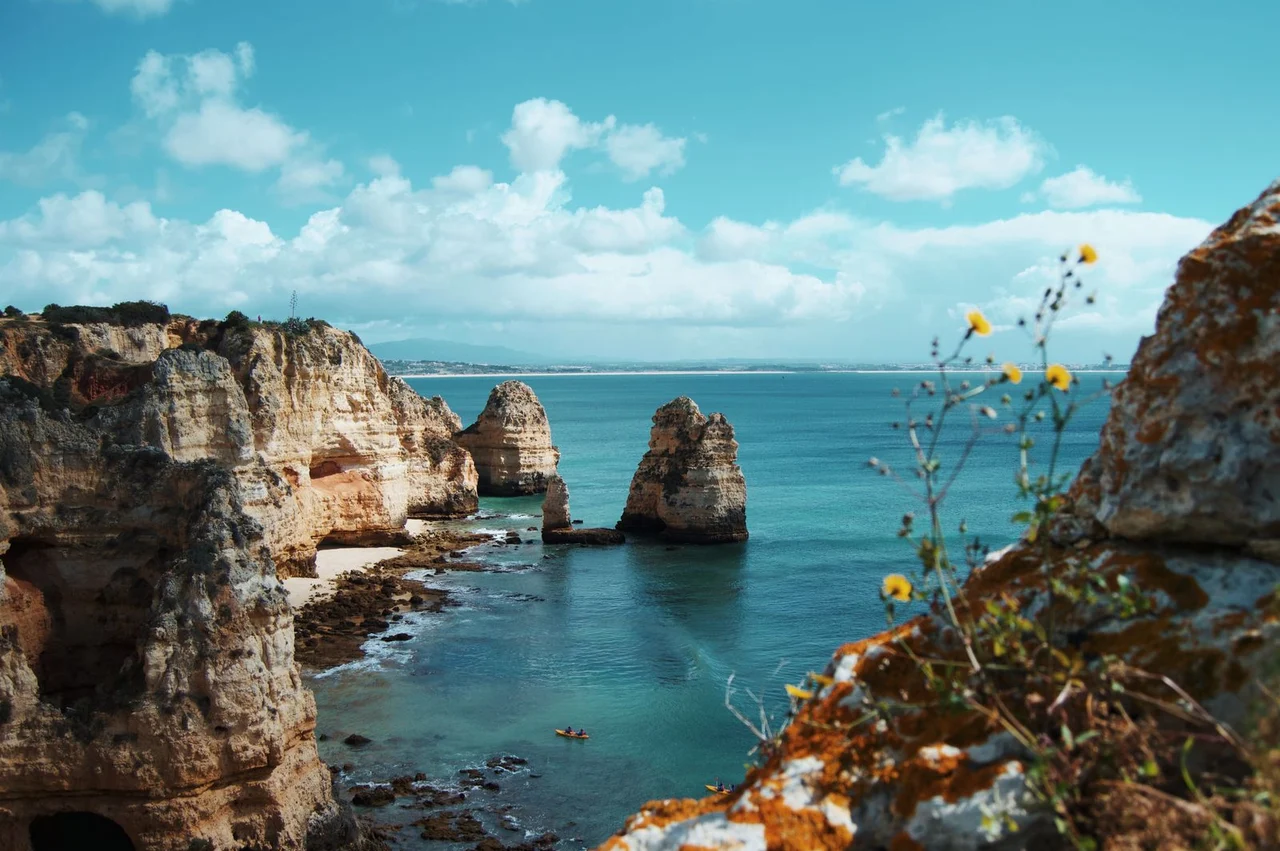
Cascais and Estoril are Greater Lisbon's most expensive residential strip: 30 kilometers from the capital, the ocean, golf, a marina, and international schools that well-off families come to from around the world. In 2026 this is a market of villas and premium apartments, where the price per square meter in the best quarters is comparable to the Algarve and downtown Lisbon. We break it down by district: what housing really costs, what expats live by, how the road to Lisbon works, and why buying real estate here no longer opens the Golden Visa - but remains one of the most reliable investments on the coast.
Cascais and Estoril: what kind of coast this is and who it's for
Cascais and Estoril are the western tip of the so-called Lisbon Riviera, an oceanic coastal strip west of Portugal's capital. Estoril was once a resort of European aristocracy and a place where exiled monarchs lived during the war years, and today it's one of the country's most prestigious addresses. Cascais grew from a fishing town into a fashionable center with a marina, restaurants, boutiques, and a dense foreign community.
The main thing to understand about this market: people come here not for cheapness, but for quality of life. A mild oceanic climate, clean beaches, golf courses, a yacht marina, developed infrastructure, and at the same time proximity to Lisbon's business and cultural center - this is the formula that's kept prices high for more than a decade now.
- Well-off expats- entrepreneurs, top executives, investors choosing Portugal as a base in Europe.
- Families with children- for international schools and a safe, calm environment by the ocean.
- Second-home buyers- those needing a weekend residence or a summer base an hour's flight from most European capitals.
If you're just looking into the Portuguese market as a whole, it's worth starting with our overview article on how tobuy real estate in Portugal, and then compare the capital and the coast in our article onreal estate in Lisbon.
Geography: Cascais, Estoril, and neighbors on the Riviera map
So as not to get confused by the names, let's lay out the geography clearly. The Lisbon Riviera stretches along the Cascais railway line from the Alges district on Lisbon's outskirts to Cascais itself - the final station. Several recognizable spots follow one after another along this stretch, and each has its own character and price.
- Estoril- a respectable resort with a casino, a park, and Tamariz beach. Quiet, green, with early-20th-century villas and new condominiums.
- Monte Estoril- a hilly zone between Estoril and Cascais, with view apartments and villas on the slopes.
- Cascais (center)- the coast's heart: a marina, historic center, waterfront, restaurants, and shops within walking distance.
- Quinta da Marinha and Quinta da Bicuda- gated premium quarters with villas, golf, and private infrastructure.
- Guincho and Malveira da Serra- a green countryside closer to the Sintra-Cascais natural park, for those wanting seclusion and space.
It's separately worth keeping neighboring Sintra with its palaces and mountain microclimate in mind, as well as the fact that this whole zone remains part of Greater Lisbon - that is, with the capital's business life, airport, and healthcare close at hand. This fundamentally distinguishes the Riviera from the country's more resort-like and seasonal south, which we write about in our article onreal estate in the Algarve.
2026 prices: what apartments and villas cost
Cascais and Estoril consistently rank among Portugal's most expensive residential markets, alongside downtown Lisbon and the Algarve's best addresses. The exact figure always depends on the specific house, ocean view, condition, and distance from the sea, so individual listings matter less here than the order of magnitude. Below are benchmarks as of 2026; they're always checked against current listings and appraisals before the deal.
- Apartments- in the Riviera's mass segment, the benchmark is around €5,000-7,000 per m², and in new projects and right by the ocean, the price easily goes over €8,000-9,000 per m² and above.
- Villas- a standalone house rarely starts below ~€1.5 million, and in Quinta da Marinha, beachfront, and premium condominiums, the price goes into the range of €3-10 million and above.
- View and trophy properties- residences with an ocean panorama and a private plot are already a category where deals are measured in millions and negotiated individually.
It's important to understand the market structure: it's not so much the area that holds up the premium bar, but the location and the view. The same square footage in two Cascais quarters can differ multiple times over in price - everything is decided by proximity to the ocean, security, the complex's infrastructure, and the panorama from the windows. We break down the full picture of associated payments below and in a separate guide onreal estate taxes in Portugal.
The Riviera's districts: character and price benchmark
For an informed choice, it's convenient to keep a map of districts with their character and price range in view. This table isn't a price list, but a navigator: it shows what to expect from each zone and who it suits.
| District | Character | 2026 price benchmark |
|---|---|---|
| Estoril | A respectable resort, a casino, beaches, villas, and condominiums | Apartments from ~€5,500 per m², villas from ~€2 million |
| Monte Estoril | Hills, view apartments, quiet streets | Apartments ~€5,000-7,500 per m² |
| Central Cascais | A marina, waterfront, restaurants, urban life | Apartments ~€6,000-9,000 per m² |
| Quinta da Marinha | A gated premium quarter, golf, private infrastructure | Villas ~€3-10 million and above |
| Guincho / Malveira | A green countryside by the natural park, space | Villas from ~€1.5 million, houses with a plot |
| Alcabideche / Birre | A more affordable family zone a bit inland | Apartments from ~€4,000 per m² |
The pattern is simple: the closer to the ocean and Cascais's center, the pricier, while inland, toward the countryside zones, you can find more space for the same money. Families often choose a compromise between the sea and the school, and here it's important to plan daily route logistics in advance.
International schools: why families come here
One of the Riviera's main magnets for well-off families is the concentration of international schools. For parents relocating to Portugal with children, this is often the decisive factor: the child continues studying under a familiar curriculum, and the family chooses a house so the school is comfortably accessible.
Educational institutions with different curricula operate in the Cascais and Estoril area:
- English-language schoolswith a British and international curriculum (IB, IGCSE) - the format most in demand with foreigners.
- French- and German-language schools- for families from the relevant countries and those wanting bilingual education.
- American-type schoolsand institutions with their own programmes, geared toward the international community.
Practical advice: when choosing a house, the logistics to school matter more than it seems. Morning traffic on narrow coastal roads can turn three kilometers into half an hour's drive, so families often choose a quarter exactly around a specific school. This factor should be budgeted for and factored into the district choice itself from the very start, not after the deal.
For those relocating not for work, but on passive income and retirement, the educational infrastructure combines well with the calm regime - read more about this route in our article onthe D7 visa to Portugal.
Golf, a marina, and coastal lifestyle
The Riviera's premium status rests not only on prices, but on the lifestyle you can lead here year-round. The oceanic climate with a mild winter and a not-hot summer makes the coast comfortable in any season - a rarity even by Southern European standards.
- Golf.Around Cascais there are several world-class courses, including courses in the Quinta da Marinha zone. For some buyers, it's exactly golf that's the reason to choose a specific quarter.
- Cascais Marina.The yacht harbor in the city center is a draw with restaurants, sailing schools, and boat moorings.
- Beaches.From Estoril's calm bays to the Guincho surf spot with ocean waves - a taste for any leisure style.
- Dining and retail.Restaurants, markets, boutiques, and European brand shops within walking distance of residential quarters.
- Nature.Nearby is the Sintra-Cascais natural park with trails, cliffs, and Cape Roca - the westernmost point of continental Europe.
All this forms exactly the lifestyle people pay a premium for: the ocean and surfing in the morning, a business meeting in Lisbon in the afternoon, dinner at the marina in the evening. It's exactly the combination of resort comfort and the capital's business environment that distinguishes Cascais from purely seasonal destinations.
The road to Lisbon: train, car, and the airport
Proximity to Lisbon is the Riviera's key advantage over other Portuguese coasts. This isn't a resort cut off from the world, but a suburban zone of the capital's metropolitan area, where you can live by the ocean and still visit the business center every day.
- Train.The coastal Cascais line connects Cascais with Lisbon's central Cais do Sodre station. The trip takes around 30-40 minutes, trains run frequently, the route runs right along the ocean - one of Europe's most picturesque suburban routes.
- Car.The A5 expressway and the coastal Marginal highway lead to Lisbon. On a clear road - around half an hour, but budget more during rush hour.
- Airport.Lisbon International Airport is approximately 30-40 minutes' drive away, making Cascais a convenient base for those who fly often across Europe and the world.
Such transport connectivity fundamentally expands the housing use scenarios: the same house can be both a permanent residence with daily trips to the capital, and a calm weekend base. Our breakdown will again be useful for comparing the urban and coastal way of lifeLisbon's real estate market.
Important honesty: buying real estate doesn't give the Golden Visa
This is the most important point that needs to be stated plainly, so as not to build false expectations. Buying real estate in Portugal (including in Cascais and Estoril) used to be a popular way to get an investor residence permit - the Golden Visa. Since October 2023, after the Mais Habitacao reform took effect, the Golden Visa routes through buying housing and through capital transfer have been abolished.
What this means in practice:
- You can buy a villa or apartments on the Riviera- the market is open to foreign buyers, there are no restrictions on the purchase itself.
- But this purchase by itself doesn't give a residence permit.Real estate is no longer in the list of qualifying investments for the Golden Visa.
- The Golden Visa programme survives, but through other routes - primarily investment funds and other qualifying investments, not housing.
So if your goal is specifically residency, real estate in Cascais should be viewed as an investment and a place to live, and legal status built through a separate route. For those relocating on passive income, a logical road remains the visaD7, and the current list of investment programme conditions should always be checked on the official portal ofPortugal's government services gov.pt.
"Cascais and Estoril are a market where people often buy with emotion, and end up paying for it in money and nerves. So I always ask the client to first separate two things: where they want to live and what status they need. Real estate here no longer opens the Golden Visa - this needs to be accepted right away with no illusions, and residency built through a separate route. In the deal itself, it's not the one who puts down the deposit first on a villa with an ocean view who wins, but the one who checked the documents in advance, calculated the full budget with taxes, and understood exactly what they're paying a premium for. On the coast, location makes the price, not square footage, and this changes the whole choice logic."
Deal conditions and expenses: what to budget for
The property price isn't the whole sum the buyer will pay when entering the deal. Portugal has a clear but noticeable system of taxes and fees for buying real estate, and it needs to be budgeted from the very start, especially at the Riviera's premium sums.
- IMT (the property transfer tax)- a progressive tax that on expensive properties reaches a noticeable share of the value; for high-price-category housing, the rate reaches the top of the scale.
- Stamp duty (Imposto do Selo)- an additional fee on the deal's value.
- Notary and registration- processing the sale and registering it.
- Legal support- checking the property's cleanliness, ownership rights, encumbrances, and debts.
- Annual IMI tax- the municipal property tax, with the AIMI surcharge added for expensive properties.
It's separately worth checking the property's legal cleanliness: the use license, documentation compliance, the absence of illegal alterations. This is especially important on the secondary villa market. We've gathered a detailed breakdown of all rates and payments in our article onreal estate taxes in Portugal- it's worth reading before signing the preliminary contract.
Risks and pitfalls of buying
A premium market doesn't mean trouble-free. To keep an expensive purchase from turning into a headache, it's important to know in advance what buyers on the Riviera stumble on.
- Villas' legal cleanliness.On the secondary market, houses with unpermitted extensions, discrepancies in documents and areas are common. Without a full check, you can buy a property with problematic legalization.
- Inflated return expectations.Premium properties rarely give high rental returns - the value here is in capital and lifestyle, not current cash flow.
- Underestimating the deal's taxes.At premium sums, taxes and fees add up to a significant addition to the price - they need to be calculated in advance.
- The Golden Visa illusion.Counting on the purchase automatically giving a residence permit is outdated and wrong. Since 2023, real estate hasn't been among the qualifying investments.
- Season and traffic.In summer coastal roads are overloaded, and a location comfortable in winter can turn out less convenient in high season.
For buyers from Russia and CIS countries, a separate layer is added - enhanced compliance and a source-of-funds check. All settlements and transfers must be transparent and fully compliant with the law; this matter is better worked out with a lawyer in advance so the deal doesn't get stuck at the banking stage.
An expert's view: how not to overpay and not go wrong
Over years working with the coast, we see that buyers on the Riviera aren't let down by rare things, but quite predictable ones. Let's break them down so you approach the deal prepared.
- Compare deals, not listings.The listing price and the real closing price on the premium market can diverge noticeably - go by actual deals in the district.
- Location matters more than square footage.Proximity to the ocean, the view, security, and the complex's infrastructure determine the price more than the area. The same square footage in two quarters costs differently.
- Check documents before the deposit.The use license, floor area compliance, and the absence of illegal alterations - all this is checked before signing the preliminary contract, not after.
- Calculate the full budget.Add the deal's taxes, the notary, registration, and legal support to the property price - and compare only this sum with your possibilities.
- Separate real estate and residency.Buying a house and legal status are two different projects; don't count on one automatically giving the other.
The main principle is simple: in the premium market, it's not the one who hurries who wins, but the one who has built a strategy for the property, budget, and status in advance.
Not sure which country and status to choose?
We will compare suitable residency programs on budget, timelines and stay requirements - with a full cost calculation for your family.
Free of charge, we reply right away, no obligation.
Real estate as an investment: rental and liquidity
Besides living for themselves, many buyers view Riviera real estate as an asset. And here Cascais and Estoril have a strong position: limited premium housing supply, stable international demand, and the status of the country's most prestigious coast support liquidity even in calm periods for the market.
- Long-term rental.Demand for quality housing from the international community, relocating families, and company employees is stable year-round.
- Short-term rental.Resort and tourist appeal gives potential for daily rental, but this format is regulated by licenses, and the rules need checking in advance.
- Value growth.Over a long horizon, the Riviera's premium addresses historically show price stability due to a shortage of supply and consistently high demand.
That said, it's important to look soberly at returns: gross rental returns on premium properties are generally lower than in the mass segment, because a significant part of the value consists of the address's very prestige and capital growth potential, not current cash flow. Before buying for rental, the model should be separately calculated and short-term rental licensing requirements checked for the specific municipality.
Cascais vs Lisbon and the Algarve: what to choose
A logical question for those choosing between Portugal's key premium markets. Each has its own profile, and the right choice depends on exactly how you plan to use the housing.
- Cascais and Estoril- the ocean plus proximity to the capital. Ideal for families with children (schools), for those who need both the beach and Lisbon's business life close at hand. The climate is mild year-round.
- Lisbon- an urban pace, culture, business, a historic center. The choice of those for whom the capital environment matters and who are ready for denser urban development.
- the Algarve- the south with the warmest climate, pronounced resort seasonality, and a strong focus on golf and beach leisure. Further from the capital and more seasonal for living.
Cascais is often chosen exactly for balance: not as much a city as Lisbon, and not as much a resort as the Algarve. It's a place for those who want to live by the ocean but not cut off from the capital's business and cultural life. For an informed choice, compare this breakdown with our articles onreal estate in Lisbonand real estate in the Algarve.
Bottom line: who Cascais and Estoril real estate suits
Cascais and Estoril are the choice for those who value quality of life and are ready to pay for it. The ocean, a mild climate year-round, golf, a marina, international schools, and at the same time the capital 30-40 minutes away by train - there's no such combination anywhere else in Portugal. This is a market of villas and premium apartments, where price is determined primarily by location and view, not square meters.
Who this especially suits: families with children for whom schools and a safe environment matter; well-off expats choosing a base in Europe; buyers of a second home by the ocean. That said, it's important to keep a caveat in mind - since 2023 real estate doesn't give the Golden Visa, so residency is built through a separate route, for example the D7 visa or investment programmes.
The optimal strategy is to split two tasks: select and legally cleanly process a property for your life scenario, and in parallel build legal status through a suitable route. It's convenient to start getting to know the market with our general guide on how tobuy real estate in Portugal, and always check current rules and conditions on the official portal ofPortugal's government services gov.pt.
Frequently asked
Questions people ask before deciding
01Where are Cascais and Estoril, and how far is Lisbon?
This is the western part of the Lisbon Riviera, an oceanic coast approximately 30 km west of Lisbon. The coastal Cascais railway line connects the area with the capital's center (Cais do Sodre station) in 30-40 minutes, trains run frequently. By car on the A5 motorway - around half an hour on a clear road.
02How much does real estate cost in Cascais and Estoril in 2026?
This is one of Portugal's most expensive markets. The benchmark for apartments is around €5,000-7,000 per m², and by the ocean and in new projects €8,000-9,000 per m² and above. Villas rarely start below ~€1.5 million, and in premium quarters like Quinta da Marinha, prices go into the range of €3-10 million and above. Exact figures are checked against current listings.
03Does buying real estate in Cascais give the Golden Visa?
No. Since October 2023, after the Mais Habitacao reform, the Golden Visa route through buying real estate was abolished. You can buy a villa or apartments with no restrictions, but this purchase by itself doesn't give a residence permit. The Golden Visa survives through other routes - primarily investment funds, not housing.
04Which district to choose for a family with children?
Families generally focus on proximity to international schools, so the district is chosen around a specific school, to avoid standing in morning traffic. Popular are Estoril, Monte Estoril, and zones a bit inland like Alcabideche, where a calm environment, schools, and more affordable prices compared to beachfront combine.
05What international schools are in the area?
Schools with different curricula operate in Cascais and Estoril: English-language with a British and international curriculum (IB, IGCSE), French- and German-language, as well as American-type institutions. This is one of the key reasons well-off families choose exactly this coast to relocate with children.
06What is Quinta da Marinha?
This is a prestigious gated quarter in Cascais with villas, a world-class golf course, and private infrastructure. One of the Riviera's most prestigious addresses. Villa prices here start from a few million euros and reach €10 million and above for trophy properties by the ocean.
07Can a foreigner buy housing in Cascais?
Yes, there are no restrictions on real estate purchases by foreigners in Portugal itself. However, enhanced compliance and a source-of-funds check apply for buyers from Russia and the CIS. All transfers and settlements must be transparent and fully compliant with the law, otherwise the deal can get stuck at the banking stage. This matter is worked out with a lawyer in advance.
08What taxes and expenses need to be budgeted for the purchase?
The IMT property transfer tax (progressive, reaching the top of the scale on expensive properties), stamp duty, notary services and registration, and legal support are added to the property price. The municipal IMI tax is paid annually, and the AIMI surcharge for expensive properties. See details in our real estate tax guide.
09Is it profitable to rent out real estate in Cascais?
Demand for quality long-term rental from the international community is stable year-round. Short-term resort rental is also possible, but is regulated by licenses. That said, gross returns on premium properties are generally lower than the mass segment: the value here is in capital growth and the address's prestige, not current cash flow. The model should be calculated in advance.
10How does Cascais differ from Lisbon and the Algarve?
Cascais is balance: the ocean and beaches plus the capital in 30-40 minutes. Lisbon is an urban pace and a business environment with no sea nearby. The Algarve is the warmest south with pronounced resort seasonality and a focus on golf and beaches, but further from the capital. Cascais is chosen by those who need both the coast and business life close by.
11Is it worth buying a villa on the secondary market?
Yes, but with mandatory legal due diligence. On the secondary villa market, unpermitted extensions, discrepancies in documents and areas, and legalization problems are common. Before paying the deposit, the use license, floor area compliance, and the absence of illegal alterations are checked. Without this there's a risk of buying a property with problematic documentation.
12How to build residency if real estate doesn't give a residence permit?
Residency is built through a separate route, not tied to buying housing. For those relocating on passive income (a pension, rent, dividends), the D7 visa is suited. The Golden Visa programme through investment funds and other qualifying investments also survives. Real estate in this case is an investment and a place to live, while status is processed in parallel.
Transparency
How this material was prepared
- Author
- Igor Venc, real Estate Managing Director, BRIDGES
- Terms and costs last verified
- June 2026
- Sources
- official government authorities of the relevant country and state publications
- Methodology
- government minimum requirements are stated separately from due diligence charges, state fees, legal and banking costs
Sources and methodology
Figures, terms and timelines are checked against official sources as of June 2026. Link availability verified in August 2026. Third-party blogs and agent websites are not used as a source of programme terms.
- [1]Agência para a Integração, Migrações e Asilo (AIMA)Residence permits and how to applyaima.gov.pt/en
- [2]Portal das FinançasTax regimes and obligations of residentswww.portaldasfinancas.gov.pt
Methodology: tables and charts state government minimum investment requirements; due diligence charges, state fees, legal, banking and other costs are calculated separately and are not included in the minimum thresholds.
About the author
Related materials
What to read next
 ArticlePortuguese citizenship by descent in 2026: by parents, grandparents and birth
 ComparisonResidence permit for investment in 2026: Greece, Portugal or UAE - what to choose
 AnalysisWhat is due diligence and why the Caribbean is rejecting applications
Personal programme selection is conducted by Anna Kovalevskaya, Head of Legal, BRIDGES.
Buying property in Portugal: what to check
Title, encumbrances, outstanding debts and what to look for in the contract.
