Residency · Greece
Seaside property in Greece in 2026: the first line, prices and nuances

Updated: June 2026·13 min read·Expert reviewed
Terms and costs verified: June 2026
Contents
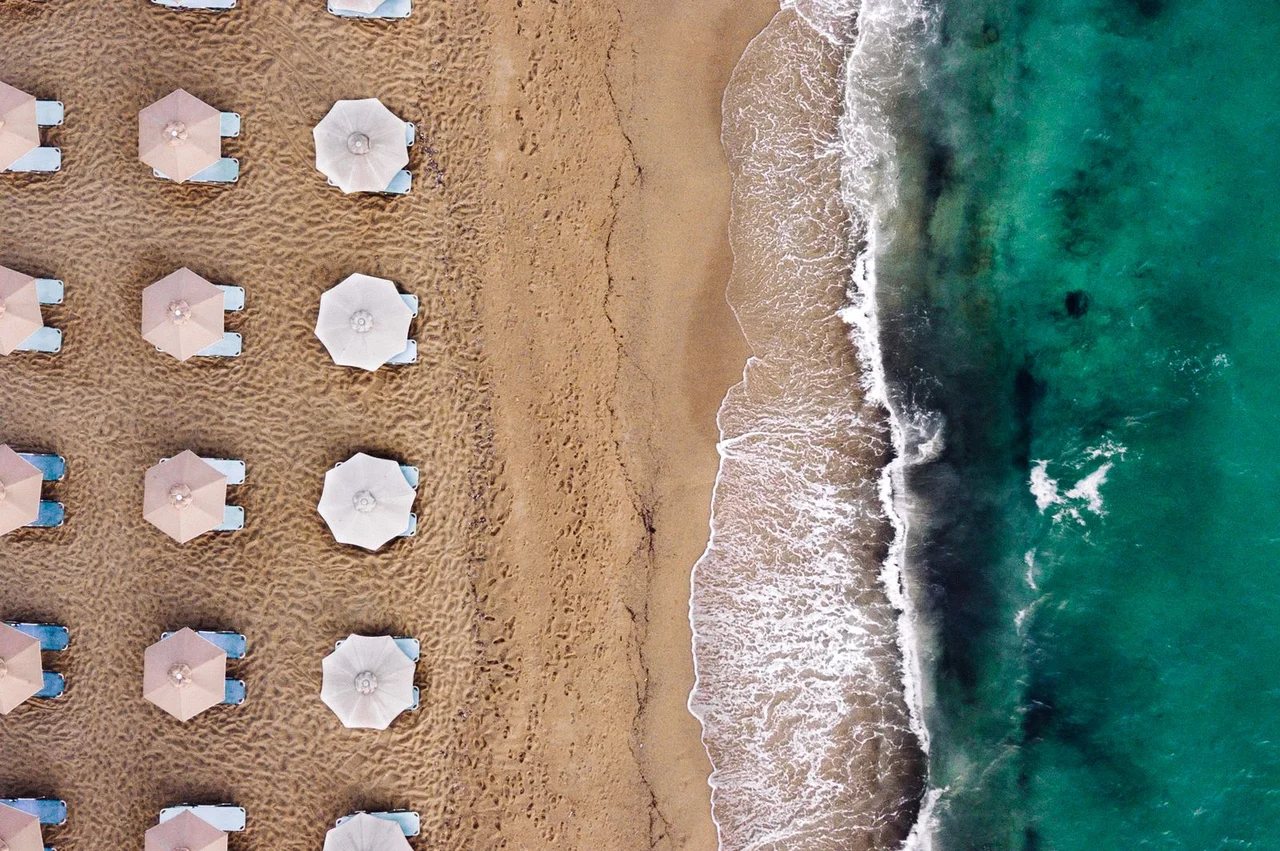
Waterfront housing is the most sought-after segment of the Greek market, and demand for it is growing faster than for any other property in the country. Buying a seaside home in Greece is the dream of those relocating to live, of buy-to-let investors, and of Golden Visa applicants alike. But the water has its own rules: part of the shore is constitutionally common and cannot be privatised, building right at the water's edge is prohibited, and the first line costs noticeably more. We break it down shelf by shelf: where a seaside apartment in Greece costs EUR 150,000 and where a villa tops a million, what the aigialos coastal zone is, what to check when buying by the water, and how to link the deal to a residence permit.
Why seaside housing is Greece's most sought-after segment
If you had to sum up the entire Greek property market in one phrase, it would be this: everyone wants to be by the water. Seaside housing is the undisputed leader in demand, and that is not a matter of fashion but a structural feature of a country with thousands of kilometres of coastline and more than six thousand islands. Buyers from abroad come to Greece for the Mediterranean way of life, and it begins on the shore - morning coffee with a view of the bay, a swim before work, a boat at the mooring. That is why coastal properties are the first to rise in price and the last to fall.
The figures confirm the sentiment. Over the past year, Greek housing prices have added 7-10% on average in nominal terms, and on islands with international airports - Crete, Rhodes, Corfu, Zakynthos - growth has held at around 11% a year since 2021. Waterfront property is appreciating faster than the national average, because supply is limited: you cannot build new shore, and the old plots were snapped up long ago.
Demand is fed by three categories of buyer at once. First, those relocating to live or to spend half the year by the sea. Second, investors in short-term and seasonal rentals, for whom a water view converts directly into the nightly rate. Third, applicants for Greece Golden Visa, for whom coastal property offers both EU resident status and a liquid asset. All three streams compete for the same limited resource - square metres by the water - and that keeps prices high.
What the first line is and why it costs more
The term "first line" is used loosely in Greece, and sellers mean different things by it. So let's first agree on the words, to avoid overpaying for a nice turn of phrase.
- First line (seafront/beachfront) - the property stands directly on the shoreline, with direct access to the water or a short private descent. This is the most expensive and the rarest format.
- Direct access to the sea - the house is not right on the shore, but a private path, steps or platform leads down to the water. In practical use, this is often more than the "first line".
- Sea view - you have to walk or drive to the water, but the windows offer a panorama. It costs less, and this is where the marketing sleight of hand most often hides.
Why is first-line property in Greece more expensive? There are three reasons. First, genuine scarcity: strict coastal laws prevent haphazard development of the shore, so there are few true waterfront properties. Second, the premium for view and access: market research shows that housing within 500 metres of the shoreline costs roughly 28% more than comparable properties away from the water, and in prime locations the mark-up is several times higher. Third, investment logic: limited supply protects the price from falling and ensures steady rental demand.
But the premium is paid in more than money. The first line has a flip side: increased wear from the salt air, more expensive upkeep of facades and equipment, and above all the legal restrictions right at the water's edge discussed below. So the "first line" is not automatically the best buy, but a deal that must be checked especially carefully.
The aigialos coastal zone: why part of the shore is not yours
This is the key nuance that surprises almost every foreign buyer. In Greece, part of the shore is a public good under the constitution and does not pass into private ownership in principle - no matter how much you pay. To avoid falling into the trap, you need to understand two concepts.
- Aigialos (the shoreline) - the strip of land between the water's edge and the line of the maximum winter wave. This is always public territory; access to it is free, and it cannot be built on or privatised.
- Paralia (the beach) - an additional strip from 0 to 50 metres wide behind the aigialos line. This zone is also public property and exists to allow free and unobstructed passage to the sea.
The practical takeaway: even if your plot fronts the water, the beach strip in front of it does not belong to you. Under Greek law the shore must remain open to all citizens, and in recent years the state has sharply tightened enforcement - a complaints app called MyCoast has appeared, through which more than two thousand reports have been filed, with East Attica and Halkidiki topping the list of violations. Jurisdiction over shore use has been handed to a dedicated state company, oversight has been reinforced, and the fines for blocking access to the sea are severe.
What does this mean for a first-line buyer? You pay for the view and the proximity, but not for "your own piece of beach". Under the new rules, umbrellas and sun loungers must sit no closer than four metres from the water's edge, and at least half of the beach must remain free. When buying a house "right on the shore", you must establish where the aigialos and paralia boundaries officially run on your specific plot - otherwise part of "your" land may turn out to be state-owned.
Where to look for seaside housing: the Athens Riviera, Crete, Halkidiki, the islands
Coastal Greece is geographically vast, and different shores suit different goals. Let's run through the main destinations to work out where to look for your particular option.
- The Athens Riviera (Glyfada, Vouliagmeni, Voula, Elliniko) - a luxury Mediterranean corridor right by the capital. People come here for the infrastructure of a big city and the sea at the same time. The most expensive shore in mainland Greece, ideal for those who want the beach, the airport and city life all at once.
- Crete - the largest island, with international airports, year-round life and a wide price range. Here you can genuinely find affordable waterfront housing while retaining liquidity - the island is popular with tourists throughout the season.
- Halkidiki - the three "fingers" of the peninsula, with the best beaches on the mainland. It combines island beauty with mainland convenience and prices 30-40% below the popular islands. A strong choice for renting.
- Islands of the Cyclades and Ionian archipelagos - Mykonos and Santorini (premium and status), Paros, Naxos, Corfu, Zakynthos. Here people buy emotion and brand, and prices depend heavily on the specific island.
Choosing a shore is always a trade-off between price, yield and seasonality. The islands deliver the greatest emotion and rental rate, but they live by the season. The Athens Riviera and Crete work year-round. We keep a detailed breakdown of the island options in the article on property on the Greek islands, and the general mechanics of buying in the guide to how to buy property in Greece.
Seaside prices by region: a "region - price - Golden Visa threshold" table
The most common question is how much a square metre by the water costs and which Golden Visa zone a location falls into. Let's bring the 2026 benchmarks together in one table. Prices are indicative, as orders of magnitude for new seaside housing, and depend heavily on the specific property, its distance from the water and its condition.
| Seaside region | Indicative price (new housing) | Golden Visa threshold |
|---|---|---|
| The Athens Riviera (Glyfada, Vouliagmeni) | from EUR 4,000-5,200/sq m, prime locations EUR 10,000-12,000/sq m | EUR 800,000 (Attica zone) |
| Thessaloniki and its seaside suburbs | roughly EUR 2,500-4,000/sq m | EUR 800,000 (greater Thessaloniki) |
| Mykonos, Santorini | premium, villas from EUR 1-2 million | EUR 800,000 (islands with >3,100 people) |
| Crete (the coast) | apartments from ~EUR 150,000, villas from ~EUR 250,000 | 400 000 EUR |
| Halkidiki | houses from ~EUR 190,000 | 400 000 EUR |
| The smaller islands and the mainland periphery | from ~EUR 117,000-270,000 | 400 000 EUR |
The table makes the key point clear: the price per square metre and the Golden Visa threshold are two separate stories. On Crete or in Halkidiki you can buy a superb seaside apartment for EUR 150,000-200,000, but for such a purchase to grant a residence permit, you need to reach an investment of at least EUR 400,000 (one property). On the Athens Riviera you will run into the EUR 800,000 threshold simply because of the zone, even if the floor area is modest. For more on the yield of these properties, see the analysis of rental yield in Greece.
Inexpensive seaside property in Greece: where it's genuinely cheap
The phrase "inexpensive seaside property in Greece" sounds like an oxymoron next to Santorini villas for two million, but budget options by the water really do exist. You just have to look for them somewhere other than where the tourists' camera flashes are.
Where the sea is cheapest:
- The mainland periphery - coasts away from the hyped resorts. Here waterfront housing is 30-40% cheaper than the popular islands, with the same Mediterranean outside the window.
- Crete away from the top resorts - the outskirts of Heraklion and small seaside towns, where new apartments start at roughly EUR 150,000 and access to the sea and infrastructure is already in place.
- The smaller islands - not Mykonos or Santorini, but the less touristy islands of the Aegean and Ionian seas. Here you can find waterfront properties from EUR 117,000.
- Northern Greece and parts of the Peloponnese - shores that premium demand has not yet reached.
An important, caveat: "inexpensive" almost always means a compromise - further from the airport, a shorter season, more modest infrastructure, sometimes a resale rather than a new build. And to be clear: a budget purchase for EUR 150,000-200,000 does NOT grant a Golden Visa on its own, because the programme's minimum threshold is EUR 400,000 in these regions. Cheap seaside housing is about a comfortable life or letting, not an automatic residence permit. If the goal is specifically a residence permit, the budget has to be raised to the programme threshold.
What to check when buying waterfront property: a checklist
Buying by the sea requires deeper due diligence than a deal in the city centre. Salt air, the public shore and environmental zones add risks that are invisible in pretty photos. Here is what you need to check before signing.
- The aigialos and paralia boundaries. Order an official demarcation of the shoreline for your plot - where private land ends and the public zone begins. This removes the risk of "buying a piece of beach that does not belong to me".
- The right of access to the water. Make sure the claimed "direct access to the sea" is confirmed by documents rather than the seller's word, and that the access is not blocked by someone else's plot or a public path.
- Building permits and the legality of the property. Unauthorised extensions and setback violations are especially common on the shore. Any illegal structure by the water is grounds for a fine and demolition.
- Environmental restrictions. Natura 2000 zones and archaeological and forest restrictions can prohibit rebuilding, extension and even certain kinds of renovation.
- A clean title and encumbrances. A check in the cadastre and the registry, and the absence of debts, mortgages and inheritance disputes.
- The true cost of ownership. Waterfront housing requires more frequent and more expensive maintenance because of the salt in the air - budget more for upkeep.
These checks are not bureaucracy but the protection of your money. A coastal deal without legal review is especially dangerous by the water. We set out the full due-diligence procedure in the article on legal due diligence on property in Greece. Current data on properties and government services should be verified on the portal gov.gr.
A bridge to the Golden Visa: how buying by the sea grants Greek residence
For many buyers, seaside housing is not only a lifestyle but a gateway to Europe. Here property and residence are directly linked: by buying a coastal property for the required amount, you obtain Greece Golden Visa - a residence permit by investment for five years, renewable, covering the whole family at once.
How the link works in 2026:
- Three thresholds by zone. EUR 800,000 - in premium zones (all of Attica and Athens, greater Thessaloniki, Mykonos, Santorini, and islands with a population over 3,100). EUR 400,000 - in most other regions. EUR 250,000 - only for converting a commercial property into residential use or restoring a listed building.
- The minimum property size is 120 sq m, and it must be a single transaction on a single property (a rule in force since 2024).
- There is virtually no minimum-stay requirement - the status is not tied to the number of days spent in the country, which is convenient for those not relocating straight away.
- A path to permanent residence and citizenship. The Golden Visa is the first step: after years of legal residence, the path to permanent status opens up.
An important warning for buy-to-let investors: short-term letting (Airbnb) of the very property that granted you the Golden Visa is PROHIBITED - a breach risks revocation of the residence permit and a fine. Long-term rental of a year or more is allowed, however. So if the goal is both a residence permit and income, the structure must be built carefully: either separate the properties, or focus on long-term letting.
Buying by the sea for Russian and CIS citizens
Let's look separately at the situation for buyers from Russia and the CIS, because there are many questions here. In short: you can buy seaside property in Greece, and the Golden Visa is available to Russians - strictly legally, with enhanced source-of-funds checks and no circumvention of sanctions.
What matters to consider:
- The purchase of property by foreigners is freely permitted. The exception is border zones, where special permission may be required. Completing the purchase requires a Greek AFM tax number and a notary.
- A Schengen visa is required for short-term entry. Since 2022 the rules for Russians are stricter and multi-entry visas are limited, but visas are still issued. For residence you obtain a national D visa.
- Source-of-funds compliance is a key stage. The bank and the authorities will scrutinise the origin of the funds in detail. This is a normal procedure, for which documents should be prepared in advance.
- Payment from a foreign corporate account requires proof of the ultimate beneficial owner (UBO).
Greece is a member of the EU and Schengen, its currency is the euro, and that is precisely why coastal property here is so appealing to buyers from the CIS: it is not only a home by the sea but also a legal foothold in Europe through a residence permit. The key is to run the deal cleanly and transparently, with properly prepared source-of-funds documentation.
Seaside rental yield: what the shore really brings in
If you are buying not only for yourself but with income in mind, a coastal location is one of the strongest options in Greece. Tourism here is a year-round engine, and a water view directly raises the nightly rate.
2026 yield benchmarks:
- Resort villas by the sea - gross yield of roughly 6-7% per year with high occupancy in season; the nightly rate swings sharply between low and high season.
- Halkidiki - short-term rental yields roughly 6-10% during the tourist season (May-October), highest for properties with direct beach access.
- The Athens Riviera - the yield is more modest (Glyfada roughly 4.5-5.5%), but this is offset by year-round demand and asset-price growth.
- Piraeus and non-elite coastal districts - roughly 6-7%, a good balance between entry price and return.
Two caveats, without which the numbers are misleading. First, seasonality: island rentals run for only a few months, and the annual yield must be calculated allowing for winter downtime. Second, regulation: short-term rental rules in Greece are tightening, restrictions are being introduced in a number of locations, and a Golden Visa property cannot be let short-term at all. So the real yield is always calculated for the specific property, taking local rules into account - a detailed breakdown is in the article on the rental yield of property in Greece.
Taxes and costs on coastal property
The property price is only half the budget. By the sea it is joined by purchase taxes, annual charges and higher maintenance costs. We calculate them in advance, so there are no surprises.
- Transfer tax on purchase - 3.09% of the price for resale housing. A different regime may apply to new builds; this is clarified property by property.
- The annual ENFIA property tax - paid every year; it depends on the property's characteristics and location.
- Upkeep by the water is more expensive. Salt air accelerates the wear of facades, windows, metalwork and appliances - the maintenance budget for a coastal home is set higher than for a comparable property away from the sea.
- Notary, lawyer and cadastral fees - the standard costs of completing the transaction.
For those considering relocation, Greece offers attractive tax regimes. Wealthy investors can access the non-dom regime with a flat tax of EUR 100,000 per year on worldwide income (with an investment of EUR 500,000 or more), while pensioners get a preferential 7% rate on foreign income and pension for 15 years. These regimes make coastal life in Greece appealing not only emotionally but financially. The specific calculations for your property should always be verified before the deal, drawing on official government data on the portal gov.gr.
Typical mistakes made by seaside home buyers
Over the years, we have seen buyers on the shore let down by the same mistakes again and again. Let's go through them so you don't repeat someone else's costly experience.
- Taking the "first line" claim on the seller's word. A seller calls a property "first line" when it has a sea view across the road and two streets away. Always verify the real distance to the water and the right of access against the map and the documents.
- Failing to check the shore boundaries. Part of "your" plot by the water turns out to be the state aigialos zone. Ordering an official demarcation of the shoreline removes this risk.
- Buying an illegal structure by the water. Unauthorised extensions and setback violations on the shore are common and grounds for a fine or demolition.
- Confusing the purchase budget with the Golden Visa threshold. Bought an apartment for EUR 200,000 expecting a residence permit, when the programme threshold in the region is EUR 400,000. The goals of "living by the sea" and "obtaining a residence permit" call for different budgets.
- Counting on short-term rental of a Golden Visa property. You cannot let the very property that granted the Golden Visa on a nightly basis - it risks revocation of the status.
- Underestimating maintenance costs. A seaside house is more expensive to maintain, and this cost must be factored into the yield.
The shore forgives slowness but not carelessness in due diligence. The more thoroughly a property is studied before the deal, the calmer the ownership afterwards.
How we run a seaside deal: an expert's view
A coastal purchase differs from an ordinary city deal in its set of specific risks, and those are exactly what we close first. We start by establishing the property's real status: where the shoreline runs, whether the plot encroaches on the public zone, and whether access to the water is documented. Then we check the legality of the building - unauthorised extensions are common on the shore, and an illegal metre by the water can turn into a fine and a demolition order. In parallel, we cross-check the property against environmental restrictions: Natura 2000, forest and archaeological zones can prohibit rebuilding. Only then do we run the economics - upkeep by the sea is more expensive, the yield depends on the season and local rental rules, and the Golden Visa threshold is set by the zone, not by your expectations. This sequence protects both your money and your nerves: by the time of signing, the client has the full picture in hand, not just pretty photos from the balcony.
Not sure which country and status to choose?
We will compare suitable residency programs on budget, timelines and stay requirements - with a full cost calculation for your family.
Free of charge, we reply right away, no obligation.
Conclusion: how to buy a seaside home in Greece wisely
Seaside property in Greece is a sought-after, liquid and emotionally powerful asset, but it is precisely by the water that the cost of a mistake is above average. Let's pull the essentials together into a strategy.
If your goal is living and holidays, choose the shore to match your lifestyle: the Athens Riviera and Crete for year-round living, Halkidiki and the islands for the season and the emotion. Budget seaside options are real - from EUR 150,000-190,000 on Crete and in Halkidiki to properties from EUR 117,000 on the smaller islands - but "inexpensive" always means a compromise on the season, infrastructure or remoteness.
If the goal is a residence permit, count from the threshold Golden Visa: EUR 400,000 in most coastal regions and EUR 800,000 in premium zones such as Attica, Thessaloniki, Mykonos and Santorini. And remember - you cannot buy a cheap seaside apartment and automatically get a residence permit: the status requires an investment that meets the programme threshold, in a single property of 120 sq m or more.
Whatever you choose, due diligence is critical by the sea: the aigialos shore boundaries, the legality of the building, environmental zones, real access to the water. A coastal deal without legal review is a lottery. To compare the options, our articles on property on the Greek islands, the purchase procedure and legal due diligence on the property. And if you are in any doubt about the shore's status or the Golden Visa zone, it is better to ask an expert once than to spend years dealing with a state zone beneath your own windows.
Frequently asked
Questions people ask before deciding
01Can a foreigner buy a house by the sea in Greece in 2026?
Yes, foreigners buy property in Greece freely, including seafront property on the first line. The exception is border zones, where special permission may be required. The transaction requires a Greek AFM tax number and a notary. Russian citizens can also buy, subject to enhanced source-of-funds checks and with no circumvention of sanctions.
02What is the aigialos coastal zone, and why does it matter when buying?
Aigialos is the strip of shore between the water's edge and the line of the maximum winter wave. Under the Greek constitution it is public property; it cannot be privatised and must remain open to everyone. Even if your plot fronts the water, the beach strip itself does not belong to you. Before buying, you should always order an official demarcation of the aigialos and paralia boundaries for the plot.
03Why is first-line property in Greece more expensive?
Because of genuine scarcity: strict coastal laws limit development along the shore, so there are few true waterfront properties. Housing within 500 metres of the shore costs roughly 28% more than equivalents away from the sea, and in prime locations the mark-up is several times higher. The premium is sustained by limited supply and steady demand for rentals with a water view.
04Where in Greece can you buy seaside property inexpensively?
The most affordable waterfront options are the mainland periphery (30-40% cheaper than the popular islands), Crete away from the top resorts (apartments from ~EUR 150,000), the smaller Aegean and Ionian islands (properties from ~EUR 117,000) and parts of the Peloponnese. Important: a cheap purchase gives you a comfortable life or income, but does NOT automatically grant a Golden Visa - a residence permit requires an investment that meets the programme threshold.
05What is the Golden Visa threshold for coastal property?
In 2026 three thresholds apply by zone: EUR 800,000 in premium zones (all of Attica and Athens, greater Thessaloniki, Mykonos, Santorini, and islands with a population over 3,100), EUR 400,000 in most other regions, and EUR 250,000 only for converting commercial premises into residential use or restoring a listed building. The minimum property size is 120 sq m, one transaction on one property.
06How much does a seaside apartment in Greece cost?
It depends heavily on the region. On Crete and in Halkidiki, new waterfront apartments start at roughly EUR 150,000-190,000. On the Athens Riviera the price per square metre runs from EUR 4,000-5,200, reaching EUR 10,000-12,000/sq m in prime locations. On Mykonos and Santorini, seaside villas start from EUR 1-2 million. Prices are indicative, as orders of magnitude.
07Can you short-term rent a seaside house bought under the Golden Visa?
No. Short-term rental (Airbnb) of the very property that granted you the Golden Visa is prohibited - a breach can lead to revocation of the residence permit and a fine. Long-term rental of one year or more is allowed, however. If the goal is both a residence permit and rental income, the structure is built carefully: you separate the properties or focus on long-term letting.
08What rental yield does coastal property in Greece offer?
Roughly 6-7% gross annual yield on resort villas by the sea, and 6-10% in Halkidiki during the tourist season. On the Athens Riviera the yield is more modest (around 4.5-5.5% in Glyfada), but this is offset by year-round demand and asset-price growth. The real figure is always calculated for the specific property, factoring in seasonality and local rental rules.
09What must you always check when buying waterfront property?
The aigialos and paralia boundaries (where private land ends), the right of access to the water, the legality of the building and its permits, environmental restrictions (Natura 2000, forest and archaeological zones), a clean title free of encumbrances, and the true cost of ownership - by the sea, upkeep is more expensive because of the salt air. Without legal due diligence, a coastal transaction is especially risky.
10Does buying a seaside apartment grant residence in Greece?
Only if the investment amount meets the Golden Visa threshold - EUR 400,000 in most coastal regions or EUR 800,000 in premium zones, in a single property of 120 sq m or more. A cheap apartment for EUR 150,000-200,000 does not grant a residence permit on its own. Buying by the sea and obtaining a residence permit are related but budget-distinct goals that must be planned separately.
11Do Russians need a visa to buy and own a seaside home?
The purchase itself requires no visa, but to enter Greece Russian citizens need a Schengen visa (since 2022 the rules are stricter and multi-entry visas are limited, but visas are still issued). For residence you obtain a national D visa or a Golden Visa. The Golden Visa is available to Russians strictly legally, with enhanced source-of-funds checks and no circumvention of sanctions.
12What taxes and costs apply to coastal property in Greece?
On a resale purchase - a 3.09% transfer tax, plus notary, lawyer and cadastral fees. Annually - the ENFIA property tax. Maintaining a seaside house costs more than usual because the salt air accelerates wear. For those relocating, preferential regimes are available: the non-dom regime with a flat tax of EUR 100,000 per year, and a 7% rate on foreign income for pensioners.
Transparency
How this material was prepared
- Author
- Igor Venc, real Estate Managing Director, BRIDGES
- Terms and costs last verified
- June 2026
- Sources
- official government authorities of the relevant country and state publications
- Methodology
- government minimum requirements are stated separately from due diligence charges, state fees, legal and banking costs
Sources and methodology
Figures, terms and timelines are checked against official sources as of June 2026. Link availability verified in August 2026. Third-party blogs and agent websites are not used as a source of programme terms.
- [1]Ministry of Migration and Asylum of GreeceResidence permits, including the investor permitmigration.gov.gr/en
- [2]Enterprise GreeceConditions of the investor programmewww.enterprisegreece.gov.gr/en
Methodology: tables and charts state government minimum investment requirements; due diligence charges, state fees, legal, banking and other costs are calculated separately and are not included in the minimum thresholds.
About the author
Related materials
What to read next
 ArticleGreek citizenship by descent in 2026: by roots, parents, grandparents
 ComparisonGolden Visa of Greece or Caribbean citizenship 2026: EU residence permit versus second passport
 AnalysisWhat is due diligence and why the Caribbean is rejecting applications
Personal programme selection is conducted by Anna Kovalevskaya, Head of Legal, BRIDGES.
Buying property in Greece: what to check
Title, encumbrances, outstanding debts and what to look for in the contract.