Residency · Greece
Life on Crete in 2026: year-round by the sea, cities, prices, pluses and downsides

Updated: June 2026·13 min read·Expert reviewed
Terms and costs verified: June 2026
Contents
Life on Crete isn't a postcard for a two-week holiday – it's real everyday living by the water twelve months a year. Greece's largest island stopped being merely a resort long ago: remote workers, retirees, and families from dozens of countries live here year-round. A mild winter, more than 300 sunny days, prices that are affordable by European standards, and an unhurried rhythm are what draws people here. But moving to Crete also comes with downsides: it's hard without a car, part of the service sector goes dormant in winter, and the mainland is still a flight away. We break it all down: where to live, what it costs, and who the island suits.
Crete as a place to live, not to holiday
Most people know Crete from summer trips: beaches, tavernas, water parks, crowds of tourists. But year-round life on Crete looks entirely different – and it's precisely this off-season side of the island that interests those thinking about relocating or gaining permanent residence. Crete is Greece's largest island and the fifth largest in the Mediterranean. More than 600,000 people live here permanently, with universities, hospitals, two airports, ports, shopping centers, and whole districts geared toward ordinary life rather than resort tourism.
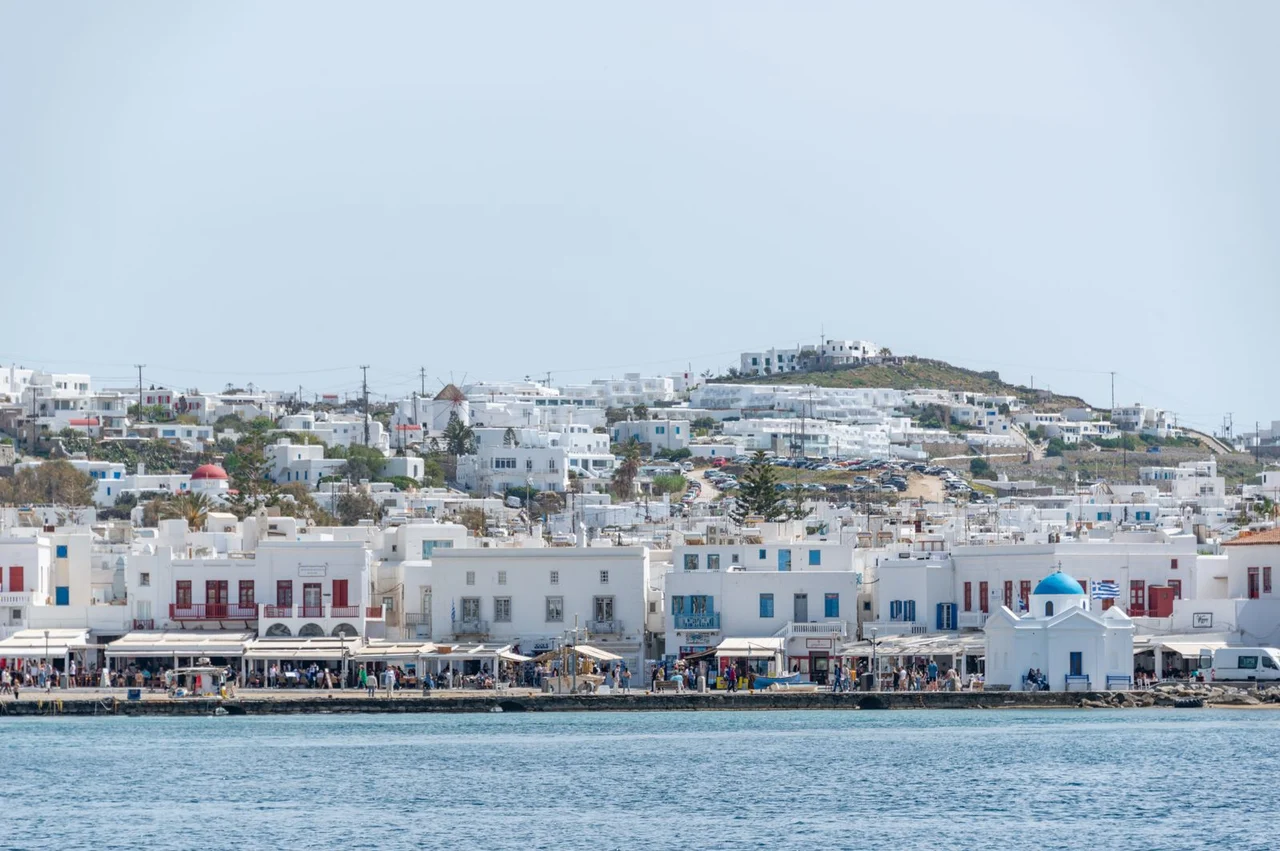
This is a fundamental difference between Crete and small islands like Santorini or Mykonos, which almost die out in winter. Crete is large and self-sufficient enough to be a full base for living: here you can work, raise children, get medical care, study, and not feel cut off from the world in November, once the tourists have gone.
This is exactly why the island is so popular with remote workers and retirees from around the world. Some come to overwinter and stay for years; others plan a move to Crete from the outset as a strategy – to swap a grey northern winter for mild Mediterranean sun. If you're considering the island seriously, it makes sense to look ahead of time at the overall a roadmap for relocating to Greece, to understand the visa and everyday roadmap.
Climate: year-round by the sea and a mild winter
Climate is the main reason people choose Crete specifically over mainland Greece. The island lies further south than the rest of Europe, closer to Africa, and this gives it one of the mildest climates on the continent. There are more than 300 sunny days a year here – a rare figure even for the Mediterranean.
What the year looks like by season:
- Winter (December–March) – mild and damp. Daytime temperatures hold around +12–16°C, cooler at night, occasionally near zero in the mountains. Snow settles only on the peaks. It rains, but not much, and the greenery afterward is lush.
- Spring (April–May) – the ideal season: warm, everything in bloom, still few tourists.
- Summer (June–September) – dry and hot, +28–32°C and above, almost no rain, saved by the sea breeze.
- Autumn (October–November) – the velvet season: the sea stays warm until November and the heat eases.
An important detail: the southern coast (the Libyan Sea) is noticeably warmer than the northern one (the Aegean Sea). Those who want the mildest possible winter often choose the south of the island. Crete's climate is considered one of the healthiest for people – sea humidity, no sharp cold snaps, plenty of sun year-round. For anyone escaping northern winters, this is the deciding argument.
The cities of Crete: Chania, Heraklion, Rethymno, and the east
Crete stretches almost 260 km from west to east, and its cities differ greatly in character. Choosing a city is essentially choosing a way of life. Let's look at the main centers where people who move here actually settle.
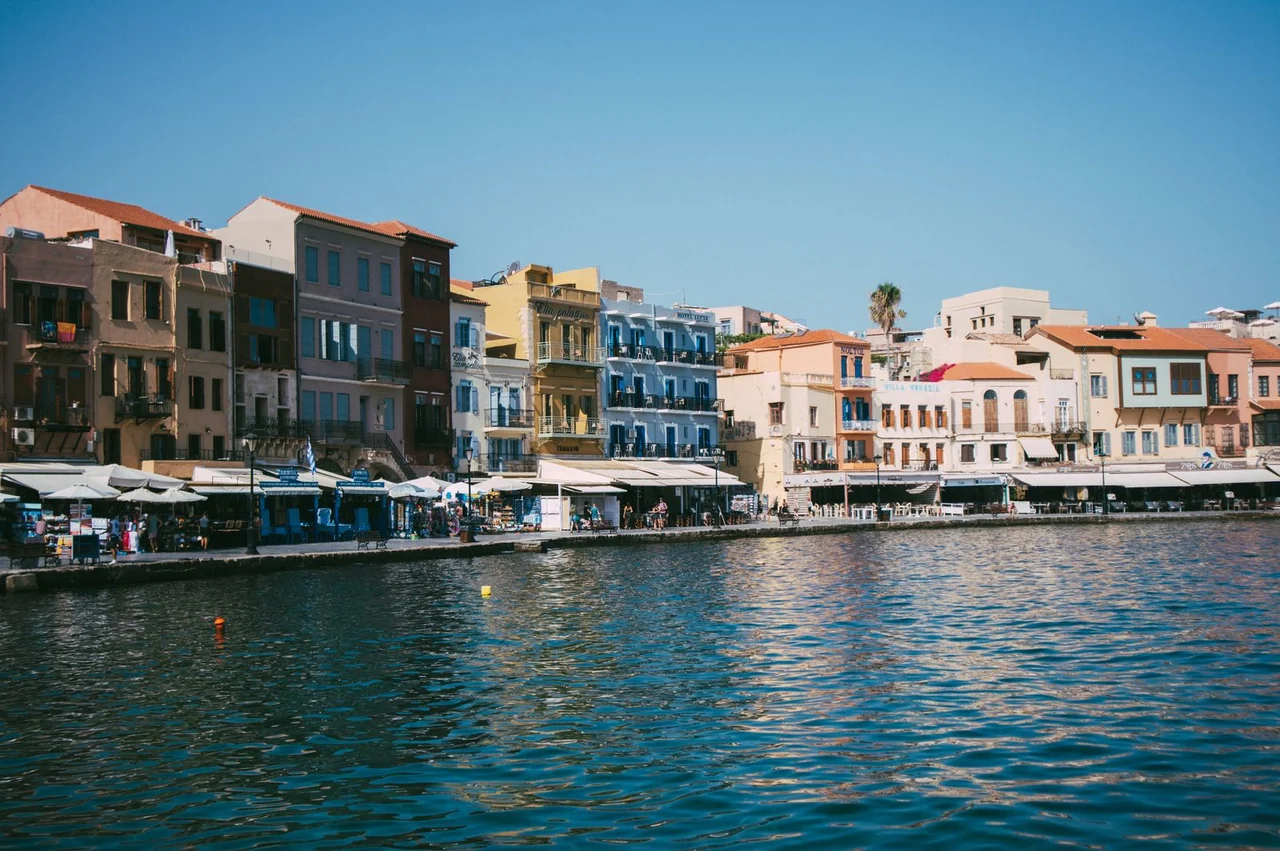
- Chania – the west of the island, the most “postcard-perfect” city and the expat favorite. A Venetian harbor, the narrow lanes of the old town, cafes by the water, a pedestrian center. The atmosphere is relaxed and cozy, yet there's an international school, hospitals, markets, and coworking spaces. The main magnet for foreigners.
- Heraklion – the regional capital and the island's largest city. This is no longer a resort but a lively business hub with students, businesses, the main airport, and the island's best healthcare. Less picturesque, more urban and dynamic – the choice for those who need infrastructure and work rather than postcard views.
- Rethymno – the golden mean between Chania and Heraklion. Smaller and calmer than Chania, more soulful than Heraklion. An old Venetian-Turkish town, a university that keeps the city alive year-round, and a notable cultural and creative crowd. Families and retirees often choose it.
- The east (Agios Nikolaos, Sitia) – a quieter, more traditional part of the island, with its own established community of foreigners, but with less infrastructure.
For buying property in these cities there is a separate practical breakdown – in the article on property on Crete.
The international community: who you'll be living alongside
One of the biggest fears about moving to an island is ending up isolated, without a social circle and in a foreign language. On Crete this concern is easier to resolve than it seems: a large and active international community has taken root here – and a permanent one, not seasonal.
Where foreigners are most numerous:
- The Chania area and Apokoronas in particular – the densest concentration of foreign residents on the island. The British, Germans, Scandinavians, and Dutch settled in the local villages long ago; there are chats, clubs, and events of their own.
- Rethymno – draws a more creative and academic crowd, largely thanks to the university; the city is alive year-round.
- Heraklion and Agios Nikolaos in the east – other established clusters with foreigners.
Cretans are known for their hospitality – locals and newcomers mix easily, especially if you make even a small effort toward the language and culture. Daily life is set up so that a newcomer can build connections without much trouble: neighborly ties, markets, cafes, language courses, parent chats at schools. Life on Crete for Russians and Russian speakers doesn't mean a vacuum either – there is a Russian-speaking community, though it is smaller than the British or German one and is concentrated mainly around the larger cities.
Prices and the cost of living on Crete in 2026
Affordable prices are the second reason to move, after the climate. By European standards Crete remains inexpensive: roughly speaking, the island is 40–50% cheaper than London or central Athens and 30–40% cheaper than Barcelona or Lisbon. That said, it's important to understand the cost structure – rent and lifestyle account for almost everything.
| Expense category | Approximate figures for 2026 |
|---|---|
| Rent of a studio/one-bedroom in central Chania | 600–900 € per month |
| Rent of a one-bedroom outside the center / in a village | 350–550 € per month |
| Groceries per person | 160–240 € per month |
| Comfortable budget per person (including rent) | roughly 1,200–1,800 € per month |
| Buying property (Chania, Rethymno) | roughly from 2,000 € per m² |
| Coffee / lunch at a taverna | 2–4 € coffee, 12–18 € lunch |
The figures are approximate: the real cost of living depends heavily on the city, the area, and your habits. A modest village life with home cooking and no car works out noticeably cheaper than a seaside apartment in Chania with daily restaurant meals. A detailed breakdown of every category is in the guide to the cost of living in Greece. You should also budget separately for the ENFIA property tax, insurance, and car costs.
Food, markets, and Mediterranean everyday life
A distinct joy of life on Crete is the food. The island is considered the birthplace of the Mediterranean diet, and this isn't marketing but daily reality. Fresh vegetables and fruit, locally pressed olive oil, fish, cheeses, honey, wild herbs – all of it is cheap, readily available, and genuinely delicious here.
How the food side of daily life works:
- Local markets (laiki) – in every city an open-air farmers' market operates on a set schedule, where locals sell vegetables, fruit, greens, eggs, and honey. Prices are lower than the supermarket, and quality is higher.
- Olive oil – Cretan olive oil is considered one of the best in the world; many buy it straight from farmers by the canister.
- Tavernas – a hearty meal at a family taverna costs 12–18 € per person, often with the owner's homemade wine.
- Seasonality – produce follows the seasons, and this changes your habits: tomatoes and watermelons in summer, grapes and pomegranates in autumn, citrus and greens in winter.
This everyday way of life is no trifle. Many who have moved here note that it's the food and the markets that make life on Crete noticeably healthier and more pleasant than in a big northern city. Fresh produce year-round is a direct result of the mild climate.
The pros and cons of life on Crete: a table
To make the decision to move a sober rather than an emotional one, let's bring the strengths and weaknesses of island life together in a single table by aspect. There's no idealizing here – every plus has a flip side, and it's important to see both.
| Aspect | Pro | Con |
|---|---|---|
| Climate | More than 300 sunny days, a mild winter, warmth by the sea year-round | In summer, strong heat of +30–35°C, especially in the cities |
| Sea and nature | Hundreds of beaches, mountains, gorges, and clean water nearby year-round | In summer the best beaches are packed with tourists |
| Prices | Cheaper than most of Western Europe, with affordable rent and food | Local wages are low; imported goods and electronics cost more |
| Pace of life | Calm, a low crime rate, none of the big-city bustle | The same unhurried pace in business and bureaucracy – everything is slow |
| Transport | Two airports (Chania, Heraklion), flights across Europe | Outside the cities you need a car; public transport is weak |
| Service and offerings | In season everything is open; in summer the city is lively | In winter (November–March) some restaurants and businesses close |
| Connection to the mainland | Good air links, ferries | It's an island – mainland Greece is a flight or a ferry away |
| Infrastructure | Hospitals, schools, and universities in the larger cities | In the villages and the east there are noticeably fewer services |
The key point of the table: Crete is nearly ideal for a measured life by the sea, but it demands a readiness for island constraints – seasonality, distances, and an unhurried pace.
Transport, airports, and connections to the world
Island logistics is a topic people underestimate – wrongly, because it determines how cut off or, conversely, how connected to the world you'll feel. The good news is that in this respect Crete is one of the most convenient islands in Greece.
- Two airports. Heraklion International Airport (the largest on the island) and Chania Airport. In summer – direct flights across Europe; in winter – steady connections to Athens and the main hubs.
- Ferries. Overnight ferries connect Heraklion, Chania, and other ports with Athens (Piraeus). Handy for transporting a car and bulky luggage.
- Roads. The main highway runs along the northern coast, linking the major cities. Inland and in the south the roads are mountainous and slower.
- KTEL buses. They link the cities to one another, but rarely reach villages and remote beaches – hence the need for a car.
The takeaway is simple: reaching mainland Greece and Europe is easy and quick, but getting around the island without your own car turns into a quest. A car should be built into the relocation budget from the start.
Healthcare, schools, and everyday life for a family
For those moving not to overwinter but for good – and all the more so with children – what matters isn't the beaches but the dull yet decisive infrastructure: hospitals, schools, banks, internet. On this front Crete is noticeably better than the small islands, though not on the level of a European capital.
- Healthcare. The best public and private clinics are concentrated in Heraklion, followed by Chania and Rethymno. There is a university hospital. Specialists and complex cases sometimes require a trip to Athens, but basic and emergency care is available on the island.
- Schools. In the larger cities there are both Greek state schools (free) and international/private schools taught in English – first and foremost in the Chania area. For families this is one of the key factors in choosing a city.
- Internet and communications. In the cities the speed is good, there's fiber optic, and mobile coverage is stable – remote work is realistic. In mountain villages the connection is worse.
- Banks and services. Bank branches, notaries, and services are available in all the larger cities; to rent or buy you'll need an AFM tax number.
The conclusion: a family or a person who values infrastructure would do better to settle in one of the three main cities or their suburbs rather than in an isolated village for the sea view.
An expert's view: how not to be disappointed by a move to Crete
Over years of working with relocations we see recurring mistakes that shatter the island's romance against everyday reality. We've gathered the main warnings so your move is a sober decision rather than an impulse after a good holiday.
- Don't confuse a holiday with living. It's easy to fall in love with Crete in August. Before you move your things, spend at least one winter on the island – it's the off-season that shows real life.
- Status first, suitcases second. Settle your legal basis (nomad visa, FIP, or a residence permit through property) before the move, not after. Everything else depends on it.
- Budget for a car and for winter. Many count only rent and food, forgetting the car, winter heating (houses are often poorly insulated), and seasonality.
- Choose your city to match your lifestyle. A remote worker and a family need the infrastructure of a large city; anyone seeking quiet will find the east or a village suitable – but with an allowance for an empty winter.
Crete delivers what people come for: sun, sea, calm, and affordable living. But it doesn't forgive illusions. The more soberly you weigh the downsides at the start, the greater the chance the island becomes a real home rather than a disappointment a year later.
The verdict: is it worth moving to Crete
Living on Crete year-round is a realistic option for anyone who wants to trade a northern winter for mild Mediterranean sun without going broke. The island offers a rare combination: more than 300 sunny days, a warm winter, the sea right at hand, fresh Mediterranean food, a calm and safe rhythm, and, at the same time, full infrastructure in the larger cities. By European standards, living here is still inexpensive.
But the conclusion is this: Crete isn't for everyone. It's ideal for remote workers, retirees, and families ready to accept the island's rules of the game – seasonality, the need for a car, an unhurried pace, and the distance to the mainland. For those who live by the rhythm of a big city and a career in local employment, the island may feel confining.
If the island does suit you, the key question is legal status. The most direct route to staying by the sea for the long term and eventually reaching permanent residence and EU citizenship is a residence permit through property investment, the digital nomad visa, or the financially independent person status. Before moving, it's always worth checking the current rules on the official portal of Greek public services (gov.gr), and to discuss the route for your own situation with the experts at BRIDGES GLOBAL. It's also useful to look at the analyses of relocating to Greece and the cost of living, to plan your budget without surprises.
Not sure which country and status to choose?
We will compare suitable residency programs on budget, timelines and stay requirements - with a full cost calculation for your family.
Free of charge, we reply right away, no obligation.
The downsides without the gloss: what to prepare for in advance
Every travel agency writes about the pluses of Crete, so let's dwell in more detail on the downsides – they are what most often spoils the move for those who weren't prepared. To know them in advance is to avoid disappointment later.
- Seasonality of services. From November to March a large share of tourist restaurants, bars, and shops in resort areas close. In the larger cities (Heraklion, Chania, Rethymno) life goes on year-round, but in small seaside towns it grows quiet and empty in winter. If you choose a village only for its summer views, you may find winter dull.
- You need a car. Public transport between cities exists (KTEL buses), but off the main routes it is infrequent. For normal life in a suburb or village a car is practically essential – an added cost for purchase, insurance, fuel, and maintenance.
- Distance from the mainland. It's an island. Athens is about an hour's flight or an overnight ferry away. In emergencies or special cases (rare medical specialists, bureaucracy) you sometimes have to travel to the mainland.
- Summer heat and tourists. July and August mean +30–35°C, packed beaches and roads, and rising prices. Locals often head inland or to less crowded coves.
- Bureaucracy. Greek public services aren't fully digitized; much is done in person, on site, and slowly. You'll need to stock up on patience.
None of these downsides is insurmountable – but each is worth weighing before you move your family and belongings.
“The advice I give most often to people dreaming of Crete: spend at least one winter on the island before you move your whole life there. Falling in love with Crete in August takes about five minutes, but the real island reveals itself in November, once the tourists have left, some tavernas have closed, and a seaside village grows quiet. Those who pass that test and still want to stay almost never regret it. The second key point is that your legal status should be settled before the move, not after. Whether you choose the digital nomad visa, the financially independent person status, or a residence permit through a property purchase determines your tax burden, your ability to bring your family, and your path to permanent residence. And always budget for a car and for winter: houses on the island are often poorly insulated, and without a car life outside town stalls. Crete gives sun and calm generously – but only to those who came here to live, not to stretch out a holiday.”
Who Crete suits: remote workers, retirees, families
Crete isn't equally good for everyone. There are groups of people for whom the island is a nearly ideal base, and there are those who will feel confined here. Let's break it down .
Who Crete suits best:
- Remote workers and freelancers. If your income isn't tied to the local economy, Crete offers a rare combination: a mild climate, low costs, the sea right at hand, and decent internet in the cities. For a legal long-term stay, Greece's digital nomad visa is a good fit.
- Retirees. Low crime, an unhurried pace, affordable healthcare in the cities, a warm winter, and cheap fresh food – everything needed for a peaceful retirement. More on this in the article on life in Greece for retirees.
- Families with children. It's safe, there are international and Greek schools in the larger cities, and children grow up by the sea and in the fresh air.
Who will find it harder: those used to the pace and opportunities of a big city, to nightlife, to a career in domestic employment (wages on the island are low), and who aren't ready for island constraints. For such people, mainland Athens or Thessaloniki will be a better fit.
The terms of a legal move: how to stay on Crete for the long term
A tourist can admire the island on a Schengen visa, but living on Crete year-round requires a legal basis for a long stay. A Schengen visa lets you stay in Greece only 90 days out of every 180 – too little for permanent living. That means you need a residence permit. Here are the main legal routes to staying on the island for the long term.
- Golden Visa (residence permit through property investment). The most direct route for those ready to buy property. A residence permit for 5 years, renewable, for the whole family, with almost no requirement to reside in the country. Investment thresholds depend on the region; in most areas Crete falls under the standard threshold. This is the legal “I want to stay by the sea for the long term” strategy.
- Digital Nomad visa. For remote workers with verified income from a foreign employer or clients – roughly from 3,500 € per month.
- Financially Independent Person (FIP). A residence permit for those with stable passive income (pension, rent, dividends).
- Permanent residence and citizenship. After 5 years of legal residence, the path opens to EU long-term resident status and, later, to naturalization.
Crete is attractive for permanent residence precisely because it combines all the perks of life by the sea with the chance to obtain EU resident status through a property purchase. For Russian nationals and citizens of the CIS, the Greek Golden Visa is available – strictly legally, with enhanced source-of-funds checks and without circumventing sanctions. The specialists at BRIDGES GLOBAL will help you choose the right route for your situation.
Frequently asked
Questions people ask before deciding
01Can you live on Crete year-round, or does the island empty out in winter?
You can live here year-round. In the larger cities – Heraklion, Chania, Rethymno – life goes on twelve months a year: shops, schools, hospitals, and universities are all open. It's mainly the small resort towns that empty out, where part of the tourist trade closes from November to March. So for permanent living it makes more sense to choose a city or its suburbs rather than an isolated seaside village.
02How much does life on Crete cost in 2026?
As a rough guide, a comfortable budget per person is 1,200–1,800 € per month including rent. A studio in central Chania costs around 600–900 €, while in a village or outside the center it's 350–550 €. Groceries come to 160–240 € per person. A modest village life with home cooking is noticeably cheaper than a seaside apartment with daily restaurant meals. All figures are approximate and depend on the city and lifestyle.
03Which city on Crete should you choose to live in?
It depends on your priorities. Chania is the coziest and the expat favorite, with its Venetian harbor and relaxed atmosphere. Heraklion is a major business center with capital-city infrastructure, the best healthcare, and the main airport. Rethymno is a quiet middle ground, popular with families and retirees. The east of the island (Agios Nikolaos, Sitia) is calmer but with a smaller range of services.
04What's the climate like on Crete in winter?
Winter on Crete is mild and damp. During the day it holds at around +12–16°C, cooler at night, occasionally near zero in the mountains. Snow settles only on the peaks; on the coast there is practically none. It rains, but not much. The island's southern coast is warmer than the northern one. Overall, Crete is one of the warmest regions of Europe in winter, which is exactly what draws winter residents.
05Do you need a car to live on Crete?
To live in the center of a large city you can manage without a car – everything is within walking distance. But outside the cities, in the suburbs and villages, a car is practically essential: public transport (KTEL buses) runs between cities but rarely reaches villages and remote beaches. A car should be factored into your relocation budget, along with insurance and fuel.
06Is there a large international community on Crete?
Yes, the community is large and active – and permanent, not just seasonal. Foreigners are concentrated most densely around Chania and in the Apokoronas area, where the British, Germans, Scandinavians, and Dutch have settled. There are clusters of their own in Rethymno (a more creative crowd), Heraklion, and the east. There is a Russian-speaking community too – smaller, but present, mainly around the larger cities.
07How to legally stay and live on Crete for the long term?
On a Schengen visa – only 90 days out of every 180. For a long-term stay you need a residence permit. The main routes are: the Golden Visa through property investment (5 years, for the whole family), the digital nomad visa for remote workers earning from ~3,500 € per month, and the financially independent person status (FIP) with stable passive income. After 5 years of legal residence, the path to permanent residence and EU citizenship opens up.
08Is Crete suitable for permanent residence?
Yes, Crete is attractive for permanent residence because it combines the perks of life by the sea with the chance to obtain EU resident status. The direct route is buying property and obtaining a residence permit through investment, which after 5 years of legal residence leads to EU long-term resident status and, later, to naturalization. The island is one of the most convenient regions of Greece for permanent living.
09What are the main downsides of life on Crete?
The downsides: the seasonality of services (in winter some venues in resort areas close), the need for a car outside the cities, the distance from the mainland (it's an island – Athens is a flight or a ferry away), summer heat of +30–35°C and the influx of tourists in July and August, plus Greece's unhurried bureaucracy. None of these downsides is critical, but they are worth weighing before you move.
10Are healthcare and schools good on Crete?
The best healthcare is concentrated in Heraklion, followed by Chania and Rethymno – there are public and private clinics and a university hospital. Complex cases sometimes require a trip to Athens. There are both Greek state schools (free) and international schools taught in English, mainly in the Chania area. For families with children it makes more sense to settle in the larger cities.
11Who does Crete suit best?
Remote workers and freelancers with an income independent of the local economy; retirees seeking calm, a warm winter, and affordable living; and families with children who value safety and life by the sea. It will be harder for those used to the pace of a big city, nightlife, and a career in local employment – wages on the island are low.
12How to get from Crete to the mainland and to Europe?
The island has two airports – Heraklion (the largest) and Chania. In summer there are direct flights across Europe; in winter there are steady connections to Athens and the hubs. Overnight ferries also run from Heraklion and Chania to Piraeus (Athens) – handy for a car and bulky luggage. For ease of connection to the mainland, Crete is one of the most accessible islands in Greece; the flight to Athens takes about an hour.
Transparency
How this material was prepared
- Author
- Irena Sokolovska, head of Europe Office, BRIDGES
- Terms and costs last verified
- June 2026
- Sources
- official government authorities of the relevant country and state publications
- Methodology
- government minimum requirements are stated separately from due diligence charges, state fees, legal and banking costs
Sources and methodology
Figures, terms and timelines are checked against official sources as of June 2026. Link availability verified in August 2026. Third-party blogs and agent websites are not used as a source of programme terms.
- [1]Ministry of Migration and Asylum of GreeceResidence permits, including the investor permitmigration.gov.gr/en
- [2]Enterprise GreeceConditions of the investor programmewww.enterprisegreece.gov.gr/en
Methodology: tables and charts state government minimum investment requirements; due diligence charges, state fees, legal, banking and other costs are calculated separately and are not included in the minimum thresholds.
About the author
Related materials
What to read next
 ArticleGreek citizenship by descent in 2026: by roots, parents, grandparents
 ComparisonGolden Visa of Greece or Caribbean citizenship 2026: EU residence permit versus second passport
 AnalysisWhat is due diligence and why the Caribbean is rejecting applications
Personal programme selection is conducted by Anna Kovalevskaya, Head of Legal, BRIDGES.
Residency in Greece: timelines and requirements
Grounds, document list, presence requirements and what is needed for renewal.