Living abroad · Greece
Medicine in Greece: insurance, clinics and prices for foreigners

Updated: June 2026·9 min read·Expert reviewed
Terms and costs verified: June 2026
Contents
Greece is a popular destination for relocation. Climate, sea, low cost of living. But when it comes to medicine, many people have questions. How is the healthcare system structured? Do you need private insurance? How much does a doctor's visit cost? In this article we will analyze everything in order - without unnecessary words and with specific numbers. If you are planning to move to Greece under the Golden Visa program or a long-term visa, the medical issue must be resolved in advance. State insurance EOPUU (ΕΟΠΥΥ) is not automatically available to all foreigners. Private clinics operate at a good level, but require expenses. We've compiled the latest data for 2026 to give you an idea of what to expect.
How the healthcare system works in Greece
Greece has a two-tier medical system. The public sector is ESI hospitals (ESY, Εθνικό Σύστημα Υγείας, National Health System) and PEDI clinics (ΠΕΔΥ). Private sector - clinics and doctors working independently.
Public hospitals are financed from the budget. Theoretically, assistance there is free for the insured. In practice, there are queues, outdated equipment in the regions and a lack of staff. Athens has better public hospitals than those on the islands or smaller towns.
Private clinics are on another level. Modern equipment, short wait, English-speaking staff. But you have to pay for everything out of pocket or through insurance.
State insurance EOPUU: who can receive
EOPUU (ΕΟΠΥΥ) is the main state insurer of Greece. It covers doctor's visits, tests, part of the cost of medications and hospitalization in public hospitals.
The following can receive an EOPUU: employees (contributions are paid by the employer), self-employed (they pay themselves), pensioners, unemployed Greeks with work experience. A foreigner with a work contract in a Greek company is automatically included in the system through the employer.
Foreigners with a residence permit without work - for example, on a Golden Visa or a financially independent person visa - are not included in the EOPUU. They need private health insurance. This is a mandatory requirement when applying for most types of residence permit.
The contribution for the self-employed is about €168 per month (minimum). At the same time, coverage remains basic: 25% co-payment for medicines, queues at government institutions.
Private insurance for foreigners: options and prices
Private health insurance is standard for most foreigners in Greece. It covers visits to private clinics, hospitalization, operations and sometimes dentistry.
| Age | Annual fee (basic plan) | Annual fee (extended) |
|---|---|---|
| 25-35 years | €600-900 | €1200-1600 |
| 36-45 years old | €900-1300 | €1500-2000 |
| 46-55 years old | €1300-1800 | €2000-3000 |
| 56-65 years old | €1800-2500 | €3000-4500 |
Large insurers in Greece: Interamerican, Allianz Hellas, Groupama Φοίνιξ, Eurolife FFH. Many offer policies in English and a call center with Russian-language support.
When applying for a Golden Visa residence permit, a policy with coverage of at least €30,000 for hospitalization is required. We recommend taking out insurance with an unlimited or high amount of coverage - this will cost €1200-2000 per year for a person 40-50 years old.
The best private clinics in Greece
Athens is the country's medical center. The best private hospitals are concentrated here. Below are the main market players.
Hygeia Hospital - the largest private hospital in Greece. Located in Athens (Maroussi). International department for foreigners, work with foreign insurance. Specialization: oncology, cardiology, orthopedics.
Metropolitan Hospital - Piraeus, Athens. Multidisciplinary hospital. Strong emergency department, good reputation in surgery.
Ευρωκλινική (Euromedica) - a network of clinics throughout Greece, including Thessaloniki and Crete. A convenient option for those who live outside of Athens.
Iaso Hospital - specializes in obstetrics and gynecology. The best choice for pregnancy management in Athens.
Ahepa Hospital (Thessaloniki) is a large university hospital in northern Greece. State-owned, but at a high level.
Prices for medical services in Greece
Private medicine in Greece is cheaper than Western Europe - but more expensive than residents of Russia and the CIS countries are used to. Government services are formally free for the insured, but in reality they require time.
| Service | State clinic | Private clinic |
|---|---|---|
| Visit to a therapist | €5 (kopecks) or free | €60-100 |
| Visit to a specialist | €5-15 (queue 1-3 months) | €80-150 |
| Blood test (general) | €0-10 | €30-50 |
| Ultrasound of the abdominal organs | €0-20 | €80-120 |
| MRI | €0-30 (queue) | €250-400 |
| X-ray | €0-10 | €40-60 |
| Ambulance ECAV | For free | - |
| Hospitalization (days) | €0-50 | €200-500 |
| Elective surgery (appendicitis) | Free for the insured | €2000-4000 |
Ambulance (ΕΚΑΒ, number 166) is free for everyone without exception - both tourists and foreigners without insurance. According to the law, it is impossible to refuse emergency assistance.
Cost of insurance and medicine: full calculation
Let's estimate the real annual budget for medicine for one adult foreigner with a residence permit in Greece.
| Expense item | Amount per year (1 person) |
|---|---|
| Private insurance (40-50 years, basic plan) | €1000-1500 |
| Doctor visits (4-6 per year, some covered by insurance) | €0-300 |
| Medicines (surcharge 25% with EOPUU or full price without) | €100-400 |
| Dentistry (2 cleanings + 1 filling) | €200-350 |
| Tests and diagnostics without insurance | €100-300 |
Total: €1400-2850 per year per adult. For a family of 4 people - multiply by 3-4 taking into account children's rates (insurance for children is cheaper).
For comparison: in Germany the same private insurance costs €3000-5000 per year. In Greece, medicine is more accessible.
Do you want to move to this country? We will analyze your case for free.
Get a free consultationChildbirth in Greece: how it works for foreigners
Greece is a popular country for “medical tourism” for childbirth. Good obstetricians, Mediterranean climate, clean clinics.
Childbirth in a public hospital for a foreigner with EDPUU is free or with a minimal additional payment. Without insurance in the state - about €1500-2500.
Childbirth in a private clinic (Iaso, Mitera, Metropolitan) - €3000-5000 for a standard birth. Caesarean section - €4000-6000. This includes 2-3 nights in the ward, anesthesia and care for the newborn.
A child born in Greece does not automatically receive citizenship. Greece does not practice jus soli (law of the soil). Citizenship is transmitted by blood - through a Greek parent.
A newborn of foreign parents receives a residence permit as a family member if the parents have a residence permit.
Dentistry in Greece for foreigners
Dentistry in Greece is one of the strengths of local medicine. Prices are significantly lower than in Germany, Great Britain or Scandinavia. Quality is at the European level.
| Service | Price in Greece | Price in Germany (for comparison) |
|---|---|---|
| Consultation and examination | €40-60 | €80-120 |
| Professional cleaning | €60-80 | €80-150 |
| Filling (photopolymer) | €80-120 | €120-200 |
| Tooth extraction | €60-100 | €100-180 |
| Implant (turnkey) | €900-1400 | €2000-3500 |
| Porcelain crown | €300-500 | €700-1200 |
Dentists in Athens and Thessaloniki often speak English. In tourist areas (Crete, Rhodes, Corfu) - even more so. Finding an English-speaking dentist is easy through the website Numbeo or Google Maps with reviews.
Pharmacies and medicines in Greece
Pharmacies in Greece are literally on every corner. The green cross on the sign is a standard sign. Pharmacies are usually open from 8:00 to 14:30 and from 17:30 to 21:00 on weekdays. On-duty pharmacies (εφημερεύον φαρμακείο) operate around the clock - the schedule is on the door of any closed pharmacy.
Most European drugs are available in Greek pharmacies. Prescription drugs require a prescription from a Greek doctor. Prescriptions from Russia or other CIS countries do not work in Greece - you need to get a prescription from a local specialist.
If there is an EOPUU, many medicines cost 25-75% less - the state compensates part of the cost. Without insurance, pay full price. Example: antihypertensive drug (losartan analogue) - €8-12 per month with insurance, €18-25 without.
Most pharmacists speak English. Medicine packaging is in Greek, but the INN (international nonproprietary name) is always indicated in Latin.
What to look for when choosing a clinic and doctor
Some practical advice for those moving to Greece.
Check the clinic's accreditation. Hygeia and Metropolitan private hospitals have international certificates. Small clinics - check with the Greek Ministry of Health (moh.gov.gr).
Look for a doctor with international experience. Many Greek specialists studied or trained in the USA, Great Britain, and Germany. Their diplomas are listed on the clinic’s website. English-speaking physician is a standard request that is understood at the reception of any private clinic.
Check your insurance coverage in advance. Before your visit, call the clinic and check whether your insurer is accepted. Large clinics work with Interamerican, Allianz, Groupama directly (direct billing) - you do not pay on the spot.
Keep documents in English. It is better to make translations of medical records from Russia in advance - in apostilled form. Greek doctors are used to working with foreign patients, but documentation in Russian can be difficult.
The state ambulance (ΕΚΑΒ, 166) works for everyone. If there is a real threat to life, call without hesitation. The invoice will be issued only for hospitalization, and then only for those who are not insured, and for those who are partially uninsured.
“Foreigners are often surprised: in Greece there is no single “medical corridor” for those who moved using a Golden Visa. This means that you organize your own health - insurance, choice of clinic, doctor. The good news is that the private healthcare system in the country is working. Hygeia or Metropolitan are real European hospitals with modern equipment. The bad news: without insurance, one serious case will cost €5,000-20,000. Therefore, the first thing you need to do after applying for a residence permit is to take out full insurance, and not the minimum of €30,000 for a visa only. Second advice: do not put off medical examination until later. Do it in the first year - there are no chronic diagnoses yet that an insurer might consider a “pre-existing condition” and exclude from coverage. This is standard practice all over the world, Greece is no exception. Plan dentistry separately - it’s really cheap by European standards, and it’s better to do it here than to overpay at home.”
Medicine in different regions of Greece
The level of medicine in Greece greatly depends on where you live. This is important to consider when choosing a city to move to.
Athens (Attica) - the best choice for those who value medicine. All leading private clinics are here. State hospitals are overloaded, but the specialists are strong.
Thessaloniki (Thessaloniki) - the second medical center in the country. Ahep University Hospital, private Euromedica. For most tasks it is enough.
Crete (Heraklion, Chania) - There are public hospitals and small private clinics. For planned operations and serious illnesses, it is better to go to Athens.
Islands (Rhodes, Corfu, Mykonos) - basic medical care. Surgery and specialized treatment are available only on the mainland. Tourist season means queues even in private clinics.
Conclusion: if health is a priority, choose Athens or Thessaloniki. Islands and small towns are for those who are young and healthy or ready to travel to the capital.
Conditions for foreigners: what is needed to live with medical coverage
To legally reside in Greece, a foreigner needs a residence permit. Golden Visa is the most popular option for investors from the CIS. The condition for obtaining a residence permit is the availability of medical insurance.
Read more about the Golden Visa program in Greece on the page brgsglobal.com/residency/investment/greece/. There are also requirements for investments, documents and deadlines.
After receiving a residence permit, you have two paths in medicine:
Path 1 - private insurance. Suitable for most investors and their families. You pay €800-2000 per year and get coverage in the best private clinics. No queues and no dependence on the government system.
Path 2 - voluntary entry into the EOPUU. Possible for the self-employed or those starting a business in Greece. Contribution €168/month + government coverage. Plus - subsidized medicines. The downside is the queues and limited choice of doctors.
Most foreigners with a Golden Visa choose private insurance. It's simpler, faster and more predictable.
Do you want to move to this country? We will analyze your case for free.
Get a free consultationComparison with other EU countries
How does Greece compare to other European countries for a foreign resident?
| Country | Private insurance (year, 40 years) | Visit to the doctor (private) | Childbirth (private clinic) |
|---|---|---|---|
| Greece | €1000-1500 | €60-100 | €3000-5000 |
| Portugal | €1200-1800 | €80-120 | €3500-6000 |
| Spain | €1500-2500 | €60-90 | €4000-7000 |
| Germany | €3000-5000 | €80-150 | €3000-5000 (hospital) |
| Cyprus | €900-1400 | €60-80 | €2500-4000 |
Greece is one of the most affordable EU countries in terms of the cost of medical care. At the same time, the level of private clinics corresponds to the European standard.
Taxes, contributions and registration of medical expenses
The costs of health insurance and treatment in Greece can be taken into account when filing taxes - if you have become a tax resident of the country.
A Greek tax resident declares income and has the right to deduct a portion of medical expenses from the tax base. The standard deduction is 20% of medical expenses, maximum €3,000 per year. To do this, you need checks and invoices from clinics in your name (with TIN - Greek AFMN).
For investors with a Golden Visa who do not live in Greece permanently (less than 183 days per year), tax residency does not arise. In this case, medical expenses are not deductible - but there are no declaration obligations.
Special “non-dom” regime in Greece: flat tax of €100,000 per year for wealthy migrants with foreign income. This regime does not affect health insurance - you must have insurance in any case.
AFMN (ΑΦΜ - analogue of TIN) is not difficult to obtain. It is needed for any official payments, including medical ones. Issued at the tax office (ΔΟΥ) if you have a residence permit or passport.
Practical advice for those moving to Greece
A few things to do before or immediately after moving.
1. Buy insurance before moving in. Many insurers sell international policies online - before obtaining a residence permit. This is mandatory for the visa package and provides coverage from day one.
2. Find “your” doctor (PHC). Greece has a system of family doctors through the EOPF. Even with private insurance, it is convenient to have one physician who takes your medical history.
3. Save medical documents from Russia. Particularly important: hospital extracts, data on chronic diseases, vaccination certificate. Translate into English - this will make it easier to work with Greek doctors.
4. Check your dental insurance coverage. Basic policies do not include dentistry. If you are planning treatment, choose an extended plan or pay separately (prices are reasonable).
5. Write down emergency numbers. Ambulance - 166. General EU emergency number - 112. Coast Guard (for islands) - 108.
Frequently asked
Questions people ask before deciding
01Do I need insurance to get a Golden Visa in Greece?
Yes. Medical insurance is a mandatory requirement when applying for a Golden Visa residence permit. The policy must cover hospitalization for an amount of at least €30,000. In practice, we recommend taking wider coverage.
02Can I use public hospitals with a residence permit?
A foreigner with a residence permit without an employment contract in Greece is not automatically included in the EOPU system. Emergency assistance (166) is available to everyone. Planned treatment in government institutions - only if there is an ESPUU or payment.
03How much does private insurance cost for a family of four?
Approximately €3000-6000 per year depending on the age of the parents. Children under 18 years of age are insured at a lower rate. Check the exact price with insurers Interamerican or Allianz Hellas.
04Which clinics in Athens are best for foreigners?
Hygeia Hospital and Metropolitan Hospital are leading private hospitals. Both institutions work with foreign insurance and have an international patient department. For obstetrics - Iaso Hospital or Mitera.
05Is ambulance service free in Greece?
Yes. ΕΚΑΒ (number 166) - state ambulance service. Call-up and transportation are free for everyone, including foreigners without insurance. Subsequent hospitalization may be subject to charges for the uninsured.
06How to find an English-speaking doctor in Greece?
In Athens and Thessaloniki, most doctors in private clinics speak English. Search through the clinic website or Google Maps. You can ask at the reception: “English-speaking doctor, please” - they will understand everywhere.
07What is the cost of childbirth in a private clinic in Greece?
Standard childbirth in a private clinic in Athens - €3000-5000. Caesarean section - €4000-6000. The price includes 2-3 nights in a room. Childbirth in a public hospital for a foreign woman without EOPU - about €1500-2500.
08Are there Russian-speaking doctors in Greece?
In Athens and on the tourist islands you can find Russian-speaking specialists - especially among immigrants from the USSR or CIS countries. But you shouldn’t count on Russian as the norm. English is the universal language of communication in private clinics.
09Is it possible to import medicines from Russia to Greece?
Medicines for personal use (up to a 3-month supply) can be imported. Prescription drugs are best accompanied by a prescription or statement in English. Narcotics and potent drugs - only with special permission.
10Are diplomas of Russian doctors recognized in Greece?
To practice as a doctor in Greece, the diploma must be recognized by the Greek Ministry of Health. This is a complex procedure. For the patient, this does not matter - you choose a doctor based on quality, not the country of his diploma.
11What is the situation with mental health care in Greece?
Private psychiatrists and psychotherapists are available in Athens and Thessaloniki. Cost - €80-150 per session. State mental health services are severely overburdened. Insurance policies sometimes cover part of the sessions - check when choosing a policy.
12Is it worth making a medical check before buying insurance in Greece?
Not required, but recommended. If you have chronic conditions, your insurer may exclude them from coverage as “pre-existing conditions.” Please indicate them when applying for a policy - this will protect you from refusal to pay in the event of an insured event.
About the author
Related materials
What to read next
 ArticleGreek citizenship by descent in 2026: by roots, parents, grandparents
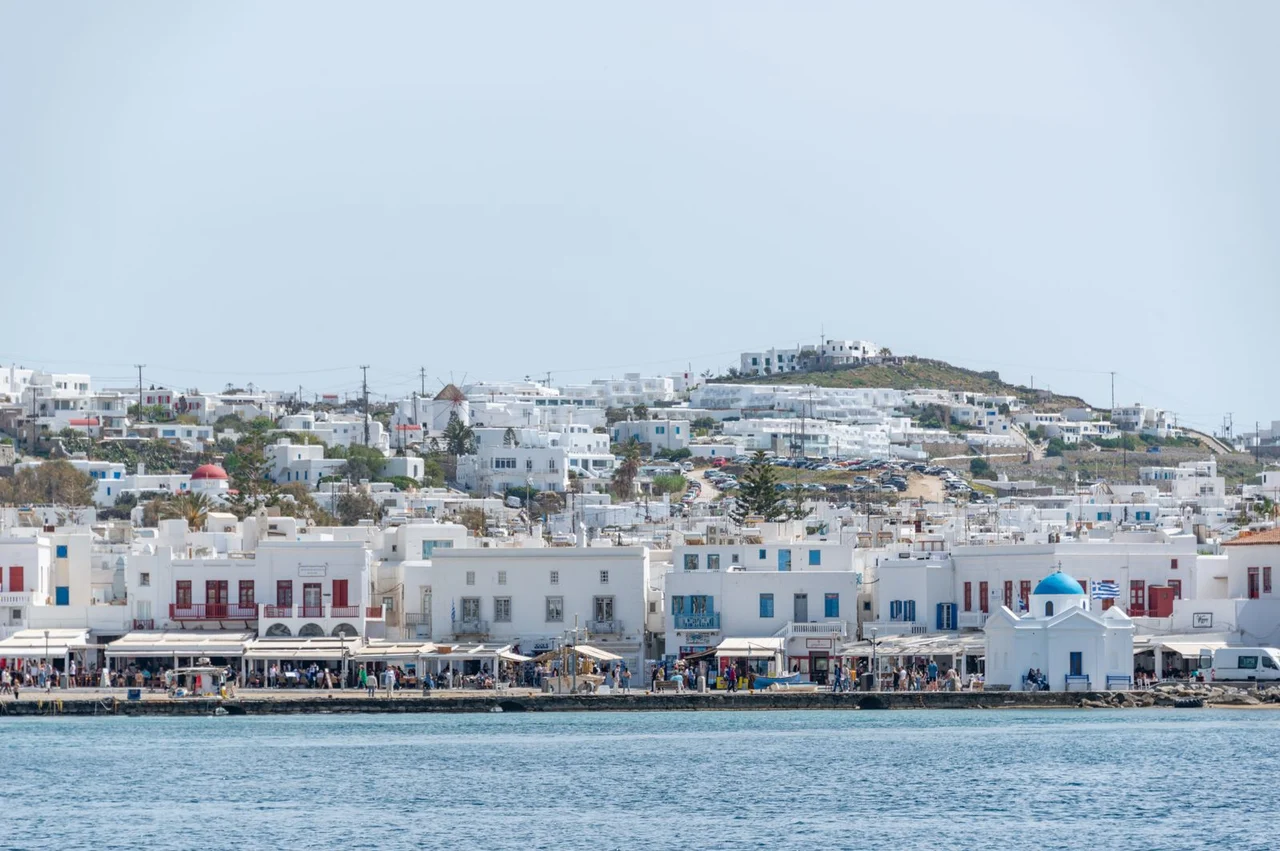 ComparisonGolden Visa of Greece or Caribbean citizenship 2026: EU residence permit versus second passport
 AnalysisWhat is due diligence and why the Caribbean is rejecting applications
Personal programme selection is conducted by Anna Kovalevskaya, Head of Legal, BRIDGES.
Moving to Greece: what to settle first
Housing, schooling, healthcare, accounts and taxes - the order and what takes longest.