Citizenship · Vanuatu
Vanuatu: what kind of country is it and where is it located?

Updated: June 2026·11 min read·Expert reviewed
Terms and costs verified: June 2026
Contents
Vanuatu sounds exotic, and many people hear this name for the first time when researching second citizenship programs. This is a republic of more than 80 islands in the South Pacific Ocean - between Australia, Fiji and New Caledonia. Let's look at the facts: where it is on the map, how they live there, what the economy is based on, and why a small island state even gives out passports for a non-refundable fee. Without advertising cliches - just as we explain to clients before making a decision.
Where is Vanuatu and what kind of archipelago is it?
Short: Vanuatu is an island republic in the South Pacific Ocean, east of Australia and north of New Zealand. About 80 islands, the capital is Port Vila on the island of Efate.
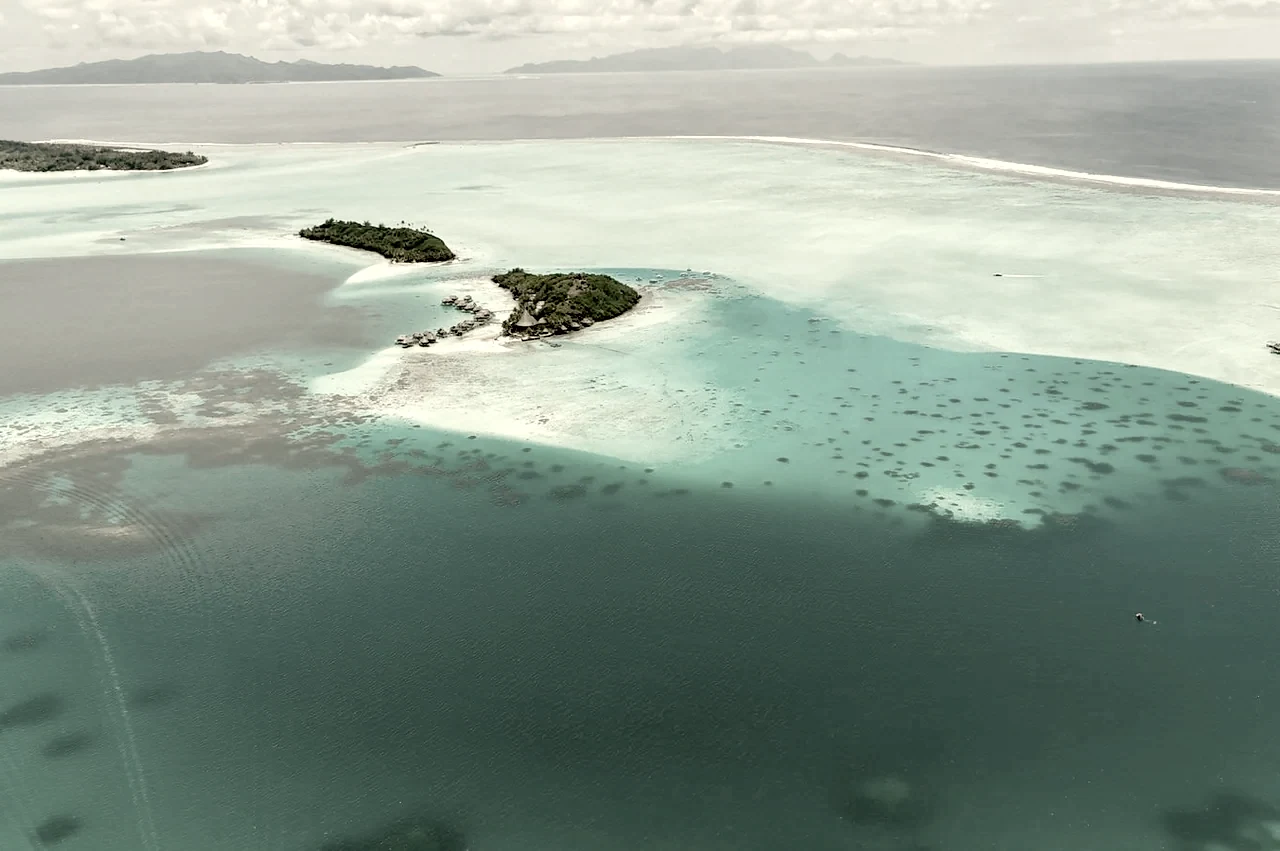
If you open a map of the Pacific Ocean and draw a line from Australia to the northeast, approximately 1,750 kilometers from Brisbane you will come across an elongated chain of islands - this is Vanuatu. The archipelago lies in that part of the ocean that geographers call Melanesia: neighboring the Solomon Islands in the north, Fiji in the east, French New Caledonia in the south. The state stretches for almost 1,300 kilometers from north to south in the shape of the Latin letter Y.
In total, the country has more than 80 islands, of which about 65 are permanently inhabited. The total land area is approximately 12,200 square kilometers, that is, slightly smaller than Montenegro, but these islands are scattered over a huge water area. The largest of them:
- Espiritu Santo - the largest island, almost 4000 sq. km, with the highest point of the country (Mount Tabwemasana, 1879 m);
- Malakula - second in size;
- Efate - the capital Port Vila, the main airport and most of the infrastructure are located here;
- Tanna - an island with an active volcano Yasur, one of the main natural attractions.
Almost all the islands are of volcanic origin, mountainous, and covered with tropical forest. Vanuatu lies on the Pacific Ring of Fire - hence the active volcanoes and seismicity. It is important for an investor to understand the geography in advance: this is not the Caribbean a few hours' flight from Miami, but a remote region reached through Australia, New Zealand or Fiji. Vanuatu citizenship is obtained remotely, without a visit, so the distance does not affect the process - but if you plan to move, it greatly affects your lifestyle.
Population, languages and culture
Vanuatu has a population of about 318 thousand people as of 2024, and it is one of the youngest nations in the Pacific in terms of average age. Approximately 99% of the inhabitants are indigenous Ni-Vanuatu, mostly Melanesian; on the remote islands there are Polynesian communities, there are small groups of immigrants from Europe, China and Vietnam. Population density is low, most people live in villages and are engaged in agriculture, and essentially only two centers are urbanized - the capital Port Vila and the city of Luganville on Espiritu Santo.
There is a unique situation here with languages. Vanuatu is one of the world record holders for linguistic diversity: for 318 thousand inhabitants there are more than 100 living local languages and dialects. In order to somehow communicate with each other, the nation uses three official languages:
- Bislama - a creole language based on English, the national language and a means of communication between speakers of different tribal dialects;
- English - the language of education, business and official documents in one part of the country;
- French - a legacy of joint Anglo-French management, still used in schools and administration.
English/French bilingualism is a direct consequence of colonial history. Until 1980, the islands were jointly administered by Britain and France (the so-called Condominium of the New Hebrides), resulting in a rare case where the country had two legal and two school systems operating in parallel. For the passport holder, this means that Vanuatu's official documents are issued in English - convenient for international recognition. Ni-Vanuatu culture is still alive: tribal rituals, customary law, the famous tower jump on Pentecost Island (the prototype of bungee jumping), an active volcanic pilgrimage to Tanna. For those who view the country as a place to live and not just a source of a second passport, this distinctiveness is part of the appeal.
Economy, currency and standard of living
Vanuatu's economy is small and relies on several pillars: subsistence and commercial agriculture, fisheries, tourism and offshore financial services. More than 80% of the population is in one way or another connected with the agricultural sector - they grow copra (dried coconut pulp), cocoa, coffee, kava (a local root for a traditional drink), and raise livestock. Before the pandemic, tourism contributed about a third of GDP: cruise ships, diving, Yasur volcano. After COVID-19 and a series of devastating cyclones, the industry has been slow to recover.
National currency - cotton wool (code VUV, symbol VT). It is a relatively stable currency pegged to a basket of trading partner currencies. Prices in the tourist areas of Port Vila are closer to Australian prices, in the villages - life is completely different. The standard of living is heterogeneous: the capital offers acceptable infrastructure, private clinics, restaurants and hotels, while on the remote islands life remains traditional and poor. Vanuatu belongs to the group of least developed countries according to the UN classification, although according to the subjective happiness index, the islanders are regularly among the most satisfied nations with life.
A separate and important detail for the investor is tax regime. Vanuatu has no personal income tax, no capital gains tax, no inheritance tax and no worldwide income tax. The state fills the budget through indirect taxes (VAT, import duties), tourist taxes and - most importantly - income from the citizenship program. It is zero taxation that makes the country interesting for wealthy people with global assets; We write more about this in the article about Vanuatu citizenship by investment. It is worth soberly understanding: resident status for tax benefits requires real presence and competent structuring - a passport alone does not automatically cancel tax obligations in your current country.
| Indicator | Value (approximately) |
|---|---|
| Currency | cotton wool (VUV/VT) |
| Basis of the economy | agriculture, tourism, offshore services |
| Personal income tax | 0% |
| Capital gains/inheritance tax | 0% |
| The main source of foreign exchange earnings | tourism and citizenship program |
Political system, security and climate
Vanuatu is a parliamentary republic with a written constitution. The head of state is considered the president, but this is largely a ceremonial figure symbolizing the unity of the nation; real executive power belongs to the prime minister and the cabinet formed by parliament. The unicameral parliament is popularly elected. The country gained independence in 1980 and since then has been a member of a number of international organizations - the UN, the Commonwealth of Nations (Commonwealth), the International Organization of Francophonie and the Pacific Islands Forum.
Membership of the Commonwealth is not an empty formality for the passport holder: it gives Vanuatu citizens certain convenience when traveling and staying in a number of Commonwealth countries, although it is not a visa-free Schengen. The political system is stable in terms of democratic institutions, but is quite flexible in terms of changing governments - coalitions in parliament are often shuffled, which is typical for Pacific states.
By security Vanuatu is a calm country with low levels of violent crime; The main risks here are natural, not criminal. The archipelago lies on the Ring of Fire and is regularly included in lists of the world's most disaster-vulnerable states. Main threats:
- Tropical cyclones - Cyclone Pam in 2015 caused damage exceeding 60% of GDP; Cyclones Harold (2020) and Judy and Kevin (2023) also hit the economy;
- Earthquakes and volcanic activity - a consequence of the position at the junction of tectonic plates;
- Sea level rise - long-term threat to low-lying islands.
The climate is tropical and subtropical: hot and humid all year round, the rainy and cyclone season occurs around November-April, the dry and more comfortable season occurs in May-October. Communications and the Internet in Port Vila work acceptable (mobile operators, optics, satellite solutions), but on the remote islands the coverage is unstable. For most investors, this is not critical: a Vanuatu passport is often taken as a backup document and a mobility tool, rather than as a place of permanent residence.
“Vanuatu is a fair program if you set the goal correctly. People often come to us with the request “I want a Vanuatu passport for the sake of a visa-free Europe,” and the first thing I do is explain that the EU revoked the visa-free regime back in 2024, and this is a decision of the EU Council, not a rumor. After this, half of the clients realize that what they really need is speed, asset protection and zero taxes - and then Vanuatu becomes an excellent choice: a passport in a month and a half, without a visit, with dual citizenship allowed. And I advise the other half to watch the Caribbean. It is better to disappoint a person during a consultation than after the contribution has already been made.”
Why does Vanuatu even issue citizenship for a fee?
A logical question: why would a sovereign state sell passports? The answer is direct and clear - budget. Vanuatu's economy is small, but the needs are great: cyclone recovery, infrastructure, schools, hospitals, roads between the scattered islands. The tax base within the country is thin (remember the zero income tax), tourism is vulnerable to weather and external shocks. The citizenship by investment program has become a predictable source of foreign exchange earnings for the state, which in some years provided a significant share of treasury revenues.
The mechanics are simple and : the state accepts non-refundable donation to the National Development Fund (Development Support Program, DSP), conducts a background check on the applicant and in return grants citizenship. This is not a purchase in the everyday sense - it is a legalized exchange: you finance the development of the country, the country provides you with status. A number of countries have similar programs - the Caribbean, Türkiye, Egypt; Against this background, Vanuatu stands out for its shortest processing time.
Here is a conversation about weaknesses, without which expert material is meaningless:
- The fee is non-refundable. Unlike real estate or fund investment options, the DSP donation is non-refundable.
- The EU has revoked visa-free travel. This is discussed in detail below - this is the key point on which many competitors mislead customers.
- Reputation factor. It was because of the claims to the citizenship program that the European Union tightened the visa regime.
Understanding this logic helps you make an informed decision. If you need a quick second passport for mobility, asset protection and access to zero taxation - Vanuatu is the place to be. If the main goal is European visa-free mobility, it is worth comparing the alternatives. We analyze the pros and cons in a separate article about comparison between Vanuatu and Dominica, as well as in the review Caribbean passports.
Why Vanuatu is interesting as a second citizenship
Let's move on from regional studies to the essence - why Vanuatu even appears on the short lists when choosing a second passport. The program has several objective strengths, because of which it is taken even in the absence of a European visa-free regime.
- Speed. This is perhaps the fastest citizenship by investment program in the world: from application to passport it takes approximately 1-2 months. For those who need a document urgently, there are almost no competitors - see our analysis fastest second citizenship.
- Zero taxes. No income tax, no capital gains tax, no inheritance tax and no worldwide income tax - a rare combination. Details - in the material about taxes and citizenship in Vanuatu.
- Dual citizenship is allowed. There is no need to give up your current passport - Vanuatu recognizes multiple citizenship.
- Remote registration. No country visit, residence or language test required; everything goes through a licensed agent.
- Family for one case. You can include your spouse, children and, in some cases, parents in your application.
The weak point is obvious to everyone - the lack of visa-free entry into Schengen after the EU decision. Therefore, a Vanuatu passport is often chosen as a tool for rapid mobility, insurance and access to a zero tax regime, rather than as a key to Europe. If you're weighing Pacific options against each other, it's a good read comparison between Vanuatu and Nauru: Both countries focus on speed, but conditions and reputations differ. And we keep the full list of available directions, the pros and cons of the program in one place - on the page Vanuatu citizenship by investment.
Terms of the program and how much it costs in 2026
Short: Vanuatu citizenship is issued through a non-refundable donation under the DSP program - approximately from 130,000 USD per applicant, for a period of about 1-2 months, without a visit to the country.
Basic option - Development Support Program (DSP): non-refundable contribution to the state development fund. The estimated donation amounts for 2026 look like this (the exact amount, taking into account fees and family composition, is specified individually):
| Composition of the application | Fee (approximately) |
|---|---|
| One applicant | from ~130,000 USD |
| Married couple | from ~150,000 USD |
| Family up to 4 people | from ~180,000 USD |
In addition to the basic fee, government fees for processing and due diligence, fees for processing passports and services of a licensed agent are paid. Therefore, the final budget is always calculated for a specific family - the public fork gives only the order of numbers. There is also an alternative investment scheme (with a partially returnable component through a state fund), but the classic and fastest route is a donation through DSP.
What's included in the process:
- collection and legalization of documents, registration of dossiers;
- payment of fees and government fees;
- due diligence through Vanuatu Financial Intelligence;
- approval, oath (conducted remotely by an authorized person) and issuance of a certificate of citizenship and passport.
The entire journey takes approximately 1-2 months - faster than most programs in the world. We provide a detailed breakdown of amounts, deadlines and package of documents on the page Vanuatu citizenship by investment. To get an accurate calculation for your family composition and check whether you meet the requirements, leave a request - we We will evaluate your case for free and tell you whether Vanuatu is right for you or is it worth considering an alternative.
What is important to check before making a decision: visa-free travel, reputation, errors
This part is not an advertisement, but a sober checklist. This is where those who choose Vanuatu based on their competitors’ beautiful landing pages most often make mistakes.
1. Visa-free entry into the EU - there is NO such thing. This is the main point. The European Union phased out the visa-free regime for the Vanuatu passport: a partial suspension was in effect from 2022, and on December 12, 2024, the EU Council finally transferred Vanuatu from the list of visa-free countries to the list of countries for which a visa is required. The reason is directly stated in the decision - the risks associated with the citizenship by investment program. Means, Vanuatu passport does not have visa-free Schengen today, and to travel to the EU you need a Schengen visa with full verification. Anyone who promises you visa-free Europe with a Vanuatu passport in 2026 is either clueless or misleading. Check with the original source - the official one press release from the EU Council.
2. The actual number of visa-free destinations. Following the EU decision, the list has been shortened. The 2026 passport indices estimate that Vanuatu provides visa-free or simplified entry to approximately 88 countries and territories - still useful mobility (including typically the UK, Singapore, Hong Kong and a number of Asian and Pacific destinations), but without Schengen. Don't trust numbers like "130+ countries" from old articles - check the current list as of the date of submission.
3. Licensed agent and reputation. Vanuatu citizenship can only be obtained through agents accredited by Vanuatu Immigration and Passport Services Department. Check that the company operates legally and does not promise “guaranteed” approval bypassing due diligence.
Frequent mistakes of applicants that we see in practice:
- choosing a country for the sake of “European visa-free travel”, which no longer exists, is an incorrectly set goal;
- underestimation of due diligence: criminal records, sanctions risks and non-transparent origin of funds lead to refusal, and the fee for refusal on such grounds is usually not returned;
- errors in documents and translations that cause weeks to be lost;
- comparison of programs only by the price of the contribution without taking into account fees, tax picture and real mobility.
Before making a decision, formulate why you need a second passport. If the answer is speed, zero taxes and a backup document, Vanuatu works great. If the answer is Europe, check out the alternatives and comparisons we linked above. We will help you compare options without pressure.
BRIDGES service: Vanuatu citizenship by investment with BRIDGES support.
Frequently asked
Questions people ask before deciding
01Where exactly is Vanuatu?
In the South Pacific Ocean, east of Australia and northwest of New Zealand, in the Melanesia region. In the neighborhood are the Solomon Islands, Fiji and New Caledonia. This is an archipelago of more than 80 islands, stretching for almost 1300 km.
02How many islands are there in Vanuatu and which are the main ones?
More than 80 islands, of which about 65 are permanently inhabited. The largest are Espiritu Santo (the largest), Malakula, Efate (where the capital is Port Vila) and Tanna with the active Yasur volcano.
03What is the capital and how many people live in the country?
The capital is Port Vila on the island of Efate. The population of the entire country is about 318 thousand people according to 2024 data, approximately 99% of them are indigenous people of Vanuatu.
04What languages are spoken in Vanuatu?
Three official languages: Bislama (English-based Creole, lingua franca), English and French. Plus more than 100 local languages and dialects - the country is one of the world record holders for linguistic diversity.
05What is the currency in Vanuatu?
The national currency is vatu (code VUV, symbol VT). It is relatively stable and pegged to a basket of trading partner currencies. In tourist areas prices are close to Australian prices.
06What is Vanuatu's economy based on?
In agriculture (copra, cocoa, coffee, kava, livestock), fisheries, tourism and offshore financial services. Before the pandemic, tourism contributed about a third of GDP. The citizenship by investment program also brings a significant share of the budget.
07What is the political system like in Vanuatu?
A parliamentary republic with a president as the ceremonial head of state and a prime minister at the head of the government. Independence gained in 1980. The country is a member of the UN, the Commonwealth of Nations and the Pacific Islands Forum.
08Is it safe in Vanuatu?
Violent crime rates are low and the country is calm. The main risks are natural: tropical cyclones, earthquakes and volcanic activity, as Vanuatu lies on the Pacific Ring of Fire.
09Why does Vanuatu issue citizenship for money?
This is a legal source of replenishment of the budget of a small state with a thin tax base and an economy vulnerable to natural disasters. The applicant makes a non-refundable contribution to the development fund (DSP), is verified and receives citizenship.
10Does a Vanuatu passport give visa-free entry to Schengen?
No. The European Union revoked the visa-free regime: partially from 2022, and on December 12, 2024, the EU Council finally transferred Vanuatu to the list of visa countries. To travel to the EU you now need a Schengen visa. Any promises of a visa-free Europe on a Vanuatu passport in 2026 are not true.
11How much does Vanuatu citizenship cost in 2026?
Under the DSP program, the fee is approximately from 130,000 USD per applicant, from ~150,000 for a couple and from ~180,000 for a family of up to four people, plus government fees, due diligence and agent services. The exact amount is calculated for a specific case.
12Is it possible to have a second citizenship and not renounce the current one?
Yes. Vanuatu allows dual and multiple citizenship; there is no need to renounce your existing passport. Registration takes place remotely, without a visit to the country, in approximately 1-2 months - this is one of the fastest programs in the world.
Transparency
How this material was prepared
- Author
- Darya Melnik, senior Investment Programs Advisor, BRIDGES
- Terms and costs last verified
- June 2026
- Sources
- official government authorities of the relevant country and state publications
- Methodology
- government minimum requirements are stated separately from due diligence charges, state fees, legal and banking costs
Sources and methodology
Figures, terms and timelines are checked against official sources as of June 2026. Link availability verified in August 2026. Third-party blogs and agent websites are not used as a source of programme terms.
- [1]Vanuatu Citizenship OfficeOfficial conditions of the citizenship programmevancitizenship.gov.vu
- [2]Vanuatu Department of ImmigrationEntry, visas and statusesimmigration.gov.vu
Methodology: tables and charts state government minimum investment requirements; due diligence charges, state fees, legal, banking and other costs are calculated separately and are not included in the minimum thresholds.
About the author
Related materials
What to read next
 ComparisonSecond citizenship in 3-6 months: Caribbean, Türkiye or Vanuatu in 2026
 AnalysisWhat is due diligence and why the Caribbean is rejecting applications
 ArticleA bank account with a Vanuatu passport in 2026: where and how to open one
Personal programme selection is conducted by Anna Kovalevskaya, Head of Legal, BRIDGES.
Citizenship of Vanuatu: preparation checklist
Documents prepared in advance, source of funds checks and where applications usually fail.