Citizenship · Turkey
Turkish citizenship for Russians in 2026: conditions, nuances and what is important to know
Updated: ·14 min read·Expert reviewed
Terms and costs verified: undefined
Contents
Turkey remains one of the most practical second passports for Russians: the entry threshold for real estate is from $400,000, there is no requirement to live in the country, dual citizenship is allowed, visa-free travel is maintained, and banking works. But there are nuances that sellers rarely write about: the obligation to notify the Ministry of Internal Affairs of the Russian Federation, tax residency, difficulties with payment under sanctions, and what a Turkish passport does NOT provide - Schengen.
Why Türkiye became the N1 passport for Russians
After 2022, the choice of countries that actually work with Russians has narrowed sharply. Caribbean programs have tightened checks, many European doors have closed, and transfers in dollars and euros through Russian banks have actually stopped. Against this background, Türkiye turned out to be a logical choice - not because of marketing, but because of practical accessibility.
What exactly makes Turkey convenient for a citizen of the Russian Federation in 2026:
- Visa-free for tourist trips. A visa-free regime for tourist trips remains between Russia and Turkey - you do not need to apply for a visa to fly in, inspect the property and conduct a transaction.
- Direct flights. Direct flights from Moscow, St. Petersburg and the regions were not interrupted - it took several hours to fly to Istanbul and Antalya, and not through third countries.
- Large diaspora. In Antalya, Alanya, and Istanbul, large Russian-speaking communities have developed, realtors, lawyers and doctors who speak Russian.
- Working banking. Türkiye has not officially joined the sanctions, so you can still open an account here, hold funds and make payments - with reservations, which are discussed below.
- No residency requirement. To obtain a passport by investment, you do not need to physically live in the country or take a language or history test.
It is important to set expectations right away: a Turkish passport is not a “European” document. We provide a detailed analysis of the economics of the program in guide to Turkish citizenship by investment.
Conditions and options: what needs to be invested in 2026
Turkish Citizenship by Investment (CBI) is not a charitable contribution like in the Caribbean, but a real asset that stays with you. The state gives several options to choose from, and the threshold depends on the type of investment. The figures are confirmed by official acts and have not changed downwards.
| Investment option | Minimum amount | Retention condition |
|---|---|---|
| Real estate (one or more objects) | from $400,000 | 3 years, sale prohibited |
| Bank deposit in a Turkish bank | $500 000 | 3 years |
| Government bonds | $500 000 | 3 years |
| Investment fund units | $500 000 | 3 years |
| Job creation | 50 employees | employment confirmation |
The most popular route among Russians is real estate. Key nuance: the threshold of $400,000 is considered not according to the price in the contract, but according to assessment by a licensed SPK appraiser (Capital Markets Council). Since 2022, the state has been harshly fighting against “drawn” valuations - if the transaction price is much higher than the appraiser’s report, the application is checked more closely. You can collect the amount from several objects: for example, an apartment for $250,000 plus a studio for $150,000.
The family is included in one application: the spouse and children under 18 years of age are included with the main applicant. An adult child does not automatically receive a passport for this investment - he needs his own investment or a separate legal decision on the division of shares. We discuss the real estate option in detail in the material about Turkish citizenship through real estate.
Process and timing: how the deal works
The algorithm for a Russian looks like this, and it is better to plan each step in advance so as not to stretch the deadlines:
- Obtaining a TIN and opening an account. First, a Turkish tax number and a local bank account are issued - without them, neither the transfer nor the registration of property will take place.
- Object selection and SPK evaluation. The property is checked legally and a report from a licensed appraiser is ordered. The report is valid for 3 months and costs approximately $300-500.
- Deal and TAPU. Ownership is confirmed by a TAPU document - a Turkish certificate. It contains a note (sherkh) banning sales for 3 years.
- Certificate of conformity. The Ministry of Finance/relevant body issues confirmation that the investment meets the program requirements.
- Applying for residence permit and citizenship. At the same time, a residence permit is issued, then an application for citizenship is submitted; biometrics, verification, decree
The approximate turnkey period is from 4 to 8 months, sometimes longer due to the workload of organs and verification of the origin of funds. To say “you’ll get it in a couple of months” would be dishonest: the final stages depend on the state, not on the agent. Property registration is carried out through Turkish Land Registry Authority (TKGM), citizenship issues - through the relevant authorities at nvi.gov.tr.
Dual citizenship: what Türkiye says and what Russia demands
This is the most sensitive bloc for Russians, and here it is important to separate the two sides - Turkish and Russian.
From the Turkish side. Türkiye allows dual (and multiple) citizenship. You are not required to give up your Russian passport - you can be a citizen of both countries at the same time. This is convenient: you retain all your rights in the Russian Federation and receive a Turkish document.
From the Russian side. And this is where the applicant’s area of responsibility begins. According to Russian law, a citizen of the Russian Federation is obliged to notify the Ministry of Internal Affairs about obtaining a second citizenship or residence permit. According to current rules, notification must be submitted within 60 days; if a person is permanently abroad, separate rules apply to him, and the obligation to notify if permanently residing abroad is interpreted differently.
- Term. Notification within 60 days (refer to the current version of the law at the time of receipt of the passport).
- Liability for failure to notify. Article 330.2 of the Criminal Code of the Russian Federation - a fine (according to different versions, approximately up to 200,000 rubles) or compulsory work.
- For violating the deadline. Administrative liability under the Code of Administrative Offenses is a fine of approximately 500 to 1000 rubles.
Separately, we note: at the beginning of 2026, a bill was discussed in the Russian Federation obliging Russians permanently living abroad to notify consulates of second citizenship and residence permit, with criminal liability for violation. This is an initiative for now, and not a current norm - but take into account the tendency towards tightening. Specific deadlines and sanctions check with a lawyer on the date of receipt of the passport: The wording changes, and we deliberately do not give “eternal” numbers.
Taxes and currency: CFC, residency and pitfalls
Obtaining a Turkish passport in itself does not automatically change your tax status - but it is important to consider the related decisions in advance, otherwise you may create a double burden on yourself.
- Tax residency. In most jurisdictions, including the Russian Federation, residency is determined not by passport, but by days of physical presence (183 days rule) and center of vital interests. A Turkish passport does not automatically make you a Turkish tax resident and does not remove your Russian residency if you continue to live in the Russian Federation.
- CFC (controlled foreign companies). If you are a tax resident of the Russian Federation and own a Turkish company (for example, for business or renting out real estate), you may have obligations under CFC rules: notifications and, in some cases, taxes. The asset ownership structure should be thought through before the transaction.
- Taxes in Turkey. The income tax is progressive, there is VAT (KDV) and a tax on the purchase of real estate (registration fee TAPU). Please check the specific rates for 2026 separately - they are indexed.
- Non-resident income. A non-resident of Turkey is taxed primarily on Turkish source income rather than worldwide income.
The main practical advice: do not buy a passport “blindly” without considering the tax consequences in both countries. A mistake in the ownership structure can cost more than the investment itself. Our analysis is useful for comparing the tax logic of different jurisdictions UAE vs Turkey.
“I have developed one principle with Russians in Turkey: first the route of money, then the choice of apartment. People come with a ready-made object, fall in love with the sea view - and then for weeks they cannot complete the payment, because there is no direct transfer from the Russian Federation, and no one has thought through the scheme through a third country in advance. The second stone is dual citizenship. Türkiye allows you to do so, but notifying the Ministry of Internal Affairs of the Russian Federation about the second passport within the prescribed period is already your responsibility, and for silence there is liability, up to and including criminal liability. And third: do not buy a Turkish passport expecting Schengen. He's not there. But there is a real asset, proximity to home and a door to an E-2 visa in the United States - if you understand why you are doing this.”
Payment for a transaction under sanctions: about the difficulties
This is the part that agents usually pass over in silence, but in vain - this is where deals most often fail. Türkiye has not officially joined the sanctions and maintains financial relations with the Russian Federation, but this does not mean that money is transferred easily.
The reality of 2026 is:
- Direct transfers from Russian banks in dollars and euros, in most cases do not go through to a Turkish account due to secondary sanctions and the caution of correspondent banks.
- Common scheme - an account in a third country (for example, in Armenia, Kazakhstan, the UAE), transfer of funds there, then to Turkey. Each bank along the chain verifies the origin of the money.
- Transaction currency. In Istanbul, prices are often in dollars, on the coast - in euros; the specific currency is fixed in the contract by agreement.
- Main bottleneck - not to find the object, but to be able to complete and close the payment in the conditions of secondary sanctions and compliance.
What this means for you: Plan your money route to choosing an object, keep transparent documents about the source of funds and allow time for bank checks. An attempt to “cut corners” through dubious schemes can lead to the freezing of funds and disruption of the entire program. This is a solvable task, but requires preparation, not improvisation.
Bonus: Turkish Passport as Key to US E-2 Visa
One of the most underrated benefits of Turkish citizenship is access to a US investor visa. E-2. Russia is not on the list of E-2 treaty countries, but Türkiye is. By obtaining a Turkish passport, an investor from a “non-E-2” country opens the way to this visa.
What does E-2 give in practice:
- Investment in a real business in the USA - approximately from $100,000-200,000 (the threshold is not strictly fixed, the materiality and viability of the business is important).
- Long term (often up to 5 years) with the possibility of extension an unlimited number of times while the business is in operation.
- Opportunity to live and conduct business in the USA, transport your family.
- An alternative to multi-year EB-5 waiting lists.
Important Timing Disclaimer: Traditionally, E-2 applicants who have acquired citizenship by investment are considered favorably after approximately 3 years possession of Turkish citizenship - the consulates check that the passport was not purchased “yesterday” precisely for the sake of a visa. This is not an automatic right, but a separate process with its own requirements. We provide a detailed analysis of the bundle in the material Turkish passport and US E-2 visa.
What a Turkish passport does NOT provide
a conversation about product boundaries is more important than fancy promises. Turkish citizenship is a powerful tool, but it has clear limits, and not understanding them means buying the wrong thing.
- This is not Schengen or the EU. Türkiye is not a member of the European Union or the Schengen area. A Turkish passport does not give the right to live and work freely in Europe and does not provide visa-free entry into Schengen. If your goal is Europe, this is a different class of programs.
- This is not “visa-free around the world.” A Turkish passport allows visa-free or simplified entry into a number of countries, but this is not a top document in terms of strength. Please check the specific list of directions on the date of registration.
- This is not automatic Turkish tax residence - see the section on taxes.
- Residence permit for real estate and citizenship are different paths. A short-term residence permit (İkamet) for an object from $200,000 does not automatically lead to a passport; citizenship is a separate program with its own threshold of $400,000.
If the priority is European mobility, it makes sense to compare alternatives. And if speed, price and business mobility are important, Türkiye remains one of the best options. It is useful to compare it with the Caribbean programs in the analysis Grenada vs Turkey.
Who is suitable and who is not?
To avoid wasting money, relate the program to your task. Türkiye is about practicality, not about European status.
Türkiye is suitable if you:
- Do you want a quick second passport with a real asset (the real estate remains with you), and not a non-refundable deposit.
- Appreciate proximity to Russia, direct flights, visa-free travel and Russian-speaking environment.
- Consider the United States through the E-2 visa as a strategic target over the horizon of several years.
- We are ready to go through bank compliance and arrange a payment route in advance.
- Do you want an alternate airfield, a base for business in the region and access to Turkish banking?
Türkiye is most likely not your option if you:
- If they are aimed specifically at living and working in the EU, then the European path is needed.
- You are not ready to hold an asset for 3 years and want to return the money faster.
- Looking for a “paper” passport without any investment.
When in doubt between regions, start by comparing goals, not prices. We help you choose a program for a specific task - leave a request for a consultation, and the lawyer will analyze your situation: taxes, route of money, family composition and timing.
Verification and compliance: why applications fail
The Turkish program does not refuse “for Russian citizenship” as such, but checks on the origin of funds and the legal purity of the object have become stricter. Understanding these risks makes the difference between a prepared applicant and one who will waste time and money.
- Origin of funds. Banks and authorities want to see a transparent history of money - sales of assets, income, dividends. An unclear source is a common cause of delays.
- SPK assessment. An inflated price against the appraiser's report triggers additional scrutiny; It will no longer be possible to “draw” the cost.
- Prohibition on early sale. The mark in TAPU actually blocks the sale for 3 years; trying to get around it through “donation” does not work and can lead to retroactive revocation of citizenship.
- Closed areas. In areas where the proportion of foreigners exceeds the threshold, registration for foreigners is limited - the facility must be checked in advance.
- Legal purity of the object. Encumbrances, debts, illegal buildings - all this is checked before the transaction.
The conclusion is simple: the success of the program is decided at the stage of preparing documents and selecting an object, and not at the final submission. It's better to spend an extra week checking than months fixing a failure.
Frequently asked
Questions people ask before deciding
01How much does Turkish citizenship cost for a Russian in 2026?
The minimum threshold for real estate is from $400,000, as assessed by a licensed appraiser SPK. Alternatives: bank deposit, government bonds or fund shares from $500,000. Additionally, include state duties, appraisal (approximately $300-500), legal support and taxes upon purchase.
02Does Türkiye allow dual citizenship with Russia?
Yes. Türkiye allows dual and multiple citizenship; there is no need to renounce your Russian passport. You can be a citizen of both countries at the same time. Responsibilities to the Russian Federation (notification of the Ministry of Internal Affairs) remain on your side.
03Is it necessary to notify the Russian Ministry of Internal Affairs about Turkish citizenship?
Yes, according to Russian law, a citizen of the Russian Federation is obliged to notify the Ministry of Internal Affairs about receiving a second citizenship - according to current rules, within 60 days. For failure to notify, liability is provided under Article 330.2 of the Criminal Code of the Russian Federation, and for violation of the deadline - an administrative fine. Please check with your lawyer for exact deadlines and sanctions on the date you receive your passport.
04Does a Turkish passport give you the right to live in Europe or entry into Schengen?
No. Türkiye is not a member of the EU and is not part of the Schengen area. A Turkish passport does not give the right to live and work freely in Europe and does not provide visa-free entry into Schengen. If the goal is the EU, other programs are needed.
05How can a Russian pay for real estate in Turkey under sanctions?
Direct transfers from Russian banks most often do not go through. A common scheme is an account in a third country (Armenia, Kazakhstan, UAE), transfer of funds there, then to Turkey. Each bank verifies the origin of the money, so the payment route must be planned in advance.
06How long does it take to obtain citizenship?
Approximately from 4 to 8 months from the date of the transaction, sometimes longer due to checks on the origin of funds and the loading of organs. The final stages depend on the state, not on the agent, so promises “in a couple of months” are incorrect.
07Is it possible to sell real estate after receiving a passport?
No, not earlier than in 3 years. A note indicating a ban on sales for 3 years is included in the TAPU document. Trying to get around it through donation or re-registration does not work and can lead to retroactive revocation of citizenship.
08What is access to an E-2 visa and why do Russians need it?
E-2 is an American investor visa. Russia is not on the list of E-2 treaty countries, but Türkiye is. A Turkish passport opens the way to this visa. In practice, applicants are considered favorably after approximately 3 years of holding Turkish citizenship.
09Will I become a Turkish tax resident after receiving a passport?
No, you won't automatically. Tax residency is determined by days of presence (183 day rule) and center of vital interests, not by passport. A Turkish passport does not remove your Russian residency if you continue to live in the Russian Federation.
10Are family members included in the application?
Yes. The spouse and children under 18 years of age go along with the main applicant for one investment. An adult child does not automatically receive a passport - he needs his own investment or a separate legal decision on the division of shares.
11How does citizenship differ from a residence permit for real estate?
These are different paths. A short-term residence permit (İkamet) is issued for a property value of $200,000 or more and does not automatically lead to a passport. Citizenship is a separate program with a threshold of $400,000 and asset retention for 3 years.
12What taxes arise when purchasing and owning real estate?
When purchasing there is a registration fee TAPU, there is VAT (KDV). When owning and renting - income tax (progressive). If you own through a Turkish company and remain a resident of the Russian Federation, obligations may arise under CFC rules. The ownership structure should be calculated before the transaction.
Transparency
How this material was prepared
- Author
- Karim Naser, head of Istanbul Office, BRIDGES
- Terms and costs last verified
- Sources
- official government authorities of the relevant country and state publications
- Methodology
- government minimum requirements are stated separately from due diligence charges, state fees, legal and banking costs
Sources and methodology
Figures, terms and timelines are checked against official sources. Link availability verified in August 2026. Third-party blogs and agent websites are not used as a source of programme terms.
- [1]Presidency of Migration ManagementResidence permits and citizenshipen.goc.gov.tr
- [2]General Directorate of Land Registry and CadastreProperty transactions and valuationwww.tkgm.gov.tr/en
Methodology: tables and charts state government minimum investment requirements; due diligence charges, state fees, legal, banking and other costs are calculated separately and are not included in the minimum thresholds.
About the author
Related materials
What to read next
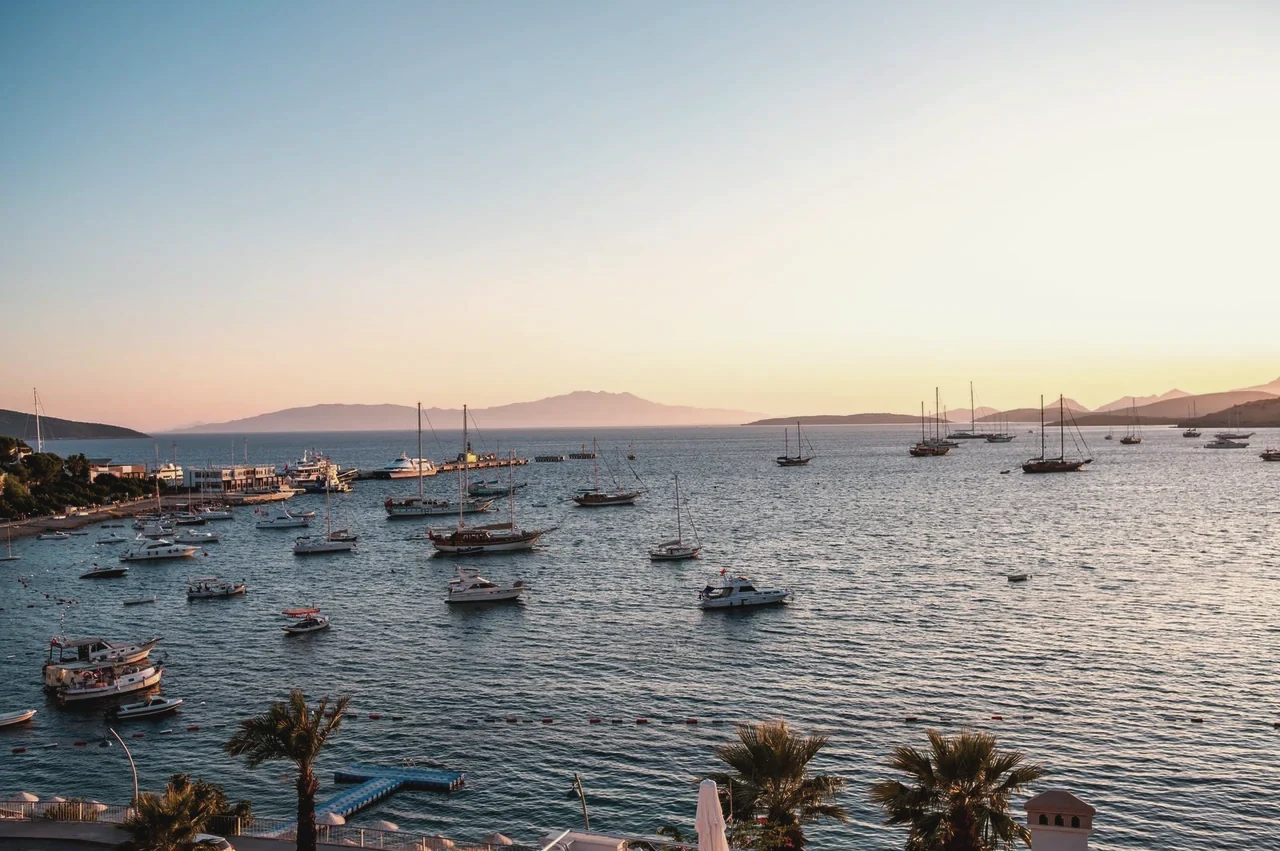 ComparisonCaribbean or Turkey: Citizenship for Contribution or Real Estate in 2026
 AnalysisWhat is due diligence and why the Caribbean is rejecting applications
 ArticleTurkish bank account for Russians in 2026: how to open and what nuances to consider
Personal programme selection is conducted by Anna Kovalevskaya, Head of Legal, BRIDGES.
Citizenship of Turkey: preparation checklist
Documents prepared in advance, source of funds checks and where applications usually fail.