Citizenship
Dual citizenship of Russia with other countries

Updated: June 2026·9 min read·Expert reviewed
Terms and costs verified: June 2026
Contents
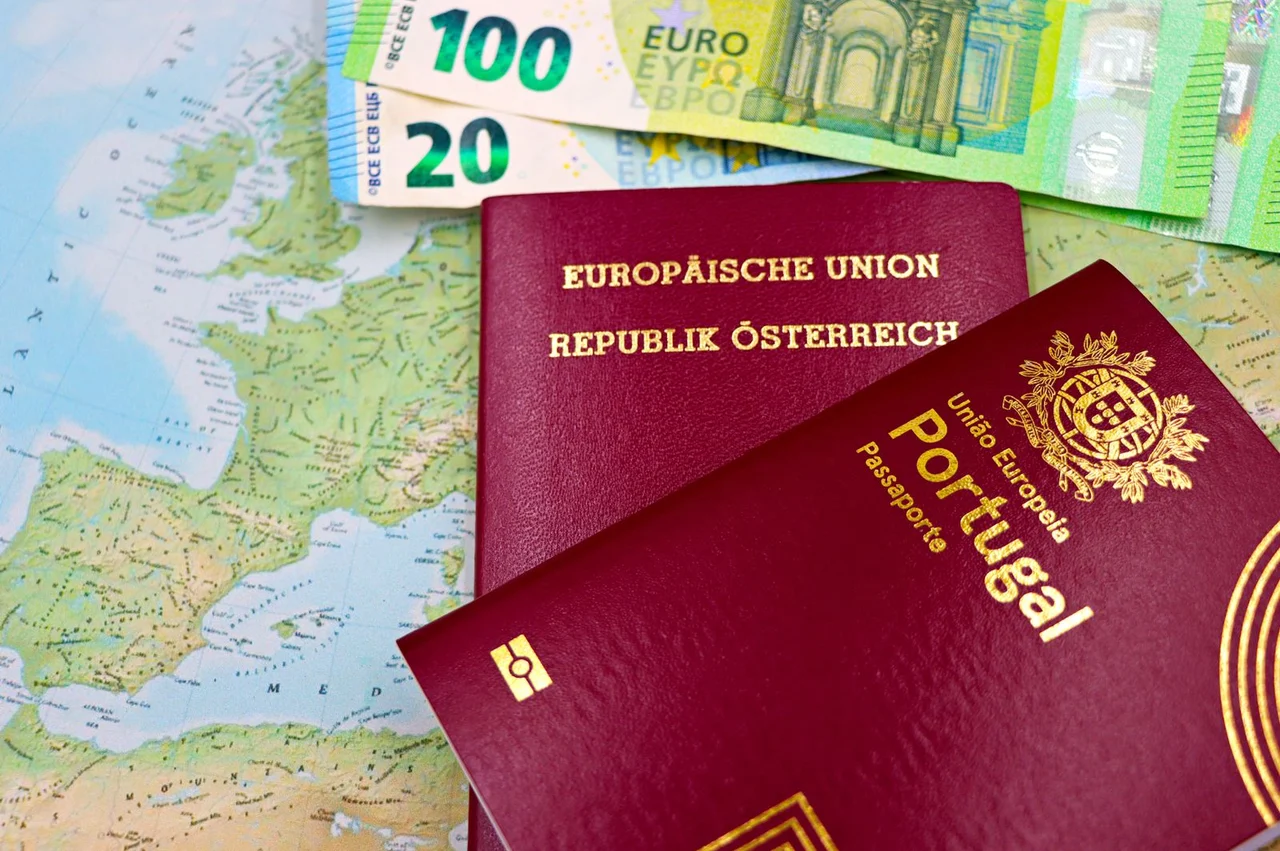
I am often asked: “Can I get a second passport and remain a Russian citizen?” The short answer is yes, you can. Long answer - it is important to understand the difference between dual and second citizenship, to know about the obligation to notify the Ministry of Internal Affairs and to understand that a second passport does not relieve you of Russian obligations. Over 12 years of practice, I have accompanied hundreds of clients from Russia who received citizenship of Bulgaria, Israel, Turkey, and Caribbean countries. Almost everyone thought that "dual citizenship" was simply having two passports. In fact, this is a legally precise term, and Russia only recognizes it with one country in the world. Everything else is a second passport, with its own set of rules and risks. Let's take it in order.
Dual vs second citizenship: what is the difference
These are not the same thing, although in everyday speech they are constantly confused.
Dual citizenship - this is when two states have concluded a special agreement between themselves. Each country recognizes that a person is a citizen of both. Russia has such an agreement only with Tajikistan - it has been operating since 1995. All.
Second citizenship - when a person received a passport from another country, but Russia does not recognize it. For the Russian state, you are still only a Russian. There is no “dual status” whatsoever. A foreign passport does not legally exist on the territory of the Russian Federation.
In practice, this means: you can have a passport from Israel, Bulgaria or Vanuatu and at the same time remain a full citizen of Russia. No one will deprive you of Russian citizenship. But obligations to Russia remain in full.
Tajikistan: the only true dual citizenship
The agreement between Russia and Tajikistan was signed in 1995. It allows citizens of both countries to hold both passports without any notification obligations - each state recognizes the second status.
In practice, this means: a citizen of Tajikistan can receive a Russian passport, enter Russia using a Russian one, and enter Tajikistan using a Tajik one, and both countries accept this as the norm.
Russia does not have any other similar agreements. Turkmenistan, which previously had a similar agreement, denounced it in 2015.
Federal Law-142: obligation to notify the Ministry of Internal Affairs
Since 2014, Federal Law No. 142-FZ has been in force in Russia. It obliges citizens of the Russian Federation to notify the Ministry of Internal Affairs about obtaining foreign citizenship or a residence permit.
Duration - 60 days from the moment of receipt of the document. The notification is submitted in person to the territorial body of the Ministry of Internal Affairs at the place of residence or through the MFC. If a citizen permanently resides abroad, notification must be made within 60 days after returning to Russia.
The notification indicates: full name, date of birth, place of residence, Russian passport data, information about foreign citizenship (country, date, document number).
An important caveat: a notification is not a request for permission. Russia does not prohibit having a second passport. This is simply informing the state of a fact.
Sanctions for failure to notify: administrative and criminal liability
For violation of the notice period there is a administrative responsibility - fine from 500 to 1,000 rubles.
But if a person did not notify the Ministry of Internal Affairs at all, this is already Article 330.2 of the Criminal Code of the Russian Federation. Sanction: fine up to 200,000 rubles or in the amount of income for 1 year, or compulsory work up to 400 hours.
In practice, cases of criminal prosecution are rare, but they do exist. The state is systematically tightening control. It's not worth the risk - notification takes 15 minutes.
You do not need to notify in only one case: if you have Tajik citizenship (dual agreement) or if you permanently reside abroad and do not enter Russia.
Does Russia deprive you of citizenship if you have a second passport?
No. The Constitution of the Russian Federation (Article 6) directly prohibits depriving a citizen of Russian citizenship against his will.
Obtaining foreign citizenship is not grounds for automatic loss of Russian citizenship. This is important to understand: even if you become a citizen of Israel, Bulgaria, Turkey or Vanuatu, no one will take away your Russian passport.
The exception is the civil service. A number of positions require the absence of foreign citizenship or a residence permit. This applies to: civil servants at the federal and regional level, employees of special services and law enforcement agencies, judges, prosecutors, and contract military personnel. For them, a second passport may become grounds for dismissal or refusal of appointment.
If you are not associated with the civil service, there are no restrictions.
Entry into Russia with two passports
The rule is simple and unchanged: You only need to enter Russia with a Russian passport.
Border guards should not and are not obliged to know about the presence of a foreign document. There is no need to present a second passport at the Russian border. Moreover, it is unnecessary.
When leaving the country of destination (Israel, Bulgaria, Türkiye), you can use a foreign passport - this is your right as a citizen of that country. At border control at the airport of your country of arrival, also use your local passport.
Route logic: Israeli passport → Tel Aviv → Moscow → Russian passport.
Military duty and second passport
A second passport does not exempt you from military service in Russia. This is a fundamentally important point.
A citizen of the Russian Federation of military age remains liable for military service, regardless of whether he has foreign citizenship. Russia does not recognize a foreign passport, which means that all obligations, including military service, remain intact.
Some clients mistakenly believe that an Israeli or Bulgarian passport automatically solves the issue of conscription. This is wrong. The only thing that changes the situation is the actual place of residence. If you permanently live abroad and do not enter Russia, the conscription mechanism de facto does not work. But legally the obligation remains.
Civil service and foreign citizenship
The Law on the State Civil Service (FZ-79) directly prohibits the employment of persons with foreign citizenship or a residence permit for most positions.
The ban includes: federal and regional civil servants, employees of the FSB, Foreign Intelligence Service, Ministry of Internal Affairs and other law enforcement agencies, judges at all levels, prosecutors, contract military personnel, and a number of municipal positions.
If you work in any of these structures or are planning to get a job there, a second passport creates a legal obstacle. Formally, you are required to notify your employer. In practice, this means dismissal or refusal of appointment.
For the rest - entrepreneurs, employees of private companies, freelancers - there are no labor restrictions.
“Over 12 years of work, I have seen how people make decisions about a second passport on the advice of friends or from articles on the Internet. And then they come to me with problems. The most common mistake is not notifying the Ministry of Internal Affairs. People think: "Nobody will know." They will find out. Data is crossed when crossing the border, when processing documents, during real estate transactions. A criminal case under Article 330.2 is real, I have seen such cases. The second mistake is to think that a second passport automatically solves the issue of conscription. No. The Russian state sees you only as its citizen. There is no foreign passport for him. The third is to choose a program by price, not by purpose. Vanuatu passport for $130,000 is good. But if you need visa-free entry into Schengen, you need a Caribbean passport. If you need a European standard of living and the opportunity to move to the EU, you need Bulgarian or Romanian roots. These are different instruments. I always tell clients: a second passport is not an escape. This is empowerment. And it only works if it’s built correctly.”
Double taxation: who pays and how
Having a second passport does not in itself change your tax status. Key criterion - tax residence, which is determined by the number of days in the country.
In Russia: if you spent 183 days or more in the country in 12 months, you are a tax resident of the Russian Federation and pay 13% of world income (for residents) or 30% (for non-residents) of Russian income.
Russia has entered into double taxation avoidance agreements (DTAs) with dozens of countries. If there is a DTA between countries, the tax paid in one is credited in the other. If there is no DTA, formally the obligation to pay arises in both.
Important: after 2022, Russia suspended a number of DTAs (with “unfriendly” countries - the USA, Great Britain, and a number of EU countries). This complicates the situation for those who have received passports from these states and continue to earn income in Russia.
DTAs are valid with Tajikistan, Israel, Bulgaria, Turkey, and Armenia.
Where do Russians most often take a second passport?
Over 12 years of practice, I see stable patterns. Here are the most popular destinations.
Israel - The Law of Return gives the right to repatriation to everyone who has Jewish roots through relatives up to the 3rd generation. One of the fastest routes - a passport can be obtained a year after repatriation.
Bulgaria - citizenship by descent for those with Bulgarian roots. EU passport. Since 2026, the procedure has been simplified: evidence is submitted directly to the Ministry of Justice. About 9 months.
Romania - similar to Bulgaria, by roots. EU passport. Popular with people from Moldova and a number of regions of Russia.
Türkiye - citizenship by investment. Purchase of real estate from $400,000 with a retention period of 3 years. About 6–9 months. Not EU, but a good document for business in the Middle East.
Armenia - for Armenians by origin, a fairly simplified procedure. Also accepts investments.
Caribbean countries and Vanuatu - investment citizenship from $90,000 (Vanuatu, Nauru) to $200–300,000 (Dominica, St. Lucia, Antigua, Grenada, St. Kitts). Visa-free entry to Schengen. 2–6 months remotely.
How to apply for a second passport: general procedure
The order depends on the country and the basis. But there are general steps.
Step 1. Determine the basis: origin (roots), investment, naturalization, repatriation.
Step 2. Collect and apostille documents. For root programs - birth certificates, marriage certificates, certificates from archives. For investment - confirmation of the source of funds, bank documents.
Step 3. Submit an application to the authorized body of the country. For investment programs - through a licensed agent (most programs require this).
Step 4. Pass due diligence. All investment programs check applicants against international sanctions databases and criminal registries.
Step 5. After approval, receive a passport. Notify the Russian Ministry of Internal Affairs within 60 days.
Are you planning a second passport? We will analyze your situation for free.
Get a free consultationDue diligence: what is checked when issuing a second passport
All serious investment programs conduct background checks on applicants. This is not a formality.
Standard scope of check: sanctions lists (OFAC, EU, UN), criminal history, connections with politically exposed persons (PEP), source of funds for investment, past refusals of visas or citizenship of other countries.
St. Kitts is considered the standard for rigor - the program has existed since 1984 and its reputation is cherished. Rejection in one Caribbean program may affect consideration in another.
For Russians, after 2022 the checks have become more thorough. A number of programs require an extended package based on the source of funds. This is normal - you just need to prepare in advance.
Root programs (Bulgaria, Romania) also conduct verification - through Interpol and national databases. But the criteria there are softer than those of investment programs.
Risks and limitations: what is important to know
The second passport is a tool. Like any tool, it works correctly when used correctly.
Risk 1: failure to notify the Ministry of Internal Affairs. Criminal liability is real. Notification takes 15 minutes - do it on time.
Risk 2: using a foreign passport at the Russian border. Border guards can ask questions, and the data will go into the system. Rule: at the Russian border - only a Russian passport.
Risk 3: Thinking that a second passport solves all problems. Military duty, tax residency, restrictions on civil service - all this remains.
Risk 4: sanctions compliance. A number of banks in third countries check citizenship when opening an account. A Russian passport can create difficulties - but this is a matter of banking policy, not the law of the country of second citizenship.
Risk 5: loss of citizenship of another country. Some states (Germany, the Netherlands, Japan) require renunciation of previous citizenship upon naturalization. This does not apply to most investment programs - they explicitly allow dual citizenship.
Comparison of popular programs for Russians
Briefly on the key parameters.
| Country | Base | Term | Schengen |
|---|---|---|---|
| Bulgaria | Roots (EU) | ~9 months | Yes (EU) |
| Romania | Roots (EU) | ~12–18 months | Yes (EU) |
| Israel | Repatriation | ~1 year | Yes |
| Türkiye | Investment $400k | 6–9 months | No |
| Dominica | Investment $200k | 3–4 months | Yes |
| Vanuatu | Investment $130k | ~2 months | No |
| Nauru | Investment $90k | ~3 months | No |
The choice depends on the purpose: EU passport - root programs or naturalization, speed - Vanuatu/Nauru, combination of price and Schengen - Caribbean.
How we help you get a second passport
BRIDGES GLOBAL works in several areas: citizenship by investment (Caribbean, Vanuatu, Turkey), citizenship by origin (Bulgaria, Romania), residence permit and permanent residence (Cyprus, Greece, UAE, Portugal).
We don't just submit documents. We analyze each situation individually: source of funds, compliance risks, roots in documents, client’s goals for 5–10 years. Sometimes the right answer is not the cheapest program, but the one that actually works in a particular case.
If you are thinking about a second passport, start with a consultation. We will tell you which options are realistic for you.
Frequently asked
Questions people ask before deciding
01Is it possible for a Russian citizen to have two passports?
Yes. Russia does not deprive you of citizenship when you receive a foreign passport. But you need to notify the Ministry of Internal Affairs within 60 days. Russia recognizes dual citizenship in the legal sense only with Tajikistan - everything else is called “second citizenship.”
02Do I need to inform the Ministry of Internal Affairs about my second passport?
Yes, definitely. Federal Law 142 requires notifying the Ministry of Internal Affairs within 60 days from the date of obtaining foreign citizenship or residence permit. Violation - administrative fine or criminal liability (up to 200,000 rubles or correctional labor).
03Will I be deprived of Russian citizenship if I get a second passport?
No. The Constitution of the Russian Federation prohibits depriving a citizen of Russian citizenship against his will. Obtaining a foreign passport is not a reason to lose your Russian one. Exception: certain categories of civil servants for whom foreign citizenship is incompatible with the position.
04With which countries does Russia have an agreement on dual citizenship?
Only with Tajikistan (1995 agreement). There was previously a similar agreement with Turkmenistan, but it was denounced in 2015. With all other countries we are talking about a second citizenship, which Russia does not recognize.
05Does a second passport exempt you from the army in Russia?
No. A citizen of the Russian Federation remains liable for military service regardless of the presence of foreign citizenship. Russia does not recognize a second passport, so all obligations to the Russian state remain in full.
06Is it possible to work in the civil service with two passports?
No. Most positions in the state civil service, law enforcement agencies, judicial and prosecutorial systems require the absence of foreign citizenship or a residence permit. Having a second passport is grounds for refusal of appointment or dismissal.
07How to enter Russia with two passports?
Only with a Russian passport. There is no need to present a foreign document at the Russian border. When leaving the country of destination, use a foreign passport - this is your right as a citizen of that country.
08Will I have to pay taxes in two countries?
Depends on tax residence and the presence of a double taxation agreement (DTA) between countries. Having a second passport does not in itself change your tax status. The key criterion is the number of days spent in each country.
09What second passport is easiest for a Russian citizen to obtain?
Depends on the situation. If you have roots - Bulgaria or Romania (EU passport). If you need speed - Vanuatu or Nauru (from $90,000, ~2–3 months). Schengen for investment - Caribbean programs from $200,000. The choice depends on the goal.
10Are Russians checked when applying for a second passport?
Yes, all serious investment programs conduct due diligence: sanctions lists, criminal history, source of funds, past refusals. After 2022, the checks for Russians have become more thorough, but the programs are open.
11Is it possible to obtain Bulgarian citizenship without roots - through investment?
The investment program of Bulgaria (Golden Visa) provides residence permit and permanent residence, but not accelerated citizenship. Citizenship by investment in Bulgaria has been effectively closed since 2022. Bulgarian passport by origin - only if you have Bulgarian roots.
12What should I do if I have already received a second passport, but have not notified the Ministry of Internal Affairs?
Notify as soon as possible. Voluntary notification with delay - an administrative fine (from 500 to 1,000 rubles). If you do not notify at all, there is criminal liability. It is better to correct the situation now than wait for the consequences.
About the author
Related materials
What to read next
 ComparisonAntigua and Barbuda or Grenada: Family Passport for Large Families in 2026
 AnalysisWhat is due diligence and why the Caribbean is rejecting applications
 ArticleCitizenship of Antigua and Barbuda through Investment: Complete Guide 2026
Personal programme selection is conducted by Anna Kovalevskaya, Head of Legal, BRIDGES.
Citizenship by investment: preparation checklist
Documents prepared in advance, source of funds checks and where applications usually fail.