
Updated: June 2026

Case study · Bulgaria · Citizenship

How We Proved Bulgarian Ancestry from BessarabiaWhen Records Were Destroyed in War

Bulgarian citizenship by descent requires neither residency requirement nor language examination—but it requires proof of ancestry, which is most difficult when documents are destroyed by war. Igor's grandfather was Bulgarian from Bessarabia (a historical region between the Dniester and Danube rivers, where Bulgarian settlers have long lived), but his birth records were burned during evacuation in the 1940s, and in Soviet documents his nationality was replaced with a dash. We explain step-by-step how we nevertheless proved Bulgarian ancestry.

Anna KovalevskayaAnna KovalevskayaHead of Legal, BRIDGESReading time9 min readVerificationReviewed by an expert

This case is based on a real matter. The name and certain identifying details have been changed to protect confidentiality.

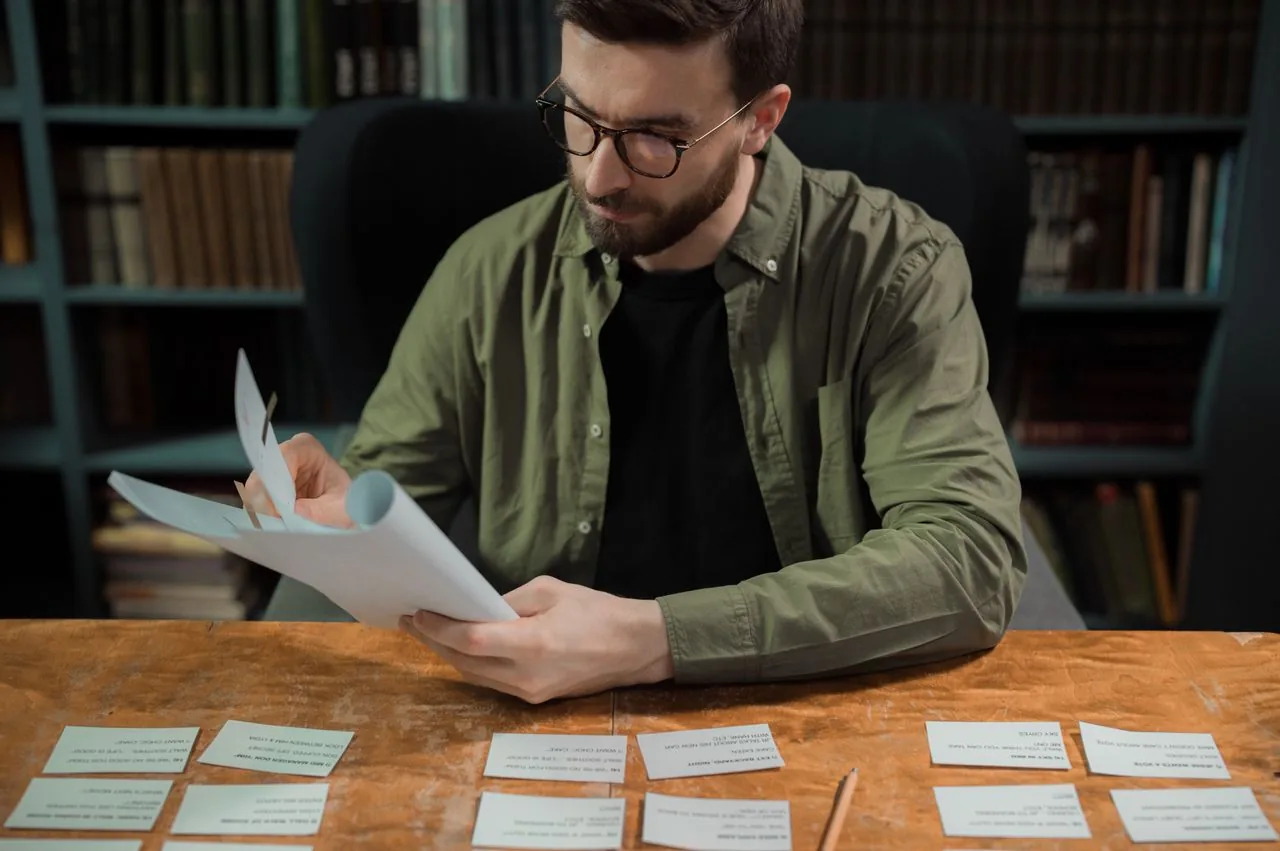
BRIDGES client story - How We Proved Bulgarian Ancestry from Bessarabia When Records Were Destroyed in War
Contents

Case at a glance

Situation, solution and outcome in seven lines

Client
Igor, approximately 39 years old, Odessa/Kyiv
Ancestry
Grandfather—Bulgarian from Bessarabia
Challenge
Birth records destroyed during 1940s evacuation; Soviet documents contain a dash instead of nationality
Program
Bulgaria, citizenship by descent (by Bulgarian ancestry, EU passport)
2026 Procedure
Proof of ancestry is submitted directly to the Ministry of Justice
Solution
Locate church records and archives of Bessarabia
Result
Bulgarian ancestry proven; path to EU passport opened

Client story

Client's Story

Where they started

Igor knew the family tradition: his grandfather was Bulgarian, from a Bessarabian village, of which there were many in those regions. Bulgarians lived for centuries in Bessarabia in large communities, and descent from them grants the right to Bulgarian citizenship—meaning an EU passport. Moreover, descent-based citizenship requires neither five years of residence in the country nor a language examination: proof of ancestry is sufficient.

Why the standard route did not work

Proving ancestry proved to be the most difficult. The family's paper history was severed twice. First by war: birth records (church and civil registrations) were burned during evacuation in the 1940s, as happened to thousands of families in those regions. Then by the Soviet system: in documents obtained later, the nationality field for ancestors contained a dash—either the field was left blank or erased.

What BRIDGES had to solve

The result was a dead end: it was known orally that the grandfather was Bulgarian, but on paper—neither birth records nor records of nationality. For Bulgaria's Ministry of Justice, which as of 2026 independently evaluates proof of ancestry, family tradition is insufficient—documents confirming the ancestor's Bulgarian roots are required.

Why a standard answer would not do

Igor turned to BRIDGES Global, understanding that the task was not merely to complete an application, but to restore the line severed by war and time—to find a document that would survive examination and prove that his grandfather was indeed Bulgarian by descent.

From childhood I knew my grandfather was Bulgarian from Bessarabia, but this could not be proven on paper: birth records were burned in the war, and in Soviet documents there was a dash instead of nationality. It seemed a dead end. Anna did not give up: her team located church records in the archives, and there, in an 1912 entry, my grandfather was registered as Bulgarian. That document became the proof. Without it, I would have remained with only a family story.


Igor, 39 · Igor, by grandfather's ancestryThe name and certain identifying details have been changed to protect confidentiality.

What Was at Risk

What Was at Risk

Citizenship by descent requires neither residence nor language—but rests on proof of ancestry. When birth records were burned and Soviet documents replaced nationality with a dash, oral tradition is insufficient: the Ministry of Justice evaluates documents. The severed line must be restored from surviving sources.

Ancestors' birth records destroyed during evacuation—direct record does not exist;

  1. 01Soviet documents contain a dash instead of nationality;
  2. 02Family tradition is not accepted as proof;
  3. 03Without a document, ancestry cannot be confirmed, and thus citizenship cannot be obtained;
  4. 04The right exists, but it remains suspended without a document that will be accepted.

The logic of the solution

How the matter progressed: from checks to result

The chart is built from the facts of this matter and shows the logic of the work without decorative or unverified data.

  1. 01
    Stage 1

    We identified the exact location to search based on the geography of the roots. First, we anchored the family oral tradition to a specific place: the Bessarabian village where the grandfather originated. The difficulty was that administrative boundaries changed and archives were dispersed; we determined which specific archives—of Odesa and Izmail regions and Chișinău—could hold pre-revolutionary records for this village.

  2. 02
    Stage 2

    We abandoned what was lost and focused on what survived. The civil records burned, Soviet documents showed blank fields—there was no point spending effort on them. We immediately focused on a source that more often survives—church records (parish records of births, baptisms, and marriages). This shifted our search from dead ends to promising sources.

  3. 03
    Stage 3

    We obtained church records from the parish of the village. The main work was here: requesting parish books of the required village from the archive for the years around the ancestors' births. The difficulty was that the records were pre-revolutionary, handwritten, in old orthography; they had to be found in the collection, read, and attributed. In the 1912 entry, the ancestor was directly identified as Bulgarian—this became the proof of descent.

  4. 04
    Stage 4

    We circumvented the Soviet blank field without relying on it. We did not attempt to challenge the nationality blank in later documents—it simply proved nothing. Instead, we built our proof on the pre-revolutionary church record, where nationality was stated directly, before it began to be erased.

  5. 05
    Stage 5

    We connected the record to Igor through an unbroken lineage. We linked the ancestor record found with birth certificates down the line—to the grandfather, father, and Igor himself—reconstructing the missing generations through civil registry offices. An unbroken documentary connection emerged from the Bulgarian ancestor to the applicant.

Takeaway. Conclusion: Citizenship by descent relies on proof of ancestral roots, not oral tradition. When civil records are destroyed, descent is proven through surviving sources—church records and pre-revolutionary archives—bypassing the Soviet blank nationality fields.

How we resolved the case

How we resolved the case

The work was split into verifiable stages so that every conclusion rested on documents.

  1. 01

    Stage 1

    We identified the exact location to search based on the geography of the roots. First, we anchored the family oral tradition to a specific place: the Bessarabian village where the grandfather originated. The difficulty was that administrative boundaries changed and archives were dispersed; we determined which specific archives—of Odesa and Izmail regions and Chișinău—could hold pre-revolutionary records for this village.

  2. 02

    Stage 2

    We abandoned what was lost and focused on what survived. The civil records burned, Soviet documents showed blank fields—there was no point spending effort on them. We immediately focused on a source that more often survives—church records (parish records of births, baptisms, and marriages). This shifted our search from dead ends to promising sources.

  3. 03

    Stage 3

    We obtained church records from the parish of the village. The main work was here: requesting parish books of the required village from the archive for the years around the ancestors' births. The difficulty was that the records were pre-revolutionary, handwritten, in old orthography; they had to be found in the collection, read, and attributed. In the 1912 entry, the ancestor was directly identified as Bulgarian—this became the proof of descent.

  4. 04

    Stage 4

    We circumvented the Soviet blank field without relying on it. We did not attempt to challenge the nationality blank in later documents—it simply proved nothing. Instead, we built our proof on the pre-revolutionary church record, where nationality was stated directly, before it began to be erased.

  5. 05

    Stage 5

    We connected the record to Igor through an unbroken lineage. We linked the ancestor record found with birth certificates down the line—to the grandfather, father, and Igor himself—reconstructing the missing generations through civil registry offices. An unbroken documentary connection emerged from the Bulgarian ancestor to the applicant.

  6. 06

    Stage 6

    We prepared a dossier for direct submission to the Ministry of Justice. As of 2026, proof of descent is submitted directly to the Ministry of Justice of Bulgaria, without a separate agency. We compiled the church record, genealogical line, and translations into a single dossier ready for review—and Igor's Bulgarian descent became a proven fact, not merely family oral tradition.

Expert comment

This is my favorite type of case—when "nothing exists" on paper, yet the roots are there; one just needs to dig deep. Everything was against us with Igor: civil records burned in the war, Soviet documents showed blank nationality fields. Many give up here. But I know something important: not everything was destroyed. Church records often survive what perishes in civil archives. We anchored the oral tradition to a specific village, obtained parish records—and in the 1912 entry, the grandfather was directly named as Bulgarian. After that, it was a matter of procedure: connecting this record to Igor through an unbroken lineage and submitting directly to the Ministry of Justice, as required by the procedure since 2026. I love cases that appear impossible at first glance. This one worked out—Igor now has proven Bulgarian descent, and with it, a path to an EU passport.

Anna Kovalevskaya, Head of Legal, BRIDGESAnna KovalevskayaHead of Legal, BRIDGES

Outcome

What the client received

What was required
How we achieved it · Result
To find proof of ancestral roots
Archives of Bessarabia and Chișinău · Necessary collections identified
To overcome loss of civil records
Focus on church records · 1912 record found
To confirm nationality
Parish record "Bulgarian" · Descent proven
To connect to the applicant
Chain of certificates to Igor · Lineage unbroken
To connect to the applicant
Chain of certificates to Igor · Lineage unbroken

The situation: The client's grandfather was Bulgarian from Bessarabia, but civil records were destroyed during evacuation, and Soviet documents showed blank nationality fields. What we did: We anchored the roots to a specific village and identified the necessary archives; we abandoned lost documents in favor of surviving church records; we obtained the 1912 parish record identifying the ancestor as Bulgarian; we circumvented the Soviet blank field by relying on the pre-revolutionary record; we connected it to the applicant through an unbroken lineage and prepared a dossier for direct submission to the Ministry of Justice. What the client obtained: Proven Bulgarian descent and a path to EU citizenship.

Practical takeaway

What matters in a similar situation

  • Conclusion: Citizenship by descent relies on proof of ancestral roots, not oral tradition. When civil records are destroyed, descent is proven through surviving sources—church records and pre-revolutionary archives—bypassing the Soviet blank nationality fields.
  • Igor ceased to be a person with only a family oral tradition—his Bulgarian roots are now confirmed by a document that will withstand scrutiny by the Ministry of Justice.

FAQ

Questions people ask in a similar situation

01Is it possible to obtain Bulgarian citizenship if the ancestors' civil records were destroyed?

Yes. Descent can be proven through other sources—church records, pre-revolutionary archives, government documents. Loss of civil records does not foreclose the path if other surviving evidence confirms Bulgarian roots.

02What should be done about nationality dashes in Soviet documents?

Do not rely on it: a dash proves nothing. Ancestry is established through sources where nationality is stated explicitly—most often in pre-revolutionary church records made before this field was erased.

03Is it necessary to reside in Bulgaria or pass a language test to obtain citizenship by descent?

No. Applicants by descent are exempt from residence requirements, language examinations, and renunciation of other citizenship. The key requirement is proving Bulgarian ancestry through documentation.

04Where are proofs of descent submitted as of 2026?

Directly to the Ministry of Justice of Bulgaria. Separate application to a specialized agency is no longer required—proofs of descent are reviewed by the Ministry of Justice.

05Are church records acceptable as evidence?

Yes. Bulgarian ancestry can be proven using documents from the Bulgarian Orthodox Church and archives. A parish record indicating the Bulgarian nationality of an ancestor constitutes strong proof of roots.

06Bulgarian ancestry exists, but ancestor documents have been lost?

We will find proof of descent where vital records have not been preserved: we will examine church records and pre-revolutionary archives, reconstruct the family line, and prepare a file for direct submission to the Ministry of Justice of Bulgaria.

About the author

Anna Kovalevskaya

Author: Anna Kovalevskaya

Head of Legal, BRIDGES

I have worked with citizenship and residency matters in European countries for 12 years. Programme requirements and application practices change, so I assess each matter against the current rules, the applicant's immigration history, family composition and the documents supporting the legal basis for the application.

I lead matters from the preliminary assessment through to the grant of status. In complex situations, I identify the circumstances that may affect the review, establish the legal logic of the application and oversee the consistency of the supporting documents at every stage.

During the consultation, you will receive an assessment of the available legal grounds, a clear understanding of the chosen route and a list of issues that should be resolved before filing. Once the engagement begins, I oversee the application and the key decisions of the BRIDGES team.

Prepared on the basis of BRIDGES practice and reviewed by a subject-matter expert.

Discuss your situation with Anna

We will review your situation and propose a solution

Describe your task in a few words. We will study your situation, assess the legal and practical options and propose the next step based on your goals, documents and country.

Confidential · no obligations · answered by the relevant specialist

Or message us on WhatsApp or Telegram

Anna KovalevskayaHead of Legal, BRIDGES
Anna Kovalevskaya, Head of Legal, BRIDGES

Names and certain details have been changed to protect client confidentiality. The result described reflects one specific situation and is neither a public offer nor a guarantee of a similar outcome. Programme terms are stated as of 2026 and may change - please confirm current parameters with a BRIDGES consultant.