Residency · Greece
Corfu Real Estate in 2026: Villas and Houses on the Green Island, Prices and Rentals

Updated: June 2026·13 min read·Expert reviewed
Terms and costs verified: June 2026
Contents
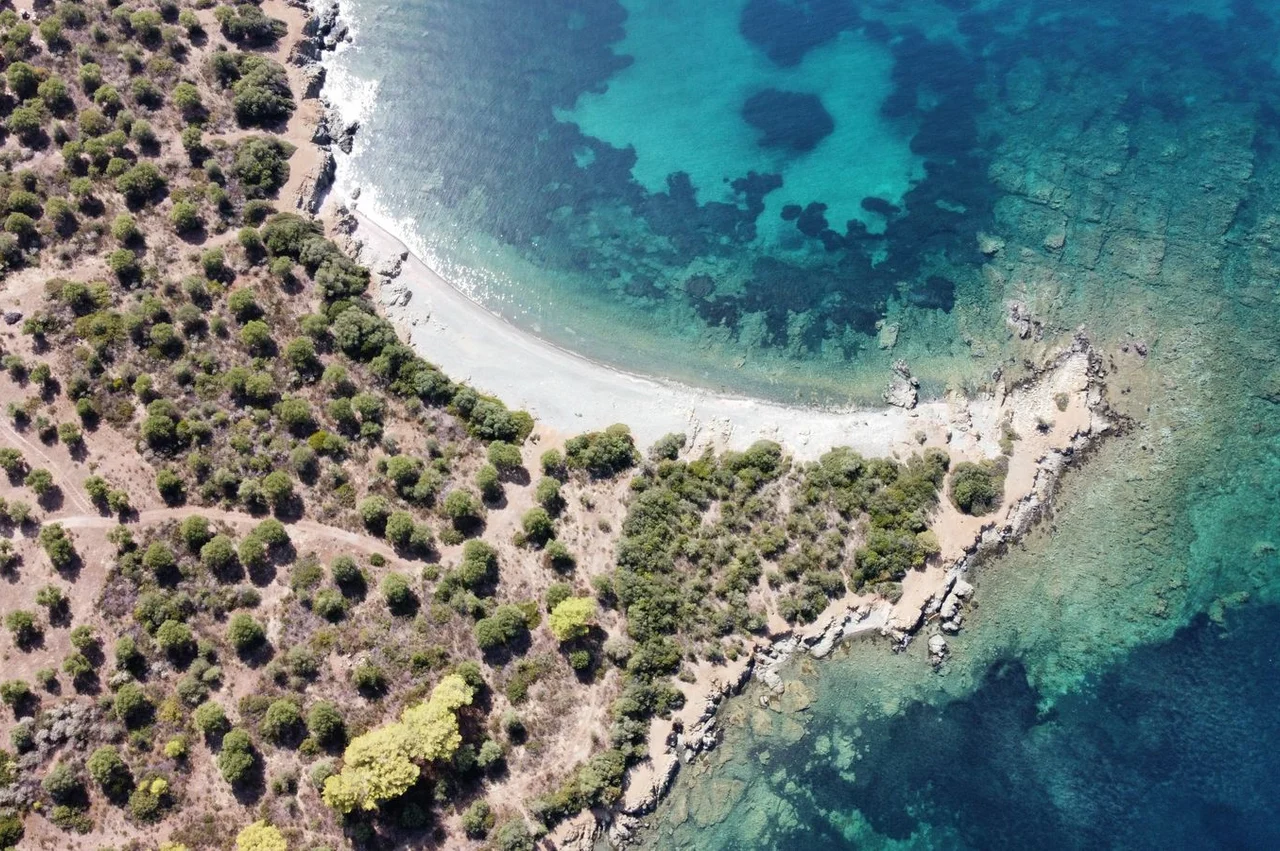
Corfu is the greenest of the Ionian Islands: cypresses and olive groves run right down to the turquoise water, and its sea-view villas have been snapped up for decades by British, Italian and affluent European buyers. This is not the postcard Santorini of whitewashed cubes, but a living island where you can stay year-round. In 2026 buying a home on Corfu remains entirely realistic for foreigners and Russian nationals alike - the market is liquid, the climate is mild, and at the right threshold the purchase itself unlocks the Golden Visa and Greek residency. We break down prices by location, rental yields and the pitfalls of the deal.
Why Corfu is not just another Greek island
When people say "a Greek island," the mind jumps straight to the white houses of Santorini or the parties of Mykonos. Corfu is a completely different story. It sits at the northern edge of the Ionian Sea, closer to Italy and Albania than to Athens, and its climate is noticeably milder and wetter than the arid Cyclades. Hence its defining feature - lush greenery. The island is covered with olive groves (an estimated three to four million trees), cypresses and flowering slopes that descend straight to the water. It is no coincidence that Corfu has been called the greenest island in Greece for centuries.
The second feature is its history and atmosphere. Corfu was ruled in turn by the Venetians, the French and the British, and it shows in the architecture: the old town of Corfu (Kerkyra) is a UNESCO World Heritage site, with Venetian fortresses, narrow kantounia lanes and the Spianada square, the only place in Greece where cricket is played - a nod to the British past. There is genuine urban life here, not just a beach season.
Third, you can live on Corfu year-round. The island has a population of around 112,000, an airport with direct flights across Europe, hospitals, schools and infrastructure. This is not a resort that empties out in winter but a fully-fledged place to live. That is why people come here not only for a summer holiday but for a second home, where they settle for six months or more. For a property buyer this means liquidity: a home on a living island is easier to rent out and easier to resell.
Who buys real estate on Corfu, and why
In terms of buyers, Corfu has historically been a British island. The English discovered it back in the 19th century, and in recent decades the British have driven a significant share of villa demand, especially in the prestigious north-east. Brexit made life a little harder for them in terms of length of stay, but it did not stem the flow - on the contrary, many began looking towards Greek residency so they could live freely on their beloved island.
Who else is actively buying a home on Corfu:
- Italians - Corfu is right on their doorstep; the ferry from Bari or Brindisi takes just a few hours. For people from southern Italy it is almost "a country house across the sea."
- Germans and Austrians - traditional buyers of Mediterranean property who value infrastructure and stability.
- Scandinavians - escaping the northern winter in search of sun and greenery.
- Russian and CIS nationals - buy freely (border zones are a separate matter, covered below), often tying the purchase to obtaining the Golden Visa and residency.
What unites them is that they are not buying "an investment square metre in a new development" but a way of life: a sea view, an olive grove outside the window, a calm island free of the bustle of mega-resorts. This is important to understand: the Corfu market is a market of villas and houses with character, not faceless apartment complexes. If you want a systematic understanding of how buying property in Greece as a foreignerworks, start with our basic guide and treat Corfu as one of the most atmospheric points on the map.
The best locations on Corfu: where to look for a villa or a seafront house
Corfu is far from uniform: the price and character of property change sharply from area to area. Broadly, the island divides into the prestigious north-east, the scenic north-west, the lively centre around the town and the more affordable south. Let us go through the main locations so you understand what you are paying for.
- North-east (Kassiopi, Nissaki, Kalami, Agni, Kouloura) - this is Corfu's "gold coast," the most expensive and prestigious. The so-called Kensington-on-Sea: this is where the European elite and celebrities bought their homes. Villas hide among the greenery on slopes running down to the sea, with views of Albania across the narrow strait. Strict building rules preserve the landscape and keep prices high.
- Paleokastritsa (north-west) - postcard bays with turquoise water, a clifftop monastery and one of the most scenic views in Greece. Demand is high and property is expensive, though slightly more affordable than the north-east.
- Corfu Town and surroundings (Kanoni, Kontokali, Gouvia, Dassia, Kommeno) - for those who value urban life, restaurants, year-round infrastructure and proximity to the airport. Kommeno is an enclave of luxury villas next to a famous hotel.
- South (Benitses, Moraitika, Lefkimmi) - calmer and more affordable, a good option for those who want a seafront home without the top-tier price tag.
A word of advice at the outset: do not choose an area from photographs. The north-east is beautiful, but the roads there are winding and the town is far away; the south is more affordable but less prestigious for resale. Tie the location to your goal - living, renting out or obtaining the Golden Visa.
Corfu property prices 2026: a location-by-location table
Let us turn to the key question - how much does a villa on Corfu cost in 2026. A caveat straight away: the prices are indicative, the villa market is bespoke, and the final figure depends on the sea view, condition, plot size and year of construction. But for guidance we have gathered the ranges into a "location - character - price" table.
| Location | Character | Indicative price |
|---|---|---|
| North-east (Kassiopi, Nissaki) | Luxury seafront villas, prime segment | 3,500-6,000 euro/m²; villas from 1.5 to 5+ million euro |
| Paleokastritsa | Villas and houses by scenic bays | 2,500-4,000 euro/m² |
| Corfu Town and suburbs | Apartments, townhouses, town houses | from ~2,000 euro/m², the old town costs more due to scarcity |
| Kommeno, Dassia, Gouvia | Comfortable north, close to town | luxury enclaves up to 4,000-5,000 euro/m² |
| South (Benitses, Moraitika) | Affordable seafront houses and villas | from ~1,500-2,500 euro/m² |
| Rural houses inland | Stone houses for renovation, olive groves | from a few hundred thousand euro per property |
What matters is reading between the lines of this table. The average price of a finished villa with a sea view, a pool and modern finishes on Corfu is roughly 1.2-5 million euro for the whole property, not per square metre. Cheaper options exist too - old stone houses inland awaiting restoration - but they still need to be put in order. If your budget is limited, it makes sense to compare Corfu with other islands: take a look at our review of property on Crete and our general overview of property prices in Greece in 2026.
We will find the right basis for residency in Greece
We calculate the budget and timing for your family and list the documents you need.
A seafront villa on Corfu: what you are really buying
The search "buy seafront property Corfu" sounds simple, but several different products hide behind it, and they should not be confused. On Corfu a "seafront villa" can mean quite different things in price and in substance.
- A front-line villa (waterfront / beachfront) - the plot opens directly onto the water or a private beach. This is the most expensive and rarest format, especially in the north-east. Here the price soars past several million, and there are only a handful of such properties on the market.
- A sea-view villa - set on a slope above the shoreline, with the water a walk or a short drive away. View villas are the backbone of the Corfu prime market: a bay panorama and sunsets, but without direct access to the water. The price is noticeably gentler than the front line for a comparable quality of life.
- A house or villa close to the sea (walking distance) - a few minutes on foot or a couple of minutes by car. The optimal balance of price and convenience, especially if you plan to rent it out.
A separate category is villas with a pool, smart-home systems and modern finishes. According to market data, these are precisely the properties valued between 1.5 and 5 million euro depending on size and location, and they are the ones that find a buyer fastest on resale. When choosing, always check the legality of the pool, terraces and extensions: unauthorised construction is common on the islands and can later interfere with both the deal and the rental.
How a foreigner buys a home on Corfu: step by step and without surprises
The good news: foreigners, including Russian and CIS nationals, buy property in Greece freely, with no separate permit required. There is one exception - border and strategic zones (relevant on Corfu because of its proximity to the Albanian border): there, purchases by non-EU nationals sometimes require the approval of a special commission. This is manageable, but the status of the plot must be checked in advance.
What the transaction looks like, step by step:
- Obtaining an AFM (a Greek tax number). Without it you can neither buy nor set up utilities. It is issued by the tax office, usually through your lawyer acting under a power of attorney.
- Opening a Greek bank account - to make payments and pay taxes (for Russian nationals this now involves enhanced compliance, which you should be prepared for).
- Legal due diligence on the property. A local lawyer checks that the title is clean, that there are no debts or encumbrances, that all structures are legal and that the plot boundaries are correct. This is the most important stage - unauthorised construction and disputed boundaries do occur on the islands.
- A preliminary agreement and a deposit - fix the price and take the property off the market.
- Completion before a notary. A notary is mandatory under Greek law. The contract is signed and the 3.09% transfer tax and the notary and lawyer fees are paid.
- Registration in the cadastre and land registry. Only after registration do you become the full legal owner.
If you cannot attend in person, a power of attorney is granted to your lawyer, who completes the transaction on your behalf. Current procedures and forms for tax and registration matters are best checked on the official Greek government services portal gov.gr.
Rental and yield: how much a villa on Corfu earns
Corfu is one of the strongest tourist markets in Greece, and seasonal rentals genuinely work here. The island receives millions of tourists over the summer, while limited coastal development keeps demand for quality villas high. That makes the purchase not only an emotional but also an investment story - provided the property is not tied to the Golden Visa (see the caveat above).
Indicative 2026 yield figures (gross, before costs):
- Sea-view villas in the north-east - roughly 5-7.5% gross per year.
- Apartments in the old town of Corfu - can deliver more thanks to scarcity and year-round demand, up to around 8%.
- Houses near popular beaches - high seasonal demand, but pronounced seasonality (the main earnings run from May to September).
What to keep in mind when calculating yield. First, Corfu is seasonal: in winter tourist flows drop and annual occupancy is lower than the summer prices suggest. Second, costs: management, cleaning, taxes and the upkeep of a villa pool and garden eat into part of the income - the net yield is lower than the gross. Third, short-term rentals require registration in the registry and payment of the tourist levy and taxes. If you want to dig into the country-wide figures, see our analysis of rental yields on property in Greece.
Climate and year-round life on the island
Corfu's greenery is a direct consequence of its climate. This is the wettest region of Greece: winters bring noticeably more rain than the southern islands, hence the lush vegetation. Summers are hot and sunny, but the sea breeze and the shade of the olive groves make the heat bearable. Spring and autumn are mild and long, the ideal time to live here, when there are fewer tourists and nature is in bloom.
What the island offers for permanent or seasonal living:
- Year-round infrastructure - unlike the smaller islands, Corfu has hospitals, schools (including an international one), supermarkets and services that stay open out of season.
- Transport access - an international airport right by the town, direct flights across Europe in summer, and ferries to Italy and the mainland.
- Cuisine and culture - a Venetian heritage, a cuisine of its own (pastitsada, sofrito, bourdeto), olive oil and local wines.
- Active pursuits - yachting in the Ionian Sea, golf (Corfu has one of the oldest courses in Greece) and the hiking routes of the Corfu Trail.
Let us be about the downsides too: in summer the north-east and the popular beaches are overrun with tourists, some roads are narrow and winding, and the damp winter demands good heating and waterproofing in the home. For those coming for year-round life this matters more than postcard views - check the condition of the house specifically with winter in mind.
Purchase and running costs: what to budget for
The price of the property is not the whole sum you will pay. When buying a home on Corfu you need to budget for additional costs, or the budget will slip. Let us go through the main items.
One-off costs at completion:
- Property transfer tax - 3.09% of the assessed value (for resale homes; for new-builds on first sale VAT may apply, which should be clarified).
- Notary - approximately 1-2% of the value.
- Lawyer - approximately 1-2% (do not skimp here; this is your insurance against a problematic title).
- Agent commission - usually around 2% plus VAT.
- Cadastre registration, translations, apostilles - separate charges.
In total, budget roughly 8-12% "on top" of the price for completing the deal. Annual running costs include the ENFIA property tax (depending on area and zone), utility bills, insurance, pool and garden upkeep at the villa and municipal charges. For a villa with a pool and garden the upkeep can add up to a substantial sum, and this must be calculated in advance, especially if the property sits empty in winter.
We will calculate the budget for your family
A full estimate: contributions, fees and our work for your family.
Owner taxes and tax statuses in Greece
Buying property means entering not only ownership but also the Greek tax system. The basic taxes for a property owner on Corfu are the same as across Greece, and it is worth understanding them in advance.
- ENFIA - an annual property tax that depends on the area, zone and characteristics of the property. For a typical house it is a moderate sum; for large villas it is more noticeable.
- Rental income tax - a progressive scale: for individuals the rates rise with the amount of income (the lower bands are around 15%, the upper bands higher). Let a villa and you declare the income in Greece.
- Transfer tax on purchase - 3.09%, one-off.
It is worth knowing separately about the preferential tax regimes in Greece, which are often combined with buying a home. For wealthy relocators there is the non-dom flat tax regime - a fixed 100,000 euro per year on all worldwide income (with an investment of at least 500,000 euro over three years), and for pensioners a preferential 7% rate on foreign income and pension for 15 years. These regimes make relocating to the island attractive not only for the climate but also for the taxes. But this is a large separate topic that should be worked through individually for your income and residency.
Corfu for Russian and CIS nationals: what to consider in 2026
A word specifically for buyers from Russia and the CIS, because there are plenty of nuances. Buying property in Greece is legal and possible for Russian nationals - there is no ban on it. But there are practical difficulties to bear in mind.
- An entry visa. Greece is visited on a Schengen visa, which is now issued to Russian nationals more strictly than before, and multiple-entry visas are limited. To reside you need a national D visa, and the best long-term route is precisely the Golden Visa or another residence permit.
- Banking compliance. Opening an account and making a payment from Russia requires thorough proof of the source of funds. This is manageable, but slower and stricter than for EU nationals. We work strictly within the law, without circumventing sanctions.
- The border zone. Corfu is close to the Albanian border, and some plots fall within a border zone where non-EU nationals need commission approval. The status of the plot is checked before the deal.
- The Golden Visa is available. Russian nationals can obtain the Greek Golden Visa - with a clean and verified source of funds and successful compliance clearance.
The conclusion is simple: the road is open, but you must travel it carefully and with a lawyer, especially where the source of funds and the status of the plot are concerned. Then buying a villa on Corfu and obtaining residency proceed without surprises.
What to look at before buying: an expert view
Over years of deals on the Greek islands, a short list emerges of the things that separate a good purchase from a headache. On Corfu, with its one-of-a-kind villas and old houses, these points are especially important.
- Legality of the structures. The pool, terrace, guest house and extension - all of it must be properly authorised. Unauthorised construction is not rare on the islands and interferes with both the deal and the rental.
- Clean title and plot boundaries. On rural plots with olive groves the boundaries can be disputed and ownership inherited by several relatives. A title check is essential.
- The border zone. For non-EU buyers - check in advance whether special clearance is required.
- The real purpose of the purchase. If the goal is the Golden Visa, remember the 800,000 euro threshold, the minimum size of 120 m² and the short-term rental ban. If the goal is rental income, a Golden Visa property will not suit and the structure must be built differently.
- The home’s winter suitability. Corfu is damp, and a house without proper heating and waterproofing becomes a problem in winter.
The main piece of advice: do not fall in love with the view before the lawyer has checked the paperwork. A beautiful panorama is not going anywhere, whereas a problematic title or unauthorised construction can cost you the deal.
The Golden Visa on Corfu: why the threshold here is 800,000 euro
Here is a key point that disappoints many, but you need to know it before choosing a property. Buying real estate in Greece unlocks the Golden Visa - residency by investment granted for 5 years, renewable and extending to the whole family. But the investment threshold depends on the region, and Corfu falls into the most expensive category.
Since the 2024-2026 reform, three property thresholds apply in Greece:
- 250,000 euro - only for conversion (turning a commercial property into residential) or the restoration of a listed building, in any region.
- 400,000 euro - the standard threshold for most regions of the country.
- 800,000 euro - for premium zones: Attica (Athens), Thessaloniki, Mykonos, Santorini and all islands with a population above 3,100.
The population of Corfu is around 112,000, so the island falls squarely into the "above 3,100" category. That means the threshold for a Golden Visa through the purchase of a home on Corfu is 800,000 euro, not 400,000. Additional conditions: a minimum property size of 120 m² and one transaction / one property (since 2024 you cannot "assemble" the threshold from several small apartments).
An important caveat about renting: a property bought for the Golden Visa cannot be let on a short-term basis (Airbnb, Booking) - doing so risks revocation of the residence permit and a fine. This strikes directly at the popular idea of "I will buy a villa on Corfu and rent it to tourists." If your goal is specifically the Golden Visa, the income model must be rethought. All the details of the program are in our guide to the Greek Golden Visa.
"I always single Corfu out among the Greek islands - it is not about a quick investment square metre but about a way of life. People come here for the greenery, the sea and the atmosphere, and the villas are one of a kind. So the first thing I tell a client is: do not fall in love with the view before the lawyer has checked the paperwork. On the islands a common problem is illegal extensions, pools built without permission and disputed boundaries of plots with olive groves inherited by several relatives. The second point that disappoints many: Corfu is a large island, and the Golden Visa threshold here is 800,000 euro, not 400,000, plus a property bought for the visa cannot be let on a short-term basis. If the goal is income from tourists, a different structure is needed. Once these things are talked through at the outset, buying a villa on Corfu goes smoothly and delivers exactly what the person came here for."
We will send a document checklist for your case
Leave your details: we will put together documents and timelines for your family.
The bottom line: who should buy property on Corfu, and why
Corfu is the choice for those who want not "an investment square metre" but a living green island with history, a mild climate and year-round life. People buy sea-view villas here to live in, to holiday in and to pass on to their children, not to speculate on new developments. The market is liquid, demand from Europeans and the British is steady, and the atmosphere of the Venetian old town and the olive groves is something you cannot buy at a faceless resort.
benchmarks for 2026: luxury north-east villas at 3,500-6,000 euro/m², finished seafront villas with a pool at roughly 1.2-5 million euro per property, and rental yields of about 5-7.5% gross, adjusted for seasonality and costs. If the goal is residency, keep the 800,000 euro Golden Visa threshold in mind, because Corfu is a large island and falls into the premium zone. And if you want to compare options by budget, it is sensible to look at other destinations too: property on Crete and our general overview of property prices in Greece. And the basic mechanics of the transaction for a foreigner are covered in our guide to buying property in Greece.
Frequently asked
Questions people ask before deciding
01How much does a villa on Corfu cost in 2026?
A finished seafront villa with a pool and modern finishes costs roughly 1.2 to 5 million euro for the whole property. Per square metre, the luxury north-east segment (Kassiopi, Nissaki) runs to 3,500-6,000 euro/m², and the areas around Paleokastritsa 2,500-4,000 euro/m². Old stone houses inland awaiting restoration are cheaper but require investment in renovation.
02Can a foreigner buy a home on Corfu?
Yes, foreigners buy property in Greece freely, with no separate permit required. The exception is border and strategic zones (relevant on Corfu because of its proximity to Albania): there, non-EU nationals sometimes need the approval of a special commission. The status of the plot must be checked before the deal. To buy, you obtain an AFM tax number and complete the transaction before a notary.
03What is the Golden Visa threshold when buying property on Corfu?
For Corfu the threshold is 800,000 euro. This is because the premium zone with the 800,000 threshold covers Athens, Thessaloniki, Mykonos, Santorini and all islands with a population above 3,100. The population of Corfu is around 112,000, so the island falls into this category. In addition: a minimum property size of 120 m² and one transaction per property.
04Can a villa on Corfu bought for the Golden Visa be rented out?
Short-term tourist rental (Airbnb, Booking) of a property bought for the Golden Visa is prohibited - it risks revocation of the residence permit and a fine. This is a rule of the 2024-2026 reform. If your goal is income from tourists, a Golden Visa property will not suit and the investment structure must be built differently. Long-term rental is considered separately.
05What is the rental yield on Corfu?
Roughly 5-7.5% gross per year on sea-view villas; apartments in the old town, thanks to scarcity, can deliver more, up to 8%. But this is gross yield before costs: management, cleaning, pool and garden upkeep, taxes and pronounced seasonality (the main earnings run from May to September) reduce the net result. Short-term rentals require registration and payment of levies.
06Where is the most expensive property on Corfu?
The most expensive and prestigious area is the north-east of the island: Kassiopi, Nissaki, Kalami, Agni, Kouloura. It is known as the gold coast or Kensington-on-Sea, where the European elite and celebrities bought their homes. Luxury villas hide among the greenery on sea-view slopes, prices reach 3,500-6,000 euro/m², and strict building rules keep values high.
07What are the additional costs when buying a home on Corfu?
Budget roughly 8-12% on top of the property price. This covers the 3.09% property transfer tax, the notary fee (1-2%), the lawyer (1-2%), the agent commission (around 2% plus VAT), and cadastre registration, translations and apostilles. Each year you pay the ENFIA property tax, utility bills, insurance and the upkeep of the villa pool and garden.
08Can a Russian national buy property on Corfu?
Yes, it is legal and there is no ban. But there are practical difficulties: the Schengen entry visa is issued more strictly, banking compliance on a payment from Russia requires thorough proof of the source of funds, and some plots fall within a border zone that needs additional approval. The Golden Visa is available to Russian nationals with a clean source of funds. Everything is strictly within the law, without circumventing sanctions.
09Why is Corfu called the greenest island in Greece?
Corfu is the wettest region of Greece: in winter it gets noticeably more rain than the southern islands. This feeds lush vegetation - the island is covered with millions of olive trees, cypresses and flowering slopes running down to the sea. Unlike the arid Cyclades with their white houses, Corfu stays green year-round, which is exactly what villa buyers value.
10Does buying a home on Corfu grant Greek residency?
Yes, through the Golden Visa program: buying property at or above the set threshold grants a residence permit for 5 years, renewable, for the whole family. But for Corfu the threshold is 800,000 euro (premium zone), with a minimum property size of 120 m². It is a route to permanent residence and, in time, to citizenship. If your budget is below the threshold, there are other grounds for a residence permit - the financially independent person or the digital nomad route.
11What taxes does a property owner on Corfu pay?
Annually - the ENFIA property tax (depending on area and zone). On renting out - rental income tax on a progressive scale (the lower bands around 15%, higher as income rises). On purchase - a one-off 3.09% transfer tax. For relocators there are preferential regimes: the non-dom flat tax of 100,000 euro per year and a 7% rate for pensioners on foreign income.
12Is Corfu a year-round island or just a summer resort?
Year-round. The population is around 112,000, and hospitals, schools (including an international one), supermarkets and services stay open out of season. There is an international airport right by the town and ferries to Italy and the mainland. So you can live on Corfu permanently, not just in summer - a clear advantage over the smaller seasonal islands that also boosts property liquidity. Before buying, always check the legality of the structures, the cleanliness of the title, the border-zone status and the home’s suitability for winter.
Transparency
How this material was prepared
- Author
- Maria Stavru, real Estate Analyst, BRIDGES
- Terms and costs last verified
- June 2026
- Sources
- official government authorities of the relevant country and state publications
- Methodology
- government minimum requirements are stated separately from due diligence charges, state fees, legal and banking costs
Sources and methodology
Figures, terms and timelines are checked against official sources as of June 2026. Link availability verified in August 2026. Third-party blogs and agent websites are not used as a source of programme terms.
- [1]Ministry of Migration and Asylum of GreeceResidence permits, including the investor permitmigration.gov.gr/en
- [2]Enterprise GreeceConditions of the investor programmewww.enterprisegreece.gov.gr/en
Methodology: tables and charts state government minimum investment requirements; due diligence charges, state fees, legal, banking and other costs are calculated separately and are not included in the minimum thresholds.
About the author
Related materials
What to read next
 ArticleGreek citizenship by descent in 2026: by roots, parents, grandparents
 ComparisonGolden Visa of Greece or Caribbean citizenship 2026: EU residence permit versus second passport
 AnalysisWhat is due diligence and why the Caribbean is rejecting applications
Personal programme selection is conducted by Anna Kovalevskaya, Head of Legal, BRIDGES.
Buying property in Greece: what to check
Title, encumbrances, outstanding debts and what to look for in the contract.