BRIDGES Insights · Caribbean
Thirty days in five years: how the Caribbean presence requirement changes the choice between the islands and Vanuatu

Updated: October 2026·17 min read·Expert reviewed
Terms and costs verified: October 2026
Contents
Thirty days in five years. That is how long, under the text of a Grenada bill, a new citizen must spend on the island, with each family member spending at least five days in the first year. The same figure appears in accounts of the regional agreement on the regulator ECCIRA, concluded by five Caribbean countries in September 2025. Today the requirement is in force nowhere: no start date has been announced. But it is already changing the choice between the Caribbean and Vanuatu, and I want to show exactly how. One country, St Kitts, we covered in detail in our piece on the St Kitts residency requirement. Here is the picture across all five countries and a comparison with Vanuatu.
My conclusion is short. Thirty days in five years add trips and time, but they are no reason to give up a Caribbean passport if it solves your task. For Russian citizens, though, and for those who value speed with no obligations after the passport is issued, Vanuatu is the better fit today. And the reason is not even the days on the island.
In brief: what is known on 21 October 2026
- Five countries - St Kitts and Nevis, Antigua and Barbuda, Dominica, Grenada and Saint Lucia - concluded the agreement on the regional regulator ECCIRA. The Grenada bill dates the agreement 18 September 2025; the St Kitts government announced the signing on 24 September.
- The official text with the figure 30 I found in Grenada: the 2026 citizenship by investment amendment bill on the parliament website. I did not find the text of the ECCIRA agreement itself in the public domain, so I treat 30 days in it as reported.
- Grenada postponed the requirement by a circular of 21 August 2026. On 28 September St Kitts confirmed that the regional rules will apply once the regulator is launched and a common start date is set.
- Antigua already requires 5 days within the first 5 years. According to press reports, a 2026 bill raises this to 30 days.
- Vanuatu has no presence requirement. There is one in-person appointment for biometrics, and Russian citizens attend it in Moscow.
- Of the five Caribbean programmes, two name Russia on their restriction lists on their websites. For the other three, according to our information, applications on a Russian passport are also closed.
Where the figure 30 is written in black and white
The first thing I did when the figure began to be retold as a ready rule was to look for the primary source. I did not find the text of the ECCIRA agreement in the public domain. The St Kitts government statement of 24 September 2025 speaks only of stronger residency requirements, with no number of days. The Dominica parliament, passing the law on the agreement on 14 October 2025, also confined itself to general words about new residency requirements.
A concrete figure turned up in Grenada. In summer 2026 an amendment bill to the citizenship by investment law appeared on the parliament website. It contains a new section on a genuine and effective link with Grenada. The main applicant and each dependant commit to spending an aggregate of at least thirty days in the country during the first five calendar years after the certificate of citizenship is granted. And to completing an integration programme: knowledge of the country's laws, history and constitution, culture, plus an interview.
Then come details usually lost in retelling. Each person in the application must spend at least five days in Grenada in the first twelve months. The remaining days up to thirty can be made up by the whole family: the main applicant, spouse, children or a combination. Days need not be consecutive. If two people are in the country on the same day, that day counts once. Time spent in the country before citizenship is granted can also count, provided the rest is completed afterwards.
And the main point. Under the bill, the first passport is issued for five years. It can be renewed for a full ten years only after the authorities certify that the requirement has been met. Failure without reasonable excuse is grounds to start revoking citizenship and the passport. There are exemptions: humanitarian reasons, illness, age, conflict or security risk, if the person has other strong ties to the country.
What this means for you. Thirty days under the Grenada text are not thirty consecutive days and not thirty days per person. For a family of four, that is five days each in the first year and ten more days in total over the remaining four years. One family trip of a week and one or two short trips later.
Five countries, five different states of play
The region is often described in one phrase: the Caribbean has introduced 30 days. That is wrong. Each country is now at its own stage, and the difference matters in practice to anyone choosing a programme.
St Kitts and Nevis. The Citizenship by Investment Unit website, describing the SISC fund, says plainly: no mandatory travel or residency requirements. The minimum contribution is USD 250,000. The government announced a move to a genuine link with the federation but has not published several days. On 28 September 2026 the Unit's chairman repeated that the regional rules will apply only after the regulator is launched and a common date is agreed, and asked agents not to make assumptions about timing.
Antigua and Barbuda. The only one of the five where a trip is already mandatory. The passport page of the programme website says the passport is issued for five years and renewed provided the citizen has spent a total of five days in the country during that period. In June 2026 the government reported tabling amendments to the citizenship by investment law in parliament. According to press reports, they raise the requirement to 30 days. I did not find the official text of the amendments, and the Antigua programme website did not open when checked on 21 October.
Dominica. The FAQ on the programme website says there is no need to reside in the country before or after citizenship is granted, nor to travel to the island for the application. According to press reports, in the budget address of 4 August 2026 the finance minister spoke of 30 days within the first five years. I did not find the text of the address on official websites, and no start date was given.
Grenada. The most detailed version of the rules and the clearest story of a postponement. The start of the requirement was set for 31 August 2026. Ten days earlier, on 21 August, the Investment Migration Agency issued Circular No. 2: the residence requirement and other regional obligations will not take effect until the regulator is operational and the countries formally agree on a start date.
Saint Lucia. It is party to the regulator agreement, but I found no official text with several days for it. It is more accurate to say unknown than to transfer its neighbours' figure to it.
| Country | What applies today | What is written or announced | Status on 21 October 2026 |
|---|---|---|---|
| St Kitts and Nevis | no mandatory residence, stated directly on the Citizenship by Investment Unit website | a genuine link with the federation, no number of days published | awaiting the launch of ECCIRA, no date announced |
| Antigua and Barbuda | 5 days in the country within the first 5 years, otherwise the passport is not renewed | 2026 bill, per press reports 30 days instead of 5 | amendments tabled in parliament, outcome not officially published |
| Dominica | no need to reside before or after citizenship, per the programme website FAQ | reportedly, the budget address of 4 August 2026 mentions 30 days within 5 years | not in force, no start date given |
| Grenada | no mandatory presence | bill: 30 days within 5 years, including at least 5 days for each person in the first year | postponed by the circular of 21 August 2026 until ECCIRA is launched |
| Saint Lucia | I found no official number of days | the common regional ECCIRA framework | awaiting the launch of ECCIRA |
| Vanuatu | no presence requirement, one in-person appointment for biometrics | no new requirement on days in the country announced | in force as it is |
What the table shows. Today only Antigua requires a trip to the islands. Thirty days live so far in bills and speeches, and the main switch is the same for all: the launch of ECCIRA and a common start date.
What this means for you. If you are told that 30 days already apply in the Caribbean, ask which country and which document. I would not sign a contract that records this rule as a programme condition already in force.
What it means in days and why it is not frightening
I take a sheet of paper and write two numbers: thirty days and five years. That is six days a year. For a family that goes on a beach holiday anyway, one trip to the Caribbean in five years covers most of the requirement. Under the Grenada text the days can be shared among family members, but in the first year each person does their own five days.
For Grenada the bill text is shown: the 30 days can be shared by the whole family, but each person spends at least 5 days in the country in the first year. The requirement is postponed until the regional regulator ECCIRA is launched. There is no official figure for Saint Lucia, so it is not on the chart.
St Kitts and Nevis Citizenship by Investment Unit website; Dominica programme FAQ; passport page of the Antigua programme website, archived copy of 15 April 2026; Grenada Citizenship by Investment (Amendment) Bill 2026 on the parliament website; European Commission 2024 report on Vanuatu
The inconvenience is not the number of days but the logistics. There are no direct flights from Moscow to the Caribbean, the journey takes a day or more, and for a family with children it is a separate holiday with connections. The second issue is record-keeping. The Grenada bill names the evidence explicitly: immigration records and certificates of completing the integration programme. So the trip has to be not just made but documented.
There is also an advantage that is mentioned less often. A passport whose holder actually came to the country raises fewer questions for those who decide on visa-free travel. The islands are introducing presence not out of love for tourists, but because their large partners expect it.
What this means for you. Thirty days in five years means planning, not relocation. Plan one family trip in the first year and keep boarding passes and entry stamps.
Why the islands need this
To understand whether the requirement will come, you need to understand who is pushing for it. On 25 June 2026 EU Home Affairs Commissioner Magnus Brunner sent the government of Antigua and Barbuda a letter: the EU asks for the citizenship by investment programme to be phased out by 1 June 2028. The Antigua government itself published this on 7 July, and on 13 July reported that the leaders of the Organisation of Eastern Caribbean States backed a joint response. What is at stake for Schengen visa-free travel I covered in detail in our piece on visa-free travel for Caribbean passports.
Giving up the programmes is hard for the islands. Take Dominica. According to the budget summary published by the Eastern Caribbean Central Bank, non-tax revenue, most of which comes from the citizenship programme, is budgeted for the 2026/27 fiscal year at EC$558.6 million. That is 54% of current budget revenue. The country depends on the programme more than on taxes.
So the islands' logic is simple: keep the programmes by showing partners a real link between new citizens and the country. Biometrics, mandatory interviews, a common minimum threshold of USD 200,000, a regional regulator with common standards and, finally, days of presence. Each measure is an argument in negotiations.
What this means for you. The presence requirement is more likely to come than not: the islands pay with it for keeping their programmes and visa-free travel. The question is not whether it will come, but when and in what form.
How the rule went from signature to postponement
18 September 2025
Five countries conclude the agreement on the regional regulator ECCIRA. This date appears in the definition of the agreement in the Grenada bill. On 24 September the St Kitts government announced the signing.
14 October 2025
The Dominica parliament passes the law giving the agreement force of law in the country. In Grenada the agreement applies as Act No. 19 of 2025.
25 June 2026
In a letter the European Commission asks Antigua and Barbuda to phase out its citizenship by investment programme by 1 June 2028. All five countries received such letters.
July 2026
The Grenada parliament website publishes a bill with 30 days of presence in the first five years. The start was set for 31 August.
21 August 2026
The Investment Migration Agency of Grenada postpones the requirement: it will apply only once the regulator is launched and a common start date is agreed.
28 September 2026
The St Kitts Citizenship by Investment Unit confirms the same and asks partners not to assume dates or transitional terms.
From this timeline I draw one conclusion. The start date is set not by a single country but by the moment the regulator becomes operational and the five governments announce a common date at the same time. Grenada tried to start earlier and stepped back ten days before the deadline.
Vanuatu: zero days and one appointment
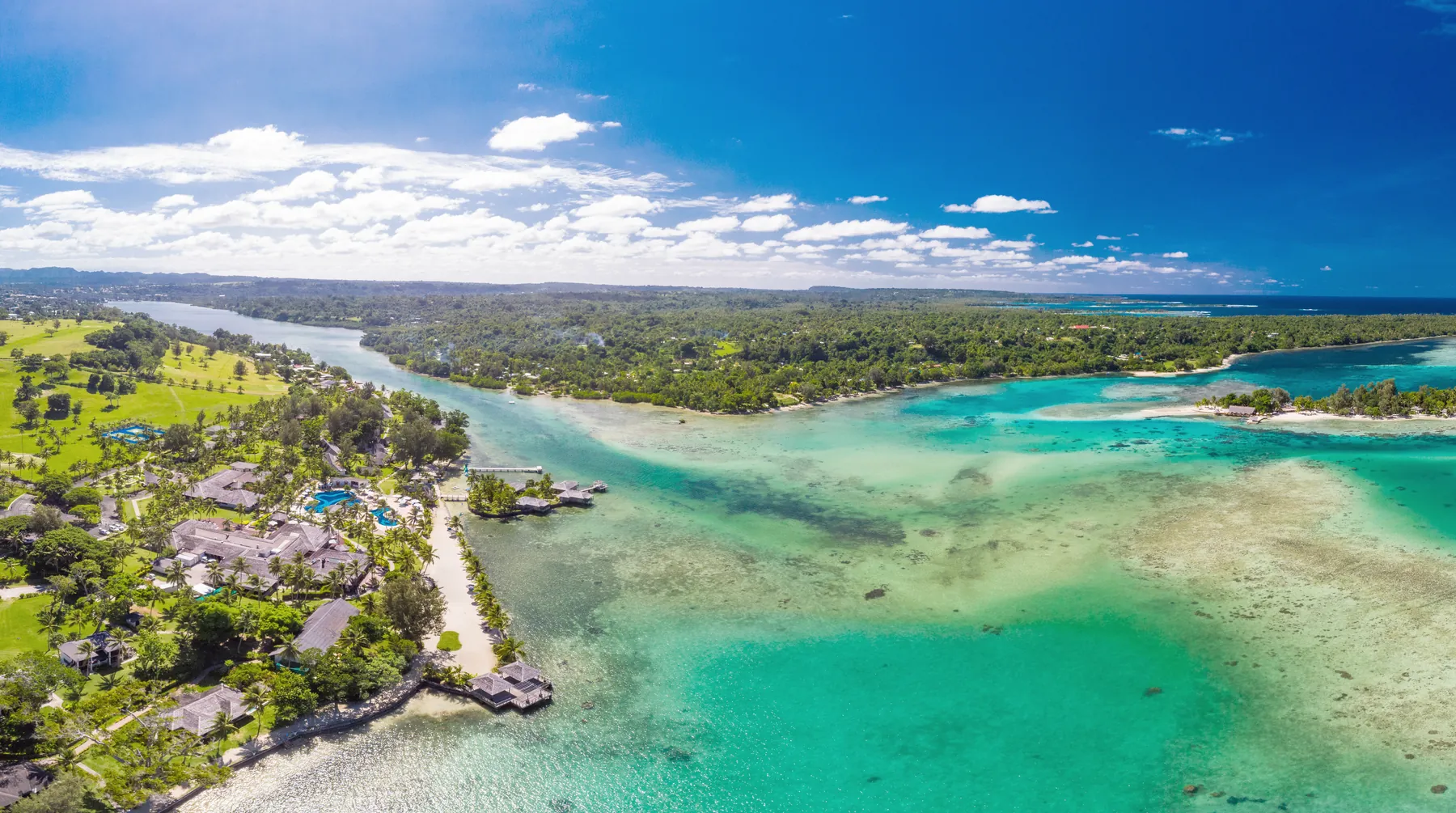
Now the other side of the scales. Vanuatu has no requirement to spend any number of days in the country. This is not my interpretation: in 2024 the European Commission, justifying the visa requirement for Vanuatu nationals, wrote directly that the country's investor programmes require neither residence nor physical presence. Since then Vanuatu has added in-person biometrics, but has not introduced days in the country.
Biometrics is one in-person appointment at the end of the process, after the application is approved. Russian citizens attend it in Moscow; no trip abroad is needed. How it works I described in our piece on biometrics for the Vanuatu passport. After the passport is issued, the citizen has no obligation to travel to the islands, and the passport is valid for ten years.
The other side is also known. Schengen visa-free travel for Vanuatu nationals is suspended: from 4 February 2023 for all nationals, and Regulation (EU) 2025/11 moved Vanuatu to the visa list from 3 February 2025. To travel to Europe, a Vanuatu citizen applies for a Schengen visa. For living in Europe, the Vanuatu passport is the start of the European path: with it families apply for residence in Greece or Hungary. Details are in our piece on the Vanuatu passport and Schengen.
What this means for you. Vanuatu does not require a single day on the islands from you, before or after the passport. The price of this convenience is a Schengen visa for trips and an EU residence permit for living in Europe.
How days on the island change the choice, in my view
Before, the difference between the Caribbean and Vanuatu came down to three things: price, timing and Schengen visa-free travel. The presence requirement adds a fourth: obligations after the passport is issued. A Caribbean passport stops being something you buy and put in a safe. It will need to be maintained with trips and, under the Grenada text, proven at renewal.
I use a simple criterion. First I ask what the passport is needed for in five years, then I look at whether the person is ready for the trip. If the task is visa-free travel to Schengen right now and you are not a Russian citizen, the Caribbean remains a strong option, and thirty days in five years do not change that. I do not advise giving up a suitable programme because of one family trip.
I consider Vanuatu the better fit in four situations. First: you are a Russian citizen, and the Caribbean programmes are closed to you. Second: there are family members for whom a flight halfway round the world is hard, and the Caribbean texts leave exemptions for health and age to the authorities' discretion. Third: you need the passport as a document for banks, business and travel in Asia and the Middle East, and for Europe you plan a residence permit anyway. Fourth: you value predictability, meaning clear conditions on the date of application and no rules that are still to be written. The programme terms are on the page Vanuatu citizenship, and a detailed comparison is in our piece Vanuatu or the Caribbean.
And the other way round. If you need Schengen visa-free travel for the coming years, you are ready for the trip and your Russian passport is not your only one, thirty days are no argument against the Caribbean. Just factor in the risk that visa-free travel will remain under discussion: the EU letter of 25 June 2026 has not been withdrawn.
We will compare the Caribbean and Vanuatu for your family
Tell us your citizenship, your family and what the passport is for. I will show which programmes are open to you and what they will require after the passport is issued.
For Russian citizens: one programme of six is open
For Russians the question of thirty days often does not arise at all. St Kitts and Nevis states on its applicant eligibility page that applications from Russian citizens are not accepted, together with Belarus, Iran, Iraq, North Korea and Afghanistan. Dominica, in the FAQ on its programme website, lists Russia and Belarus among countries subject to explicit bans, limitations or enhanced due diligence.
For Antigua, Grenada and Saint Lucia I did not find a separate official list naming Russia on their websites during this check. According to our information, applications on a Russian passport are closed there too, and this is covered in detail in our pieces on each country. Before any contract this is checked in writing as of the application date.
Vanuatu accepts applications from Russian citizens, and their biometrics are taken in Moscow. So for a Russian the choice between the Caribbean and Vanuatu in practice becomes Vanuatu or none of these six. Thirty days on the islands change nothing here.
What this means for you. If your only passport is Russian, do not spend time comparing days in the Caribbean. First check whether the programme accepts your citizenship at all.
When I advise not to rush
First case. Applying to Grenada or another Caribbean programme before the 30 days come in is a poor reason to hurry. Under the Grenada bill the new rules apply to applications submitted after the ECCIRA agreement law comes into force, and the minister may apply them to pending applications at his discretion, subject to transitional guidelines. Applying early does not guarantee exemption.
Second case. If you are already a citizen of one of the five countries, the texts I read say nothing about extending the new days to those who received a passport earlier. There is no reason to fly to the islands just in case. Antigua has its own five-day rule, and it is worth meeting before the passport renewal.
Third case. Do not choose Vanuatu only because it has no days on the island. If you need Schengen visa-free travel without a visa centre, Vanuatu does not offer that now, and one family trip to the Caribbean in five years costs less than years of visas. The decision is made by the task, not by the number of days.
And for whom this news does not matter at all. Those who are choosing a residence permit in Europe rather than a second passport. And those who have already decided that the passport is needed as a document for banks and Asia: for them the difference between zero and thirty days is secondary.
What to do before applying
- Decide what the passport is for in five years: visa-free Schengen, banks, business or residence in Europe.
- Check whether the chosen programme accepts your citizenship. For Russian citizens this is the first question, not the last.
- If you choose the Caribbean, plan one family trip in the first year after the passport and keep proof of your stay.
- Ask the agent to show the document behind every residence condition, with its date. A retelling is not a document.
- Watch three points: the announcement of the ECCIRA launch, a common start date from the five countries and the outcome of the Antigua amendments.
We will check whether Vanuatu suits you
Tell us your citizenship and family. I will say which documents are needed, where biometrics will take place and how long the process takes.
Before choosing between the Caribbean and Vanuatu, I advise going through a programme and risk review and preparing proof of the source of funds in advance. How we work with citizenship programmes is described on the About us page.
How this piece was prepared
This piece was prepared on 21 October 2026 from official sources: the Grenada Citizenship by Investment (Amendment) Bill 2026 on the Grenada parliament website; Circular No. 2 of the Investment Migration Agency of Grenada of 21 August 2026; the St Kitts and Nevis government statement of 24 September 2025; the eligibility and SISC pages and the news item of 28 September 2026 on the St Kitts Citizenship by Investment Unit website; the Dominica Office of the Prime Minister statement of 15 October 2025; the FAQ on the Dominica programme website; the passport page of the Antigua programme website, archived copy of 15 April 2026; the Antigua and Barbuda Cabinet notes of 10 June 2026 and government statements of 7 and 13 July 2026; the Eastern Caribbean Central Bank's Dominica budget summary of 25 August 2026; Regulation (EU) 2025/11 and the European Commission's 2024 proposal on the visa requirement for Vanuatu. The 30-day figure for Antigua and Dominica and for the ECCIRA agreement text is given as reported in the press: I did not find an official text with it. Rules change, and conditions are checked as of the application date. This is not a legal opinion on your situation.
Frequently asked
Questions people ask before deciding
01Does the 30-day rule already apply in the Caribbean?
No. On 21 October 2026 none of the five countries officially applies it. Grenada postponed the start by a circular of 21 August 2026, and on 28 September St Kitts confirmed that the regional rules will apply after the ECCIRA regulator is launched and a common date is set.
02Do the 30 days have to be consecutive?
Not under the Grenada bill. Days need not be consecutive, and after the first five days per person the rest can be made up by the whole family. A day when two people are in the country counts once.
03What happens if the requirement is not met?
Under the Grenada bill the first passport is issued for five years and renewed for ten only after compliance is certified. Failure without reasonable excuse is grounds to start revoking citizenship. Exemptions are possible for health, age and security risks.
04Can I apply before the new requirements if I hurry?
There is no guarantee. Under the Grenada bill the minister may apply the new rules to pending applications, subject to transitional guidelines. I do not advise hurrying for this reason.
05Does Vanuatu require you to visit the country?
No. One in-person appointment for biometrics is needed at the end of the process. For Russian citizens it takes place in Moscow. After the passport there are no mandatory trips.
06Which of these programmes are open to Russian citizens?
St Kitts and Dominica name Russia among restrictions on their websites; for Antigua, Grenada and Saint Lucia, according to our information, applications on a Russian passport are also closed. Vanuatu accepts applications from Russian citizens.
About the author
Related materials
What to read next
 ComparisonAntigua and Barbuda or Grenada: Family Passport for Large Families in 2026
 AnalysisWhat is due diligence and why the Caribbean is rejecting applications
 AnalysisHow to Choose a Program: Citizenship, Residence Permit or Permanent Residency through Investment
Personal programme selection is conducted by Anna Kovalevskaya, Head of Legal, BRIDGES.
We will find a citizenship programme for your task
Tell us your citizenship, your family and what the passport is for. We will compare the Caribbean and Vanuatu by availability, timing and obligations after the passport is issued.
