Citizenship · Dominica
Dominica: What Country Is It, Where Is It Located, Facts 2026
Updated: June 2026·9 min read·Expert reviewed
Terms and costs verified: June 2026
Contents
Heard of Dominica and immediately thought of the Dominican Republic? This is a very common confusion. In reality, these are two different countries in different parts of the Caribbean Sea, speaking different languages. Dominica is a tiny green island known as the "Nature Island." It has waterfalls, hot springs, and tropical rainforests. And this country also offers one of the most accessible second passports in the world. In this article, in simple terms: where Dominica is located, what its capital is, what language is spoken, and what makes it interesting overall. No complex terminology or filler.
Where Is Dominica on the Map
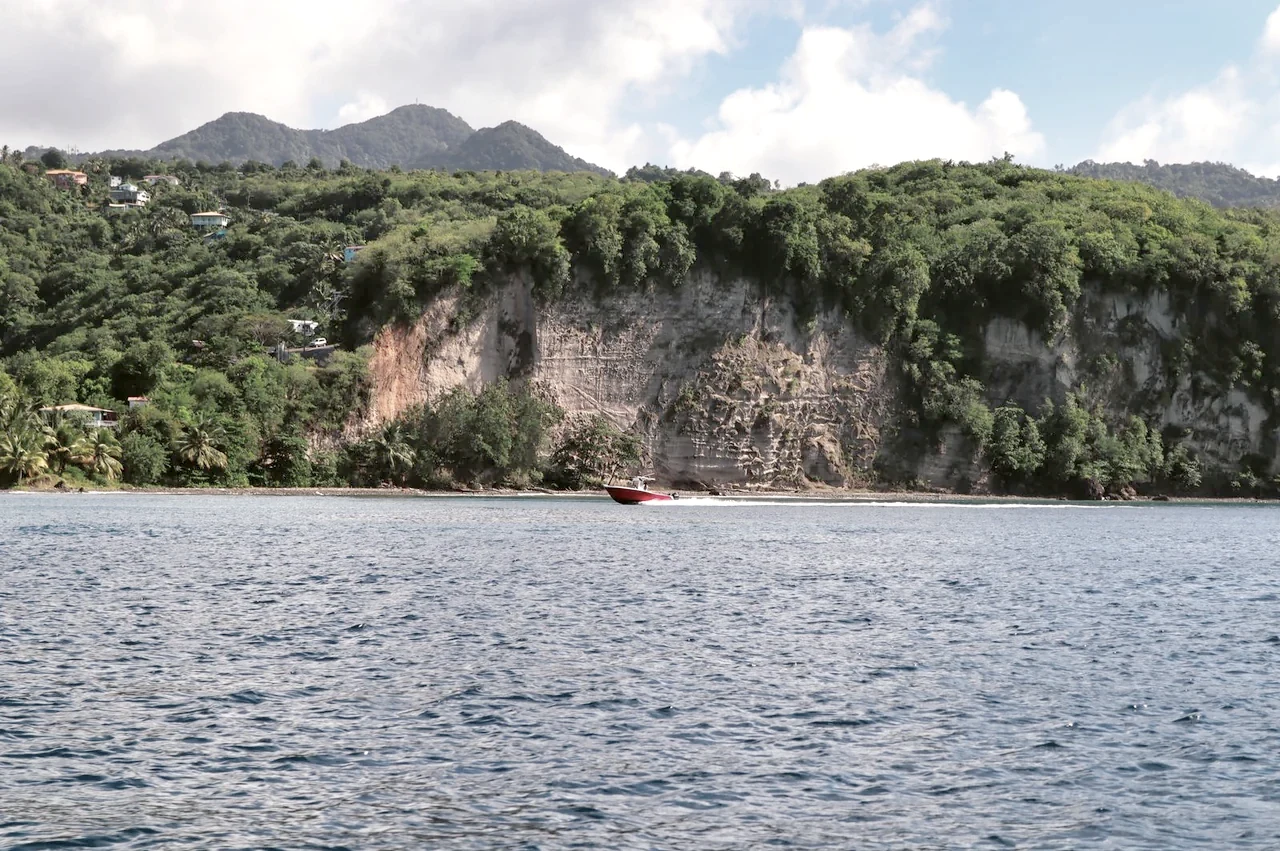
Dominica is an island in the Caribbean Sea. It lies in the eastern part of the Caribbean, in the group of Lesser Antilles islands. Simply put: it is a long chain of small islands that curves southward from Puerto Rico.
Dominica's neighbors are two French islands. To the north is Guadeloupe. To the south is Martinique. Dominica is sandwiched between them.
The island itself is small. About 47 kilometers in length and 26 kilometers in width. You can drive around it in a day. However, the terrain is mountainous and very green, so the roads wind.
One side of the island faces the Caribbean Sea, and the other faces the Atlantic Ocean. The highest point is Morne Diablotins mountain, almost 1,450 meters. For such a small island, that is substantial.
The climate is tropical. Warm year-round, but due to the mountains and rainfall, it is slightly cooler and greener than the neighboring beach islands.
Dominica Is NOT the Dominican Republic
This is the main confusion that made this article worth writing. Dominica and the Dominican Republic (Dominican Republic) are two completely different countries. They are easy to confuse by name, but they have almost nothing else in common.
See the difference:
| Feature | Dominica | Dominican Republic |
|---|---|---|
| Location | Lesser Antilles, eastern Caribbean | Island of Haiti, near Puerto Rico |
| Language | English | Spanish |
| Population | Approximately 67,000–73,000 | More than 11 million |
| Capital | Roseau | Santo Domingo |
| What it is known for | Nature, forests, waterfalls | Beaches, resorts, all-inclusive hotels |
Dominica is large, Spanish-speaking, focused on beach vacations. Dominica is tiny, English-speaking, focused on wild nature. Easy to remember: if it's English and about jungles - it's Dominica.
The names are similar by coincidence. Columbus named Dominica because he saw the island on a Sunday (in Latin, dies Dominica - "the Lord's Day").
The capital of Dominica is the city of Roseau
The capital of the country is the city of Roseau (in English, Roseau). It is both the main port and the largest city on the island.
Roseau is small and cozy. There are old houses in Caribbean style, a waterfront, and a market with local fruits and vegetables. Life is calm, without the hustle and bustle of large cities.
Cruise ships enter the port. During the season, the city is lively in the mornings as tourists walk through the center, and by evening everything quiets down.
Near the capital are a botanical garden and access to mountain trails. Famous waterfalls and hot springs are less than an hour's drive from the city.
There are almost no other large cities on the island. There is the town of Portsmouth in the north; the rest are small villages along the coast.
Population and language: who lives on the island
The population of Dominica is approximately 67,000-73,000 people. This is very small. For comparison, that many people live in one district of a large city.
Because of the small size, everyone knows each other here. The atmosphere is calm and friendly. Locals are welcoming to guests.
The official language is English. It is used throughout life: documents, school, business, shopping. So there is almost no language barrier for tourists.
Besides English, many speak the local Creole (called Patois). It is a mixture based on French - a legacy of colonial history, when the island was owned by the French.
A small community of Kalinago also lives on Dominica - descendants of indigenous Caribbean Indians. They have their own territory in the eastern part of the island. This is rare for the Caribbean.
What currency is used in Dominica
The currency here is the East Caribbean dollar. Abbreviated as XCD, shown on price tags as EC$.
This currency is used by several small Caribbean countries: besides Dominica, there are Saint Kitts and Nevis, Grenada, Saint Lucia, Antigua, and a couple more islands. One central bank, one currency.
A convenient detail: the East Caribbean dollar is firmly pegged to the US dollar. The exchange rate does not fluctuate. One US dollar equals approximately 2.7 EC$. It has been this way for many years.
In practice, American dollars are accepted almost everywhere on the island. In hotels, restaurants, and from taxi drivers. So you do not need to exchange money in advance.
Cards also work in cities and major places. However, in remote villages, it is better to have some cash on hand.
We will map your route to Dominica citizenship
We review your family, source of funds and timing and tell you which route fits.
Why Dominica is called the "Island of Nature"
Dominica has a nickname - "Nature Island." And this is not advertising. Nature is truly the main value here.
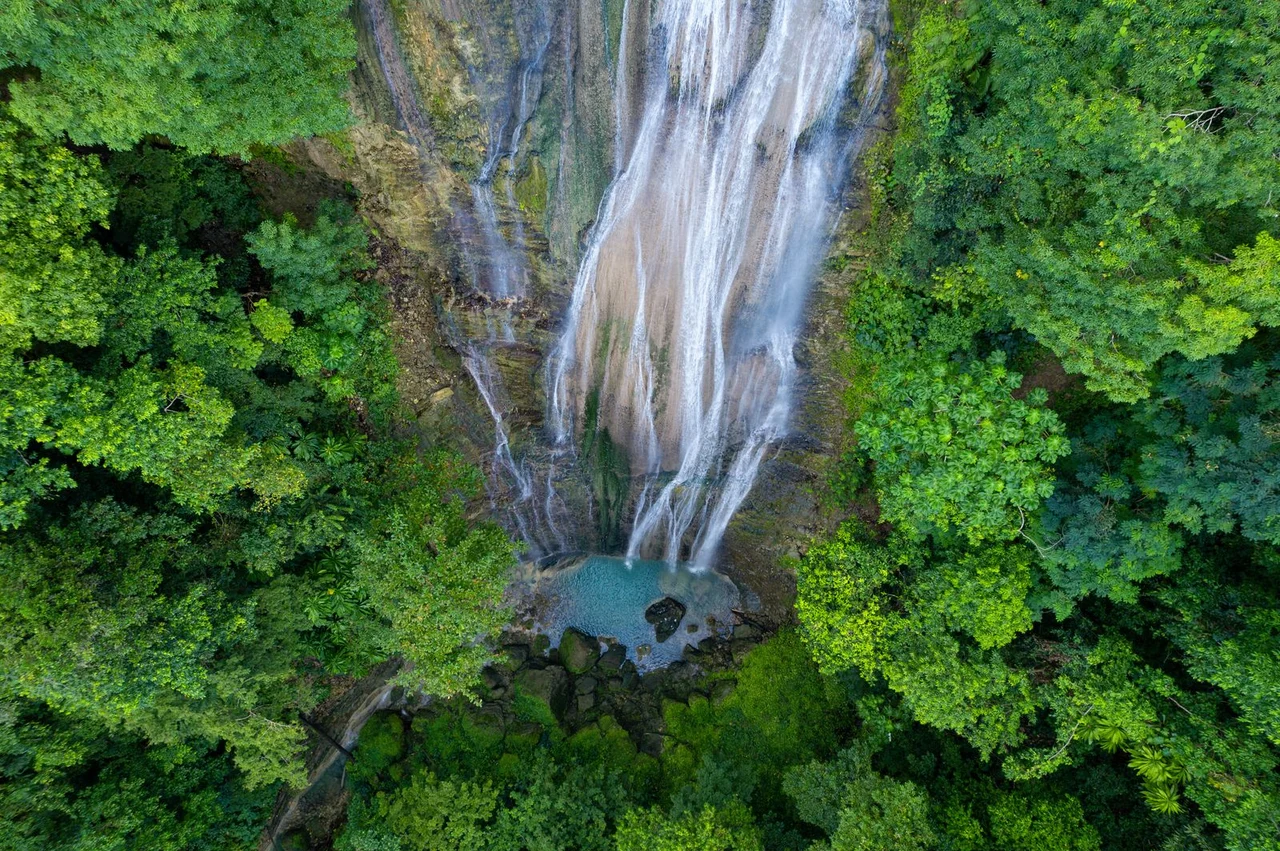
Tropical forests cover about two-thirds of the island. These are dense, humid jungles with rivers and waterfalls. They say there are more than 300 rivers on the island - almost one for each day of the year.
There is the famous Boiling Lake here. This is the second-largest lake of its kind in the world: the water literally boils due to volcanic activity underground. You cannot swim there, but you can reach it and see it.
There are also many hot springs on the island. After hiking in the mountains, you can relax in a natural hot bath right in the forest.
Part of the island is the Morne Trois Pitons National Park. It is included in the UNESCO World Heritage List. This means that nature is protected here at the world level.
Volcanoes, waterfalls, and hot springs
Dominica is a volcanic island. It literally grew out of volcanoes. There are no major eruptions now, but underground it is still "hot." This is the source of the hot springs and the Boiling Lake.
Waterfalls are the signature attraction of the island. The most famous are Trafalgar (two waterfalls side by side), Emerald Pool (an emerald pool in the forest), and Victoria. Trails through the jungle lead to them.
For hiking enthusiasts, there is the Waitukubuli Trail - the longest hiking trail in the Caribbean. It runs through the entire island.
There is also interest underwater. Divers value Dominica for its volcanic underwater landscapes and for the fact that whales are often seen off the coast. Sperm whales live here year-round.
In short: this is an island for those who love nature and active recreation, not lounging by the pool on a beach.
Is it safe in Dominica
Dominica is considered one of the calmest and safest places in the Caribbean. There is little serious crime here.
The reason is simple. The island is small, there are few people, and everyone knows each other. Life flows at a measured pace, without the major problems of big cities.
Tourists usually feel comfortable. Locals are friendly and willing to help guests. The atmosphere is relaxed.
Standard rules, of course, have not been cancelled. It is better not to leave valuables unattended, and when hiking in the mountains, go with a guide or along familiar trails.
The main risks on the island are natural: hurricane season in summer and fall, slippery trails after rain. You should pay careful attention to the weather.
"Dominica is often underestimated - and unfairly so. Yes, it is not the European Union, and the passport does not give the right to live in Europe. But as a tool, it works perfectly. For a family that needs a reliable Plan B at a reasonable price and remotely, it is one of the best options in the Caribbean. What I particularly like: very broad family rules. You can include not only a spouse and children, but also parents, and even brothers and sisters. However, I should warn you. The vetting here is serious. If the source of funds is opaque - they will refuse, and they will not return the contribution. So first sort out your situation, and only then apply. And do not confuse citizenship with taxes - these are different things."
Dominica and the British Commonwealth
Dominica has been an independent country since 1978. Before that, the island was a British colony.
Dominica is now a parliamentary republic. The country has its own president and prime minister. This is an important distinction from some neighbors, where the British monarch formally remains the head of state.
At the same time, Dominica is a member of the Commonwealth of Nations. This is an association of countries with a shared history with Great Britain. Membership provides convenient connections with other Commonwealth countries.
The English language, English law as the basis of the legal system, left-hand traffic on roads - all of this is a legacy of the British period.
For travelers and investors, this is a plus. A clear legal system, English language, and the reputation of a stable country.
What the island's economy is based on
Dominica is a small country with a modest economy, but it has several pillars of support.
The first is agriculture. For a long time, the island lived on banana exports. Now they also grow other fruits, vegetables, and cacao.
The second is tourism, but a special kind. People come here not for beaches, but for nature: eco-tourism, hiking, diving, whale watching. This is a growing sector.
The third pillar, important for the state, is the citizenship by investment program. Foreigners invest money in the country and receive a passport. These funds go into the budget: for roads, schools, hospitals.
Dominica also focuses on green energy. The island has abundant geothermal resources—the underground heat from volcanoes. The country wants to become one of the first in the world to abandon fossil fuels.
Why Dominica interests investors
This is where it gets interesting for many readers. Dominica offers one of the most well-known and accessible second passports in the world.
The program is called "citizenship by investment" (CBI in English). The concept is simple: you make a contribution to the country and receive citizenship. You do not need to relocate or live on the island.
This is convenient for those who want a "backup" passport. For example, for travel freedom, for business, or as a plan B for the family.
The Dominica passport provides visa-free or simplified entry to many countries worldwide, including Schengen countries and the United Kingdom. It is important to be : the passport itself is NOT European, and Dominica is not part of the European Union. This is about travel convenience.
We discussed the passport in detail, its strength and benefits in separate articles: Dominica passport and benefits of Dominica citizenship.
How to obtain Dominica citizenship: in brief
There are two main ways to obtain Dominica citizenship. Both are official, according to the country's laws.
| Method | Essence | Special feature |
|---|---|---|
| Government fund contribution | non-refundable contribution to the country's development fund | the simplest and most popular option |
| Real estate | purchase of a state-approved property | must be held for several years, then can be sold |
It is best to clarify the exact amounts and timeframes at the current moment—program conditions change. The process takes approximately several months and is conducted remotely.
An important point. All applicants are vetted. This is called due diligence. The source of funds is also checked. The programme does not accept applications from citizens of Russia and Belarus.
And remember: citizenship is not the same as tax residency. Obtaining a passport does not automatically mean you will or will not pay taxes somewhere.
A comprehensive review of options is in the article on Dominica citizenship by investment. Everything about visas and travel is in the material on visas and visa-free entry.
Want to understand if this option suits you? Leave a request —we will analyze your situation and tell you about timelines, amounts, and pitfalls.
Is Dominica worth considering: expert opinion
For a perspective beyond tourism, we have added a comment from our Caribbean programs expert.
Below is a analysis of who the island and its passport really suit, and who should look at other options.
We will send a document checklist for your case
Leave your details: we will put together documents and timelines for your family.
The main points in brief
Let's put it all together so you remember.
- Dominica is a small island in the Eastern Caribbean, between Guadeloupe and Martinique.
- It is NOT the Dominican Republic. That one is larger, Spanish-speaking, and known for beaches.
- The capital is Roseau. Population is approximately 67,000-73,000. Language is English.
- Currency is the East Caribbean dollar, pegged to the US dollar.
- Nickname—"island of nature": forests, waterfalls, hot springs, volcanoes.
- A safe, peaceful country, and a member of the British Commonwealth.
- Known as one of the most accessible second passports in the world - remotely and officially.
If you want to move from facts to action and learn about the passport itself - visit our page on Dominica citizenship. It contains all information about the program.
Frequently asked
Questions people ask before deciding
01Are Dominica and Dominican Republic the same thing?
No. These are two different countries. Dominica is a small English-speaking island in the Eastern Caribbean. Dominican Republic is a large Spanish-speaking country on the island of Hispaniola. They only have similar names, nothing else in common.
02Where is Dominica located?
In the eastern part of the Caribbean Sea, in the Lesser Antilles group of islands. To the north is French Guadeloupe, to the south is Martinique.
03What is the capital of Dominica?
The capital is the city of Roseau. It is also the main port and the largest city on the island.
04What language is spoken in Dominica?
The official language is English. Many also speak the local Creole (Patois) based on French.
05How many people live in Dominica?
Approximately 67-73 thousand people. It is a very small country.
06What is the currency in Dominica?
East Caribbean Dollar (XCD, marked as EC$ on price tags). It is pegged to the US Dollar: 1 USD is approximately 2.7 EC$. US Dollars are accepted almost everywhere.
07Why is Dominica called the "Island of Nature"?
Due to its pristine nature. Two-thirds of the island is covered in tropical rainforest. There are hundreds of rivers, waterfalls, hot springs, volcanoes, and a Boiling Lake. Part of the island is UNESCO heritage.
08Is it safe in Dominica?
Yes, the island is considered one of the most peaceful in the Caribbean. Serious crime is rare. The main risks are natural: hurricane season in summer and autumn.
09Is Dominica part of the European Union?
No. Dominica is not in the EU. It is an independent country and a member of the Commonwealth. A Dominica passport is not European, although it provides convenient travel to many countries.
10Can you obtain a Dominica passport without relocating there?
Yes. Citizenship through investment can be processed remotely, without mandatory relocation or residency. The process typically takes several months.
11What is required to obtain Dominica citizenship?
Two main options: a non-refundable contribution to a state fund or purchase of approved real estate. All applicants undergo due diligence checks, and the source of funds is also verified. Amounts and timelines should be clarified for the current moment.
12Does Dominica citizenship make me a tax resident of the island?
No. Citizenship and tax residency are different matters. Obtaining a passport by itself does not determine where you pay taxes. This issue is resolved separately.
Transparency
How this material was prepared
- Author
- Andres Ferreira, head of Investment Advisory, BRIDGES
- Terms and costs last verified
- June 2026
- Sources
- official government authorities of the relevant country and state publications
- Methodology
- government minimum requirements are stated separately from due diligence charges, state fees, legal and banking costs
Sources and methodology
Figures, terms and timelines are checked against official sources as of June 2026. Link availability verified in August 2026. Third-party blogs and agent websites are not used as a source of programme terms.
- [1]Commonwealth of Dominica Citizenship by Investment UnitOfficial conditions of the programmecbiu.gov.dm
Methodology: tables and charts state government minimum investment requirements; due diligence charges, state fees, legal, banking and other costs are calculated separately and are not included in the minimum thresholds.
About the author
Related materials
What to read next
 ComparisonDominica or St. Lucia: the most affordable Caribbean citizenship in 2026
 AnalysisWhat is due diligence and why the Caribbean is rejecting applications
 ArticleBenefits of Dominican Citizenship in 2026: What Makes This Passport Useful
Personal programme selection is conducted by Anna Kovalevskaya, Head of Legal, BRIDGES.
Comparison of five Caribbean programmes
Amounts, timelines, family composition and requirements in one table.