Citizenship · Antigua and Barbuda
Antigua and Barbuda: what kind of country is it, where is it located, and what is it famous for
Updated: June 2026·9 min read·Expert reviewed
Terms and costs verified: June 2026
Contents
Antigua and Barbuda is a small island nation in the Caribbean Sea. It has 365 beaches, warm sea year-round, and peaceful life without winter. Many have heard of this country because of its second passport: it can be obtained remotely, and you only need to visit for 5 days over a 5-year period. In this article, we will straightforwardly explain where Antigua is located, what kind of country it is, what its capital is, its population and language—and why it is so interesting to investors.
Where is Antigua? Finding the country on the map
Antigua and Barbuda is an island nation in the Caribbean Sea. In short: look for the eastern part of the Caribbean on the map, slightly to the east of most neighboring islands.
The country is part of the Lesser Antilles island group. Simply put, it is a chain of small islands that curves through the Caribbean Sea. Antigua and Barbuda is located in its northern part, in the so-called Leeward Islands.
The nearest neighbors are Guadeloupe, Montserrat, St. Kitts and Nevis. It takes about 3 hours to fly from Miami to Antigua, and about 8 hours from London on a direct flight.
So the country sits at a convenient crossroads between North America and Europe. This is one of the reasons why it is easy to reach and why the island is loved by travelers.
Sounds like a point at the edge of the world? In reality, it is a well-connected place with an international airport.
What kind of country is Antigua and Barbuda
It is an independent state consisting of two main islands—Antigua and Barbuda. There is also a third, small and uninhabited island called Redonda.
Antigua is the largest and most populated island. Almost the entire population of the country lives here, the capital is located here, and the airport operates here. Barbuda is quiet, sparsely populated, with wild beaches and a colony of frigatebirds.
The country gained independence from Great Britain in 1981. Before that, it was a British colony for many years. That is why English is spoken here and many things are organized in the British manner.
Today, Antigua and Barbuda is a member of the Commonwealth of Nations (an association of countries linked to Great Britain). Formally, the British monarch is considered the head of state, but in reality, the country is governed by its own government and prime minister.
In one word: a peaceful democratic state with the English language and Caribbean character.
Capital of Antigua—the city of St. John's
The capital of the country is St. John's. The city is located on the island of Antigua, on the northwestern coast, near a convenient bay.
St. John's is the largest city in the country and its main port. Large cruise ships call here, trade is conducted from here, and all official activities are concentrated here.
The city is small and cozy. There is a cathedral with two white towers, colorful houses in Caribbean style, markets, cafes, and a waterfront for cruise tourists.
By world capital standards, St. John's is tiny—it has only about 20,000-25,000 inhabitants. But this is where the government, banks, and the country's main offices are located.
For an investor, this is an important detail: all state bodies dealing with citizenship issues operate in the capital.
Population and language: how many people and what they speak
The population of Antigua and Barbuda is quite small—approximately 94,000 people (estimate for 2026). For comparison: this is less than in one district of a major city.
Most residents are descendants of people who were brought to the islands from Africa during the sugar plantation era. There are also people from other Caribbean countries, Europe, and the Middle East.
The official language is English. It is spoken by everyone: in shops, banks, government agencies. In everyday life, a local dialect (Caribbean English creole) is often heard, but official documentation is in standard English.
For Russians and residents of the CIS, this is a plus. English here is understandable, and all citizenship program documents are in English.
- Population: approximately 94,000 people
- Official language: English
- Religion: primarily Christianity
- The majority of people live on the island of Antigua
Climate and weather: summer year-round
Key information about Antigua's weather: it is always warm here. Winter does not exist in the conventional sense.
Average air temperature stays around 23-30 degrees year-round. The sea is warm, approximately 27 degrees. Trade winds—constant ocean breezes—temper the heat.
Antigua is considered one of the sunniest islands in the Eastern Caribbean. There is less rain here than on neighboring islands, and the sun shines almost every day.
The rainy season and hurricane season formally last from June to November. However, rains are usually brief, and strong hurricanes do not occur every year.
The best time to visit is December to April: dry, warm, and pleasant. That said, the island is suitable for living in any season.
We will map your route to Antigua and Barbuda citizenship
We review your family, source of funds and timing and tell you which route fits.
365 beaches—one for each day of the year
Antigua's most famous feature is 365 beaches. Locals proudly say: "one for each day of the year."
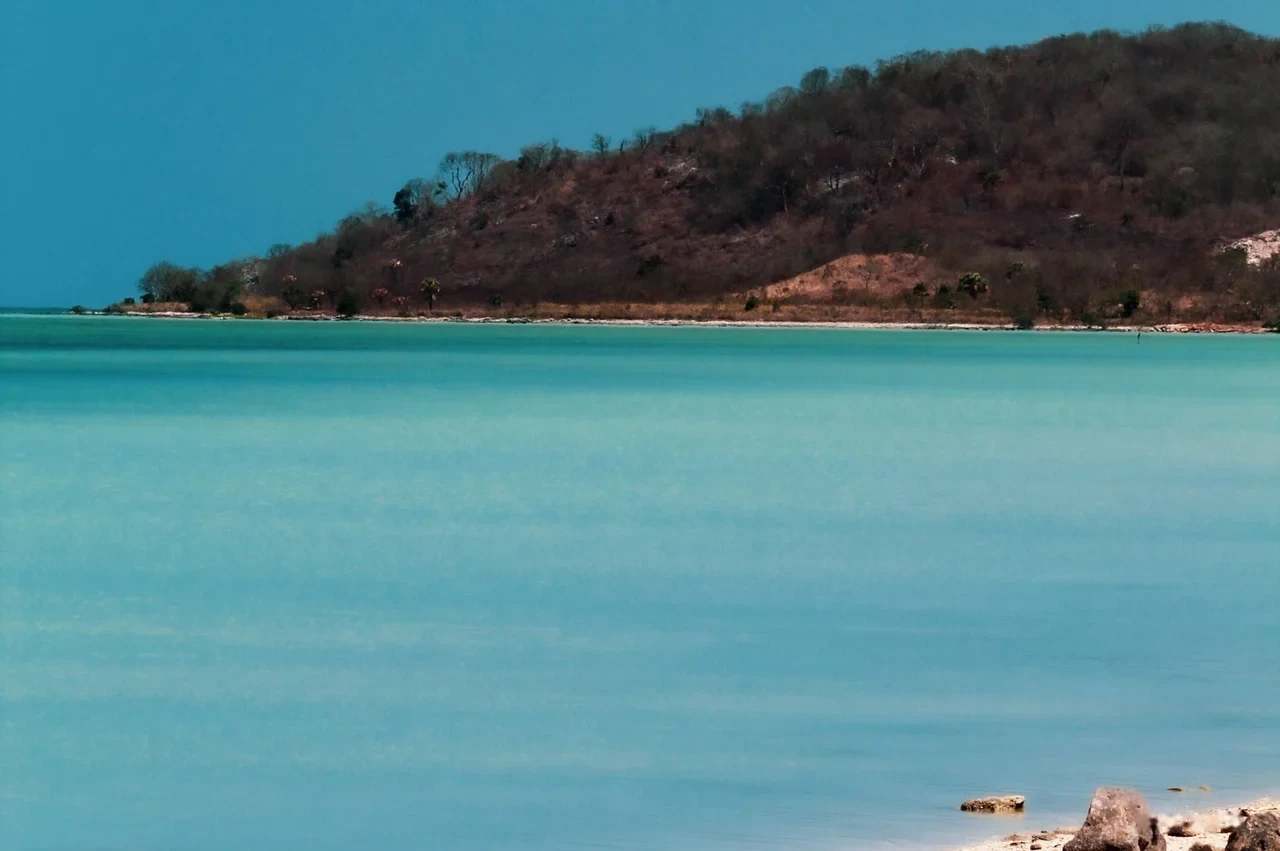
And the beaches here are diverse. In the south—long stretches of sand with a slight pinkish tint. In the east—calm turquoise bays. In the north—open shores where Atlantic waves arrive.
The water is clean and warm, with gradual entries into the sea. Many beaches are wild and almost empty—you can find a place where you will be completely alone.
Tourism is very important for the country. In early 2026, the tourist flow increased by almost 7 percent compared to the previous year. Antigua consistently ranks among the best Caribbean destinations.
Sounds like a postcard? It is. These views are exactly why people come here from all over the world.
Sailing and yachts
Antigua is one of the main sailing centers in the Caribbean. The island's coastline is indented with convenient bays, and the wind here is stable—ideal for yachts.
The coastline length is approximately 100 miles. This makes the island one of the best places for sailing in the entire region.
Every year, the famous Antigua Sailing Week takes place here—a major sailing regatta that brings sailors from around the world. English Harbour and Nelson's Dockyard are historic places beloved by sailors.
For wealthy individuals, this is an important consideration. There is developed infrastructure for yachts: marinas, service, berths. If you have a yacht or dream of one—Antigua is an excellent base.
Currency and money: what to use for payments
The official currency of the country is the East Caribbean Dollar (abbreviation XCD or EC$). It is the common currency for several island nations of the Eastern Caribbean.
The East Caribbean Dollar exchange rate is tightly pegged to the US Dollar. This means the rate is stable and does not fluctuate.
In practice, US dollars are readily accepted here. Many prices in tourist locations are listed directly in US dollars. Credit cards are accepted almost everywhere.
| Money in Antigua | Details |
|---|---|
| Local currency | East Caribbean Dollar (XCD) |
| Exchange rate peg | To the US Dollar (stable) |
| US dollars | Accepted almost everywhere |
| Cards | Work in hotels, shops, restaurants |
Convenient for investors: major payments under the citizenship program are made in US dollars.
"Antigua is often chosen as a first second passport—everything is logical and fast here. But I always tell clients: do not chase the timeline alone. The quality of document preparation affects the result. The most sensitive area is verification of the source of funds. For citizens of CIS countries, the checks are now particularly thorough, and this is normal: the state wants to be confident that the funds are clean and earned legally. When we prepare the file carefully—statements, contracts, tax declarations, a clear history of fund movement—the application goes through smoothly and without unnecessary questions. And one more thing: remember that Antigua citizenship does not automatically make you a tax resident. These are different things. A passport provides freedom of movement and a backup option, while taxes depend on where you actually live. If you understand this in advance, the island becomes a truly convenient solution."
Is it safe there and how do people live
Antigua is considered a calm and safe place. It is a small island nation where people live mostly at a measured and friendly pace.
There is little serious street crime here, especially in tourist areas and neighborhoods where expatriates live. As everywhere, it is worth taking normal precautions with belongings and documents.
The standard of living by Caribbean standards is decent. The economy is sustained mainly by tourism, as well as services and construction.
Life here is unhurried. There are no traffic jams of large cities, no hustle and bustle of a metropolis. Many expatriates value the island for this very reason: warm climate, ocean nearby, and a calm daily rhythm.
This is one reason why Antigua's second passport is chosen as a "backup option"—a quiet place with good weather.
Why everyone talks about Antigua's passport
Antigua and Barbuda has a citizenship by investment program (CBI). In simple terms: you make a contribution to the country's development—and receive citizenship and a passport.
The main feature is that almost everything can be done remotely. You do not need to relocate, abandon your business, or learn the language. A licensed agent submits the application, and you gather documents from home.
There is only one residency requirement: within the first 5 years, you must spend a total of 5 days on the islands. That is, literally one short visit. More details on this are in our breakdown of Antigua citizenship benefits. Benefits of Antigua citizenship.
It is important to be : this is NOT a European Union passport. However, it provides visa-free entry to many countries, including the Schengen Zone and the United Kingdom (entry rules sometimes change—they should be checked before traveling).
We covered in detail the document itself and its capabilities in an article about Antigua and Barbuda passport.
How to obtain citizenship: main pathways
The program offers several pathways. You choose the one that is most convenient for your budget and goals.
- National Development Fund (NDF) contribution - a non-refundable contribution to the country's development. Suitable for those who want a simple solution without real estate complications.
- University Fund (UWI) contribution - beneficial for large families (typically from 6 people). The package includes one year of education for one family member.
- Purchase of approved real estate - you purchase a property from an approved list and hold it for several years, then can sell it.
Amounts and conditions change from time to time, so it is best to clarify the exact figures today. We compiled the current breakdown in an article about the cost of Antigua citizenship.
Timelines are pleasantly encouraging: processing usually takes several months. By Caribbean standards, this is fast.
The cost includes, in addition to the investment itself, government fees and mandatory due diligence checks for each adult applicant.
Can Russians and CIS residents participate
Citizens of Russia and Belarus cannot apply at present: since 31 March 2023 the program has not accepted their applications. Citizens of other CIS countries participate in the program, but there are important points worth mentioning upfront.
Applicant screening is now enhanced. For citizens of CIS countries this is particularly strict: thorough examination of biography and source of funds (fund origins must be confirmed with documents).
Everything must proceed strictly according to law. No schemes to circumvent sanctions - this is unacceptable. Funds must be clean and of verifiable origin.
Many home countries allow it too, including the UK, the US, Canada and Russia. After obtaining an Antigua passport, you only need to notify the Ministry of Interior (typically within approximately 60 days).
And one more important detail: citizenship is not the same as tax residency. Obtaining a passport does not automatically make you a tax resident of another country. Read about the passport's visa opportunities in the article about visas and visa-free countries.
Expert perspective: what to prioritize
Clients like Antigua and Barbuda for its simplicity and speed. However, there are nuances in the application process that are better understood in advance - they determine whether your application will proceed smoothly.
Most importantly - prepare documents correctly and confirm the source of funds. When this is done carefully from the start, everything else proceeds smoothly.
We will send a document checklist for your case
Leave your details: we will put together documents and timelines for your family.
Who is Antigua and Barbuda suitable for and summary
Let us summarize in simple terms. Antigua and Barbuda is a small island nation in the Eastern Caribbean with the capital of St. John's, English language, and eternal summer.
The country is known for 365 beaches, yachts, and relaxed living. And also - a convenient second citizenship program.
Who finds this particularly interesting:
- Those who want a second passport without relocation and long waiting periods.
- Families - the program allows including children, parents, and other relatives.
- Lovers of the sea, yachts, and warm climate.
- Those who need a calm "backup plan" in a reliable jurisdiction.
If you are considering this option, check our page about Antigua and Barbuda citizenship - all relevant information is collected there. And you can discuss your situation via contact form.
Frequently asked
Questions people ask before deciding
01Where is Antigua located?
In the Caribbean Sea, in the eastern part of the Caribbean. It is a group of the Lesser Antilles (Leeward) islands, east of most neighboring islands.
02What is the capital of Antigua and Barbuda?
The capital is the city of St. John's. It is located on the island of Antigua, on the northwestern coast. It is the main city and port of the country.
03How many people live in Antigua and Barbuda?
Approximately 94,000 people (estimate for 2026). It is one of the least populated countries in the Caribbean.
04What language is spoken in Antigua?
The official language is English. It is used in all official matters and documents. In everyday life, local Caribbean English creole is often heard.
05Is Antigua an independent country?
It has been an independent state since 1981. Previously it was a British colony. Now it is part of the Commonwealth of Nations.
06What is the currency there?
East Caribbean dollar (XCD), pegged to the US dollar. In practice, US dollars are accepted almost everywhere, and cards work too.
07Is it true that there are 365 beaches?
Yes, this is a well-known feature of the island – "one beach for each day of the year". The beaches are diverse: from pinkish sand in the south to wild shores in the north.
08What is the climate like in Antigua?
Warm year-round, 23-30 degrees. There is no winter. It is one of the sunniest and driest islands in the Eastern Caribbean.
09Is it safe in Antigua?
Yes, the country is considered peaceful and safe, especially in tourist areas. It is sufficient to exercise normal caution with your belongings.
10Why do people need an Antigua passport?
It is a second passport through an investment program. It is obtained remotely, without relocation. It provides visa-free entry to many countries, including the Schengen area and the United Kingdom.
11Do you need to relocate to the island for citizenship?
No. Almost everything is done remotely. You only need to spend 5 days on the islands within the first 5 years – that is, one short visit.
12Can Russians obtain Antigua citizenship?
No. Since 31 March 2023 the Antigua program has not accepted applications from citizens of Russia and Belarus. For other applicants enhanced verification is required; you need to confirm the origin of funds. If you hold Russian citizenship, dual citizenship is allowed; after obtaining it, notify the Ministry of Internal Affairs.
Transparency
How this material was prepared
- Author
- Darya Melnik, senior Investment Programs Advisor, BRIDGES
- Terms and costs last verified
- June 2026
- Sources
- official government authorities of the relevant country and state publications
- Methodology
- government minimum requirements are stated separately from due diligence charges, state fees, legal and banking costs
Sources and methodology
Figures, terms and timelines are checked against official sources as of June 2026. Link availability verified in August 2026. Third-party blogs and agent websites are not used as a source of programme terms.
- [1]Antigua and Barbuda Citizenship by Investment UnitOfficial conditions of the programmecip.gov.ag
Methodology: tables and charts state government minimum investment requirements; due diligence charges, state fees, legal, banking and other costs are calculated separately and are not included in the minimum thresholds.
About the author
Related materials
What to read next
 ComparisonVanuatu or Antigua and Barbuda: citizenship by investment in 2026
 AnalysisWhat is due diligence and why the Caribbean is rejecting applications
 ArticleCitizenship of Antigua and Barbuda through Investment: Complete Guide 2026
Personal programme selection is conducted by Anna Kovalevskaya, Head of Legal, BRIDGES.
Comparison of five Caribbean programmes
Amounts, timelines, family composition and requirements in one table.