Citizenship · Saint Lucia
Saint Lucia: what kind of country is it, where is it located and what is it known for
Updated: June 2026·9 min read·Expert reviewed
Terms and costs verified: June 2026
Contents
Saint Lucia is a small island in the Eastern Caribbean. They know it from the two sharp Piton mountains that rise straight from the sea, from the warm sea and calm life. But the island also has a second side, which is important for investors: here they give a second passport remotely, without moving. In this article, we will explain in simple terms what kind of country Saint Lucia is, where it is on the map, what language they speak, what currency and climate it is. And at the end we will show how the island is connected with the citizenship by investment program.
Where is Saint Lucia on the map
Saint Lucia lies in the Eastern Caribbean. It is part of the Lesser Antilles, a long arc of small islands between North and South America.
To put it very simply: the island is located in the warm Caribbean Sea, approximately halfway between Puerto Rico and the coast of Venezuela. Nearby are Martinique in the north and Saint Vincent in the south.
The island is small. Its area is about 606 square kilometers. It's like one large city with suburbs. You can travel from north to south of the island in a couple of hours.
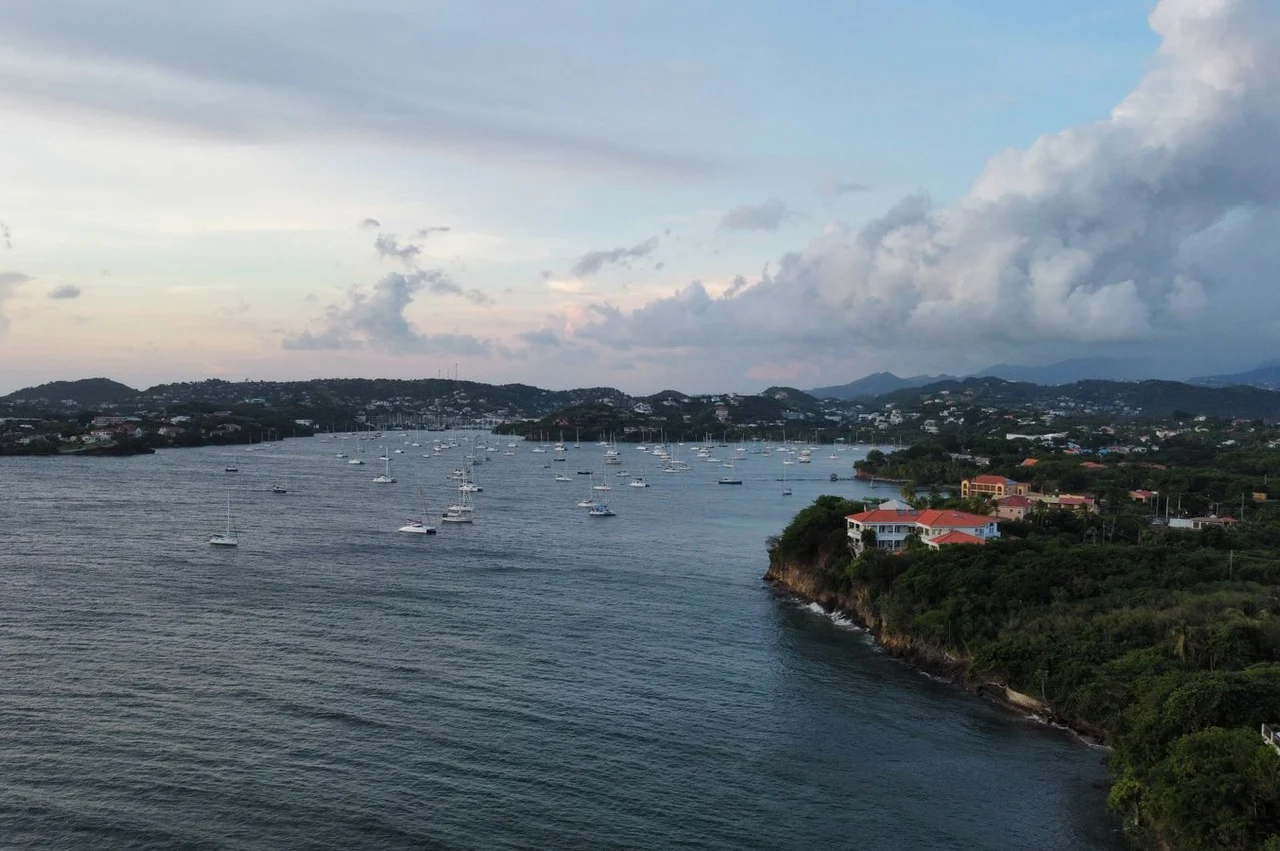
Saint Lucia has an elongated shape, slightly like a drop. The shores are indented with bays, and in the depths there are green mountains. It is because of the mountains and the sea nearby that tourists love the island so much.
When they say “St. Lucia is where,” the answer is short: a warm island in the Caribbean Sea, in its eastern part. Time zone is 8 hours behind Moscow.
What kind of country is Saint Lucia?
Saint Lucia is a separate state. Not a colony or part of another country, but an independent state with its own government.
The island gained independence in 1979. Before that, it was under British rule for a long time, and traces of this are still visible: language, law, school system.
Saint Lucia is part of the Commonwealth of Nations (Commonwealth), an association of countries, many of which were previously associated with Great Britain. Formally, the head of state was for a long time the British Crown, and in place it was represented by the Governor General.
By type, the island is classified as a small island state. The economy here is small and relies mainly on tourism, agriculture and services.
What is important for an investor is this: Saint Lucia is a stable country with English law and calm politics. That is why there is a second citizenship program here, which we will discuss further.
The capital of Saint Lucia is Castries
The capital of Saint Lucia is the city of Castries. It stands in the north-west of the island, right by the sea.
Castries is both the main city and the main port. Cruise ships come here, as well as the island's business center and government.
The city is small by the standards of large countries. But there is everything you need here: banks, shops, a market, an embankment. Nearby is a convenient bay where yachts and cruise ships moor.
A significant part of the island's population lives in Castries itself and its suburbs. This is the busiest place in Saint Lucia.
In short: Castries is the heart of the island. All the business and port life is happening here, and all around are quiet villages and green hills.
Population and language: who lives on the island
About 180 thousand people live in Saint Lucia. This is quite a bit - less than in one district of a big city.
The official language is English. All work, studies and documents are carried out on it. For an investor, this is a plus: you can communicate and draw up paperwork in English, without a rare language.
In everyday life, people often speak local Creole - it is called Kweyol or Patwa. This is a French based blend. It sounds melodious, but in business they use English.
Local residents are mainly descendants of immigrants from Africa. The culture here is warm and open: music, carnival, markets, cuisine with seafood and tropical fruits.
The people on the island are calm and friendly. Tourists are greeted warmly - tourism is important for the island, and you can feel it.
Currency and money on the island
The currency of Saint Lucia is the East Caribbean dollar (code XCD). It is used by several neighboring islands, not only Saint Lucia.
The exchange rate of this currency is pegged to the US dollar. It has been staying at the same level for a long time and almost never jumps. It's convenient: prices are predictable.
In practice, it is easy to pay in US dollars on the island. They are accepted in many places - hotels, restaurants, tour operators.
Bank cards work in cities and tourist areas. In small towns it is better to have some cash.
For calculations under the citizenship program, amounts are usually calculated in US dollars (USD). This makes it easier to compare with other countries.
We will map your route to Saint Lucia citizenship
We review your family, source of funds and timing and tell you which route fits.
Climate and nature: warm all year round
The climate in Saint Lucia is tropical. It is warm here all year round - on average about 26-30 degrees. There is no winter in the usual sense.
The year is divided into two seasons. Dry - from approximately December to May. Wet (with rain) - from June to November. The rains during the season are usually short and warm.
Nature is the main wealth of the island. Inside are green mountains and tropical forest. Along the shores there are beaches, including those with dark volcanic sand.
The island is of volcanic origin. Near the town of Soufriere there is a “drive-in volcano” - a place with hot springs and steaming slopes, where you can drive almost right up to it.
The sea is warm and clean. Off the coast there are coral reefs and a lot of fish. Therefore, diving and snorkeling are popular here.
Mountains Piton - the main symbol of the island
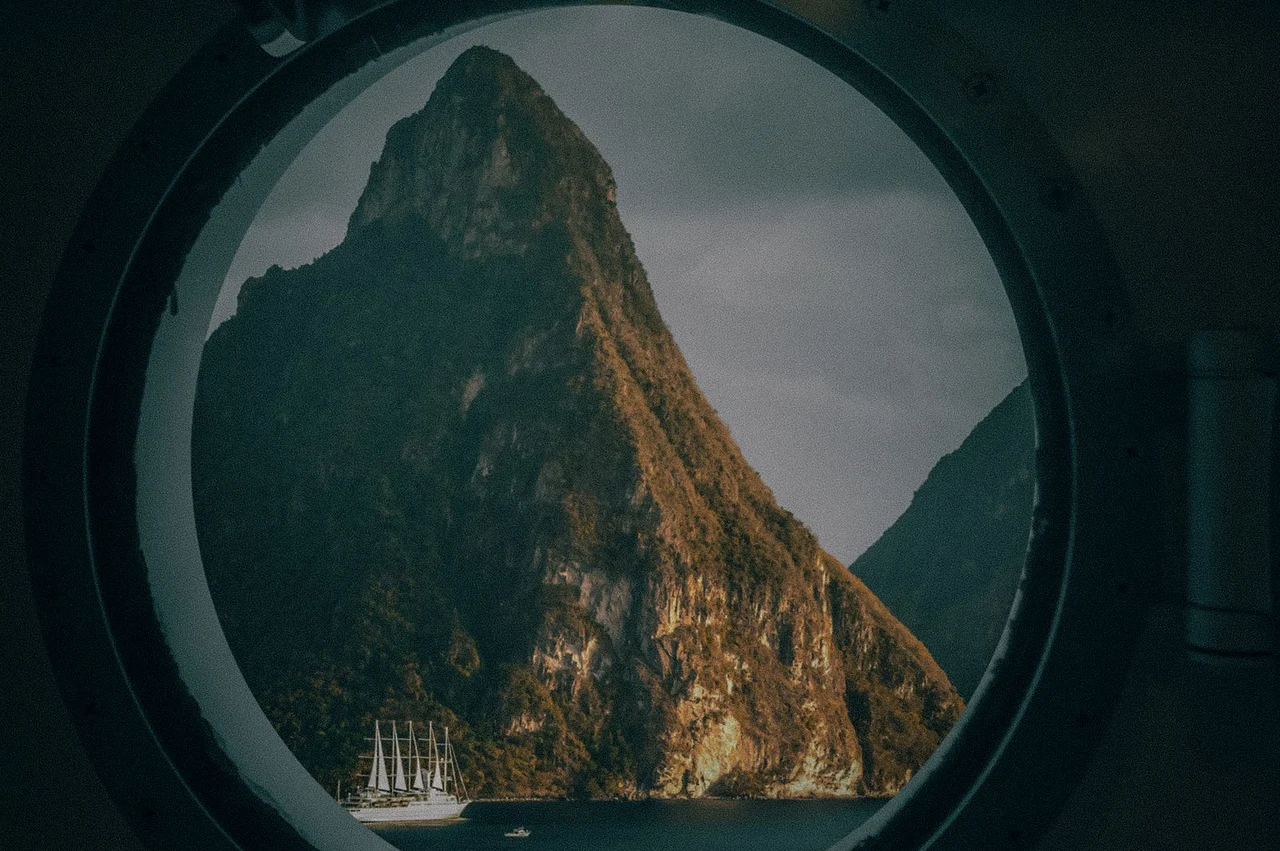
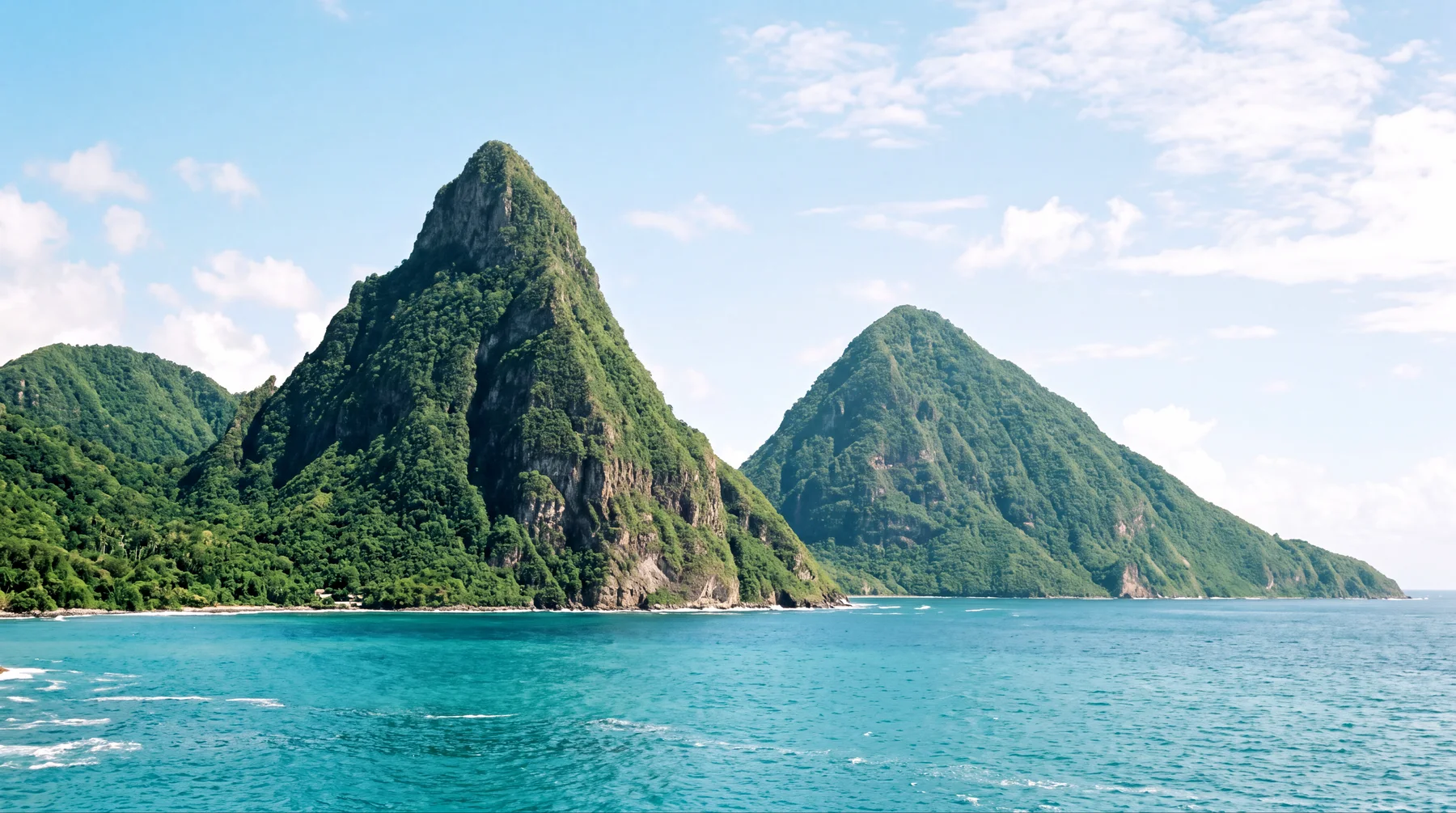
If you've seen a postcard of St. Lucia, it probably features two sharp mountains that rise straight out of the sea. These are the Pitons Mountains.
There are two of them: Gros Piton (higher, about 770 meters) and Petit Piton (about 743 meters). They stand nearby, near the town of Soufriere, and have become the hallmark of the island.
These are ancient volcanic formations. Once upon a time there was an active volcanic zone, and the Pythons were its frozen “teeth”.
Since 2004, the Pythons and the area around them have been included in the UNESCO World Heritage List. That is, it is a protected natural place of global importance.
You can climb Gros Piton on foot - there is a marked trail. The climb takes a couple of hours, and from the top you can see the sea and the island. For many guests, this is the highlight of the trip.
Economy and tourism
The island's main income is tourism. People come here for the warm sea, the Piton Mountains and a relaxing holiday. Cruise ships call at Castries almost every day.
In addition to tourism, there is agriculture. Previously, the island lived largely on bananas, now they rely on recreation and services.
Another source of income is the citizenship by investment program. Investors' money goes into the state fund and projects, and this supports the island's budget.
The economy is small but stable. English law and the pegging of the currency to the US dollar make the island understandable for foreign capital.
For an investor, this means a simple thing: you are entering a calm, predictable jurisdiction, and not a zone of chaos.
“Saint Lucia is often underestimated, but in vain. People come with one thought - “a beautiful island with mountains”, and leave with a clear plan for a second passport. What do I always tell clients? Don't go for the lowest entry price. Consider the whole picture: how many people are in the family, do you need a refund of part of the money, where are you actually going. Saint Lucia has a convenient thing - government bonds with a return. The money acts as collateral and is returned after a period of time. For some, this decides everything. But the most important thing is documents on the source of money. The check here is serious, and that's normal. The sooner we put together a clean and understandable package, the smoother the approval will be. I've seen pre-collected paperwork save people months. And one more thing: a passport is not about automatically changing taxes, it is about freedom and a backup option for the family. If you keep this in mind, the choice turns out to be calm and correct.”
Is it safe in Saint Lucia
Overall, Saint Lucia is a relaxing holiday destination. Tourist areas and hotels are well maintained and most guests have a hassle-free trip.
As with everything, reasonable caution is a good idea. It is better not to leave things unattended on the beach and not to walk at night in unfamiliar areas. These are normal rules for any country.
The political situation is stable. Power changes through elections, without shocks. This is important for long plans.
Medicine and services on the island are also aimed at tourists. Large hotels are accustomed to guests from all over the world.
In short: the island is suitable both for relaxation and for the quiet possession of a second passport. You don’t need to live here permanently to get a passport - more on that below.
Why an investor needs an island: a second passport
Now the main thing for the investor. Saint Lucia is one of the Caribbean countries that provides citizenship by investment (CBI program).
This means that a foreigner can receive an island passport in exchange for contributing to the country's economy. There is no need to move. Everything is done remotely.
Why a second passport? It gives you more freedom to travel, an alternate “airfield” for your family, and a convenient tool for international affairs. Read more about the advantages in the article benefits of Saint Lucian citizenship.
It is important to be : this is not an EU passport. But he has visa-free entry into many countries, including the Schengen area. What exactly does a passport reveal - read the material Saint Lucia passport.
The family can usually be included along with the main applicant: spouse, children, and in some cases parents. Conditions regarding family composition are specified separately.
How to get a passport: main ways
The Saint Lucia program has several paths. They are chosen according to the task and budget. The main thing is that you choose one of them.
| Path | The essence in simple words |
|---|---|
| Contribution to the fund (NEF) | Non-refundable contribution to the country's state fund |
| Real Estate | Purchase of an approved property with retention for several years |
| Government bonds | Investment in government bonds with a return of money over time |
An interesting feature of Saint Lucia is repayable government bonds. Here, part of the investment along this route is returned to you after the expiration of the term (usually without interest). That is, money works as collateral, and not as a pure expense.
The exact amounts and terms for 2026 are changing, and they should be checked for a specific family. We discuss all the current numbers and steps in a detailed guide - Saint Lucian citizenship by investment.
For citizens of Russia and the CIS, the path is completely legal. Second citizenship in the Russian Federation is allowed - you just need to notify the Ministry of Internal Affairs (about 60 days in advance). Money undergoes enhanced verification, and the source of funds is confirmed with documents, strictly according to the law and without circumventing sanctions.
Where to start designing
Sound like a lot of steps? In fact, everything is easier when there is someone nearby who leads the process for you.
The first step is a short conversation. We look at your situation: family composition, budget, travel goals. After this, we select the appropriate path - contribution, real estate or bonds.
Next comes the collection of documents and verification. This is the most critical stage: the cleaner and clearer the package, the smoother the approval process.
Most of the journey is from home. Personal presence on the island for a passport is not required.
Want to know if Saint Lucia is right for you and how much your specific case will cost? Leave a request for a consultation - We will analyze your situation and propose a plan.
Expert's view: what to look for
Saint Lucia is often chosen for its flexibility and clear rules. But the decision should always be made with a cool head - that’s what our expert points out.
Compare not only the entry amount, but also family composition, taxes and travel purposes. Sometimes it’s a little more expensive at the entrance, but more convenient in the long run.
And most importantly - the source of money. This is the heart of the entire test. Pre-collected and understandable documents save months.
Taxes and Important Disclaimers
Let’s be : citizenship and tax residency are two different things. Obtaining a Saint Lucia passport does not automatically mean becoming a taxpayer there.
Where you pay taxes depends on where you actually live and do business, not on what second passport you have. This is a common misconception.
Saint Lucia itself generally does not tax income earned outside the island for non-residents. But your taxes at home are calculated according to the rules of your country.
Therefore, the tax part is always looked at separately and for a specific person. There is no universal answer here.
In short: the island's passport is about freedom of travel and a backup option for the family, not an automatic change of taxes. Details and nuances of entry are in the article visas and entry with a Saint Lucia passport.
We will send a document checklist for your case
Leave your details: we will put together documents and timelines for your family.
Briefly about Saint Lucia
Let's summarize in simple words. Saint Lucia is a small volcanic island in the Eastern Caribbean. The capital is Castries, the language is English, the currency is the East Caribbean dollar.
The island is famous for the Piton Mountains (UNESCO site), warm sea and quiet life. The climate is tropical, warm all year round.
For an investor, Saint Lucia is a convenient second passport. It is issued remotely, and among the options there are flexible options, including returnable government bonds.
The passport is not European, but it allows visa-free entry into many countries and gives the family a backup option. Everything is legal and with documents.
Ready to move from theory to action? Explore Saint Lucia citizenship program or immediately sign up for a consultation.
Frequently asked
Questions people ask before deciding
01Where is Saint Lucia?
In the Eastern Caribbean, in the Caribbean Sea. It is part of the Lesser Antilles, between Martinique and St. Vincent.
02Where is Saint Lucia, to put it simply?
A warm island in the Caribbean Sea, roughly between Puerto Rico and the coast of Venezuela.
03What is the capital of Saint Lucia?
The capital is the city of Castries. It is also the main port of the island, located in the northwest by the sea.
04What language is spoken on the island?
The official language is English. In everyday life they often speak local Creole (Kweyol), but business and documents are done in English.
05What is the currency in Saint Lucia?
East Caribbean Dollar (XCD). Its exchange rate is pegged to the US dollar. US dollars are also widely accepted.
06How many people live on the island?
About 180 thousand people. The island is small in area and population.
07What is Saint Lucia famous for?
First of all, the Piton Mountains - two sharp peaks near the sea. Since 2004 they have been included in the UNESCO list.
08What is the climate in Saint Lucia?
Tropical, warm all year round (about 26-30 degrees). There is a dry season (December-May) and a wet season (June-November).
09Is it safe there?
Generally calm, especially in tourist areas. You should exercise the usual caution, as in any country.
10Is it possible to obtain Saint Lucian citizenship by investment?
Yes. The island gives a second passport for contribution to the economy. Registration is carried out remotely, there is no need to move.
11Is a Saint Lucia passport an EU passport?
No. This is not an EU passport. But it gives visa-free entry to many countries, including the Schengen area.
12Can Russian citizens participate?
Yes, it's legal. Second citizenship in the Russian Federation is allowed (you need to notify the Ministry of Internal Affairs). The verification is enhanced, the source of money is confirmed with documents, without circumventing sanctions.
Transparency
How this material was prepared
- Author
- Darya Melnik, senior Investment Programs Advisor, BRIDGES
- Terms and costs last verified
- June 2026
- Sources
- official government authorities of the relevant country and state publications
- Methodology
- government minimum requirements are stated separately from due diligence charges, state fees, legal and banking costs
Sources and methodology
Figures, terms and timelines are checked against official sources as of June 2026. Link availability verified in August 2026. Third-party blogs and agent websites are not used as a source of programme terms.
- [1]Saint Lucia Citizenship by Investment ProgrammeOfficial conditions of the programmewww.cipsaintlucia.com
Methodology: tables and charts state government minimum investment requirements; due diligence charges, state fees, legal, banking and other costs are calculated separately and are not included in the minimum thresholds.
About the author
Related materials
What to read next
 ComparisonVanuatu or Saint Lucia: which citizenship by investment to choose in 2026
 AnalysisWhat is due diligence and why the Caribbean is rejecting applications
 ArticlePros of Saint Lucia citizenship 2026: how a passport is useful
Personal programme selection is conducted by Anna Kovalevskaya, Head of Legal, BRIDGES.
Comparison of five Caribbean programmes
Amounts, timelines, family composition and requirements in one table.