Citizenship · Nauru
Nauru's History: From Phosphate Boom to Citizenship Program

Updated: June 2026·11 min read·Expert reviewed
Terms and costs verified: June 2026
Contents
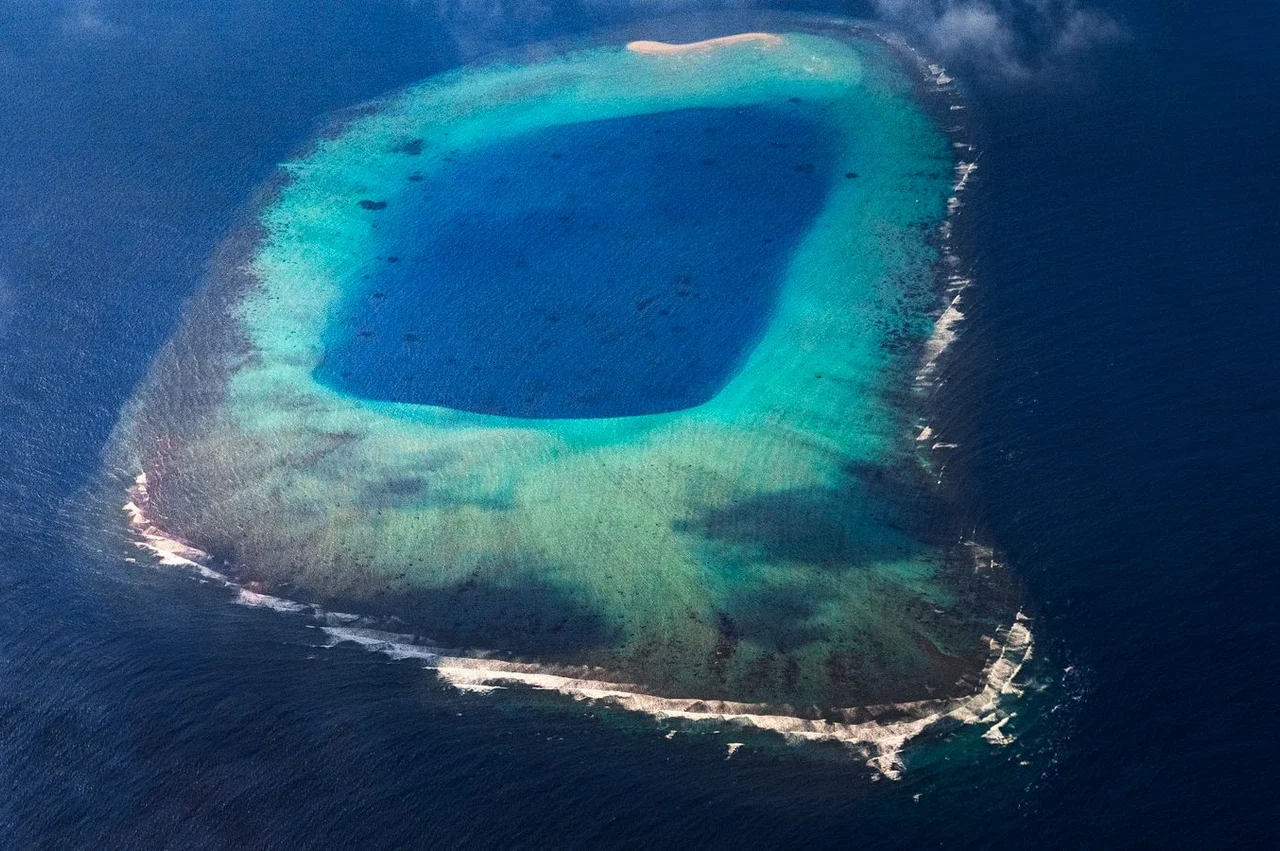
Nauru's history is one of the most remarkable stories of the past century: a tiny coral island with an area of about 21 sq.km first became one of the wealthiest states on the planet per capita, then nearly completely lost its wealth. The island's history encompasses German annexation, phosphate discovery, League of Nations mandate, Japanese occupation, independence, and a long search for new sources of income—up to today's investment citizenship program. Let us examine in detail how Nauru became rich and poor, and why its experience matters for those today looking at this Pacific passport.
Indigenous peoples and first contacts with Europeans
Long before the Europeans, Nauru was inhabited by Micronesian and Polynesian tribes—traditionally twelve clans are mentioned, and the twelve rays on the modern flag of the island remind us of them. People lived by fishing, grew coconut and pandanus, and raised a special fish called ibia in the coastal lagoon. Society was divided into clans, with power held by elders and a complex kinship system.
The first European to see the island in 1798 was British whaler John Fearn. Enchanted by the mild climate and the friendliness of the inhabitants, he named it Pleasant Island. Throughout the 19th century, whalers and traders came here, leaving weapons and alcohol. The imported rifles turned local skirmishes between clans into a protracted internecine war, which significantly reduced the population. By the end of the century, the fragmented and weakened island became an easy prey for colonial powers.
German annexation of 1888
In 1888, Germany officially annexed Nauru, incorporating the island into the Marshall Islands protectorate. The pretext was the very same inter-tribal war: the German administration landed a small detachment, confiscated weapons from the clans, and under threat of force ended the armed clashes. Thus ended the era of independent tribal chiefs, and the colonial period began.
Germany viewed Nauru as part of its Pacific expansion and sought to secure the island before the British. At the same time, Christian missionaries came to the island, changing the way of life. But no one yet understood the true significance of this scrap of land—it was hidden literally beneath their feet, in layers of rock that had been formed by seabirds over centuries.
Phosphate discovery: history of the island's main wealth
Nauru's phosphates are bird droppings (guano) compressed over thousands of years, lying in a thick layer across the entire central plateau of the island. Around 1900, prospecting geologist Albert Fuller Ellis noticed a strange stone that served as a doorstop for a door in a Pacific company office and identified it as high-quality phosphorite—the most valuable raw material for fertilizers.
This discovery turned the fate of the island. As early as 1906, the Pacific Phosphate Company began extraction by agreement with Germany, and the first shipment of phosphates was exported in 1907. Demand for fertilizers in Europe, Australia, and New Zealand grew rapidly, and tiny Nauru suddenly became a strategic raw material hub of the Pacific Ocean. Thus, Nauru's history and phosphates became intertwined for the next hundred years.
League of Nations Mandate: Australia, Britain, and New Zealand
The First World War remade the colonial map. In 1914, Australian troops occupied the island, and after the war, in 1920, Nauru came under a League of Nations mandate. Administration was shared among three countries—Australia, Great Britain, and New Zealand, with Australia providing direct administration on behalf of all three.
Phosphate rights passed to the specially created British Phosphate Commissioners (BPC)—a commission representing the interests of the three powers. Extraction proceeded at full speed, phosphates flowed to the fields of Australia and New Zealand, and indigenous inhabitants received modest royalties. It was during this period that a model emerged in which the island's wealth went outward, while the Nauruans themselves received only a small share. This imbalance would later become one of the driving forces behind the struggle for independence.
Japanese occupation: the tragedy of World War II
The darkest chapter in Nauru's history is the years of World War II. In late August 1942, a Japanese landing force occupied the island without resistance. The occupation turned into a catastrophe for the residents: the Japanese built an airstrip, imposed a strict regime, and used the local population as a labor force.
In 1943, fearing food shortages and the advance of the Allies, the occupiers deported a large part of the indigenous population—about 1,200 Nauruans—to the Truk (now Chuuk) islands hundreds of kilometers away. The conditions there were appalling: of the deported, only slightly more than seven hundred survived the war. The island was subjected to bombing by American aviation, phosphate extraction stopped. When in 1946 the survivors were returned home, they saw devastated land. This tragedy remained forever in the collective memory of the people.
Nauru's independence on January 31, 1968
After the war, the island once again came under guardianship—this time as a UN Trust Territory under Australian administration. But sentiments had changed: Nauruans increasingly demanded a fair share of the phosphates and the right to determine the fate of their island themselves. The leader of the movement was Chief Hammer DeRoburt, who became the country's first president.
On January 31, 1968, Nauru declared independence, becoming one of the smallest republics in the world. Nauru's independence is not only a political act, but also an economic victory: in 1970, the new state purchased the rights to phosphate deposits from Australia for a substantial sum at that time. For the first time in decades, all income from the island's main resource remained at home. A short but dazzling era of wealth was beginning.
We will map your route to Nauru citizenship
We review your family, source of funds and timing and tell you which route fits.
The phosphate boom of the 1970s: how Nauru became rich
In the 1970s, with high fertilizer prices, Nauru entered the ranks of the wealthiest states on the planet in per capita income. By various estimates, GDP per capita reached tens of thousands of dollars—comparable to the wealthiest oil-producing countries of the time. Money from phosphates flowed like a river, and the state generously shared it with its citizens.
- Medicine and education became free, and many were sent to study abroad at state expense.
- Residents paid virtually no taxes, and utilities cost almost nothing.
- The state purchased expensive automobiles, real estate abroad, and even its own airline, Air Nauru.
This is the first half of the answer to the question of how Nauru became rich: a unique natural resource, world market demand, and complete control over extraction after independence. But this wealth had a built-in timer—phosphates were finite.
Sovereign Fund and Attempt to Secure the Future
Island authorities understood that phosphates would eventually run out and attempted to prepare. A sovereign fund was created - Nauru Phosphate Royalties Trust, into which a portion of mining revenues was directed. The idea was sound: accumulate capital, invest it in foreign real estate and securities, so that interest would sustain the island after resource depletion.
By the late 1980s and early 1990s, the fund was valued at over 1 billion Australian dollars. On paper, the future seemed secure. Nauru purchased hotels and office buildings in Australia, Great Britain, and Hawaii, and invested in various projects worldwide. However, the quality of these investments and their management proved far worse than the size of the capital itself. Behind the facade of prosperity, problems accumulated.
"Nauru's history is a rare and instructive textbook for investors. Over half a century, the island traveled from the pinnacle of global wealth to near bankruptcy, and the main reason lies not in the phosphates themselves, but in how the income was managed. When I explain the ECRCP program logic to clients, I always emphasize: this is the island's attempt to build a sustainable income source instead of a depleted resource. For investors, this yields two conclusions. First - choose a Nauru passport with realistic expectations: it is a convenient, fast, and remote second document, but not a key to Schengen or the US. Second - the decision should be based on facts and law, especially for applicants from Russia and the CIS, where the transparency of funds source and correct notification of second citizenship are critically important. Then a Pacific passport works exactly as expected."
How Nauru Became Poor: The Collapse of the Trust Fund
The second half of the story - how Nauru became impoverished - proved far more dramatic. By the early 2000s, phosphate reserves on the island were nearly exhausted: decades of mining had transformed the central plateau into a barren lunar landscape of coral peaks, unsuitable for habitation and agriculture.
Simultaneously, the trust fund melted away. Money was spent on current consumption and high salaries instead of sound investments, and the investments themselves often proved unsuccessful or dubious. Stories emerged of failed projects - from a London musical to real estate sold at a loss to cover debts. By the mid-2000s, the fund's capital had shrunk dramatically, the state was mired in debt and barely making ends meet. The once-richest republic had become nearly bankrupt - a classic example of resource curse.
Search for New Income Sources
Deprived of phosphates and savings, Nauru was forced to seek any way to earn income. In the late 1990s and early 2000s, the island attempted to profit from offshore financial services and bank registration, but international pressure due to money laundering risks quickly shut down this business.
The next source became hosting an Australian refugee processing center on the island (regional processing center). Australia paid for the maintenance of this structure for years, and these payments became an important budget item for a time - the center was estimated to provide a significant portion of jobs on the island. However, such a model remained unstable, politically controversial, and entirely dependent on decisions from Canberra. The island needed its own, transparent, and long-term income source.
Climate Threat and Modern Challenges
Economic troubles were compounded by an environmental challenge. Decades of phosphate mining scarred the landscape: approximately 80% of the island's area consists of exhausted quarries where almost nothing grows. Life is concentrated on a narrow coastal strip, and it is precisely this that today faces threats from rising ocean levels.
Like other low-lying Pacific nations, Nauru is extremely vulnerable to climate change. Coastal erosion, storm surges, and freshwater scarcity are real daily problems. Authorities openly discuss the need for adaptation, coastal reinforcement, and even possible relocation of some residents to elevated areas within the island. Financing these programs requires money that a small budget does not have. It is at the intersection of economic need and climate threat that the island's current strategy was born.
From History to Nauru's Citizenship Program
Today, Nauru's history enters a new phase. In 2024, the island launched a citizenship-by-investment program - Economic and Climate Resilience Citizenship Programme (ECRCP). The logic is straightforward: funds from new citizens are directed toward climate adaptation, coastal reinforcement, and economic development - that is, toward solving the very problems that the island's past history created.
This is not a repetition of the phosphate model, but an attempt to build a sustainable income source for the future. The program conditions are maximally practical for an investor:
- Non-refundable contribution - approximately from 105,000 USD per applicant; for 2026, under a time-limited initiative, the threshold was reduced to 90,000 USD until 30.06.2026 - verify current amounts and deadlines before submission.
- Processing is entirely remote, with no requirement for residence or visits to the island.
- Timeline - approximately 85 days (three to four months) upon passing background checks.
- Nauru permits dual citizenship.
It is important to maintain a realistic perspective: the program is young, and the Nauru passport does not grant visa-free access to Schengen, the US, Canada, or Australia. Its strong directions are the UAE, Singapore, Hong Kong, Malaysia, South Korea, a number of Oceania and Caribbean countries, often via visa on arrival or eVisa. At the same time, Nauru does not tax residents' worldwide income with standard income tax, which is interesting for tax planning - but actual tax residency is determined by place of residence and center of interests, not by the passport itself. For more information on the country and program, see materials on Nauru as a state, facts about the island, Nauru citizenship and citizenship by investment.
If you are considering a Pacific passport as part of a second citizenship strategy, review Nauru's citizenship-by-investment program and schedule a consultationto assess thresholds, timelines, and whether this solution is right for you.
Expert Perspective: What Nauru's History Teaches Investors
Nauru's history is not only a fascinating story but also a practical lesson for all who choose second citizenship. The island's experience demonstrates how important transparency of the program, sound management of funds, and realistic assessment of passport capabilities are - without inflated expectations.
Below is our expert's commentary on how to properly interpret Nauru's history when choosing investment citizenship, and what citizens of Russia and other CIS countries should remember.
We will send a document checklist for your case
Leave your details: we will put together documents and timelines for your family.
Chronology of Nauru's History: Key Dates
To assemble the entire history of Nauru island - from first Europeans to the citizenship program - into a unified picture, we gather key events in one table. It clearly shows how Nauru became wealthy and impoverished, and why the island came to its current strategy.
| Year | Event |
|---|---|
| 1798 | British whaler John Fearn discovers the island and names it Pleasant Island |
| 1888 | German annexation, island enters the Marshall Islands protectorate |
| circa 1900 | Discovery of phosphates (guano) by geologist Albert Fuller Ellis |
| 1906-1907 | Beginning of industrial mining and first phosphate export |
| 1920 | League of Nations Mandate: Australia, Britain, and New Zealand |
| 1942-1945 | Japanese occupation, deportation of approximately 1,200 residents to Truk Islands |
| 1968 | Nauru's Independence, January 31 |
| 1970 | Purchase of phosphate mining rights from Australia |
| 1970s | Peak of wealth, one of the world's leaders in per capita income |
| 1990s – 2000s | Phosphate depletion and collapse of the trust fund |
| 2001+ | Offshore services, then refugee application processing center |
| 2024 | Launch of the ECRCP citizenship-by-investment program |
For Russian and CIS citizens: important considerations
For applicants from Russia and CIS countries, participation in the Nauru program is possible strictly within the legal framework. This means enhanced compliance and thorough due diligence of funds sources – the more transparent the origin of money, the smoother the process.
- The program is not a tool for sanctions circumvention, and serious consultants will not pursue this – honesty from the start saves time and reputation.
- Russian citizens should remember their obligation to notify the competent authorities of the existence of dual citizenship within the statutory timeframe.
- A Nauru passport does not eliminate visa requirements for key destinations – assess its real value, not its advertised strength.
A competent approach to the island's history and facts helps make a well-informed decision. If you have further questions about the program or document preparation, our specialists will review your situation individually.
Frequently asked
Questions people ask before deciding
01When did Germany annex Nauru?
Germany officially annexed the island in 1888, incorporating it into the Marshall Islands protectorate. The occasion was an inter-tribal war between clans, which the German administration ended by confiscating weapons. From this point began the colonial period in Nauru's history.
02When and how were phosphates discovered on Nauru?
High-quality phosphates (compressed bird droppings, guano) were discovered around 1900 - geologist Albert Fuller Ellis identified the valuable mineral in a random stone. Industrial mining began in 1906, and the first export took place in 1907, which determined the island's economy for the next hundred years.
03What happened on Nauru during World War II?
In August 1942, Japanese forces occupied the island. In 1943, approximately 1200 indigenous residents were deported to the Truk Islands, where only slightly more than seven hundred people survived the war. The island was bombed by American aviation, mining stopped - this is the most tragic chapter in Nauru's history.
04When did Nauru become independent?
Nauru's independence was proclaimed on 31 January 1968. The country became one of the world's smallest republics. In 1970, the new state purchased rights to phosphate deposits, and all revenue from the resource remained on the island for the first time.
05How did Nauru become wealthy?
In the 1970s, with high fertilizer prices and complete control over phosphate mining, Nauru ranked among the wealthiest states by per capita income. Medicine and education were free, taxes were minimal, and the state spent enormous sums on purchases and foreign assets.
06Why did Nauru become poor?
The wealth disappeared for two reasons: phosphates were nearly depleted by the early 2000s, and the sovereign wealth fund, intended to secure the future, was depleted by current consumption and failed investments. By the mid-2000s, the fund's capital had shrunk several times over, and the state found itself in debt.
07What is Nauru's sovereign wealth fund and what became of it?
Nauru Phosphate Royalties Trust - a sovereign fund where phosphate revenues were directed for investment in foreign real estate and securities. At its peak, it was valued at over one billion Australian dollars, but due to poor management and questionable investments, it became almost completely worthless.
08What does Nauru live on today?
After phosphate depletion, the island sought income through offshore services, then earned money by hosting Australia's refugee application processing center. Currently, one source has become the ECRCP citizenship by investment programme and attracting climate finance.
09What is the ECRCP programme?
Economic and Climate Resilience Citizenship Programme - a citizenship by investment programme launched in 2024. Applicants' funds are directed toward climate adaptation, shore reinforcement, and island economic development - that is, toward solving problems created by past history.
10How much does Nauru citizenship cost and how quickly can it be issued?
Non-refundable contribution - approximately from 105,000 USD per applicant; for 2026 under a limited initiative, the threshold was reduced to 90,000 USD until 30.06.2026. Processing is remote, without residency requirements, timeframe - approximately 85 days. Confirm current amounts and deadlines before submission.
11How strong is the Nauru passport?
It should be assessed realistically: visa-free access to Schengen, USA, Canada, and Australia is not available. Strong destinations include the UAE, Singapore, Hong Kong, Malaysia, South Korea, several Oceania and Caribbean countries, often by visa on arrival or eVisa. Nauru permits dual citizenship.
12What should Russian and CIS citizens consider?
Participation is possible strictly within the law, with enhanced compliance and source of funds verification. The programme does not serve as a sanctions bypass. Russian citizens should remember the obligation to notify authorized bodies of second citizenship within the statutory period.
Transparency
How this material was prepared
- Author
- Andres Ferreira, head of Investment Advisory, BRIDGES
- Terms and costs last verified
- June 2026
- Sources
- official government authorities of the relevant country and state publications
- Methodology
- government minimum requirements are stated separately from due diligence charges, state fees, legal and banking costs
Sources and methodology
Figures, terms and timelines are checked against official sources as of June 2026. Link availability verified in August 2026. Third-party blogs and agent websites are not used as a source of programme terms.
- [1]EUR-LexOfficial texts of European Union legislationeur-lex.europa.eu/homepage.html
- [2]European Commission - Migration and Home AffairsEntry and residence rules in the EUhome-affairs.ec.europa.eu/index_en
Methodology: tables and charts state government minimum investment requirements; due diligence charges, state fees, legal, banking and other costs are calculated separately and are not included in the minimum thresholds.
About the author
Related materials
What to read next
 ComparisonNauru or Caribbean Citizenship: Investment Program Comparison
 AnalysisWhat is due diligence and why the Caribbean is rejecting applications
 ArticleArea and size of Nauru: how small is this country
Personal programme selection is conducted by Anna Kovalevskaya, Head of Legal, BRIDGES.
Citizenship of Nauru: preparation checklist
Documents prepared in advance, source of funds checks and where applications usually fail.