BRIDGES Insights · Saint Vincent and the Grenadines
Saint Vincent promises citizenship by investment in Q1 2027: what to expect and why not to pay in advance

Updated: October 2026·9 min read·Expert reviewed
Terms and costs verified: October 2026
Contents
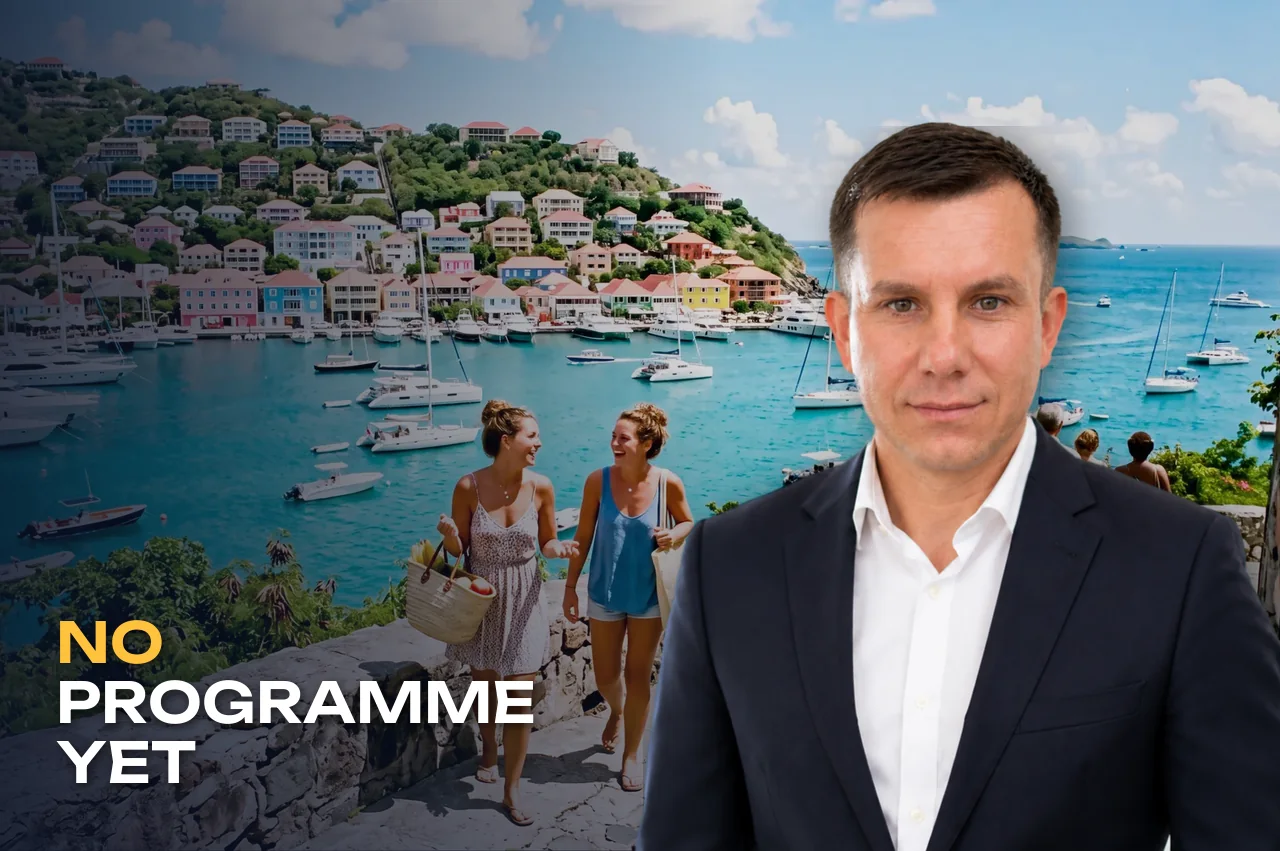
On 14 October the Prime Minister of Saint Vincent and the Grenadines, Godwin Friday, said the government hopes to launch a citizenship by investment programme in the first quarter of 2027. And he immediately added that it would not be a programme "in the old sense". This is the third date in a year: first 2026 was promised, then mid-2026. There is no law, no amounts, and applications are not open. I will go through what is known, what to expect and why nobody should pay for Saint Vincent today.
In brief
- The government names Q1 2027, but the prime minister himself speaks of it with caveats.
- The programme will be "not in the old sense": tougher checks, central management, coordination with regional neighbours, central bank oversight.
- The 2026 budget promised a residence requirement, checks for the life of citizenship and a separate fund for all proceeds.
- There is no law, contribution amount or filing procedure. The timeline has already slipped twice.
- My advice: waiting for the launch is fine; paying intermediaries for a "reservation" is not. Working Caribbean programmes exist right now.
What the prime minister said
- 11.2025The new government after the election promises a programme in 2026
- 02.2026Budget: launch in mid-2026, residence, checks for the life of citizenship, a separate fund
- 05.2026Prime minister: the programme will be walled off from ministers and politicians
- 14.10.2026The prime minister names Q1 2027 and says it will not be a programme "in the old sense"
- 10.2026No law, no terms or amounts, applications not open
statements of the Government of Saint Vincent and the Grenadines, 2026 budget address
Friday gave an interview to a Caribbean TV channel at the annual IMF and World Bank meetings. His words should be read carefully. He did not say "we will launch in Q1"; he said they hope to, and added caution himself. He described a programme managed from the centre through a dedicated government unit, with heavy applicant checks, coordination with the Organisation of Eastern Caribbean States and oversight by the central bank. A consultancy is designing the programme; its name has not been disclosed.
There is also context that explains the hurry: according to the prime minister, the country's public debt was 113% of GDP in 2025. Money is needed, and a citizenship programme is one of the few fast sources.
What this means for you. When a government badly needs money, it promises fast. When Washington and Brussels are watching closely, it launches slowly. Saint Vincent is now between those two forces.
What is known about the terms
Only general principles from the February 2026 budget address have been published officially: a residence requirement, checks on the applicant not once but for the life of citizenship, and a separate national fund receiving all proceeds. In May the prime minister added that the programme would be walled off from ministers and the political leadership so that decisions do not depend on particular people.
Contribution amounts, processing times, filing procedure, document list and family rules have not been announced. Any figures you see on intermediaries' websites are their own estimates.
Our assumption, and I stress it is an assumption: in March 2024 the five Caribbean programmes agreed a minimum threshold of $200,000. A newcomer to the region is unlikely to be allowed in cheaper. So we expect entry from $200,000 for one applicant and a presence requirement no softer than what the neighbours are discussing. A comparison with working programmes is below.
| Saint Vincent (expected) | St Kitts and Nevis | Saint Lucia | |
|---|---|---|---|
| Status | no law, applications not open | running since 1984 | running since 2016 |
| Entry for one | not announced, we expect from $200,000 | from $250,000 | about $250,000 with fees |
| Residence | a residence requirement promised | awaits the common regional rule | awaits the common regional rule |
| Checks | promised for the life of citizenship | 10 out of 10 in CBI Index 2026 | to regional standards |
| CBI Index 2026 | not rated | 1st, 78 points | 4th, 71 points |
What this means for you. If someone quotes you an exact price for Saint Vincent, ask which law it is written in. Today there is one answer: none.
We will tell you when Saint Vincent opens applications
Leave your contact: we will write on the day the law and terms are published and recalculate the budget for your family.
Why you must not pay in advance
I have already seen this story with Argentina: seventeen months of announcements, court cases, a loud launch, and nowhere to file an application. Details in the column on Argentina and 17 months of promises. Saint Vincent is more cautious for now: the prime minister himself adds caveats about the timeline. But the mechanics are the same.
- Until there is a law, there are no rules under which anything can be "reserved".
- Money handed to an intermediary before applications open is not protected by anything: neither a contract with the state nor an agent licence for this programme.
- The terms may turn out different: a residence requirement could make the programme inconvenient precisely for you.
What this means for you. Waiting for the launch is normal. Paying for the wait is not.
What you can obtain right now
If you need a Caribbean passport within the next year, there is no point waiting for Saint Vincent. The region has five working programmes, and they took the whole top five of the industry ranking CBI Index 2026. The most stable is St Kitts and Nevis citizenship, with a clear price and timeline Saint Lucia citizenship, among the most affordable Dominica, and with a route to the US E-2 visa Grenada.
Bear in mind that the Caribbean already requires in-person interviews and biometrics, and the common rule on presence in the country awaits the launch of the regional regulator; see the analysis of in-person presence in the Caribbean. If the Caribbean is not essential and speed and price matter, there is Vanuatu citizenship in 2-3 months.
Detailed analyses of the working programmes: the St Kitts and Nevis guide, Saint Lucia citizenship by investment, the Dominica programme, Grenada citizenship. The questions asked in due diligence are in the piece on 12 due diligence questions, and Caribbean passports' visa-free Schengen access in the analysis of the June 2028 deadline.
When Saint Vincent can be considered seriously
- The programme law is passed and the terms are published: amounts, timeline, documents, family rules.
- Authorised agents are appointed, and the agent you pay holds such authorisation.
- It is clear how the residence requirement works and how many days must be spent in the country.
- The first passports under the new programme have been issued.
The rules the neighbours live by
Saint Vincent belongs to the same Organisation of Eastern Caribbean States as the five countries with working programmes. So its programme will almost certainly be built on the region's common rules rather than from scratch.
These rules took three years to form. In 2023, after talks with the United States, the five countries adopted six principles: regional sharing of refusal data, mandatory interviews, Financial Intelligence Unit screening, regular programme audits, cooperation in recovering revoked passports and restrictions on applicants from Russia and Belarus. In March 2024 they signed an agreement with a common minimum threshold of $200,000. A regional regulator has been created to oversee all programmes, but it has not yet started work.
Hence our expectation on price: a newcomer wanting to join the common system cannot sell a passport cheaper than its neighbours. And the promised checks for the life of citizenship and residence requirement suggest Saint Vincent wants to look stricter than the rest.
What this means for you. Saint Vincent will be neither cheaper nor softer than its neighbours. More likely the opposite.
The key question for Russian citizens
One of the region's six principles is restrictions on applicants from Russia and Belarus. If Saint Vincent joins the common system, it is logical to expect the restrictions to extend to it. Nothing has been said officially yet, but I would not build a plan on the newcomer being an exception.
The same applies to the working programmes I mentioned above: before choosing a Caribbean passport, check whether the programme accepts an applicant with your citizenship and on what terms. We carry out this check before any work begins.
What this means for you. For a Russian the first question about any Caribbean programme is not price but eligibility. Ask it before discussing amounts.
What a residence requirement could mean
The word "residence" in the budget address does not yet measure anything. Let us look at how the neighbours do it. In July 2026 Antigua tabled a bill for 30 days' presence in the first 5 years instead of the previous 5 days. The common regional rule, 30 days in 5 years with at least 5 in the first year, awaits the launch of the regulator.
If Saint Vincent takes these figures as its basis, most clients will find it tolerable: a month on the island over five years. If it goes further, for example requiring annual presence, the programme will become inconvenient for those who live and work elsewhere. That is why I advise against deciding in advance: whether the programme suits you at all depends on one figure in the law.
How to check whoever is selling Saint Vincent
- Ask for the number of the programme law. There is none yet, so there is no legal sale either.
- Ask whether the agent holds authorisation from the Government of Saint Vincent. No authorised agents have been appointed for the programme yet.
- Do not sign a contract with prepayment "for launch preparation". Source-of-funds documents can be prepared without such a contract.
- Compare the promised price with the regional minimum threshold of $200,000. An offer below it is a reason for caution.
What could make the programme strong
I criticise the timeline, not the idea. Saint Vincent has a chance to do what its neighbours did not manage in the early years of their programmes.
- A separate fund for all proceeds. If investor money goes to a fund with public reporting, the programme will find it easier to answer questions from banks and foreign governments.
- Checks for the life of citizenship. Inconvenient for the applicant, but a passport with such checks is less at risk of losing value because of other people's scandals.
- Separation from politicians. If decisions are taken by a dedicated unit rather than ministers, the programme depends less on changes of government.
- The neighbours' experience. A newcomer can adopt the region's best practices from the start rather than catching up, as countries with programmes from the 1990s and 2000s had to.
The risks are clear too: a small economy, high public debt and timelines that have already slipped. A new programme without a history always carries the risk that the rules will change along the way.
What this means for you. If Saint Vincent keeps its promises, it will be a good programme for those prepared to wait. But it must be judged by the law, not by an interview.
My conclusion
Saint Vincent promises a programme built on its neighbours' mistakes: checks for the life of citizenship, a fund and no politicians in the decision chain. If the promises come true, it will be one of the most careful programmes in the region. But for now it is three dates in a year and not a single line of law. Follow the news, and keep your money. When the law is published, we will go through it point by point the same day.
How this piece was prepared
This piece is based on statements by the Prime Minister of Saint Vincent and the Grenadines in October and May 2026, the February 2026 budget address, the Caribbean programmes' agreements on a minimum threshold and the CBI Index 2026 report. The expected entry threshold is a BRIDGES assumption not confirmed by official documents. The piece will be updated once the law is published.
Frequently asked
Questions people ask before deciding
01When will Saint Vincent's citizenship programme open?
The government hopes for Q1 2027, but the prime minister speaks of it with caveats. The timeline has already slipped twice.
02How much will Saint Vincent citizenship cost?
No amount has been announced. We expect entry from $200,000, in line with the minimum threshold of neighbouring Caribbean programmes.
03Will there be a residence requirement?
The 2026 budget promised a residence requirement. The number of days has not been announced.
04Can I reserve a place in the programme?
No. Until there is a law there is nothing to reserve, and money handed to an intermediary is not protected.
05How will the programme differ from its neighbours?
Promised: checks for the life of citizenship, central management, central bank oversight and a separate fund.
06What can I obtain if I need a passport now?
Working programmes: St Kitts and Nevis, Saint Lucia, Dominica, Grenada, Antigua and Barbuda, and outside the Caribbean, Vanuatu.
About the author
Related materials
What to read next
 ComparisonAntigua and Barbuda or Grenada: Family Passport for Large Families in 2026
 AnalysisWhat is due diligence and why the Caribbean is rejecting applications
 AnalysisHow to Choose a Program: Citizenship, Residence Permit or Permanent Residency through Investment
Personal programme selection is conducted by Anna Kovalevskaya, Head of Legal, BRIDGES.
We will tell you when Saint Vincent opens applications
We will write on the day the law is published and recalculate the budget for your family.