BRIDGES Insights · Latvia
Latvia ends residence permits for property buyers: what investors have left and what current holders should do

Updated: October 2026·13 min read·Expert reviewed
Terms and costs verified: October 2026

Contents
Since 15 September 2026 Latvia has had a new Immigration Law, and it no longer grants residence permits for buying real estate. A flat in Riga worth EUR 250,000, which since 2010 had opened the door to a residence permit, is now just a flat. The residence permit for subordinated liabilities of a Latvian bank has closed with it. Investors have two bases left: a contribution to company capital and a new option with a state-established fund manager. Below I explain what has changed, what people who already hold a permit for property should do, and where to look if the goal is EU residence through investment.
In brief
- The Saeima adopted the new Immigration Law on 11 June 2026, the President returned it for reconsideration, and on 20 August the Saeima adopted it again. The law has applied since 15 September 2026 and replaces the 2002 law.
- The new law does not provide for residence permits for buying real estate or for subordinated bank liabilities. New applications on these grounds are not accepted.
- The permit for a contribution to company capital remains: EUR 50,000 or EUR 100,000 plus EUR 10,000 to the budget. The permit term has been cut from five years to two.
- New basis: at least EUR 150,000 for at least 5 years with a state-established fund manager plus EUR 10,000 to the budget. Permit for up to 5 years. This option is closed to citizens of Russia and Belarus.
- Holders of property-based permits can obtain a repeat permit under a transitional rule if they apply while the current permit is valid and the investment still meets the conditions.
My conclusion: Latvia has not closed investor residence; it has given up on passive investments. Money sitting in a flat or in a bank account no longer gives status. Status now comes from money that works in a company or in a state fund and that the state can trace. For property buyers Latvia has dropped off the list of countries with residence by real estate. For holders of an existing permit the main risk now is missing the renewal deadline.
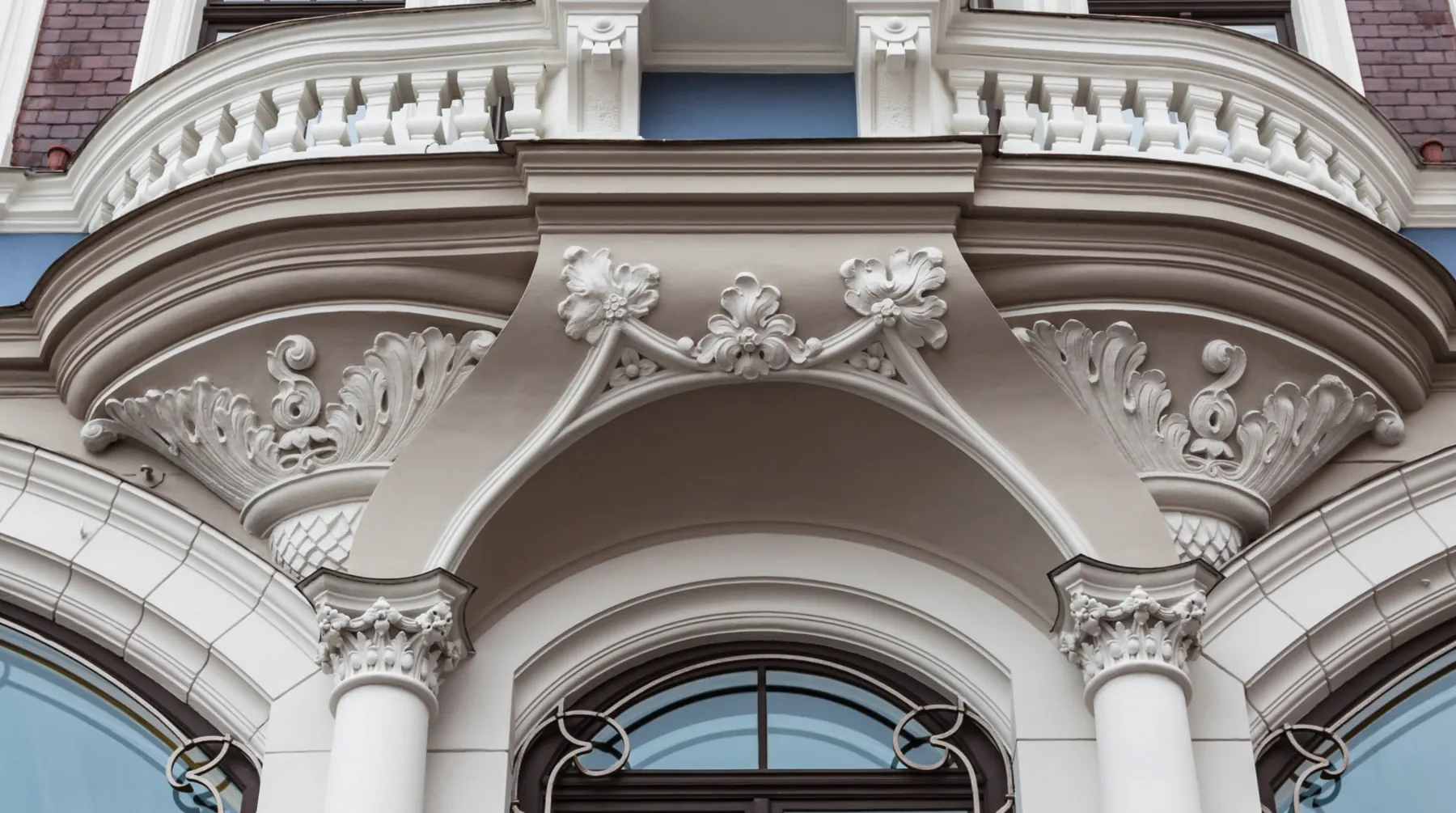
Since 15 September a flat in Riga no longer brings a residence permit
Article 23 of the former 2002 law listed four investment grounds for a temporary residence permit. The first was a contribution to company capital. The second was buying real estate: in Riga, Jurmala and several suburbs one property from EUR 250,000, outside them up to two properties for the same total, plus 5% of the value paid to the state budget with the first permit. The third was subordinated liabilities of a Latvian bank of EUR 280,000 for 5 years. The fourth was interest-free government securities of EUR 250,000. Permits were issued for up to five years.
The cuts began before the new law. Amendments of 23 April 2026 removed the government securities option from the old law. The new law went further. Its Article 27, which lists the grounds for a temporary residence permit, contains neither real estate nor bank liabilities. In its announcement on the law's entry into force, the Office of Citizenship and Migration Affairs says plainly that the law no longer provides residence permits for property buyers or for investors in subordinated liabilities of credit institutions.
The decision was not accidental. At the third reading in June the Saeima considered proposals to keep the permit for buying property and rejected them. When returning the law, the President of Latvia suggested parliament consider a property-based permit at least for citizens of NATO, OECD and European Economic Area countries. At the reconsideration on 20 August, according to press reports, MPs also rejected options with property purchases from EUR 300,000 and with EUR 100,000 invested in apartment building projects in Latgale. The law was adopted in the committee's wording.
What this means for you. If you planned to buy a flat in Latvia for a residence permit, that plan no longer works. Foreigners can still buy property, but it does not give a residence permit.
There were four investment grounds; two remain
The table shows the key point: every option where money was simply held has closed, and the remaining ones now give shorter permits. The amounts for companies have not changed; the permit term has.
| Basis for the permit | Before 15 September 2026 | From 15 September 2026 | Permit term under the new law |
|---|---|---|---|
| Buying real estate | from EUR 250,000 plus 5% of the value to the budget | closed to new applications | - |
| Subordinated liabilities of a Latvian bank | EUR 280,000 for 5 years | closed to new applications | - |
| Interest-free government securities | EUR 250,000 | removed by the amendments of 23 April 2026 | - |
| Capital of a small company | EUR 50,000 plus EUR 10,000 to the budget | EUR 50,000 plus EUR 10,000 to the budget | up to 2 years (previously up to 5) |
| Capital of a large company | EUR 100,000 plus EUR 10,000 to the budget | EUR 100,000 plus EUR 10,000 to the budget | up to 2 years (previously up to 5) |
| State-established fund manager | did not exist | EUR 150,000 for 5 years plus EUR 10,000 to the budget | up to 5 years |
Former conditions are given under the 2002 law in its latest wording, new ones under the text of the law in force since 15 September 2026. The law also changes general rules: many temporary permits are now issued for up to two years, but without annual registration. Documents for a first permit may be filed in Latvian or English; for a repeat permit only in Latvian. Of the permanent residence types, only one remains: EU long-term resident status.
What this means for you. Cutting the company permit from five years to two means more renewals and more checks. Every two years the company has to show that it operates and pays taxes.

Those who already got a permit for a flat keep their status if they renew on time
This is the most common question, and the law answers it. The new law does not cancel permits already issued. Your residence card is valid until the date shown on it. The question is what happens when it expires.
The transitional provisions of the new law contain a separate rule for this. A holder of a permit for real estate or bank liabilities receives a repeat temporary permit and unrestricted access to employment on four conditions. First, the application is filed while the previous permit is still valid. Second, the investment still meets the conditions under which the foreigner would be entitled to a permit under the old law as worded on 23 April 2026 or under its transitional rules. Third, there are no grounds for refusal under Article 34 of the new law. Fourth, the budget payment under Article 30 has been made.
In practice this means three things. You cannot sell the property: no property, no basis. You must not let property tax debts arise; that was a condition under the old law too. And you cannot be late. Under the old rules a repeat application was accepted within 90 days after expiry. The transitional rule of the new law requires the application to be filed while the previous permit is valid. Being one day late may leave you without a basis, because real estate is no longer a basis for new applicants.
The amount of the payment and the term of the new permit under the transitional rule depend on when and under which wording your first permit was issued. Here I advise not to calculate from memory but to check against the text of the law and your property documents several months before the card expires. Documents for a repeat permit are now filed in Latvian, so allow time for translation as well.
What this means for you. If you hold a Latvian residence permit for real estate, note the card's expiry date and start preparing the renewal at least three months ahead. This is the one thing that can genuinely go wrong right now.
We will check whether your permit falls under the transitional rule
Tell us the basis of your permit, the card expiry date and any changes to the property. We will tell you which documents are needed and when to apply.
What entry costs now and why it is more expensive than it looks
On paper Latvia looks cheaper than before. The lowest threshold is EUR 50,000 in company capital. But comparing it with EUR 250,000 for a flat is misleading: the flat was a passive investment, while the company has to operate.
Company and fund investments also require EUR 10,000 paid to the state budget. For real estate the payment used to be 5% of the property value.
Latvian Immigration Law adopted on 20 August 2026, in force from 15 September 2026, Article 27; former Immigration Law of 2002, Article 23
The conditions for companies in the new law are the same as before. A contribution from EUR 50,000 is made in a company with no more than 50 employees and an annual turnover or balance sheet not exceeding EUR 10 million. No more than 10 foreigners can get permits through one such company. The permit stays valid while the company pays at least EUR 40,000 in taxes to the state and municipal budgets in each reporting year. A contribution from EUR 100,000 is made in a larger company or group. In both cases EUR 10,000 is paid to the budget with the first permit. If you are ready to build a real business in Latvia, start with registering a Latvian company and calculating the tax burden.
Forty thousand euros in taxes a year is not a formality. It is the level of a company with several employees and stable revenue. For an investor who wanted residence without running a business, this option offers essentially nothing.
The new fund option looks like a replacement for real estate. The foreigner signs an agreement and transfers at least EUR 150,000 for at least five years to a fund manager established by the state, and pays EUR 10,000 to the budget. The permit is issued for up to five years. It stays valid while the manager confirms that the agreement has not been terminated and the investment balance is at least EUR 150,000. According to press reports, the government will set the procedure for checking the origin of funds.
The weak point of the new option is that there is no working fund for residence permits yet. On 29 September 2026 the government approved the concept of a Capital Fund: a subsidiary of the state finance institution Altum is to become an alternative investment fund manager and register with the Bank of Latvia. Official announcements as of the date of this piece do not say whether this is the fund the Immigration Law refers to or when it will start accepting agreements with foreigners.
What this means for you. Today only the company option is actually available. The fund option is written into the law, but you cannot apply under it until the manager is launched. Do not transfer money before the rules are published.
Citizens of Russia and Belarus: the fund is closed, the rest is uncertain
For citizens of Russia and Belarus the restriction is set out separately. On 18 June 2026 the Saeima adopted amendments that bar them from obtaining a residence permit through investment with the state-established fund manager. The amendments took effect together with the new law.
There is also a general tool. Article 28 of the new law allows the government, after assessing the impact on national security or the economy, to suspend investment residence permits for citizens of specific countries for up to five years. In other words, conditions can change without a new law, by government decision.
For Russian passport holders who already have a Latvian permit for real estate, the transitional rule makes no exceptions by nationality. But the grounds for refusal under Article 34 are checked at every application. I advise preparing the renewal especially carefully and early, with a complete set of proof on the property and on the origin of funds. If a new EU residence permit matters to you, compare other countries, for example Hungary's guest investor programme and the 2026 changes to the Greek golden visa.
What this means for you. For citizens of Russia and Belarus a new Latvian investor permit is practically unavailable now. Those who already have status should make sure not to lose it at renewal.
When the closure changes nothing for you
First, if you are buying property in Latvia to live in or to let, not for status. The new Immigration Law does not affect foreigners' right to buy flats. The only change is that a purchase no longer gives a residence permit.
Second, if you live in Latvia on another basis, such as work, study or marriage. There are changes to those grounds too, but they are unrelated to the closure of investor residence.
Third, if you need EU residence and the country is not important. Then there is no reason to rush to Latvia. Europe still has programmes where you can invest in property or funds without an obligation to run a business. A comparison of current options is in our review of European golden visas in 2026 and in the comparison of Hungary, Greece and Portugal.
A separate word for those waiting for the fund. There is no need to hurry with transfers. Until the manager is established and the rules on checking funds are published, any offer to "reserve a place in the programme" for a prepayment is a reason for caution.
What this means for you. Only holders of existing permits for real estate or bank liabilities need to act urgently now. For everyone else, choosing the right country matters more than speed.
What to do in the coming months
- If you hold a permit for real estate: check the card expiry date and start preparing the renewal at least three months before it.
- Do not sell or re-register the property before renewal. Make sure there are no property tax debts.
- Prepare documents in Latvian, including translations and proof regarding the property.
- If you planned a permit through buying property: choose another EU country or another type of investment; do not buy a flat in Latvia for status.
- If you are ready to run a business: check whether the company can pay EUR 40,000 in taxes a year, and only then invest EUR 50,000.
- If you are interested in the fund: wait for the official launch of the manager and the published rules. Gather proof of the source of funds in advance; you will need it in any case.
We will find an EU country instead of Latvia
Tell us your budget, nationality and goal: a home, a business or a back-up status. We will compare current EU programmes and tell you which ones suit you.
What is still unknown and what to watch
First, when the state fund manager will start operating and what rules on checking money the government will approve. Without these rules the fund option exists only on paper.
Second, government decisions under Article 28. If it suspends investment permits for citizens of particular countries, this will affect both companies and the fund.
Third, the practice of the Office of Citizenship and Migration Affairs under the transitional rule. The first renewals of property-based permits under the new law will show how the Office assesses the property and calculates the payment. Watch the Office's announcements and changes to the residence permit regulations, which the government has to bring into line with the new law.
How this piece was prepared
This piece is based on the text of the Latvian Immigration Law adopted by the Saeima on 11 June 2026, re-adopted on 20 August 2026 and in force since 15 September 2026 (Articles 27, 28, 29, 30, 34 and the transitional provisions), on the text of the former Immigration Law of 2002 (Article 23) and its amendments of 23 April 2026, on the Saeima amendments of 18 June 2026 restricting citizens of Russia and Belarus, on the President of Latvia's letter returning the law in June 2026, on the announcement of the Office of Citizenship and Migration Affairs of 15 September 2026 on the law's entry into force, and on the Ministry of Economics announcement of 29 September 2026. The texts were checked on 23 October 2026. This is not a legal opinion on your situation: renewal terms depend on the date and basis of your first permit.
Frequently asked
Questions people ask before deciding
01Can I get a Latvian residence permit by buying a flat now?
No. Since 15 September 2026 the new Immigration Law does not provide residence permits for real estate. You can buy property, but it will not be a basis for residence.
02What happens to my permit if I got it for property earlier?
Your card is valid until the date shown. You can get a repeat permit under the transitional rule if you apply while the current one is valid, the property still meets the conditions, there are no grounds for refusal and the budget payment is made.
03Can I sell my flat and buy another one while keeping the permit?
That is risky. The transitional rule requires the investment to still meet the conditions, and under the old rules a change of investment object was treated like a first application. Check the consequences for your case before the deal.
04Is the permit for EUR 150,000 in a fund already available?
The basis is in the law, but as of the date of this piece it has not been officially announced that the state fund manager accepts agreements for residence permits. Do not transfer money before the launch.
05Can Russian citizens get a Latvian residence permit by investment?
The fund option is closed to citizens of Russia and Belarus by the amendments of 18 June 2026. In addition, the government may suspend investment permits for citizens of specific countries for up to five years.
06Which EU countries still grant residence for investment?
Programmes with investment in property or funds operate, for example, in Greece and Hungary, each with its own thresholds and conditions. The choice depends on your budget, nationality and goal.
About the author
Related materials
What to read next
 ComparisonTop 10 Golden Visas in Europe for Investors in 2026
 ComparisonHungary vs Greece vs Portugal Golden Visa: what to choose in 2026
 ArticleChanges to Greece's Golden Visa 2024-2026: new thresholds, the Airbnb ban and the 120 m2 rule
Personal programme selection is conducted by Anna Kovalevskaya, Head of Legal, BRIDGES.
We will review your Latvian residence permit under the new law
Tell us the basis of your permit or your investment plans. We will tell you how to renew your current status or which EU country to choose instead of Latvia.
