Residency · Montenegro
Montenegro's new Law on Foreigners: property residence from €150,000 stays

Updated: October 2026·12 min read·Expert reviewed
Terms and costs verified: October 2026

Contents
On 8 October three clients with flats in Budva, Bar and Herceg Novi wrote to me at once. They all had the same question: "We hear Montenegro is passing a new law on foreigners. Will we lose our residence permits?" I read the bill in full, all 278 articles, and the short answer is no. The property route is kept almost word for word. And the main thing about this document is not about today at all: it will apply from the day Montenegro becomes an EU member. Here is what stays, what changes and what the bill is silent on for now.
In short
- On 8 October 2026 the government sent a new Law on Foreigners to parliament and asked for urgent procedure. As of 11 October it is a bill.
- The law enters into force eight days after publication but applies only from Montenegro's EU accession day. Until then the current law governs.
- Property residence remains: ownership or a share of at least half and a tax valuation from €150,000.
- Permanent residence still comes after 5 years, but absences will be counted more strictly. The 30-day rule for temporary residence is not repeated in the new law.
- The bill has no transitional provisions. How current permits will move to the new law is unclear for now.
What has been sent to parliament
The government approved the text without a sitting, by written consent of a majority of ministers, and sent it to parliament the same day asking for urgent procedure. These are not amendments but a completely new law meant to replace the current one. Parliament referred the bill to the legislative committee and the committee on the political system, judiciary and administration.
Why it is needed. Montenegro is negotiating EU membership, and its migration rules must match European directives. Hence categories new to the country: the EU Blue Card, intra-corporate transfer, researcher mobility, long-term resident status. Hence also the bill's key condition, in its very last article: the law enters into force on the eighth day after publication in the official gazette and applies from the day Montenegro joins the European Union.
- 01.2026Amendments to the current law: property residence from €150,000 by tax valuation
- 08.10.2026The government sends a new Law on Foreigners to parliament under urgent procedure
- 8 days after publicationThe law enters into force but does not yet apply
- EU accession dayThe new law starts to apply instead of the current one
What this means for you. Nothing changes today. All permits are issued and renewed under the current law, and that will remain so until Montenegro joins the EU.
What stays: residence through property
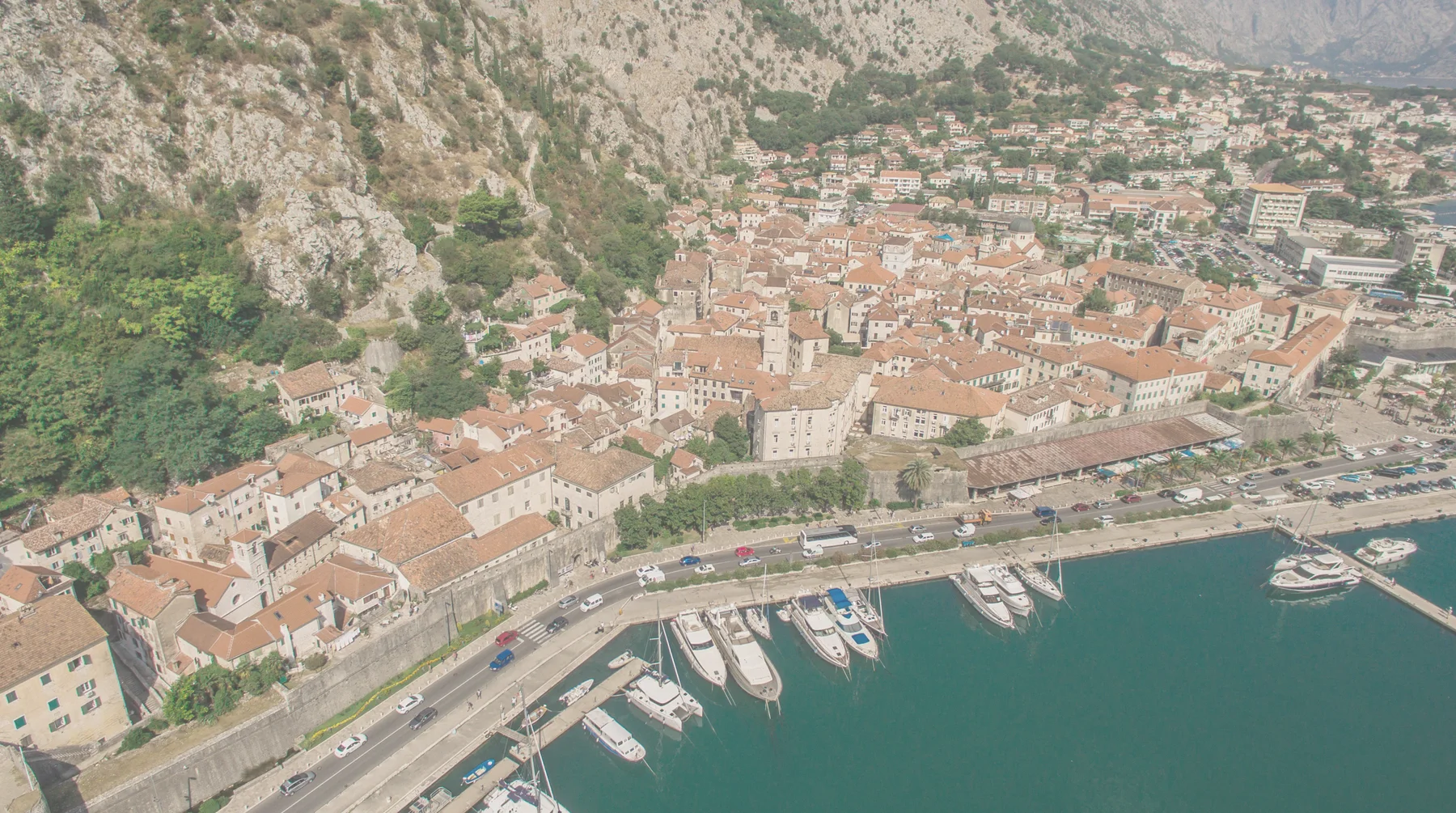
For flat owners this is the main news, and it is good. The new law repeats the ground from the current one almost word for word. Temporary residence is granted to a property owner who owns it outright or holds a share of at least half, provided the property's tax valuation is at least €150,000.
The €150,000 threshold has applied since January 2026, when the current law was amended. The key words here are tax valuation. Value is set not by the contract price but by the tax authority's decision when calculating property transfer tax. This is where buyers most often go wrong.
Picture a couple who bought a flat in Bar for €155,000. The contract sum is above the threshold, so they calmly go to apply for residence. But the tax authority valued the property at €142,000: an old building, no sea view, an area with low cadastral prices. There is no ground for residence, even though they paid more than the threshold. This cannot be fixed retroactively. The valuation should have been checked before the deal by comparing the property with tax decisions on similar flats in the same area.
EU, EEA and Swiss citizens are exempt from the value threshold under both the current and the new law. A separate €250,000 investment ground is not in this bill: it sits in another set of amendments to the current law, which is also before parliament.
What this means for you. When buying for residence, rely on a tax valuation from €150,000, not the contract price. That rule does not change now or after EU accession.
How to check the tax valuation before the deal
The tax valuation does not match the market price, and that is normal. The tax authority relies on cadastral zones, building type and age, floor area and its own transaction data. In resort areas with expensive new builds the valuation is often close to the price. In older buildings, away from the sea and in smaller towns it can be noticeably lower.
This can be checked before signing. We look at tax decisions on similar properties in the same building or block, compare floor area and year of construction, and check whether the cadastre records a smaller area than the actual one. If the margin above the threshold is thin and the property is in a zone with low cadastral prices, it is better to choose another flat or pay more for one with a margin than to end up without grounds for residence.
What this means for you. A margin above €150,000 in valuation is as necessary as a budget margin. Buying right at the threshold is the most common source of unpleasant surprises.
How to get property residence now
While the current law applies, the procedure is as follows. First the property is checked: owner, encumbrances, building and occupancy permits, cadastral match. Then the contract is signed before a notary and the title registered in the cadastre. After that the tax authority issues a decision on transfer tax that states the property's valuation. Only with that decision can you proceed.
With the tax decision, a cadastral extract and personal documents you apply for temporary residence at the police office where the property is located. The permit is issued for a year with annual renewal. The 30-day rule matters: a long absence from the country without notification puts renewal in question.
Property check
Owner, encumbrances, building permits, cadastral match and a forecast of the tax valuation.
Transaction
Notarised contract and registration of title in the cadastre.
Tax decision
Transfer tax and a property valuation from €150,000.
Application
Filing for temporary residence where the property is located.
Card and renewal
A one-year permit, then annual renewal.
Documents for property residence
What you will need
- A passport valid for at least the term of the permit sought
- A cadastral extract showing ownership or a share of at least half
- A tax authority decision valuing the property at no less than €150,000
- A police certificate from the country of citizenship with apostille and translation
- Health insurance for the term of the permit
- Proof of means of subsistence: bank statement or income documents
- Photos and fee receipts
Which costs to budget for
Besides the property price, the buyer pays property transfer tax on a progressive scale from 3% when buying a resale home. With a new build from a developer, VAT is usually already included in the price instead of that tax. Add notary fees, document translation, cadastral registration and, if needed, a lawyer to check the property.
After the purchase the owner pays annual property tax: the rate is set by the municipality within limits set by law and is calculated on the property's valuation. The permit itself has annual costs: permit and card fees, health insurance, certificates. If you let the flat, rental income is taxed in Montenegro, which is also worth remembering in your calculations.
What will change after EU accession
The changes mainly concern how long you may be absent and how the path to permanent status is counted. Below is a comparison of the current law and the bill.
| Issue | Current law | New law, from EU accession day |
|---|---|---|
| Property residence | ownership or a share of 1/2+, tax valuation from €150,000 | the same |
| EU, EEA, Swiss citizens | exempt from the value threshold | exempt from the value threshold |
| Absence on temporary residence | 30-day rule | 30-day rule not repeated |
| Permanent residence | after 5 years, absences up to 10 months in total or one up to 6 months | after 5 years, each absence under 6 months in a row and no more than 10 in total |
| Work | work permit and residence | single permit up to 1 year, renewable twice |
| Digital nomads | available | 2 years plus 2, then a 6-month break |
| Short visits | 90 days in 180 | 90 days in 180 under the Schengen Borders Code |
| Loss of permanent residence | under current rules | 12 months in a row outside the EU or 6 years outside Montenegro |
Temporary residence will become more flexible. Today the 30-day rule is strict: a long trip abroad without notification puts the status in question. That rule is absent from the list of grounds for ending temporary residence in the new law. For property owners who do not live in Montenegro year-round this is a notable relaxation, but it will apply only after EU accession.
The path to permanent residence will become stricter. The term is the same, 5 years. But each absence must now be under six months in a row, and no more than 10 months in total over five years. Today one of the two conditions is enough. As now, permanent residence requires basic Montenegrin.
Loss of permanent residence will get clear time limits. The status ends after 12 consecutive months outside the EU or six years outside Montenegro. This is the standard European formula for long-term residents.
What this means for you. After accession temporary residence will be gentler on time abroad, while permanent residence will be stricter about real residence. If your goal is permanent residence and then citizenship, live in the country for real starting now.
Work, business and digital nomads
For work the new law introduces a single work and residence permit. It is issued for up to one year and renewable up to twice. An important detail: the permit is not withdrawn merely because the job ended, as long as the period without work does not exceed three months, or six months after two years in the country.
Digital nomads keep their status: two years plus two more, after which a six-month break is needed before a new permit. There is no separate "investment" ground in the list of purposes for temporary residence: property, work and remote work are listed separately.
Directors of their own companies who today obtain residence through the firm will continue under the same logic: work is the ground. After EU accession it will be processed under the single permit rules.
What the bill does not contain
The bill has no transitional provisions and no article repealing the current law. So the main questions for those already living in the country remain open. How current permits will move to the new law on accession day. Whether years lived before accession will count towards the five years for permanent residence. Which rules will apply to applications filed the day before.
Such questions are usually settled by amendments during the parliamentary reading or by a separate transition law. For applicants it is a reason to keep every document on residence from day one: lease or ownership contracts, address registration, entry and exit stamps, utility bills.
What this means for you. Keep proof of residence from the first year. If transitional rules require you to prove your years, you will need it.
The bill is often read as a threat to residence through property. In fact that ground is one of the few that move into the new law unchanged. The risk lies elsewhere: the bill has no transitional rules. So we advise clients to keep all evidence of residence from day one and to watch for amendments in parliament.
What about citizenship
The Law on Foreigners does not govern citizenship: Montenegro has a separate law for that. Naturalisation is a long road: about ten years of lawful continuous residence, language skills and, as a rule, renouncing previous citizenship unless there is a dual citizenship agreement. So residence through property in Montenegro is above all the right to live by the sea in Europe, not a shortcut to a passport.
After EU accession a Montenegrin passport will become an EU citizen's passport, and interest in naturalisation will grow. But the naturalisation rules change by a separate law, and the bill on foreigners says nothing about them.
When Montenegro will join the EU
Montenegro leads the candidate countries and expects to complete negotiations in the coming years. The government names membership by the end of the decade as its goal. There is no exact date: it depends on closing all negotiating chapters and ratification of the accession treaty by every EU state. So the current law still has several years ahead of it.
After accession Montenegro will be an EU country but will not join Schengen immediately: that requires a separate decision. So a Montenegrin residence permit on its own will not give free travel across Europe until Schengen accession. If you need Schengen now, look at our comparison of Montenegro and Greece.
What buyers and permit holders should do
| Situation | What to do now |
|---|---|
| Buying for residence | rely on a tax valuation from €150,000, not the contract price |
| Already living on a permit | renew under current rules, observe the 30-day rule |
| Planning permanent residence | count absences strictly, keep evidence of residence |
| Working remotely | factor in a 6-month break after four years in future |
| Running a business | the work ground remains, the paperwork will change after accession |
Let us check a Montenegro property before the deal
Documents, cadastre and a tax valuation forecast: we will tell you whether the flat gives grounds for residence.
Summary
The new Law on Foreigners prepares Montenegro for EU membership; it is not a tightening for investors. Property residence from €150,000 stays, temporary residence will become more flexible, and the path to permanent residence stricter about real presence. The law will apply only from EU accession day; until then the current procedure works. The main open question is the transitional rules.
What to watch next: the parliamentary reading of the bill and amendments on the transition, the fate of the separate bill on a €250,000 investment ground and the progress of accession talks. We will update this article when parliament adopts the law.
Ask a question about Montenegro
Buying, already living there or preparing for permanent residence - tell us and we will look at your situation.
How this article was prepared
The bill: the text of the new Law on Foreigners sent by the government of Montenegro to parliament on 8 October 2026 and the bill's record on the parliament's website. Current rules: the consolidated Law on Foreigners as amended in 2026. Prepared by Daniel Kovach, Senior International Law Attorney at BRIDGES. All facts were checked on 11 October 2026.
Related: Montenegro residence: all grounds, Montenegro or Greece, Serbia or Montenegro.
Frequently asked
Questions people ask before deciding
01Does the new law abolish property residence in Montenegro?
No. The bill keeps the ground: ownership or a share of at least half and a tax valuation from €150,000.
02When will the new law take effect?
It enters into force eight days after publication but will apply only from the day Montenegro joins the European Union.
03What applies now?
The current Law on Foreigners as amended in 2026, including the 30-day rule for temporary residence.
04Why does the tax valuation matter rather than the price?
The €150,000 threshold is based on the tax authority's transfer tax decision. If the valuation is lower, there is no ground for residence even if the contract price is higher.
05How will the path to permanent residence change?
The term stays at 5 years, but each absence must be under six months in a row and no more than 10 months in total.
06What happens to my permit on EU accession day?
The bill has no transitional provisions yet. They are usually added by amendment. Keep residence documents from the first year.
07Will a Montenegrin permit give Schengen access?
No. After EU accession Schengen requires a separate decision.
08Will digital nomad status remain?
Yes: two years plus two, then a six-month break before a new permit.
About the author
Related materials
What to read next
 ComparisonAntigua and Barbuda or Grenada: Family Passport for Large Families in 2026
 AnalysisWhat is due diligence and why the Caribbean is rejecting applications
 ArticleMontenegro visa for Russians from 1 November 2026: who needs it and how to apply
Personal programme selection is conducted by Anna Kovalevskaya, Head of Legal, BRIDGES.
Let us check a Montenegro flat before you buy
Cadastre, permits and tax valuation for residence.
