BRIDGES Insights · World
Where Russians buy homes abroad: the UAE loses share, Thailand and Georgia grow

Updated: October 2026·10 min read·Expert reviewed
Terms and costs verified: October 2026
Contents
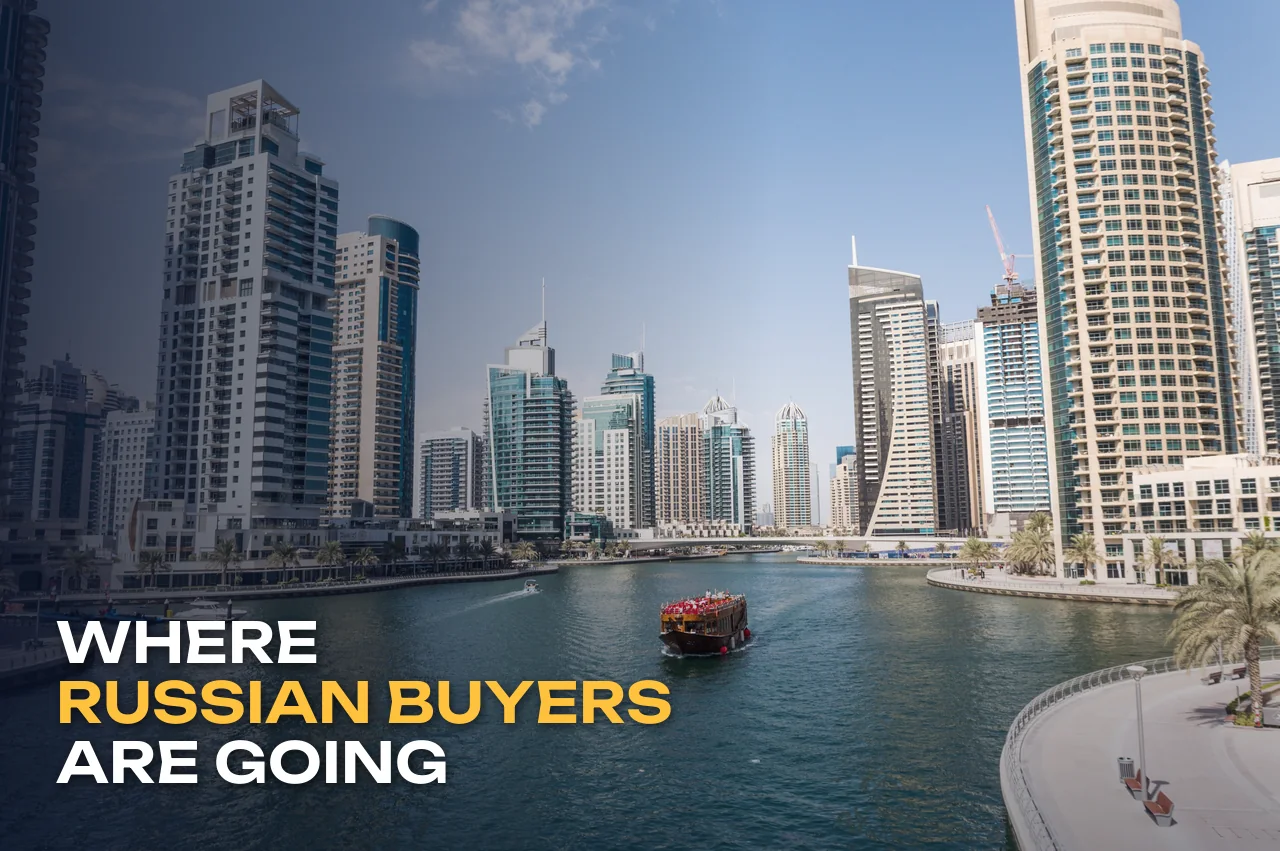
In Q3 2026 Russian demand for homes abroad shifted noticeably. The UAE stayed first, but its share fell from half of all deals to 37%. Thailand grew by half and Georgia threefold, while Greece, France and Spain dropped out of the top six. We look at what lies behind the shift and why buying "for holidays and rent" and buying "for status" are two different tasks. Country terms are on the pages UAE golden visa through property and Greece golden visa.
In short
- UAE: 37% of deals in July-September against 50% in the first half.
- Thailand: 25% against 17%. Georgia: 17% against 5%. Turkey holds at 12%.
- Mauritius and Oman 4.5% each. Serbia, with 11% in the first half, dropped out of the leaders.
- Buyers want a home to holiday in themselves and let the rest of the time, with direct flights and visa-free entry.
- None of the six leaders gives EU status. Thailand gives no status at all.
What changed in the quarter
Greece, France and Spain, previously among the leaders, dropped out of the top six.
Overseas property market data, July-September 2026
In the first half the UAE took half of all Russian deals abroad. In Q3 its share fell by 13 points. The Emirates have not become worse: the market is still liquid, there is no tax on rental income, and a 10-year residence visa is granted for property from AED 2,000,000. Part of the buyers with smaller budgets simply moved to where entry is cheaper.
The main winner is Thailand, up from 17% to 25%. Buyers mostly choose seaside flats to winter in themselves and let in high season. Georgia climbed from fifth to third: close, visa-free, clear prices and a deal in a few days.
What this means for you. Demand did not move to the "best" countries but to cheaper and more familiar ones. It is a decision about holidays and rental income, not about a second home in Europe.
Why the UAE is losing share
The Emirates remain the largest market for Russians, and the falling share is not a flight. Dubai prices have risen markedly in recent years, and entry for a small budget has become dearer. A buyer looking for a flat to holiday in and let compares not status but the amount going in and the income coming out. Where a seaside flat is cheaper and the season longer, that is where such a buyer ends up.
The second reason is the structure of purchases. In the UAE many buy off-plan with a developer payment plan, and part of Russian money is already committed to buildings due for handover in the coming years. These buyers do not make new deals until they get the keys. So the drop in share largely reflects a pause rather than disappointment.
Meanwhile the Emirates keep strengths the new favourites lack: no tax on rental income or capital gains, and property from AED 2,000,000 gives a 10-year UAE residence visa for the whole family.
What buying a home actually gives
| Country | What buying a home gives | Threshold |
|---|---|---|
| UAE | 10-year residence visa | property from AED 2,000,000 (about $545,000) |
| Thailand | no status: condominium flats, foreign share of a building up to 49% | status arranged separately |
| Georgia | 1-year renewable residence / 5-year residence | from $150,000 / from $300,000 |
| Turkey | 2-year residence / citizenship | from $200,000 / from $400,000 |
| Greece | 5-year EU residence | from EUR 400,000, EUR 800,000 in Athens and popular islands |
| Cyprus | permanent EU residence | from EUR 300,000 |
This is where the main mistake lies. Many buy a flat in Thailand or Georgia and believe they have also settled the question of a second status. In Thailand buying a home gives no residence at all: a foreigner can only buy a condominium flat, and the foreign share in one building is capped at 49%. To live there long term, status is arranged separately, for example through the DTV visa for remote work.
In Georgia, from 1 March 2026 the threshold for property-based residence rose to $150,000. That permit is issued for a year and renewed while you own the property. A five-year permit requires $300,000. In Turkey residence through a home purchase starts at $200,000, and Turkish citizenship by investment at $400,000.
Thailand: what to know before buying
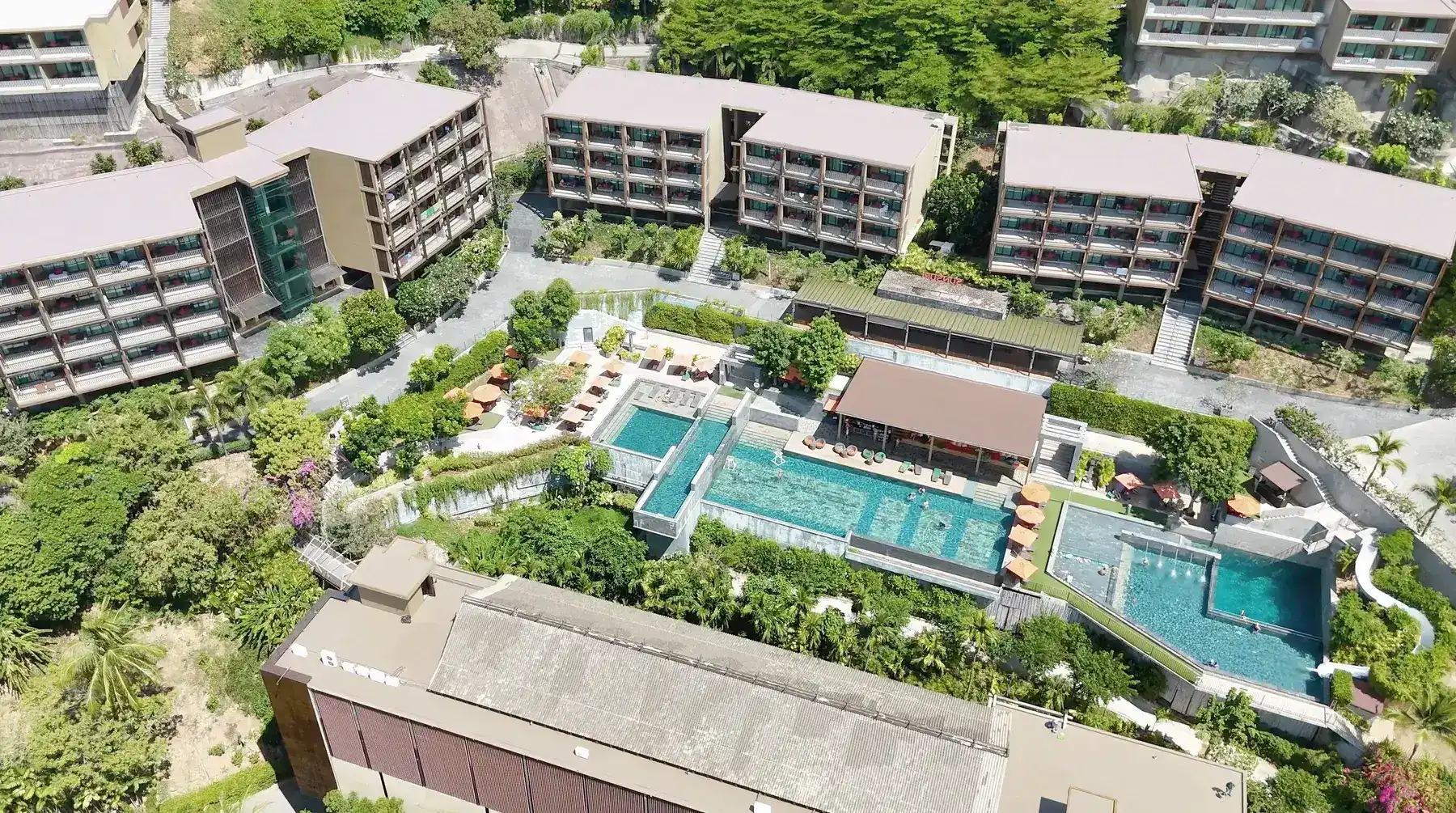
A foreigner in Thailand can buy a condominium flat freehold, but the foreign share of one building is capped at 49% of the residential area. Once the quota is used up, only long-lease options remain. Foreigners cannot own land, so villas are usually taken on a 30-year lease.
A purchase gives no status. Living there long term needs a separate visa. For remote professionals that is the DTV visa: it is issued for five years at once, allows up to 180 days per entry with a further 180-day extension and requires a balance of at least 500,000 baht.
Georgia: why it rose to third place
For Russians Georgia is close, visa-free, with direct flights, and a deal is registered in the public registry within a few days. There is no transfer tax. These reasons lifted the country from fifth to third.
Status exists here, but it is modest. From 1 March 2026 residence is granted for property worth more than $150,000, for a year with annual renewal while you own it. A five-year permit requires $300,000, and after five years of ownership permanent residence is possible. Georgian residence gives no Schengen access and no right to live in the EU.
Turkey: a steady 12%
Turkey holds its share without sharp moves. Residence through a home purchase is granted for property valued from $200,000 for two years with renewal. But some districts are closed to foreigners' registration: you can buy a flat there but cannot obtain residence on it. This is checked before the deposit, not after the deal.
For those who need a second passport there is Turkish citizenship for property from $400,000 with an obligation not to sell for three years.
Let's look at your situation
Tell us why you want a home abroad: holidays, rent or status for the family. We will show where these goals overlap and where they do not.
Why Europe dropped out of the leaders
Greece, France and Spain left the top six for different reasons. Spain closed its golden visa in 2025, so buying a home there no longer gives status. France has never had a residence programme for buying a home. Greece is getting dearer: the golden visa threshold in Athens and the popular islands is EUR 800,000, and from 1 July 2027 the purchase tax for non-EU buyers will rise to 15%. Details in our analysis of the Greek 15% tax.
Cyprus is also interesting for tax. Permanent residence is granted for a new build from EUR 300,000 excluding VAT, the status is indefinite and kept with one visit every two years. If you spend at least 60 days a year on the island, keep a home and work or business there and live no more than 183 days in any other country, you can become tax resident in Cyprus. Since 2026 you no longer have to prove you are not resident elsewhere. Details in non-dom status in Cyprus: dividends and interest for such residents are tax-free for up to 17 years.
The other European routes for Russians are closed or narrowed. The fund options of the Portuguese and Hungarian golden visas are closed to Russian citizens by EU sanctions: selling them fund units is prohibited. Details in the Hungarian golden visa myth. Malta and Italy stopped accepting Russians even earlier. So for a buyer with a Russian passport the real EU choice today comes down to Greece and Cyprus.
Yet it is Europe that gives what the leaders lack: the right to live in the EU and, years later, a path to a European passport. Cyprus permanent residence is indefinite, covers the whole family and does not require living on the island. The Greek golden visa gives a renewable five-year EU residence: from EUR 400,000 in most regions and from EUR 250,000 for converting a commercial building into housing. If the goal is a fallback for the family in Europe, the popularity ranking decides nothing.
What it costs to get in and what you pay afterwards
| Country | Taxes and fees on purchase | Tax on rental income locally |
|---|---|---|
| UAE | Dubai Land Department registration fee of 4% of the price | none |
| Thailand | 2% transfer fee on the appraised value, plus the seller's taxes | yes, progressive |
| Georgia | no transfer tax, only registry fees | yes |
| Turkey | 4% title deed fee on the declared value, usually split between seller and buyer | yes, progressive |
| Greece | 3.09% transfer tax, 15.45% for non-EU buyers from 1 July 2027 | yes, progressive |
| Cyprus | new build - VAT, resale - transfer fee | yes |
Purchase costs differ sharply. In Dubai a 4% registration fee is added to the price, in Turkey a 4% title deed fee, in Thailand a 2% transfer fee. Georgia has no transfer tax. Greece charges 3.09% today, and from 1 July 2027 non-EU buyers will pay 15.45%.
Rental income is counted separately. If you remain tax resident in Russia, rental income abroad must be declared in Russia and personal income tax paid. Tax paid in another country can be credited only where a double tax treaty works. With the UAE and Turkey it applies. With Greece, Cyprus and other EU countries the core treaty articles have not applied since August 2023, so the income may be taxed twice.
How to get the money into the country
The most common problem in a deal today is not choosing the flat but paying for it. EU banks and some Asian banks are cautious with transfers from Russia, and developers require a clear source of funds. It is better to place the money in advance in an account in a country where the bank already knows your history, and to gather documents on the source: a sale of a business or property, dividends, savings by year.
Paying in cash or through cryptocurrency without documents almost always creates a problem later: when selling the property, when opening an account for rental income and when obtaining status, where the source of funds is checked separately.
Which market suits whom
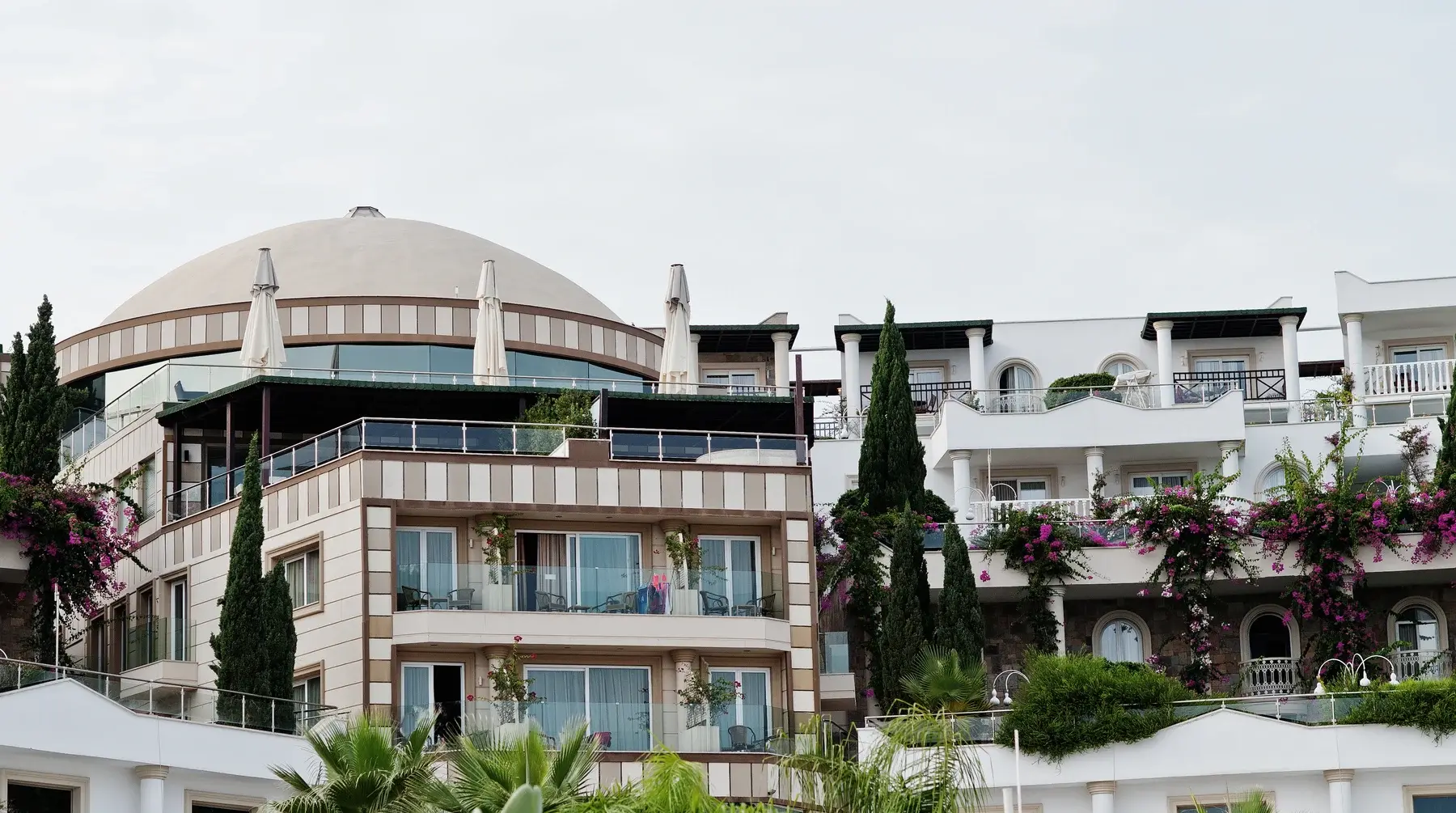
- Rental income without local tax: the UAE.
- A seaside flat to winter in and let in season: Thailand, with status arranged separately.
- An affordable home near Russia and simple residence: Georgia.
- Residence or a second passport for a home: Turkey, from $200,000 and from $400,000.
- EU status for the family: Greece or Cyprus.
Common mistakes
- Buying a home "with status included" where no status is given for a purchase, as in Thailand.
- Not checking the district in Turkey: the property is bought but residence cannot be obtained on it.
- Counting only the price and forgetting purchase fees and tax on rental income locally and in Russia.
- Paying without documents on the source of funds and facing a bank refusal or a problem on resale.
- Choosing a country by the popularity ranking rather than by the goal: holidays, income or status for the family.
- UAE37%share of deals, 50% in H1
- Thailand25%up from 17%, the main winner of the quarter
- Georgia17%up from 5%, from fifth to third place
- Turkey12%share unchanged
overseas property market data, July-September 2026
What comes next
Until the end of 2026 Russian demand will most likely stay in countries with direct flights and visa-free entry: the UAE, Thailand, Georgia and Turkey. Georgia's growth may slow after the residence threshold rose to $150,000. In Greece a pick-up in deals is likely in the first half of 2027: non-EU buyers will try to sign at the notary before 1 July 2027, before the tax rises to 15.45%.
For a family choosing between holidays and status, the sensible strategy is to separate the two tasks. A seaside flat for holidays and rent can be in one country, and EU status for the children and the fallback plan in another. Each purchase then solves its own task, and neither holds the other hostage.
How to choose a country for your goal
- Decide what matters more: rental income and holidays, or status for the family. The list of countries depends on it.
- If you need status, check the threshold: it differs in the UAE, Turkey, Georgia and the EU, and Thailand gives no status for a purchase.
- Work out the full price: purchase taxes, annual costs and tax on rental income.
- Check how you will bring money in and take income out: EU banks and some Asian banks are cautious with transfers from Russia.
- Assess liquidity: how quickly the property can be sold if plans change.
Before buying a home abroad
- Goal: holidays, rent or status
- Whether the purchase gives residence and for how long
- Full price with taxes and fees
- Channel for transferring money and income
- Selling the property in 3-5 years
Conclusion
The Q3 shift shows that Russians choose homes with the heart and the wallet: warm, close, visa-free and with rental income. That is sensible if the task is holidays and income. But such a purchase rarely settles status in another country. A second home in the EU and a path to a European passport need a separate plan, and it is better built before the deal than after.
Want residence through property? Write to us
We will match a country and property to your goal and budget and work out the full price with taxes.
Sources
Shares of Russian deals by country for H1 and Q3 2026 come from overseas property market data published on 13 October 2026. Status thresholds were checked against official sources: the Public Service Development Agency of Georgia (sda.gov.ge), UAE residence visa rules, Turkish requirements and EU programmes as at the publication date.
Related: Dubai or Turkey, UAE or Georgia, how to buy a flat in Dubai, Cyprus sells at a record pace, EU golden visas in autumn 2026.
Frequently asked
Questions people ask before deciding
01Where do Russians buy homes abroad most often in 2026?
In Q3 2026 the leaders are the UAE (37% of deals), Thailand (25%), Georgia (17%) and Turkey (12%). Mauritius and Oman took 4.5% each.
02Does buying a flat in Thailand give residence?
No. A foreigner can buy a condominium flat, but no status is granted for the purchase. Long stays need a separate visa.
03How much does Georgian residence through property cost?
From 1 March 2026 the property must be worth more than $150,000 and the permit is issued for a year with renewal. A five-year permit requires $300,000.
04Why have Russians bought less in Europe?
Spain closed its golden visa, in France a home purchase gives no status, and Greece is getting dearer and will raise the purchase tax for non-EU buyers to 15% from July 2027.
05What are the purchase taxes in Dubai?
The Dubai Land Department registration fee is 4% of the price. The UAE has no tax on rental income or capital gains.
06Do I pay tax in Russia on renting out a flat abroad?
Yes, if you are tax resident in Russia: the income is declared in Russia. Tax paid abroad is credited only where a double tax treaty works, for example with the UAE and Turkey.
07Can a foreigner buy land in Thailand?
No. A foreigner buys a condominium flat within the 49% quota or takes a villa on a long lease, usually 30 years.
08Where does buying a home give EU status?
In Greece the golden visa gives five-year residence: from EUR 400,000 in most regions and EUR 800,000 in Athens and popular islands. In Cyprus a purchase from EUR 300,000 gives indefinite permanent residence for the whole family.
About the author
Related materials
What to read next
 ComparisonAntigua and Barbuda or Grenada: Family Passport for Large Families in 2026
 AnalysisWhat is due diligence and why the Caribbean is rejecting applications
 AnalysisHow to Choose a Program: Citizenship, Residence Permit or Permanent Residency through Investment
Personal programme selection is conducted by Anna Kovalevskaya, Head of Legal, BRIDGES.
Want residence through property? Write to us
A country and property for your goal, full price with taxes.