BRIDGES Insights · Panama
Panama changes residency by investment: USD 300,000 only for new builds, state bank deposit from USD 500,000
Updated: October 2026·16 min read·Expert reviewed
Terms and costs verified: October 2026
Contents
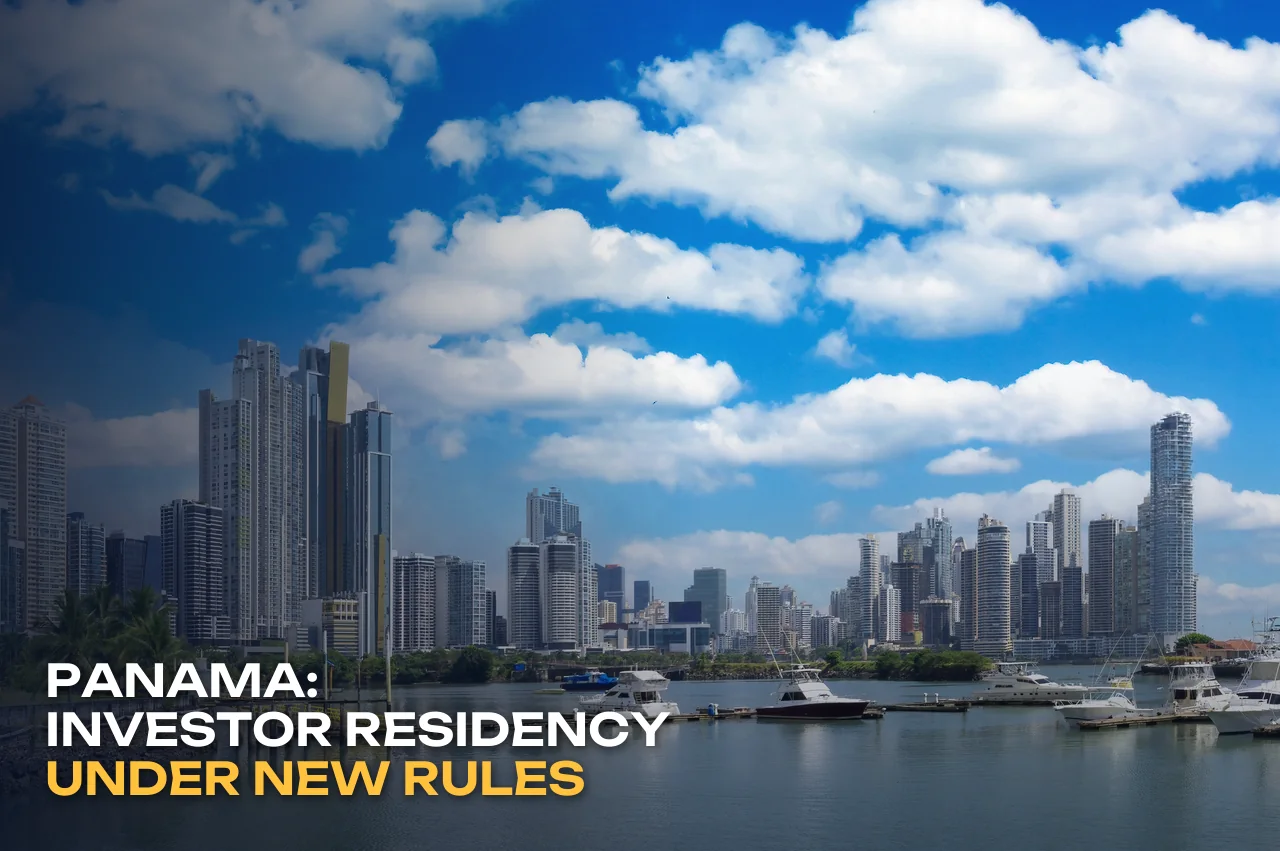
On 16 September 2026 Panama published Decree No. 17, which rewrites permanent residency for qualified investors. USD 300,000 now buys residency only through a new property bought from a developer. Resale property has risen to USD 500,000, while a fixed deposit has become cheaper, at USD 500,000, if it is opened with one of two state banks. I went through the full text of the decree and explain which option now makes more sense and who should wait. Other investment residency programmes are collected on the page on investment residency.
In brief
- Executive Decree No. 17 of 8 September 2026 was published in Official Gazette No. 30613 on 16 September 2026 and applies from that date. It fully replaces Decree No. 722 of 2020 and all its amendments.
- New property from a developer still starts at USD 300,000. Resale property now starts at USD 500,000.
- A new option: a fixed deposit of USD 500,000 with Banco Nacional de Panamá or Caja de Ahorros. With a private bank the minimum remains USD 750,000.
- Securities start at USD 500,000 through a licensed Panamanian broker, and the list of eligible instruments is longer.
- The investment is held for 5 years and confirmed with the ministry every year. After 5 years of living in the country you can apply for citizenship.
- If the investment was made or the contract signed before 16 September 2026, you can apply under the old rules within 6 months.
My conclusion is short. The decree does not close the programme; it shifts it. The preamble says plainly that the state wants to support construction and reduce unsold new housing stock, while in its view the resale market creates fewer jobs. Hence the different prices. For an investor this means: with a USD 300,000 budget the choice has narrowed to new builds, and with USD 500,000 there is now an option with no property at all.
What changed for each option
In the table, look at two rows: resale property and the deposit with a state bank. The other amounts have not changed; the conditions have.
| Investment option | Minimum before 16 September 2026 | Minimum under Decree 17/2026 | Key condition |
|---|---|---|---|
| New property from a developer | USD 300,000 | USD 300,000 | new, never occupied, bought from the developer |
| Resale property | USD 300,000 | USD 500,000 | already sold, leased or lived in before |
| Promise to purchase | USD 300,000 | USD 300,000 | via a trust account or 100% payment backed by a bank guarantee, no longer than 3 years |
| Securities through a Panamanian broker | USD 500,000 | USD 500,000 | funds, Panamanian government bonds, shares, REITs supervised by the regulator |
| Fixed deposit with a private bank | USD 750,000 | USD 750,000 | 5 years, free of pledges and blocks |
| Fixed deposit with Banco Nacional or Caja de Ahorros | USD 750,000 | USD 500,000 | 5 years, only in one of the two state banks |
Previous amounts follow Decree No. 722 as amended in 2024; new amounts follow the text of Decree No. 17. Panama's currency, the balboa, is pegged one to one to the dollar, so the decree states amounts in balboas while payments are made in dollars.
What this means for you. If you planned residency through a resale apartment at USD 300,000-400,000, that option no longer works. What remains is a new build at the same price or a different kind of investment.
USD 300,000 now works only with a new build
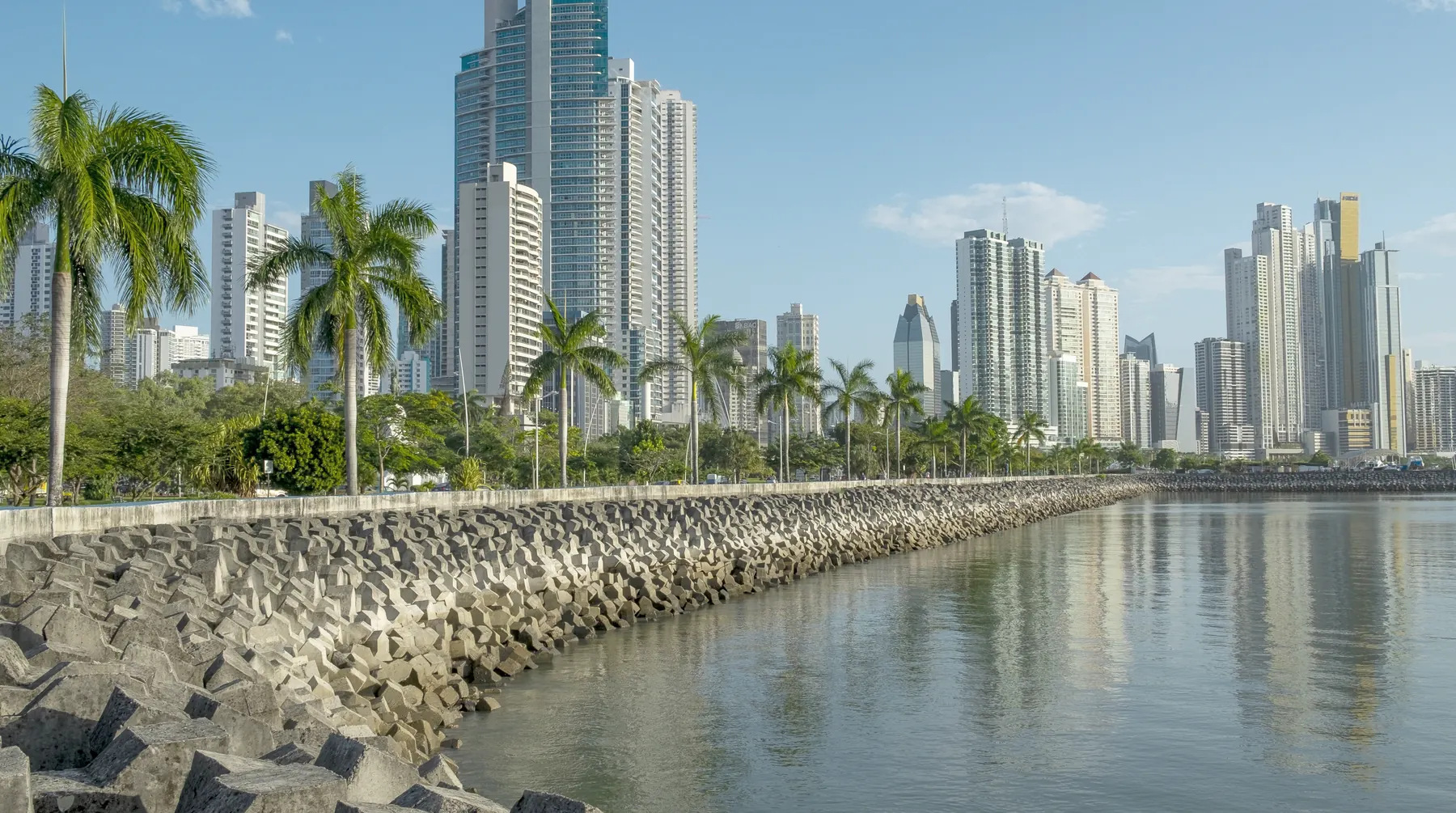
The decree splits property into two categories. A first sale is an apartment or house that nobody has bought or lived in before, sold by the developer or its successor. The resale market is everything that has already been sold, leased, lived in or transferred to an unrelated party. The line is drawn not by year of construction but by the property's history: an apartment in last year's building that has already been let to a tenant counts as resale.
The decree lists actions that do not strip a property of its first-sale status: plot subdivision, registration of improvements, transfer into a trust, a merger or corporate reorganisation without a sale to an outsider. Status is proven with a Public Registry certificate, construction or occupancy permits and tax records. One important caveat: the authorities may disregard transactions that look like an attempt to get around the minimum. A chain where the developer sells to its own company and the company resells to you as new is risky.
The promise-to-purchase option, buying an apartment while it is under construction, is kept separately. The minimum is the same USD 300,000, but the conditions are stricter. Money goes either into a trust account with a Panamanian bank, from which it is paid to the developer under the contract, or 100% is paid to the developer upfront. In the second case a bank instrument in the investor's favour is required: a standby letter of credit, an irrevocable bank aval or a performance guarantee. It is renewed and shown to the ministry every year until the apartment is registered in your name.
There is also a time limit. You can hold the status on promise-to-purchase contracts alone for no more than 3 years in total. If the developer misses deadlines, the investor has 180 business days to replace the investment with another option, and a new promise-to-purchase contract can be signed only once. Miss the deadline or have the second contract fail too, and the permit is cancelled.
What this means for you. Buying off-plan still gives residency, but the risk of construction delays now falls directly on your status. Checking the developer and the guarantor bank becomes part of the preparation, not a formality.
The contract price no longer equals the investment amount
I consider this the most underestimated change. The decree introduces the net computable value. It is the lower of two figures, the price you actually paid and the market value, minus all charges on the property. If an apartment costs USD 320,000 and carries a USD 40,000 mortgage, the net value is USD 280,000, and that is not enough for residency.
Borrowing is allowed only above the minimum. You can buy an apartment for USD 450,000 and take a USD 150,000 mortgage if the loan documents are transparent. But the charge must not push the net value below the threshold.
The ministry checks the price against the cadastral value confirmed by the land authority ANATI. Where there is reasonable doubt, it can require an independent appraisal. The appraiser must be recognised by Banco Nacional or Caja de Ahorros and be independent of the seller, developer, intermediary and lender, and the report must be no older than 6 months. The applicant pays for it. Only what was actually paid to the seller, developer or trustee counts.
What this means for you. An inflated contract price no longer helps reach the threshold. Before buying, compare the price with the market and the cadastre, or the certificate may be refused. We cover this through property due diligence before purchase.
Why a state bank deposit has become the simplest option
A fixed deposit used to be the most expensive way in: USD 750,000 with any Panamanian bank. Now, for two state banks, Banco Nacional de Panamá and Caja de Ahorros, the threshold is USD 500,000. With private banks the minimum is unchanged. The state does not hide its aim: the preamble says the money is needed to fund agricultural and mortgage lending.
The deposit conditions are simple and strict. It is opened by an individual for at least 5 uninterrupted years, with no pledges, blocks or security for third-party loans. The money must arrive by international transfer from an account of the applicant or of a company the applicant ultimately owns. The bank issues a certificate confirming the deposit, its term, the holder and the foreign origin of the funds.
Why I call this option simple. There is no apartment to choose, no developer to check, no appraisal to pay for and no property to maintain. There is no risk that the property will be valued below the threshold. The downside is just as clear: the money is frozen for 5 years in one bank, and the bank sets the return. Comparing USD 500,000 in a resale apartment with USD 500,000 on deposit, the deposit wins on simplicity, the apartment on potential return and the right to use the home.
The money must come from abroad and stay invested for 5 years. Gifts and third-party funds do not count towards the minimum.
Executive Decree No. 17 of 8 September 2026, Official Gazette No. 30613 of 16 September 2026, articles 4, 7, 8 and 9
What this means for you. With a USD 500,000 budget and no wish to own property in Panama, a state bank deposit is the shortest path to the investment certificate.
Securities: the same amount, more instruments
The threshold for the securities market remains USD 500,000. The investment is made personally or through a company of which you are the absolute ultimate owner, and only through a brokerage licensed by Panama's Superintendency of the Securities Market. The amount must be held for 5 uninterrupted years.
The decree lists three groups of instruments. The first is units in private equity and venture capital funds investing in companies, infrastructure and businesses in Panama. The second is bonds, treasury notes and other debt issued or guaranteed by the state. The third is shares, corporate bonds, mutual funds and real estate investment trusts registered and traded under the regulator's supervision.
A new rule protects against market swings. If the portfolio falls below USD 500,000 through no fault of yours, that alone is not a breach. But after notice from the ministry the amount must be restored within 90 calendar days. If you sold securities, withdrew money or pledged them yourself, the general rules on replacing the investment apply.
What this means for you. Build the portfolio with a margin above the threshold so that a market dip does not force you to top up within 90 days.
We will compare investment options for your budget
Tell us the amount, your family and what matters most: a home, income or simplicity. We will compare a new build, a deposit and securities under the new rules.
How long it takes: 15 business days at the ministry and 30 at immigration
For the first time the decree sets maximum deadlines. The Ministry of Commerce and Industries issues the investment certificate within 15 business days after a complete file is admitted through the electronic platform. If documents are missing, 15 business days are given to fix them. If not fixed, the application is treated as not filed and everything starts again. The certificate is valid for 3 months, within which you must file with the immigration service.
Under the decree the National Immigration Service decides within 30 business days of receiving a complete file at the special investor window. You can file before entering the country through a legal representative. But the permanent resident card will not be issued until the applicant and family members enrol biometrics and register in person in Panama.
Choose an option and check the money trail
Decide where to invest and gather statements showing the money arrived from abroad in your name or in a company you ultimately own.
Make the investment
Buy the property, open the deposit or a brokerage account. For property, check in advance whether it counts as new under the decree and whether it carries any charges.
Obtain the investment certificate
The Ministry of Commerce and Industries checks the investment and issues a certificate. The decree sets 15 business days after a complete file is admitted; the certificate is valid for 3 months.
File with the immigration service
Filing goes through a legal representative and can happen before you enter the country. The decree sets a decision within 30 business days of a complete file.
Enrol biometrics and collect the card
Before the permanent resident card is issued, you must enrol biometrics and register in person in Panama.
Confirm the investment every year
Within the 30 days before the anniversary of the decision, report to the ministry, for 5 years.
Fees under the decree: USD 5,000 to the Treasury for processing and USD 5,000 to the immigration service as a repatriation deposit for the main applicant. For each family member, USD 1,000 each to the Treasury and the immigration service.
What this means for you. Excluding document preparation, the path from certificate to decision under the decree takes about two months of business days. The real time depends on how cleanly the file is assembled at the first submission.
Who can still apply under the old rules
The decree leaves a window for those who started earlier. Applications filed with the ministry or the immigration service before 16 September 2026 are decided under the previous amounts and conditions, while new procedural rules apply where they are more favourable. If the investment was made or a binding contract signed before 16 September 2026, you can apply under the previous rules within 6 months of that date. Investment certificates already issued remain valid until they expire.
Another window concerns holders of residency based on economic solvency. Those with such status or a pending application can switch to the qualified investor category within 12 months, provided the investment meets the new amounts. Investments made before 15 October 2020 do not count.
What this means for you. If you bought a resale apartment for USD 300,000 before 16 September, file by mid-March 2027. After that you would have to reach USD 500,000 or change the type of investment.
Family, travel and a passport after five years
Family members are included in the application from the start. The new rule concerns those who come later: a child born or adopted after approval and a spouse by a marriage entered into after the decision. They can be added to the status directly as long as the investment is maintained. You need a ministry certificate confirming the investment, apostilled marriage or birth certificates, a notarised letter of financial responsibility and fees of USD 1,000 each to the Treasury and the immigration service.
If the relationship changes, for example through divorce, a child coming of age or the death of the main applicant, the immigration service must be notified. The family member's status is decided separately, by a reasoned decision and after a hearing. The decree does not allow automatic cancellation.
On travel. The decree contains no requirement to spend a set number of days a year in Panama to keep the permit. Biometrics in person before the card is issued is mandatory; the annual confirmation of the investment goes through a legal representative. For citizenship the decree refers to 5 consecutive years of permanent residence and the additional conditions of the Constitution. The application is filed through the ministry window, which confirms the investment was maintained for all 5 years.
What this means for you. If Panamanian citizenship is part of your plans, presence in the country will have to be proven separately. A permit held from abroad does not by itself lead to a passport. A comparison with other countries in the region is in the article on Latin American citizenship by investment.
Who the programme suits, including Russian citizens
The programme suits those who need permanent residency without annual renewal in a country with the dollar, a developed banking system and direct flights to both Americas and Europe. It works as a second home, a backup status or a base for business in the region. It suits less well those who need a quick passport: citizenship here is possible only after 5 years of real residence.
The decree contains no nationality restrictions: it applies to any foreign national who makes the investment. For Russian citizens the difficulty lies elsewhere. The decree requires the money to arrive by international transfer with its path confirmed by bank documents, and for a deposit, by SWIFT transfer from an account in your name or your company's. That means you need an account in a country from which a Panamanian bank will accept payment, and a complete source-of-funds file. We prepare this stage through source of funds documentation.
Documents from Russia need an apostille and a Spanish translation; the decree expressly provides for this for bank letters and company documents. The decree expressly excludes gifts and third-party transfers from the minimum, so money from relatives should be properly made your own in advance.
What this means for you. For Russian citizens the programme is available on general terms. What limits it is not the decree but the banking path of the money, and that path should be built before choosing an asset.
When I advise not to rush
First: if you need freedom to live in Europe. Panamanian residency gives no right to live in the EU. For that goal European programmes are needed, and the money is better directed there.
Second: if your budget is around USD 300,000 and you are not ready for a new build. Taking the first developer apartment just to meet the threshold is poor logic. New residential complexes in Panama differ in quality and rental demand, and you cannot exit the investment before 5 years without replacing it.
Third: if the money cannot be transferred from abroad with a clear history. The decree is stricter than before on the origin of funds, and without this part the certificate will not be issued, however well the asset is chosen.
Fourth: if you are counting on citizenship without moving. Five consecutive years of permanent residence means living in the country, not a card in your wallet.
What this means for you. Only those who invested before 16 September 2026 and fall within the six-month window should hurry. For everyone else, choosing the right option matters more than speed.
What residency changes in taxes, and what it does not
Panama's tax system is built on the territorial principle: article 694 of the Tax Code taxes income produced in Panamanian territory, wherever it is received. Income generated abroad is, as a general rule, not subject to this tax. For companies the rules have tightened in recent years: the EU removed Panama from its tax blacklist after a reform of the foreign income regime; details are in the article on the EU blacklist.
Residency by itself does not change your tax status in the country where you live now. Tax residence is determined by days and the centre of interests, not by a resident card. If you continue to live in Russia or the EU, your taxes there remain. A calculation for a specific family is best done before investing.
What to do before filing
- Define the goal: a backup status, a move or a future passport. This determines whether you need property in Panama.
- Choose an option from the table above and build in a margin over the threshold, especially for securities.
- Check the money trail: an account abroad in your name or your company's, statements, a bank letter, an apostille.
- For property, check first-sale status, charges and whether the price matches the market and the cadastre.
- For off-plan purchases, check the developer and the bank that will issue the guarantee.
- If the investment was made before 16 September 2026, file within 6 months of that date.
We will check whether your investment will count
Describe the property or deposit and where the money will come from. We will tell you whether the amount meets the new rules and which documents are missing.
How this piece was prepared
This piece is based on the text of Executive Decree No. 17 of 8 September 2026, published in Panama's Official Gazette No. 30613 of 16 September 2026, checked on 23 October 2026. Previous amounts follow Decree No. 722 of 15 October 2020 as amended by Decrees No. 109 of 13 October 2022 and No. 193 of 15 October 2024, which the new decree cites, and legal reviews from September and October 2026. The territorial tax principle is described under article 694 of Panama's Tax Code as restored by Law No. 1 of 2014. Processing times are the maximum deadlines under the decree, not statistics of actual decisions. This piece is not a legal opinion on your situation.
Frequently asked
Questions people ask before deciding
01Can I get Panamanian residency for a USD 300,000 resale apartment?
No, if the investment was made after 16 September 2026. The minimum for resale property is now USD 500,000. If the apartment was bought earlier, you can apply under the old rules within 6 months of 16 September 2026.
02Which banks accept the USD 500,000 deposit?
Only Banco Nacional de Panamá and Caja de Ahorros. With private banks the minimum remains USD 750,000. The deposit is held for 5 years with no pledges or blocks.
03Do I have to live in Panama to keep the permit?
The decree sets no minimum number of days in the country to keep the status. You must enrol biometrics in person before the card is issued and confirm the investment every year. Citizenship requires 5 consecutive years of permanent residence.
04Can I buy with a mortgage?
Yes, but only above the minimum. What counts is the lower of the price and the market value, minus any charges, and it must not fall below the threshold.
05Can Russian citizens take part in the programme?
The decree has no nationality restrictions. The main condition is that the money arrives by international transfer with a proven origin, from an account in your name or your company's.
06Can a child born after I receive residency be added?
Yes. The decree allows a new child or a spouse by a marriage after approval to be added directly, as long as the investment is maintained. Fees are USD 1,000 each to the Treasury and the immigration service.
About the author
Related materials
What to read next
 AnalysisThe EU updates its tax blacklist: Panama is out, Vanuatu and Russia stay
 ArticleLatin America with a Vanuatu passport: Peru, Ecuador and the Caribbean visa-free
 ComparisonAntigua and Barbuda or Grenada: Family Passport for Large Families in 2026
Personal programme selection is conducted by Anna Kovalevskaya, Head of Legal, BRIDGES.
We will find the right Panama residency option under the new rules
Tell us your budget and goal. We will compare a new build, a deposit and securities and tell you which documents are needed.
