Citizenship · Dominica
How much does Dominica citizenship cost in 2026: EDF contribution and real estate
Updated: June 2026·9 min read·Expert reviewed
Terms and costs verified: June 2026
Contents
Dominica is often called one of the most accessible paths to a second passport in the Caribbean. But "accessible" does not mean "cheap without caveats." Behind the base amount are fees, checks, and charges for each family member. In this article, we have broken down the budget in detail - in simple terms and with figures for 2026. You will see two paths, understand which is more profitable for you specifically, and will not receive any surprises in the bill. All amounts are indicative, based on publicly available program data; the final calculation is always individual.
Summary: how much does Dominica citizenship cost
Let's start with the main point. Dominica has two paths to a passport. The first is a non-refundable contribution to the state Economic Diversification Fund (EDF). The second is the purchase of approved real estate.
The base figure in both cases is similar - approximately from 200,000 USD per person. But the paths are structured differently.
- Contribution (EDF) - money goes to the state and is not returned. However, there are fewer ancillary fees and the process is simpler.
- Real estate - you purchase a share in a resort. After 3-5 years, the property can be sold and the investment returned. But additional government fees apply on top.
That is, "from 200,000 USD" is just the entry point. The actual bill is always higher: due diligence checks, government fees, passport fee, and payment for each family member are added to it.
Below we will break down each expense item. And show which path is more profitable in different situations.
Two paths: contribution or real estate
Choosing a path is the first decision that determines the entire budget. Let's keep it simple.
Path 1. Fund contribution (EDF). You transfer money to the state fund. This is like a one-time payment for citizenship. The money will not be returned. However, this is the simplest path: no real estate transaction, no management company, fewer documents.
Path 2. Approved real estate. You purchase a share in a resort from the official list (for example, hotel complexes and eco-resorts). After a set period, the share can be sold.
The main difference is in refundability and fees. The contribution is cheaper in terms of total fees, but the money is lost. Real estate is more expensive in ancillary payments, but the capital is theoretically returned.
We provided a detailed breakdown of each option in separate articles: Dominica citizenship through investment and Dominica real estate for a passport.
Path 1: EDF fund contribution and its thresholds
EDF is the Economic Diversification Fund. In simple terms: a state fund that finances country projects. Your contribution is non-refundable.
The thresholds for 2026 are as follows:
- Single applicant Starting from 200,000 USD.
- Family of up to 4 people Starting from 250,000 USD.
- Each additional family member Additional fee (depends on age and relationship).
Why does a family of four cost only 50,000 USD more than one person? Because the fund charges a fixed amount for the base package. This makes the EDF path particularly advantageous for families.
Important: verification and minor fees are added to the contribution. However, there are no large separate government fees like with real estate. Therefore, on a full EDF basis, it is almost always cheaper for a family.
All amounts are approximate. The program may adjust thresholds, so always verify the current figures before submission.
Path 2: Real estate and holding period
The second path is purchasing a share in an approved project. Minimum for 2026 is from 200,000 USD.
Key point – holding period. This is the time during which you cannot sell the property:
- 3 years from the date of citizenship acquisition if you sell on the open market.
- 5 years if the future buyer is also applying for citizenship through this property.
What is purchased in Dominica? Shares in resort complexes from the official list. These are hotels and eco-resorts under well-known brands. You do not select an individual villa – you enter the project as a co-investor.
Advantage of this path – capital theoretically returns. In 3 years, the share can be sold. Disadvantage – significant government fees apply on top, which do not exist with the contribution. These often "eat away" the advantage of return, especially for large families.
More details on properties and transactions in the article on Dominica real estate.
Verification (due diligence): mandatory expense
Due diligence is verification of your background and funds. The government wants to ensure the applicant is clean: no legal problems, source of funds is clear. This fee is paid by everyone and applies to both paths.
2026 tariffs are approximately as follows:
- Main applicant - 7 500 USD.
- Family member from 16 years old 4,000 USD for each.
- Children under 16 years Usually without verification fee.
Sometimes enhanced verification is required. This occurs with complex background or specific citizenship. The fee is then higher. The programme does not accept applications from citizens of Russia and Belarus at all.
Verification cannot be avoided and costs cannot be saved on it. However, it works in your favor: a clean passport is valued higher, and Dominica itself maintains the reputation of a reliable program.
We will map your route to Dominica citizenship
We review your family, source of funds and timing and tell you which route fits.
Government fees and passport collection fees
Besides the main investment and verification, there are fees. And here the paths diverge most significantly.
With contribution to the fund (EDF) There are no separate large government fees for investment. You pay the contribution itself plus minor fees. This is what makes EDF cheaper overall.
With real estate Government fees are substantial and depend on family size:
- One applicant – approximately 75,000 USD;
- Family of up to three people – approximately 100,000 USD;
- Each additional person under 18 years – approximately 25,000 USD;
- Each additional person over 18 years – approximately 40,000 USD.
Additionally, both paths have minor fees: for certificate of naturalization – approximately 500 USD per person, for mandatory interview (from age 16) – approximately 1,000 USD.
The conclusion is simple. With real estate, capital returns, but these fees do not. They must be included in the budget.
Complete estimate: path, investment, return, total
We will summarize everything in a table. Figures are approximate, for one applicant and a family of four. Associated fees (verification, fees, passport) are shown separately.
| Path | Investment | Return | Total approximately (one person) |
|---|---|---|---|
| EDF contribution, one | From 200,000 USD | Non-refundable | Approximately 210,000-215,000 USD |
| EDF contribution, family of 4 | From 250,000 USD | Non-refundable | Approximately 270,000-280,000 USD |
| Real estate, single applicant | From 200,000 USD | Return within 3-5 years (share sale) | Approximately 290,000-300,000 USD including fees |
| Real estate, family of 4 | From 200,000 USD | Return within 3-5 years | Approximately 340,000-360,000 USD including fees |
How to read the table. The "Investment" column represents the entry amount. The "Total" column represents entry plus due diligence, government fees, and administrative charges. For real estate, the investment is returned, but fees and charges are not.
Therefore, for an EDF family, it often works out cheaper on the actual bottom line, even accounting for the non-refundable contribution. Real estate is more attractive to those willing to freeze capital for 3-5 years for its return.
What is more advantageous for you and how much to budget
Simple rule. Calculate not the entry amount, but the full statement—with all fees and all applicants in the application.
Choose EDF if:
- You have a family—the fund's thresholds are more cost-effective overall
- You want simplicity and speed, without a real estate transaction
- You don't plan to recover the investment and value savings on fees
Choose real estate if:
- It is important to theoretically recover capital within 3-5 years
- You are single or there are two of you—then fees don't impact the budget as heavily
- You are interested in the property itself (resort, rental income, brand)
How much to budget in practice? For one person—plan for 210,000-300,000 USD depending on the pathway. For a family of four—plan for 270,000-360,000 USD. This includes due diligence, government fees, and passport processing charges.
And remember the licensed agent's fee—you cannot submit an application directly; only through an authorized representative. Clarify this amount in advance as well.
Want an exact calculation for your family and pathway? Write to us —we will calculate the estimate line by line and advise which option is more advantageous.
Source of funds verification: what they examine
Any amount in the estimate is only half the work. The other half is proving the money is clean. This is source of funds verification.
What is typically demonstrated:
- Where the money comes from—business, asset sales, salary, inheritance, dividends
- Documentation chain—contracts, bank statements, tax returns
- That the money trail is transparent and logical
For applicants from CIS countries verification follows the law strictly, and the programme does not accept applications from citizens of Russia and Belarus. No sanctions workarounds— and within regulations. Thorough verification is standard practice, not cause for concern. The clearer the money's history, the smoother the process.
Many home countries allow it too, including the UK, the US, Canada and Russia. New passport notification to the Interior Ministry is typically required within approximately 60 days. And separately: citizenship is not the same as tax residency. Where to pay taxes is determined by different rules.
"In practice, clients are frightened not by the amount but by the uncertainty behind it. So the first thing we do is break down the estimate line by line. The base 200,000 USD is entry only. Then come due diligence, government fees, and processing charges for each person in the application. This is where the pathways differ significantly. If you have a family, almost always the fund contribution is more advantageous: thresholds are lower and there are no substantial government fees like with real estate. If you're going alone or as a couple and want capital returned—look at real estate with a 3-5 year holding period. Separately on funds: their source is reviewed seriously, and this is normal. The programme does not accept applications from Russian citizens. And remember: you deposit the large amount only after the approval letter—so before that, you risk only processing charges."
Family composition: who can be included and at what cost
Dominica is renowned for very broad family definitions. You can include many relatives in a single application—a major advantage, especially with the EDF pathway.
Typically included:
- Spouse
- Children (generally up to age 30, if dependent on you)
- Unmarried daughters—under their own age conditions
- Parents and grandparents - typically aged 65 and above, and dependent on your financial support.
Each person in the application adds to the cost estimate. This includes a contribution or fee, a verification fee (for ages 16+), and a passport fee. Therefore, the total invoice depends not only on the pathway chosen but also on how many people you include.
The advice is simple. Decide immediately who will be included in the application. Then calculate the cost estimate for this composition. This way there will be no surprises. Exact amounts for each family member are best verified with the agent - they depend on age and pathway.
What you get for this money
A fair question: what does a Dominica passport ultimately provide? We will break this down without exaggeration.
- Second passport - processed remotely, without relocation, approximately within 3-6 months.
- Visa-free access - approximately 120-145 countries by various counts. Among them - Schengen (up to 90 days per six months), Singapore, Hong Kong, many countries in Asia and Latin America.
- Citizenship for life and transfer to children.
- Tax flexibility - Dominica does not tax worldwide income, but citizenship alone does not make one a tax resident.
Let us be about limitations. A Dominica passport is not EU membership and does not grant the right to live and work in the European Union. Entry to the United Kingdom requires a visa, not visa-free access. The USA also requires a visa. These are normal Caribbean realities - it is important to understand them from the start.
More about passport opportunities - in the article Dominica passport.
Timeline and staged payment schedule
Money is not paid all at once. Payments are divided into stages - this is convenient and logical.
How the process typically proceeds:
- Start. You sign an agreement with a licensed agent, pay initial fees and verification costs.
- Verification (due diligence). The state reviews your background and finances. This is the main time-consuming stage.
- Approval in principle. If everything is clear, an approval letter arrives. Only after this is the main amount paid - the contribution or real estate payment.
- Passport. After payment, a naturalization certificate and passport are issued.
The entire process takes approximately 3-6 months. The main advantage of this scheme: you pay large sums only after approval. In other words, you risk only verification fees in advance, not the entire amount.
Timeline depends on government workload and complexity of your case. Therefore, any figures are guidelines, not guarantees.
Common budget calculation mistakes
People often count only the entry fee and are surprised by the final invoice. We will collect typical oversights so you can avoid them.
- Count only 200,000 USD. This is only the entry fee. Add verification, fees, and passport charges.
- Forget about family members. Each family member adds to the cost estimate. A large family on real estate becomes significantly more expensive due to fees.
- Confuse pathways by fee structure. Large government fees apply to real estate, not EDF. There are none for contributions.
- Not account for agent fees. You cannot apply directly. Representative services are a separate expense item.
- Expect real estate returns "immediately." You can sell your share only after the holding period - 3 or 5 years.
The correct approach is to calculate the full cost estimate for your family composition and pathway. Then the figure in the contract will not be an unpleasant surprise.
We will send a document checklist for your case
Leave your details: we will put together documents and timelines for your family.
Conclusion: how much a Dominica passport actually costs
Let us put it all together. Dominica is one of the most affordable pathways to a second passport in the Caribbean. But "affordable" works with calculation.
Remember three guideline figures for 2026:
- One person - budget approximately 210,000-300,000 USD depending on the pathway.
- Family of 4 - approximately 270,000-360,000 USD.
- Timeline Approximately 3-6 months, remote work.
For families, an EDF contribution is often more advantageous—lower duties overall. For those who want to recover capital and are applying with a small group, real estate with a 3-5 year holding period is more attractive.
All amounts are approximate and subject to change. The final estimate is always individual: it depends on the pathway, number of applicants, and current program rules. The best approach is to calculate your specific case in advance so you enter the process with a clear budget.
If you plan to apply from Russia or the CIS, review the separate analysis: Dominica citizenship for Russian citizensAll program details are collected on the page Dominica citizenship.
Frequently asked
Questions people ask before deciding
01How much does Dominica citizenship cost in 2026?
Minimum—from 200,000 USD per person. This is the entry point for either pathway. Including verification, duties, and fees, the actual cost for one person comes to approximately 210,000-300,000 USD depending on the chosen pathway.
02Which pathway is cheaper—contribution or real estate?
For families, a contribution to the EDF fund is almost always cheaper: lower thresholds and no major government fees. Real estate costs more when all fees are totaled, but invested capital theoretically returns within 3-5 years.
03How much does an EDF fund contribution cost?
For 2026, approximately USD 200,000 per applicant and USD 250,000 per family of up to four persons. The contribution is non-refundable. Additional verification and minor fees apply.
04What is the cost of the real estate pathway?
The real estate itself costs from USD 200,000. However, substantial government fees are added: approximately USD 75,000 per individual and approximately USD 100,000 per family of up to three persons. Therefore, the total cost is significantly higher than the initial entry fee.
05Is the money for real estate refunded?
Yes, theoretically. The stake in the project can be sold after the holding period—after 3 years in case of regular sale or after 5 years if the buyer also applies for citizenship. Government fees are not refunded.
06What is the cost of due diligence?
Approximately USD 7,500 for the main applicant and USD 4,000 for each family member aged 16 and above. Children under 16 are typically exempt from this fee. Enhanced due diligence may be required in some cases, resulting in a higher amount.
07Who can be included in the application?
The composition is very broad: spouse, children (typically up to age 30 if dependent), unmarried daughters, as well as parents and grandparents aged 65 and above if dependent on you. Each person adds to the estimate.
08What budget should be allocated for a family of four?
Approximately USD 270,000–360,000 including verification, fees, and passport charges. The exact amount depends on the pathway and the age of family members. The EDF pathway is typically more advantageous for families.
09How quickly is a passport issued?
Approximately 3–6 months from the date of complete submission. Everything is processed remotely; relocation is not required. Processing times depend on the workload of the authorities and the complexity of your case.
10Can one apply for citizenship from Russia?
Not for citizens of Russia and Belarus: the Dominica programme does not accept their applications, as both countries are on the official restrictions list of the Citizenship by Investment Unit.
11Does a Dominica passport provide visa-free access to the EU and the United Kingdom?
To the Schengen area—yes, up to 90 days per six months without a visa. However, entry to the United Kingdom and the USA requires a visa. A Dominica passport is not part of the EU and does not grant the right to live and work in the European Union.
12Are there hidden costs beyond the investment?
Yes, they are important to account for: verification, government fees (for real estate), naturalization certificate fee approximately USD 500 per person, interview fee approximately USD 1,000, and licensed agent fee. Direct application is not possible.
Transparency
How this material was prepared
- Author
- Darya Melnik, senior Investment Programs Advisor, BRIDGES
- Terms and costs last verified
- June 2026
- Sources
- official government authorities of the relevant country and state publications
- Methodology
- government minimum requirements are stated separately from due diligence charges, state fees, legal and banking costs
Sources and methodology
Figures, terms and timelines are checked against official sources as of June 2026. Link availability verified in August 2026. Third-party blogs and agent websites are not used as a source of programme terms.
- [1]Commonwealth of Dominica Citizenship by Investment UnitOfficial conditions of the programmecbiu.gov.dm
Methodology: tables and charts state government minimum investment requirements; due diligence charges, state fees, legal, banking and other costs are calculated separately and are not included in the minimum thresholds.
About the author
Related materials
What to read next
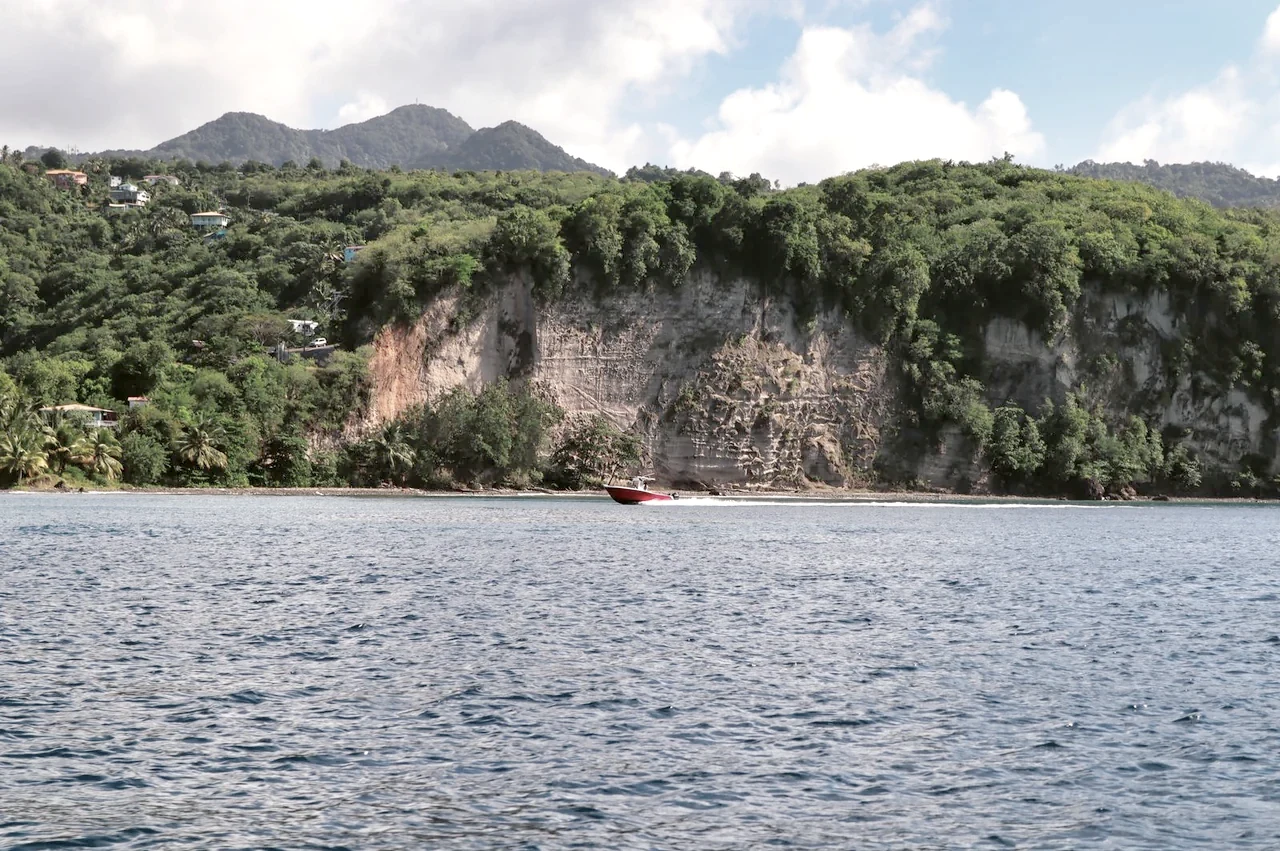 ComparisonDominica or St. Lucia: the most affordable Caribbean citizenship in 2026
 AnalysisWhat is due diligence and why the Caribbean is rejecting applications
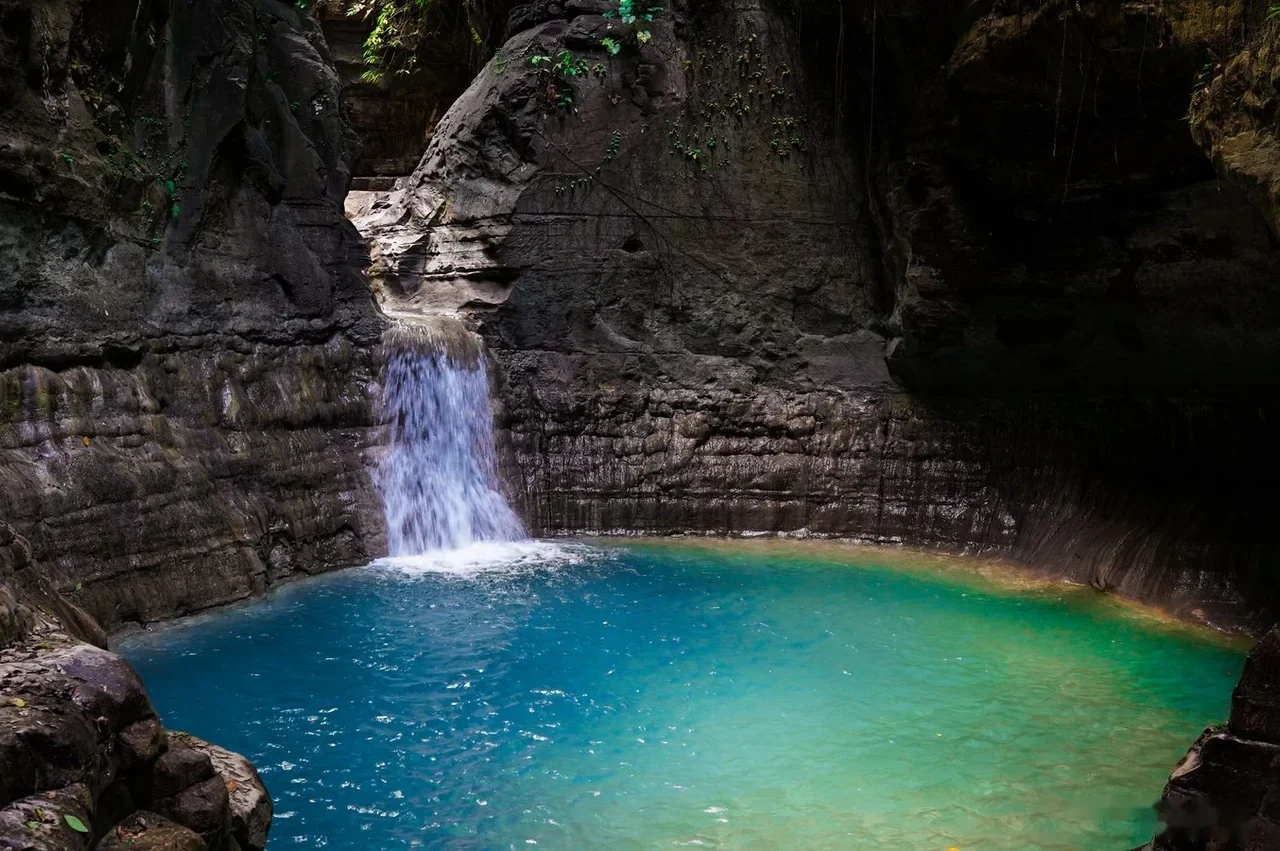 ArticleBenefits of Dominican Citizenship in 2026: What Makes This Passport Useful
Personal programme selection is conducted by Anna Kovalevskaya, Head of Legal, BRIDGES.
Buying property in Dominica: what to check
Title, encumbrances, outstanding debts and what to look for in the contract.