Residency · Greece
Property in Halkidiki in 2026: houses by the sea near Thessaloniki and prices

Updated: June 2026·12 min read·Expert reviewed
Terms and costs verified: June 2026
Contents
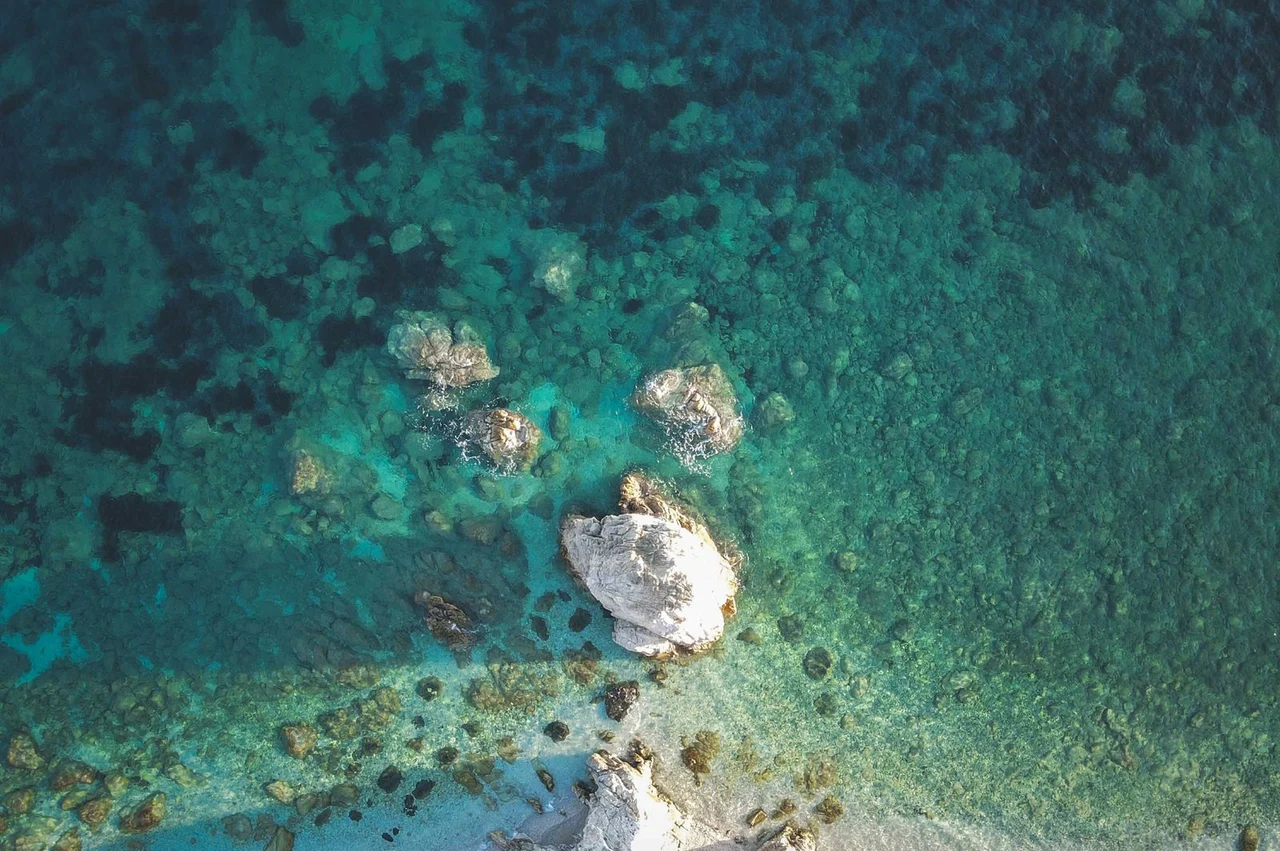
Halkidiki is three green “finger” peninsulas an hour’s drive from Thessaloniki international airport: pine forests run right down to the water, blue-flag beaches, and yet no island isolation – proper roads with no ferries. For decades, residents of Thessaloniki and investors from Eastern Europe, including Russians, have come here for a second home by the sea. In 2026, new villas start at roughly 3,500 euros per square metre, front-line properties by the water start at 500,000 euros, and the Golden Visa threshold in most parts of Halkidiki is 400,000 euros. We break down where a seaside house costs how much, how Kassandra, Sithonia and Athos differ, what summer rental looks like, and how buying property turns into a legal Greek residence permit.
Halkidiki: three “fingers” by the sea an hour from Thessaloniki
If you look at a map of northern Greece, Halkidiki (Chalkidiki in Greek, often referred to in the plural in everyday speech) looks like a palm with three fingers stretching out into the Aegean Sea. The western “finger” is Kassandra, the middle one is Sithonia, and the eastern one is Athos, home to the monastic republic of Mount Athos. All of this is mainland Greece, the region of Central Macedonia, and this is the key difference between Halkidiki and the popular islands: there is no need to fly and then take a ferry. From Thessaloniki “Makedonia” international airport it is about an hour to the first Kassandra resorts, and roughly one and a half to two hours to the far bays of Sithonia on a good road.
It is precisely this logistics that shapes the character of the market. Thessaloniki is Greece’s second-largest city, and for its residents Halkidiki is a nearby getaway and a place for a second home by the sea. Demand here is not only touristic and not only foreign: a significant share of transactions are Greeks buying a summer home an hour from their apartment. Historically, citizens of Eastern Europe – including many Russians – have also actively bought property here, for whom the combination of “pines, clean sea and an affordable price” proved clear and appealing.
For the buyer this means a mature, liquid market: there are new builds, resale properties and building plots, and an established rental season. If your goal is not just holidays but legal status in Europe, then Halkidiki property is logically considered together with the Greece Golden Visa – more on this in detail below.
Why Halkidiki rather than the islands
Islands like Santorini or Mykonos have their own magic, but also their own downsides: a high entry threshold (these are premium Golden Visa zones with an 800,000-euro threshold), seasonality with an almost dead winter, dependence on ferries and the costly logistics of any renovation. Halkidiki plays in a different league – this is “normal” resort property next to a major city, and it has several objective advantages.
- Year-round access. No ferries and no dependence on the weather at sea – you can reach the property by car from Thessaloniki on any day. This simplifies ownership, letting and any renovation.
- Nature without postcard overheating. Pine and olive forests running down to the water, dozens of blue-flag beaches, a clean turquoise sea. And without the crowds and prices of the hyped-up islands.
- Two sources of demand. Summer tourists and a steady flow of second-home buyers from Thessaloniki. This makes the market more resilient than purely tourist locations.
- An entry threshold below that of the islands. Most of Halkidiki falls within the standard Golden Visa zone with a 400,000-euro threshold rather than the premium 800,000 euros.
- A clear language of prices. Here there are offers at 250–300 thousand euros (apartments, houses needing renovation) as well as villas worth millions – you can choose a strategy to fit your budget.
In short: the islands are about emotion and status, Halkidiki is about a sensible balance of price, nature and ease of ownership. For a family that wants a real house by the sea rather than a postcard, it is often the more rational choice.
Kassandra: the most built-up and “resort” finger
Kassandra is the western peninsula, the closest to Thessaloniki and the most developed of the three. It is a classic resort “finger”: developed infrastructure, long sandy beaches, hotels, restaurants, nightlife, supermarkets and water parks. It attracts those who value not seclusion and wild nature but convenience, service and an easy summer life within walking distance.
Kassandra’s most expensive and sought-after locations are Hanioti and Afytos, a picturesque village on a cliff overlooking the bay. Next in price come Siviri, Pefkochori, Polychrono and Kallithea, followed by Nea Skioni, Kriopigi and Fourka. Kallithea and Hanioti are strong spots for summer rental: the beachfront front line here commands the highest seasonal rates.
In terms of prices, Kassandra offers a wide spread. Apartments in good condition run at roughly 1,300–2,000 euros per square metre on the resale market and from 2,400–2,500 euros in new builds. Villas start at around 250,000 euros (properties needing renovation or unfinished) and easily exceed a million in premium locations right by the sea. This is the most straightforward “finger” for those buying their first seaside home who want to enjoy a developed environment straight away rather than build a life from scratch.
Sithonia: nature, bays and waterfront villas
Sithonia is the middle “finger,” and it is a completely different story from Kassandra. There are fewer hotels and clubs here, but more wild nature: pine forests right up to the water, a string of secluded bays, turquoise lagoons. Sithonia is chosen by those seeking privacy, quiet and a seaside villa surrounded by nature rather than resort crowds.
The most developed and expensive spots are Neos Marmaras, with its marina and shops, and Nikiti, a fully-fledged, well-appointed resort. Vourvourou stands apart – an area that made its name specifically for luxury villas by the lagoon. The quiet villages of Sarti and Toroni offer a more intimate format for those who love peace and quiet. Prices for the most prestigious front-line Sithonia villas start at roughly 400,000 euros and up, while top waterfront properties can begin at 1.5 million euros.
Sithonia is a “buy for the future” choice: the nature is premium, properties are often more expensive, and the season is slightly shorter and more private. For an investor in an expensive waterfront villa this is a very strong location; for those who need maximum occupancy from short-term rental, you have to look at the specific village and beach – the market here is deeper for top properties and thinner in the far bays.
Athos and Ouranoupoli: a quiet entrance to the third “finger”
The eastern “finger” – Athos – is arranged differently. Most of it is occupied by the autonomous monastic republic of Mount Athos, where women are not allowed to enter and men need a special permit (diamonitirion). You cannot buy real estate there as an ordinary home – it is a restricted territory. That is why the market of the third finger is concentrated at its “gateway” – the town of Ouranoupoli and the adjacent coast.
Ouranoupoli is valued for its calm atmosphere, views of Mount Athos and good summer rental: according to market estimates, yields here can reach roughly 5–7% per year with competent management. It is a location for those who want seclusion and atmosphere but are not ready to head off to the truly wild bays of Sithonia.
- Pros: quiet, prices below Kassandra’s hottest spots, views and a special atmosphere, decent summer rental.
- Cons: a smaller choice of properties, more modest infrastructure, further from Thessaloniki than Kassandra.
For the buyer, the third “finger” is a niche story: if you are after peace and quiet and are ready for a smaller choice, Ouranoupoli may prove a fortunate and underrated entry point into the Halkidiki market.
We will find the right basis for residency in Greece
We calculate the budget and timing for your family and list the documents you need.
Comparison of locations: which one has what character and price
To make it easier to get your bearings, let’s bring the three “fingers” and key villages together in one table. The prices are indicative 2026 starting levels to give a sense of the order of magnitude; a specific transaction always depends on the proximity to the sea, the condition and the area of the property.
| Location | Character | Indicative price |
|---|---|---|
| Kassandra: Hanioti, Afytos, Kallithea | The most resort-oriented “finger,” developed infrastructure, strong rental | Apartments from 2,400–2,500 euros/m2; seaside villas from 500,000 euros |
| Kassandra: Pefkochori, Polychrono, Kriopigi, Fourka | Calmer and more affordable, a family format | Houses and villas from roughly 250,000–350,000 euros |
| Sithonia: Neos Marmaras, Nikiti | Developed resorts, marina, higher prices | Front-line villas from roughly 400,000 euros |
| Sithonia: Vourvourou, Sarti, Toroni | Nature, lagoons, luxury villas and quiet | Top waterfront villas from 1.5 million euros (indicative) |
| Athos: Ouranoupoli | Peace, views of Mount Athos, rental 5–7% | Prices below Kassandra’s hot spots |
This table is a starting map for the conversation. The actual price per square metre in the very same village can differ twofold depending on whether it is the front line by the beach or the second row behind the road. So treat the figures as a guide, not a price list.
Property prices in Halkidiki in 2026
Now for more detail on the money. It is convenient to divide the Halkidiki market by property type – that makes it clearer what to budget for. All the figures below are indicative 2026 market levels; they show the order of magnitude, not a fixed price list.
- Apartments. Resale property in decent condition runs at roughly 1,300–2,000 euros per square metre. New builds start at 2,400–2,500 euros/m2, and on the beachfront front line in sought-after resorts often above 3,000 euros/m2.
- Maisonettes and townhouses. New builds – from roughly 3,000 euros/m2.
- Villas. New villas start at around 3,500 euros/m2 depending on the level of finish. Budget options needing renovation or without finishing can be found from 250,000 euros, but that is no longer a “turnkey house by the sea.”
- The front line by the water. A villa right on the beach or by the sea – roughly from 500,000 euros as the lower bar, while prestige properties in the premium bays of Sithonia start at 1.5 million euros.
The average ticket for premium listings on luxury platforms runs into the hundreds of thousands and millions of euros, but that is the top of the market. For most buyers, the realistic range for a “decent house or villa by the sea” is roughly 300,000–700,000 euros. To cross-check against the broader price context across the country, see our overview of property prices in Greece in 2026, and how the purchase is technically arranged – in the guide how to buy property in Greece.
A seaside house in Halkidiki or an apartment in Thessaloniki
Buyers from northern Greece often face a choice: invest in a house by the sea in Halkidiki or in a city apartment in Thessaloniki. These are two different scenarios, and there is no “one-size-fits-all” right answer – it all depends on the goal.
A house by the sea in Halkidiki – this is about the season, holidays and summer rental. The property works at full capacity from May to September, delivers the feeling of “your own sea” and appreciates well in price on hot front-line plots. But in winter the resorts empty out, and there is almost no long-term urban rental here.
An apartment in Thessaloniki – this is about year-round living, stable long-term rental to students and company employees, and urban infrastructure. Seasonality is minimal, but there will be no “wow effect” of the sea outside your window either.
In practice, many investors combine the two: a city apartment for year-round income plus a house in Halkidiki for the season and their own holidays. If the city scenario appeals to you more, study the separate breakdown of of property in Thessaloniki – a logical neighbour of Halkidiki both on the map and by budget.
Property in Halkidiki for Russians: what is important to know
Russians have historically been among the most prominent buyers in Halkidiki, and the region remains accessible to them in 2026. But there are nuances that are important to understand in advance.
- You can buy. A Russian citizen has the right to buy property in Greece on general terms – there is no ban. You need an AFM, a notary and a legal source of funds.
- Entry. A Schengen visa is required for short trips – it is issued, but since 2022 checks have been stricter and multiple-entry visas are limited. For residence, a national D visa or a residence permit is arranged.
- The Golden Visa is available. The programme is open to Russians too – strictly legally, with enhanced source-of-funds compliance. No circumvention of sanctions: the money must have a transparent and verified origin.
- Payments. The settlements and the banking path of the money are the most sensitive part. Here it is critical to set up the correct structure in advance so that the payment passes the checks of the Greek bank and the notary.
The key idea: for a Russian buyer, Halkidiki is an absolutely workable option both for a seaside home and for a European residence permit, but the success of the deal is determined not by the price of the villa but by a properly prepared source of funds and payment route. This is the part where doing it yourself most often leads to frozen money and a collapsed transaction.
Common mistakes when buying a house by the sea
Over years of practice we see that buyers in Halkidiki are let down not by rare mistakes but by the same typical ones. Let’s go through them so you don’t repeat them.
- Buying “from photos” without a viewing. The front line versus the second row behind the road is a difference both in price and in living. Road noise, a long walk down to the beach, a view onto a neighbour’s wall – all of this is only visible on site.
- Ignoring seasonality. Calculating yield “on July” for the whole year is a classic trap. In winter the resort empties out, and the real annual figure is more modest than the bright summer one.
- Confusing the Golden Visa with daily rental. You cannot buy a villa for a residence permit and let it on a daily basis – this means loss of status and a fine. The two goals must be kept separate from the very start.
- A property below the residence permit threshold. If the goal is a Golden Visa, a property for 350,000 euros will not qualify: you need a threshold of 400,000 euros and an area of at least 120 sq. m in a single transaction.
- A transaction without an independent lawyer. Trusting the seller’s agent to check the title means checking nothing at all. You need your own lawyer protecting your interests.
- Underestimating maintenance costs. Pool, garden, ENFIA, management – a villa requires a maintenance budget, and it is often forgotten.
The good news: all these mistakes are preventable at the planning stage. The earlier the purchase strategy is built, the fewer surprises at the transaction and afterwards.
We will calculate the budget for your family
A full estimate: contributions, fees and our work for your family.
How to choose a property in Halkidiki: an expert’s view
A DIY buyer usually looks at the beauty of the picture and the price per square metre. A professional looks at something else – and that is exactly what determines whether the purchase turns out well five years down the line.
- First the goal, then the property. A holiday home, a rental investment and a Golden Visa property are three different lists. Mixing them up is the first mistake.
- Proximity to the sea and access to the water. The front line and genuine walking access to the beach are what hold the price and the rental. This is checked on foot, not on a map.
- Legal cleanliness. Title, absence of encumbrances, the legality of buildings and permits – on the Greek market there are properties with problematic legalisation.
- Meeting the residence permit threshold. If you need the status, the property must clearly clear 400,000 euros and 120 sq. m in a single transaction, with a margin.
We always start not by showing villas but with the question “why.” One village is good for holidays, another for maximum rental, a third for a Golden Visa. Once the goal is clear, 80% of unsuitable options are cut out, and from the rest we then choose by proximity to the sea, condition and legal cleanliness. This order saves both money and nerves.
Conclusion: who Halkidiki suits in 2026
Halkidiki is the rational choice for those who want a genuine house by the sea next to a major city rather than a postcard island with a premium price tag and ferries. There is a mature and liquid market here, two sources of demand, year-round access and a clear language of prices – from apartments for 250–300 thousand to villas worth millions.
If your goal is summer holidays and seasonal rental, choose resort-style Kassandra or quiet Ouranoupoli. If you are after privacy and a prestige waterfront villa, look at Sithonia. And if the purchase is also driven by the goal of legal European status, then a house from 400,000 euros in Halkidiki qualifies for the Golden Visa straight away – and then seaside property becomes an entry ticket to the EU with the prospect of permanent residence and citizenship.
The main thing is not to confuse your goals and not to cut corners on due diligence. The price of the villa matters, but the fate of the deal is decided by the right location for the goal, a clean title and a properly prepared source of funds. That is where the conversation about buying a house in Halkidiki should begin.
Summer rental and yields in Halkidiki
Halkidiki’s main money argument is a strong summer season. Both Greeks and foreigners come here to holiday, and the absence of ferry dependence makes the region predictable: the tourist arrives by car or transfer rather than praying over the ferry timetable.
What is important to understand about yields:
- Order of magnitude. According to market estimates, for properties in the 400,000-euro range in Halkidiki’s tourist zones the long-term yield can reach roughly 5–6% per year, and in certain spots such as Ouranoupoli up to 5–7%. This requires active management.
- Seasonality. The main earnings are concentrated in July–August and the shoulder months (June, September). In winter resort rental is almost non-existent – this is not a city with year-round demand.
- Management. To achieve the quoted yield, work is required: cleaning, check-ins, promotion on platforms, pool maintenance. Either your own involvement or a management company for a percentage.
A critically important nuance for Golden Visa investors. If you are buying a property specifically for a residence permit by investment, then short-term daily rental (Airbnb-type) of that property has been banned in Greece since 2024 – the penalty is revocation of the residence permit and a fine. Long-term rental (from one year) is permitted. So the “villa for a Golden Visa plus daily letting” strategy must be discarded from the outset – these are incompatible things. A detailed breakdown of real yields across the country is in the article on rental yields on property in Greece.
«When clients come to me saying “we want a house by the sea in Halkidiki,” the first thing I ask about is not the budget but the goal. Because a property for holidays, one for rental income and one for a Golden Visa are three different properties in three different villages. The most common and most expensive mistake is buying a beautiful villa for 350 thousand, falling in love with the picture, and only later discovering that it doesn’t qualify for a residence permit: you need a threshold of 400 thousand euros and a floor area of at least 120 metres in a single transaction. The second typical trap is calculating yield on July rates for the whole year, when the resort empties out in winter. And a separate point for Golden Visa buyers: you cannot let such a property short-term in Greece – it means loss of status and a fine. That’s why I always advise first defining the objective clearly, checking the title through an independent lawyer and building a legal source of funds in advance – and only then going to view villas. Then buying a house by the sea in Halkidiki works both as a holiday home and as European status.»
A bridge to residency: the Golden Visa via a house in Halkidiki
Here is the most interesting part for those thinking beyond just holidays. Buying property in Halkidiki is not merely a second home but a legal route to residency in the European Union through Greece’s Golden Visa programme. Greece, unlike Cyprus, is part of both the EU and Schengen, and the residence permit opens visa-free movement across the Schengen area.
How this works in relation to Halkidiki:
- Investment threshold. Halkidiki falls within the standard zone with a 400,000-euro threshold (in premium zones such as Athens, Thessaloniki, Mykonos and Santorini the threshold is 800,000 euros). The minimum property area is 120 sq. m, and since 2024 this must be a single transaction / single property.
- Who it covers. A renewable five-year residence permit for the whole family – spouse, children and in some cases parents.
- Presence. There is almost no minimum mandatory stay – the status does not require living in Greece permanently.
- Prospects. Then comes the path to permanent residence after five years and to EU citizenship over a longer horizon.
In other words, a villa for 400,000+ euros in Halkidiki can be selected from the outset so that it qualifies for the Golden Visa – and then buying a house by the sea automatically becomes an application for a European residence permit. We break down the full mechanics of the programme in the guide to Greece Golden Visa.
We will send a document checklist for your case
Leave your details: we will put together documents and timelines for your family.
Conditions and real costs of the purchase
Let’s pull together the practical conditions of buying a house or villa in Halkidiki in 2026 – what you need to factor in beyond the price of the property itself.
- AFM tax number. Any foreign buyer needs a Greek tax number. Without it the transaction is impossible.
- Notary and lawyer. The transaction goes through a notary; an independent lawyer is strongly needed to check the cleanliness of the title and the absence of encumbrances.
- Tax on purchase. Property transfer tax – 3.09% (for resale / ready homes). When buying from a developer, different VAT rules may apply – clarified for the specific property.
- The annual ENFIA tax. Property tax is payable every year, and its amount depends on the property.
- Border zones. For certain border territories foreigners need a special permit – in Halkidiki this is rarely relevant, but it is checked individually for each plot.
- Maintenance. Pool, garden, utility bills, management – budget for operating costs, especially for a villa.
Foreigners buy property in Greece freely, and the transaction itself is technically straightforward. But it is precisely on title verification, correct tax calculation and selecting a property “for a Golden Visa” that DIY buyers most often go wrong. Current government procedures and forms should always be checked against the official portal of Greek government services (gov.gr).
Frequently asked
Questions people ask before deciding
01How much does it cost to buy a house or villa in Halkidiki in 2026?
As a rough guide: new villas start at around 3,500 euros per square metre, new-build apartments from 2,400–2,500 euros/m2. Budget houses needing renovation can be found from 250,000 euros, and a front-line villa right by the sea from 500,000 euros. The realistic mainstream range for a “decent seaside house” is roughly 300,000–700,000 euros. All figures are indicative and depend on the proximity to the sea and the condition of the property.
02Where in Halkidiki are property prices the lowest?
More affordable options are in the quiet villages of Kassandra (Pefkochori, Polychrono, Kriopigi, Fourka) and around Ouranoupoli on the third “finger.” The most expensive are the seafront front line in Hanioti, Afytos and Kallithea on Kassandra and the luxury villas of Sithonia (Vourvourou, Neos Marmaras). Within a single village, the price gap between the front line and the second row behind the road can be twofold.
03How do Kassandra, Sithonia and Athos differ?
Kassandra is the most resort-oriented and built-up “finger,” with developed infrastructure and strong rental demand, closest to Thessaloniki. Sithonia is nature, secluded bays and luxury waterfront villas – quieter and often more expensive. Athos is occupied by the monastic republic of Mount Athos, and the market there is concentrated in Ouranoupoli – peace, views and good summer rental with a smaller choice of properties.
04Can you buy a seaside villa in Halkidiki and obtain a Greek residence permit?
Yes. Halkidiki falls within the standard Golden Visa zone with a 400,000-euro threshold (minimum property area – 120 sq. m, single transaction). Buying such a property grants a renewable five-year residence permit for the whole family, with the prospect of permanent residence and EU citizenship. Greece is part of both the EU and Schengen, so the residence permit opens visa-free movement across the Schengen area.
05What Golden Visa threshold applies in Halkidiki?
In most parts of Halkidiki the standard threshold of 400,000 euros applies. The premium threshold of 800,000 euros applies to locations such as Athens, Thessaloniki, Mykonos, Santorini and the large islands. That is why Halkidiki is one of the most reasonably priced entry points for a Golden Visa with a genuine house by the sea.
06Can you let a villa bought for a Golden Visa on a daily basis?
No. Since 2024, short-term daily rental (Airbnb-type) of a property on the basis of which a Golden Visa was obtained has been banned in Greece – the penalty is revocation of the residence permit and a fine. Long-term rental of one year or more is permitted. If you plan daily letting, it must be done on a separate property not tied to the residence permit.
07What is the rental yield in Halkidiki?
According to market estimates, for properties in the 400,000-euro range in Halkidiki’s tourist zones the long-term yield is roughly 5–6% per year, and in certain spots such as Ouranoupoli up to 5–7%. Earnings are concentrated in July–August and the shoulder months, while in winter resort rental is almost non-existent. The quoted figures require active management of the property.
08How far is Halkidiki from Thessaloniki and the airport?
Close. From Thessaloniki “Makedonia” international airport it is about an hour to the first Kassandra resorts and roughly one and a half to two hours to the far bays of Sithonia on a good road. The key advantage over the islands is the absence of ferries: you can reach the property by car year-round, which is convenient both for ownership and for rental.
09Can Russians buy property in Halkidiki in 2026?
Yes, Russian citizens buy property in Greece on general terms – there is no ban. You need an AFM tax number, a notary and a legal source of funds. The Golden Visa is available to Russians strictly legally, with enhanced compliance on the origin of the money and without any circumvention of sanctions. The most sensitive point is the correct payment route and proof of the source of funds.
10What taxes are paid when buying a house in Halkidiki?
When buying a ready home / resale property, there is a 3.09% property transfer tax. With a developer, different VAT rules may apply – this is clarified for the specific property. The annual ENFIA property tax is payable each year, with the amount depending on the property. Also budget for the notary, the lawyer and the registration of an AFM tax number.
11Which is better – a seaside house in Halkidiki or an apartment in Thessaloniki?
It depends on the goal. A house in Halkidiki means the season, holidays and summer rental, but in winter the resort empties out. An apartment in Thessaloniki means year-round living and stable long-term rental without pronounced seasonality, but without the effect of the sea outside your window. Many investors combine the two: a city apartment for year-round income plus a house in Halkidiki for the season.
12Can you buy property on Athos itself (Mount Athos)?
No. Most of the eastern “finger” is occupied by the autonomous monastic republic of Mount Athos – a restricted territory where women are not allowed to enter and men need a special permit. You cannot buy a home there as ordinary real estate. The market of the third “finger” is concentrated at its “gateway” – the town of Ouranoupoli and the adjacent coast. Where to start with a purchase in general: first define your goal (holidays, rental or Golden Visa), then choose the location, go for a viewing, check the title through an independent lawyer and prepare a legal source of funds in advance.
Transparency
How this material was prepared
- Author
- Igor Venc, real Estate Managing Director, BRIDGES
- Terms and costs last verified
- June 2026
- Sources
- official government authorities of the relevant country and state publications
- Methodology
- government minimum requirements are stated separately from due diligence charges, state fees, legal and banking costs
Sources and methodology
Figures, terms and timelines are checked against official sources as of June 2026. Link availability verified in August 2026. Third-party blogs and agent websites are not used as a source of programme terms.
- [1]Ministry of Migration and Asylum of GreeceResidence permits, including the investor permitmigration.gov.gr/en
- [2]Enterprise GreeceConditions of the investor programmewww.enterprisegreece.gov.gr/en
Methodology: tables and charts state government minimum investment requirements; due diligence charges, state fees, legal, banking and other costs are calculated separately and are not included in the minimum thresholds.
About the author
Related materials
What to read next
 ArticleGreek citizenship by descent in 2026: by roots, parents, grandparents
 ComparisonGolden Visa of Greece or Caribbean citizenship 2026: EU residence permit versus second passport
 AnalysisWhat is due diligence and why the Caribbean is rejecting applications
Personal programme selection is conducted by Anna Kovalevskaya, Head of Legal, BRIDGES.
Buying property in Greece: what to check
Title, encumbrances, outstanding debts and what to look for in the contract.