Citizenship · Turkey
How to obtain Turkish citizenship by investment: step-by-step instructions 2026
Updated: ·14 min read·Expert reviewed
Terms and costs verified: undefined
Contents
A Turkish passport by investment is issued in about 3-8 months, without a language exam and without mandatory residence. But behind the apparent simplicity there is a chain of eight stages: choice of investment path, tax number, Turkish bank account, assessment according to SPK rules, transaction with TAPU registration, investor residence permit, application for citizenship and the final presidential decree. We analyze each step with real deadlines, documents and stoppers on which applicants stumble.
What is Turkish citizenship by investment and who is it suitable for?
Türkiye has been issuing passports for investments since 2017 as an exception - under Article 12 of the Citizenship Law No. 5901. Specific thresholds and conditions are fixed by a presidential decision, the last major revision of which dates back to June 13, 2022. This is not a “golden visa” with accumulation of experience, but a direct path to full citizenship: you invest capital, pass a background check and receive a passport by presidential decree, bypassing the years-long naturalization process.
The program is designed for those who need a second passport quickly and without moving. Türkiye is not a member of the European Union or the Schengen zone, so this is not the path to a visa-free Europe. But the passport opens visa-free or simplified entry to dozens of countries, the right to live and do business in Turkey, and also - and this is an underrated advantage - access to the US E-2 investor visa, since Turkey is on the list of countries party to the E-2 treaty with the United States.
Who is this primarily interested in: entrepreneurs and investors whose native passport limits mobility; families who want an alternate airfield and base between Europe and Asia; those who view E-2 as a faster and cheaper entry into the US than EB-5. We have collected a detailed analysis of all options in guide to Turkish citizenship by investment.
Step 1. Selecting an investment path: real estate $400,000 or alternatives $500,000
It all starts with deciding where to invest. The law gives several ways, and they are not equivalent in price and logic. The most popular is real estate from $400,000. The threshold is calculated not by the price in the contract, but by the official SPK assessment, so the real deal is often higher so that the assessment is guaranteed to exceed the limit. An object (or several objects in total) cannot be sold for three years - this condition is recorded directly in TAPU.
Cash alternatives start at $500,000 and are also held for three years:
- Bank deposit from $500,000 in a Turkish bank - in lira, dollars or other convertible currency; The interest on the deposit remains yours.
- Government bonds from $500,000 - confirmed by the Ministry of Treasury and Finance; coupon income is available, only the body is frozen.
- Units of Turkish investment funds from $500,000 under the supervision of SPK.
- Creation of at least 50 jobs - the path for those who open or expand a business in Turkey.
Real estate is the most popular choice: the asset is tangible, can generate rent, and often grows in value over three years. Cash routes are easier to administer, but capital is frozen without a physical asset. If you're leaning towards buying a home, check out our breakdown of the journey through Turkish citizenship through real estate, and the full estimate for any of the ways is in the material about cost of Turkish citizenship.
Step 2. Tax number and preparation of documents
Before opening an account and concluding a transaction, a foreigner needs a Turkish tax number (vergi numarasi). They receive it from the local tax office using a foreign passport - the procedure takes from a couple of hours to one day, the state fee is symbolic. Without this number, it is impossible to open a bank account, register property, or pay taxes on the transaction. This is the first formal step within Turkey, and this is where your lawyer begins to work under a power of attorney.
At the same time, they collect a personal package of documents. Basic set for the main applicant and each family member:
- international passport with a reserve validity period;
- birth certificates of children and marriage - with apostille and sworn translation into Turkish;
- biometric photographs of the established format;
- a certificate of good conduct from the country of citizenship (at the request of the authorities);
- health insurance valid in Turkey.
Documents from abroad must be apostilled and translated - at this stage, time is most often lost, because an apostille in the home country is not issued instantly. The sooner you start legalizing certificates, the less downtime there will be later, when the investment has already been made, and the papers are still on the way.
Step 3. Opening an account in a Turkish bank
All payments under the program go through a Turkish bank - this is a requirement, not a formality. Money for real estate, a deposit or bonds must come to an account in Turkey and be traceable: the authorities want to see a transparent chain of “where the funds came from - where they went.” Therefore, an account is opened in the name of the main investor (and often also in the name of the real estate seller), and the transfer is processed via banking, without cash or bypass schemes.
To open an account you will need a passport, Turkish tax number and proof of address. Banks, as part of anti-money laundering control (AML/KYC), check the origin of capital, so keep documents on the source of funds ready: statements, agreements for the sale of assets, dividends, inheritance. This is the most common stopper: if the origin of the money looks unconvincing, the bank delays or refuses to open an account, and the whole chain stops.
Technically, an account can be opened remotely - through a trusted person with a notarized power of attorney - but some banks insist on a personal visit or video identification. Therefore, the path to the account is agreed upon with a lawyer in advance: a bank that is loyal to foreign investors is selected and a package is prepared to suit its specific requirements. After the transaction, the bank issues a currency conversion document (DAB / DAP) - confirmation that the funds entered the country in foreign currency; Without it, your application for citizenship will not be accepted.
We will map your route to Turkey citizenship
We review your family, source of funds and timing and tell you which route fits.
Step 4. Real estate valuation according to SPK rules
If you go the real estate route, the key document is the official appraisal report. It is prepared by a licensed appraiser accredited by the Turkish Capital Markets Board (SPK/Sermaye Piyasasi Kurulu). It is this assessment, and not the price in the contract, that determines whether the threshold of $400,000 has been exceeded. The report takes into account the market value on the date of assessment and conversion into dollars at the rate of the Central Bank of Turkey.
Here lies a typical pitfall. It happens that the seller and buyer agreed on $400,000, but SPK's independent assessment gives $380,000 - and the application does not meet the threshold. Therefore, experienced buyers aim for objects whose appraised value confidently exceeds the limit with a margin, and does not teeter on the edge. It makes no sense to artificially inflate the contract price: the appraiser focuses on the market, and not on your wishes.
The appraisal report must be recent - usually issued shortly before the transaction, usually within three months. Order it before completing the purchase to make sure that the object fits the program. The cost of the report is several hundred dollars, and this money saves months: it is better to find out about the shortfall in the assessment before the transaction than after registering the property, when the money is already frozen and the threshold has not been met.
Step 5. Transaction and registration of TAPU with a note of non-alienation
TAPU is a Turkish certificate of ownership, similar to an extract from the real estate register. The transaction is registered at the General Directorate of Land Registry (Tapu ve Kadastro Genel Mudurlugu). At this stage, the buyer pays the transfer tax - usually about 4% of the declared value - and the property officially passes to him.
A fundamental point for the citizenship program: a special note (annotation) is added to the TAPU stating that the object cannot be sold for three years. This record is legal evidence of compliance with the investment retention condition. Without it, no object will count towards citizenship, even if it costs a million dollars. The retention period is usually calculated from the date of purchase.
- Payment is made by bank transfer through a Turkish account - not in cash.
- The transaction involves a currency conversion certificate (DAB/DAP).
- You can collect a threshold from several objects in total.
- Closed areas where the share of foreign ownership has reached the limit are not available for purchase.
It is possible to conduct the entire transaction remotely. If you do not want to fly to Turkey, a notarized power of attorney is issued to a local lawyer (abroad - with apostille and translation), and the representative signs the documents, registers TAPU and submits applications on your behalf. Personal presence at the transaction is not necessary - this is one of the conveniences of the Turkish program.
Step 6. Investor residence permit (short İkamet)
Before applying for citizenship, the investor issues a residence permit - the so-called investor residence permit, a type of short-term İkamet. This is a technical step within the program: it confirms the applicant's legal status in the country while their citizenship case is being processed. An investor's residence permit is issued on the basis of an investment made and does not require you to actually live in Turkey.
It is important not to confuse this residence permit with a separate “residence permit for real estate”, which is often asked about. A residence permit for the purchase of a home is an independent path with its own cost threshold (raised to about $200,000 according to the estimate), its own restrictions (in areas where the share of foreigners exceeds 25%, it is not issued; commercial real estate is not suitable) and it does not automatically lead to a passport. An investor’s residence permit within the framework of the CBI is an official status on the path to citizenship, which is issued quickly, usually within a matter of days or weeks after the transaction.
For a residence permit, you will need a foreign passport, biometric photos, proof of investment (TAPU with a mark or bank documents for a deposit/bond), valid health insurance and a tax number. All family members included in the application receive this status. Once the investor’s residence permit is in hand, the road to the main thing opens - the application for citizenship.
Step 7: Citizenship Application and Family Inclusion
The application is submitted to the General Directorate of Population and Citizenship (Nufus ve Vatandaslik Isleri Genel Mudurlugu, nvi.gov.tr) - through the relevant migration department or directly, depending on the region. At this stage, a complete dossier is generated: confirmation of investment, SPK report, annotated TAPU or bank statements, DAB/DAP certificate, passports, photographs, apostilled birth and marriage certificates, health insurance and completed forms.
The key advantage is that the family is included in one application. Together with the main investor, citizenship is obtained by:
- spouse (officially registered marriage);
- children under 18 years of age.
Adult children (over 18 years old) are not included in the standard application. There are two working scenarios for them: either their own investment for the full threshold, or structuring a deal with a division of shares so that each adult formally owns a qualifying part of the asset. This requires careful legal preparation in advance - we write more about the package of papers for all family members in the analysis for citizens of Russia. Türkiye allows second citizenship and does not require the renunciation of the previous passport - this removes one of the most painful issues for most applicants.
Step 8. Verification and presidential decree: final countdown
Once filed, government review begins, the longest phase of the process, usually two to four months. Agencies verify the authenticity of documents, conduct security checks and confirm that the investment is real, correctly processed and held. At this step, any inconsistencies emerge: discrepancies in valuation, problems with the source of funds, errors in translations or apostilles. A purely collected dossier is verified without additional requests; sloppy - results in correspondence and weeks of downtime.
If the test is passed, the case is submitted for final decision, and citizenship is granted by decree of the President of Turkey (Cumhurbaskanligi karari). This is the final legal act: from the moment it is signed, you are a Turkish citizen. Next, a certificate of citizenship is issued, an identification number (T.C. kimlik), and then a passport - it is usually issued within one to two weeks after the certificate.
In total, from the completed investment to the passport with a clean dossier it takes about 3-8 months. Deadlines are extended if documents are submitted with gaps, if the assessment is borderline, or if verification of the source of funds requires additional confirmation. Therefore, the actual speed depends not so much on the state, but on the quality of preparation on the shore.
“The Turkish program is praised for its speed, and it is indeed fast - but only when the dossier is assembled without a single gap. In my practice, deadlines are almost always extended for three reasons: a borderline SPK assessment that did not reach the threshold, an unclear source of funds at the account opening stage, and late apostilles on certificates. All three problems are resolved before any money is spent on the deal. Therefore, I always advise you to first fix the structure - who from the family is included in the application, how adult children are taken into account, which object confidently covers the estimated $400,000 - and only then start the payment. Preparation on shore saves months, not weeks.”
Deadlines by stages, budget and typical stoppers
To see the whole picture, let’s break down the process over time and highlight the places where applications stall most often.
| Stage | Term | What's important |
|---|---|---|
| Tax number | 1 day | Account and transaction basis |
| Opening an account | 1-2 weeks | Verification of source of funds (AML) |
| SPK rating | a few days | The assessment should exceed the threshold with a margin |
| Deal and TAPU | 1-2 weeks | Notice of non-alienation for 3 years |
| Investor residence permit | days-weeks | Service status per family |
| Application + verification | 2-4 months | Longest phase |
| Decree and passport | 1-2 weeks | Citizenship from the date of the decree |
Where time and money are most often lost:
- Borderline assessment. An object “close” to $400,000 risks not passing the SPK report - we are aiming above the threshold.
- Source of funds. The unclear origin of capital hinders the opening of an account - prepare the evidence base in advance.
- Apostilles and translations. It takes a long time to legalize certificates from your home country - start legalization in parallel with the search for the object.
- Closed areas. In locations where the quota for foreign property has been exhausted, the transaction will not be registered under the program.
- Adult children. Their inclusion requires a separate investment or division of shares - plan the structure before the transaction.
In addition to the investment itself, consider related expenses: property transfer tax of about 4%, appraisal report, notary and translation fees, state fees and legal support. Analysis will help you compare Turkey with other fast programs UAE vs TurkeyandGrenada vs Turkey. We are ready to calculate your script according to timing and budget - leave a request for a consultation, and we will lay out the path step by step for your family and capital.
We will send a document checklist for your case
Leave your details: we will put together documents and timelines for your family.
Is it possible to go all the way remotely?
Yes, and this is one of the reasons for the popularity of the Turkish program. Personal presence in the country for the transaction and filing is not necessary: the process is carried out under a notarized power of attorney for a local representative. The power of attorney is issued either in Turkey or abroad - in the latter case with an apostille and a sworn translation into Turkish. Based on the power of attorney, the lawyer obtains your tax number, opens or assists in the opening of an account, orders an SPK assessment, signs an agreement, registers TAPU, issues an investor residence permit and submits an application for citizenship.
There are nuances that should be clarified in advance. Some banks, according to KYC rules, require a personal meeting or video identification to open an account - this is agreed upon before the start, choosing a loyal bank. At some point, you will also have to submit biometrics for your passport in person, but this is a short visit already at the final stage. Birth and marriage certificates are prepared in your home country and sent - their legalization does not require your presence in Turkey.
In practice, many investors fly in once - at the final stage to take biometrics and receive documents - and do all the preliminary work remotely. If flying is completely inconvenient, a well-drafted power of attorney covers almost all stages. The main thing is to trust a representative with a proven reputation and record powers and calculations in writing.
Frequently asked
Questions people ask before deciding
01How much do you need to invest for Turkish citizenship in 2026?
From $400,000 in real estate (according to the official SPK estimate) or from $500,000 in a bank deposit, government bonds or shares of Turkish funds. The alternative is the creation of at least 50 jobs. Any investment is held for a minimum of three years.
02How long does it take to actually get a Turkish passport?
From the completed investment to the passport, with a cleanly collected dossier, it takes about 3-8 months. The longest phase is government inspection, usually 2-4 months. Gaps in documents and borderline assessments are stretching deadlines.
03Do I need to live in Turkey or take a language test?
No. The program for investment does not require a mandatory residence permit, nor a Turkish language exam, nor an integration test. This is a direct path to a passport by presidential decree as an exception.
04Is it possible to sell real estate after obtaining citizenship?
Not earlier than in three years. The prohibition on sale is entered directly into the TAPU and is a condition of the program. The retention period is usually calculated from the date of purchase of the property.
05Which family member receives citizenship together with the investor?
One application includes a legally married spouse and children under 18 years of age. Adult children over 18 years of age require either their own investment for the full threshold, or structuring a transaction with a division of shares.
06Why do you need an SPK assessment if there is a price in the contract?
The $400,000 threshold is calculated by the official report of a valuer accredited by the Capital Markets Council (SPK), and not by the contract price. Therefore, the object must, according to the assessment, confidently exceed the threshold, otherwise the application will not be accepted.
07What is TAPU and why is it critical?
TAPU - Turkish Certificate of Title from the Land Registry. For citizenship, it contains a special note banning sales for three years. Without this entry, the object will not be counted, no matter how expensive it is.
08Is it possible to go through the entire process remotely, without coming?
Almost completely - yes, with a notarized power of attorney for a local representative. Some banks may require video identification for an account, and biometrics for a passport are usually provided in person during a short visit at the final stage.
09Does Türkiye allow second citizenship?
Yes. Türkiye allows dual citizenship and does not require renunciation of your previous passport. This removes one of the main issues for most investors who do not want to part with their native citizenship.
10Does a Turkish passport give visa-free entry into the European Union?
No. Türkiye is not part of the EU or the Schengen zone, so this is not the path to a visa-free Europe. But a passport opens up simplified entry into dozens of countries and access to an American E-2 investor visa.
11How is the E-2 visa useful for a Turkish passport holder?
Turkey is included in the list of E-2 treaty countries with the United States, so its citizens can apply for an E-2 investor visa when investing in an American business - the threshold for it is noticeably lower than that of the EB-5 program, and without a long waiting list.
12What are the additional costs besides the investment itself?
Property transfer tax of about 4%, SPK valuation report, notary and translation fees, state fees, medical insurance and legal support. It is worth calculating the exact estimate for your scenario in advance, before starting the payment.
Transparency
How this material was prepared
- Author
- Martina Veber, head of Case Processing, BRIDGES
- Terms and costs last verified
- Sources
- official government authorities of the relevant country and state publications
- Methodology
- government minimum requirements are stated separately from due diligence charges, state fees, legal and banking costs
Sources and methodology
Figures, terms and timelines are checked against official sources. Link availability verified in August 2026. Third-party blogs and agent websites are not used as a source of programme terms.
- [1]Presidency of Migration ManagementResidence permits and citizenshipen.goc.gov.tr
- [2]General Directorate of Land Registry and CadastreProperty transactions and valuationwww.tkgm.gov.tr/en
Methodology: tables and charts state government minimum investment requirements; due diligence charges, state fees, legal, banking and other costs are calculated separately and are not included in the minimum thresholds.
About the author
Related materials
What to read next
 ComparisonCaribbean or Turkey: Citizenship for Contribution or Real Estate in 2026
 AnalysisWhat is due diligence and why the Caribbean is rejecting applications
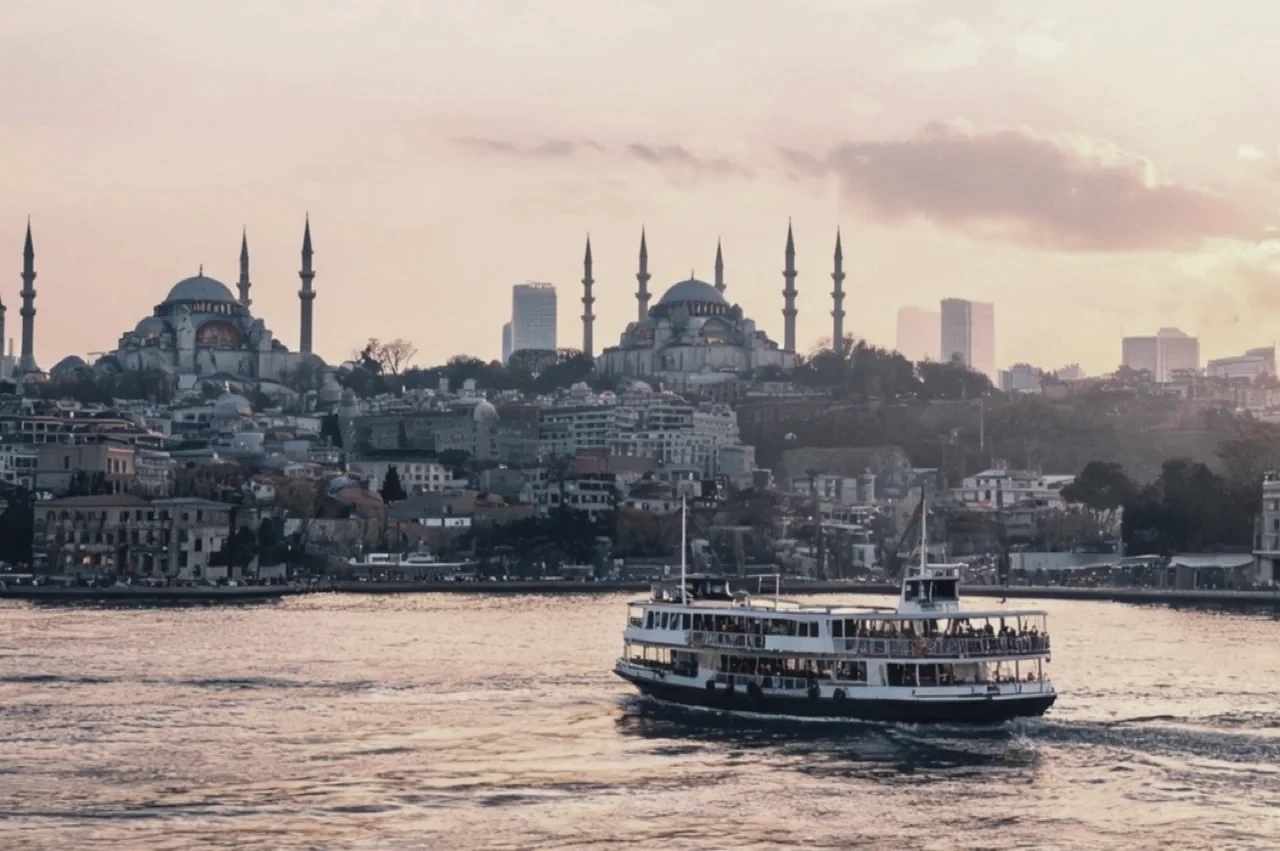 ArticleTurkish citizenship by investment in 2026: complete guide
Personal programme selection is conducted by Anna Kovalevskaya, Head of Legal, BRIDGES.
Citizenship of Turkey: preparation checklist
Documents prepared in advance, source of funds checks and where applications usually fail.
