A free PDF guide — a rate of 15% on income remitted
A guide to Maltese tax residenceunder the GRP
A special tax regime: 15% on foreign income remitted to Malta, with a minimum tax of €15,000 a year. We set out how the burden is counted, what the housing thresholds are and who the regime really pays off for.
- PDF in English
- Free of charge
- Verified on 11.08.2026
- Sent by email, WhatsApp or Telegram
This material is for information and is not tax advice. The outcome turns on the shape of your income and is worked out case by case.
01 / The essentials first
How the regime works
Four things that decide whether this status pays off for you.
- This is a tax status, not a right to move
The GRP gives a special tax regime. The right to live in the country and the residence status are arranged separately — and that is exactly where the two are confused.
- A flat rate of 15% on income remitted
Only foreign income actually remitted to Malta is taxed. Income that stays outside the country is not taxed under this regime.
- A minimum tax of €15,000 a year
It is paid whatever you remit. So the regime pays off on a substantial income and does not on a modest one.
- The housing threshold — a lease or a purchase
A lease from €8,750 a year, or the purchase of a property from €275,000. The housing is kept for as long as the status runs.
02 / The burden
What it costs a year
Choose the housing route and the family. The calculation shows the yearly burden: the minimum tax plus the housing.
03 / Two thresholds
Renting or buying a home
The tax outcome is the same; the difference is in the money and in what you are left with after a few years.
The values were checked against the official material on 11.08.2026. Only the rows for which there is no official wording are marked separately.
| Criterion | A leaseFrom €8,750 a year | A purchaseFrom €275,000 |
|---|---|---|
| The housing threshold | €8,750 a year | €275,000 |
| Capital tied up | none | yes, in the property |
| The minimum tax | €15,000 a year | €15,000 a year |
| The rate on income remitted | 15% | 15% |
| What you have left after 5 yearsA BRIDGES estimate | the costs, with nothing to show | the property, owned outright |
| How long it takesA BRIDGES estimate | 3-4 months | 3-4 months |
| Who it usually suitsA BRIDGES estimate | Trying the regime out, or not wanting an asset | Planning to keep a base for a long time |
- The housing threshold
- €8,750 a year
- €275,000
- Capital tied up
- none
- yes, in the property
- The minimum tax
- €15,000 a year
- €15,000 a year
- The rate on income remitted
- 15%
- 15%
- What you have left after 5 yearsA BRIDGES estimate
- the costs, with nothing to show
- the property, owned outright
- How long it takesA BRIDGES estimate
- 3-4 months
- 3-4 months
- Who it usually suitsA BRIDGES estimate
- Trying the regime out, or not wanting an asset
- Planning to keep a base for a long time
The minimum tax of €15,000 a year is paid on either route and whatever the sum remitted.
04 / The country
What the country looks like
Briefly about the country and about what sets the terms of the programme.
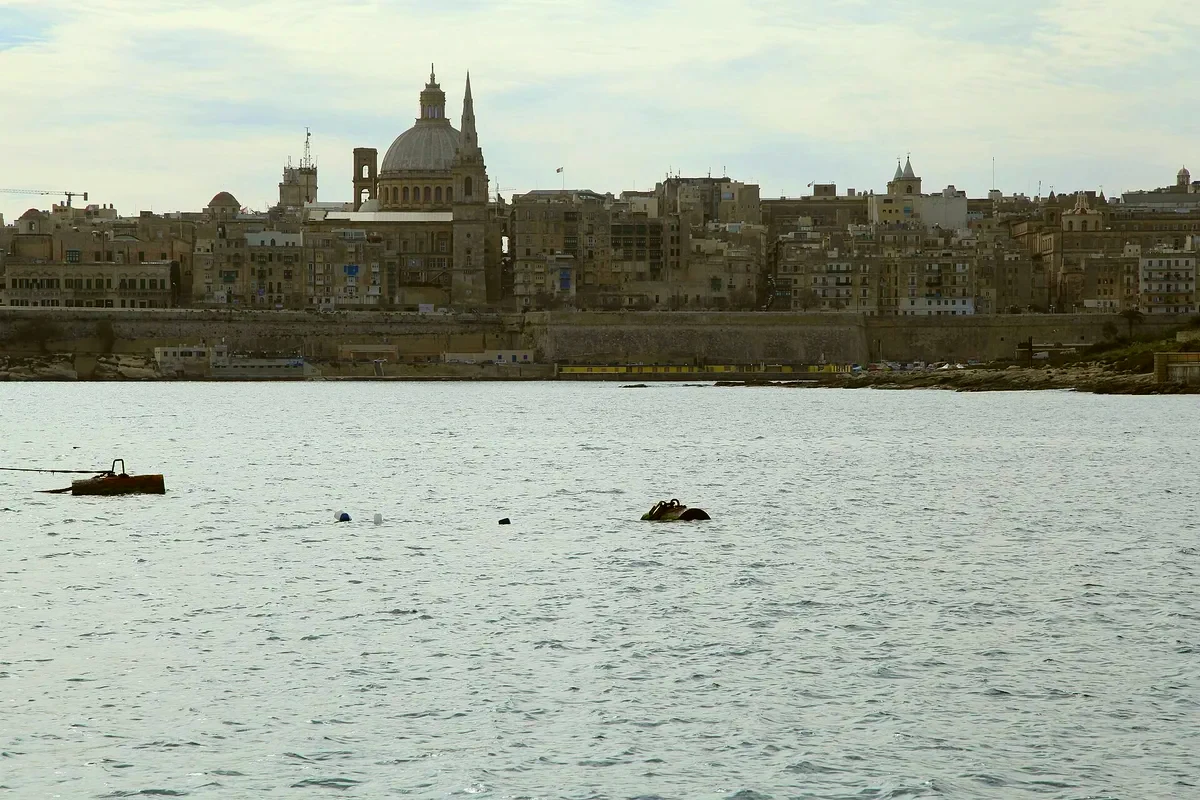
- MaltaThe cover of the guide: the country and the key terms of the programme.
- The essentials firstWhat to know before the calculation: the key facts of the programme.
- The terms of the optionsThe parameters of the programme in one table, on the official terms.
- The road mapThe process step by step — from the check to the documents.
- The check on the applicantWhat is examined before the status is granted, and where people stumble.
- The limitsThe limits that bear on the timings and the sum.
- Your teamWho runs the case and what each specialist answers for.
05 / The order of work
How the status is obtained
The first step is not the documents but the arithmetic: the regime does not suit every income.
- The tax analysis
We work out whether the regime pays off given the shape of your income. On a modest income the minimum tax makes it not worth having — and that is settled before filing.
- Choosing the housing
A lease or a purchase within the threshold. The housing is kept for as long as the status runs.
- Preparing the documents
Proof of income, certificates, the family’s documents, legalisation and translations.
- Filing the application
The application goes to the Maltese revenue authority through an authorised representative.
- The status is granted
Consideration takes 3-4 months. Once approved the regime applies to the income remitted.
- Keeping it up each year
Filing the returns, paying the minimum tax and keeping the housing within the threshold.
07 / The check
What is gone through before filing
The main questions are the shape of the income and the proper closing of the former tax residence.
- The shape of the income
The key question: how much you receive and from where, and how much of it you plan to remit to Malta. Whether the regime pays off turns on that.
- Your former tax residence
How your current tax status will be closed is examined. Dual residence creates a risk of assessments.
- Housing within the threshold
The lease or the title documents have to meet the requirements of the programme and be kept in place throughout.
- The family
A spouse, children and dependent parents come into the status where dependence is evidenced.
Dual tax residence creates a risk of assessments, so the move is planned in advance.
08 / The limits
What this status is not
Five limits that account for most of the misunderstandings about the programme.
This is not a residence permitA tax status carries no right to move
The GRP governs taxation. The right to live in the country is arranged by a separate procedure — through the MPRP, for instance.
The minimum tax is always paid€15,000 a year whatever you remit
Even if you have remitted nothing to Malta, the minimum sum falls due. On a modest income the regime does not pay off.
Only income remitted is taxedAnd that cuts both ways
Income that stays outside Malta is not taxed under the regime. But nor can you use it in Malta without remitting it.
The housing has to be kept upThe threshold applies throughout
The lease or the property is kept in place at all times. Falling below the threshold means losing the regime.
The former residence has to be closed properlyOtherwise double taxation arises
The former tax status is closed under your own country’s rules. Moving does not by itself end it.
09 / Your team
Who runs your case
The work is led by specialists in tax planning and the European statuses.
The editorial record
The material was prepared and checked by


- First published
- 11 August 2026
- Last updated
- 11 August 2026
The official sources
- The Maltese revenue authority — the special tax regimesCommissioner for Revenue, Malta · checked 11.08.2026How the regime applies, the rates, the minimum tax and the filing of returns.
- Legislation Malta — the statute bookThe Government of Malta · checked 11.08.2026The legal basis of the tax regimes and of the housing requirements.
- The Residency Malta AgencyThe Government of Malta · checked 11.08.2026The Maltese residence programmes, which are arranged separately from the tax status.
10 / Common questions
Questions about Maltese tax residence
What does the GRP give?
A special tax regime: a flat rate of 15% on foreign income remitted to Malta, with a minimum tax of €15,000 a year.
Is it a residence permit?
No. The GRP governs taxation and by itself gives no right to move. The residence status is arranged separately.
What is taxed?
Only foreign income actually remitted to Malta. Income that stays outside the country is not taxed under this regime.
What does the housing cost under the programme?
A lease from €8,750 a year, or the purchase of a property from €275,000. The housing is kept for as long as the status runs.
Who does the regime pay off for?
Those with a substantial foreign income, part of which is remitted to Malta. On a modest income the minimum tax of €15,000 makes it not worth having.
Do I have to live in Malta?
The programme lays down no requirement to live there, but tax residence is evidenced by the facts of the case.
How long does it take?
3-4 months with a complete set of documents.
What about my former tax residence?
It has to be closed properly under your own country’s rules. Otherwise dual residence and assessments are possible.

Free of charge
Take the guide and a calculation on your income
We will send the PDF explaining how the regime works and work out the burden for the shape of your income.
- How the tax on income remitted is counted
- The housing thresholds and the yearly costs
- At what income the regime pays off
- How to close your former residence properly