Comparisons · Portugal
Portugal or Hungary in 2026: Investor residence permit, taxes, citizenship and life

Updated: June 2026·13 min read·Expert reviewed
Terms and costs verified: June 2026
Contents
Two EU and Schengen countries, two completely different approaches. Hungary offers entry through real estate fund shares from €250,000 and one of the lowest taxes in the European Union - flat income 15% and corporate 9%. Portugal requires €500,000 in investment funds, but it provides a mild ocean climate, an English-speaking environment and a clear path to permanent residence. But in both cases, the rules changed in 2025-2026: Hungary removed the direct purchase of housing, Portugal raised the citizenship requirement to 10 years. Let's look point by point - where taxes are more profitable, where a passport is faster, and which country is really suitable for whom.
Why compare Portugal and Hungary at all?
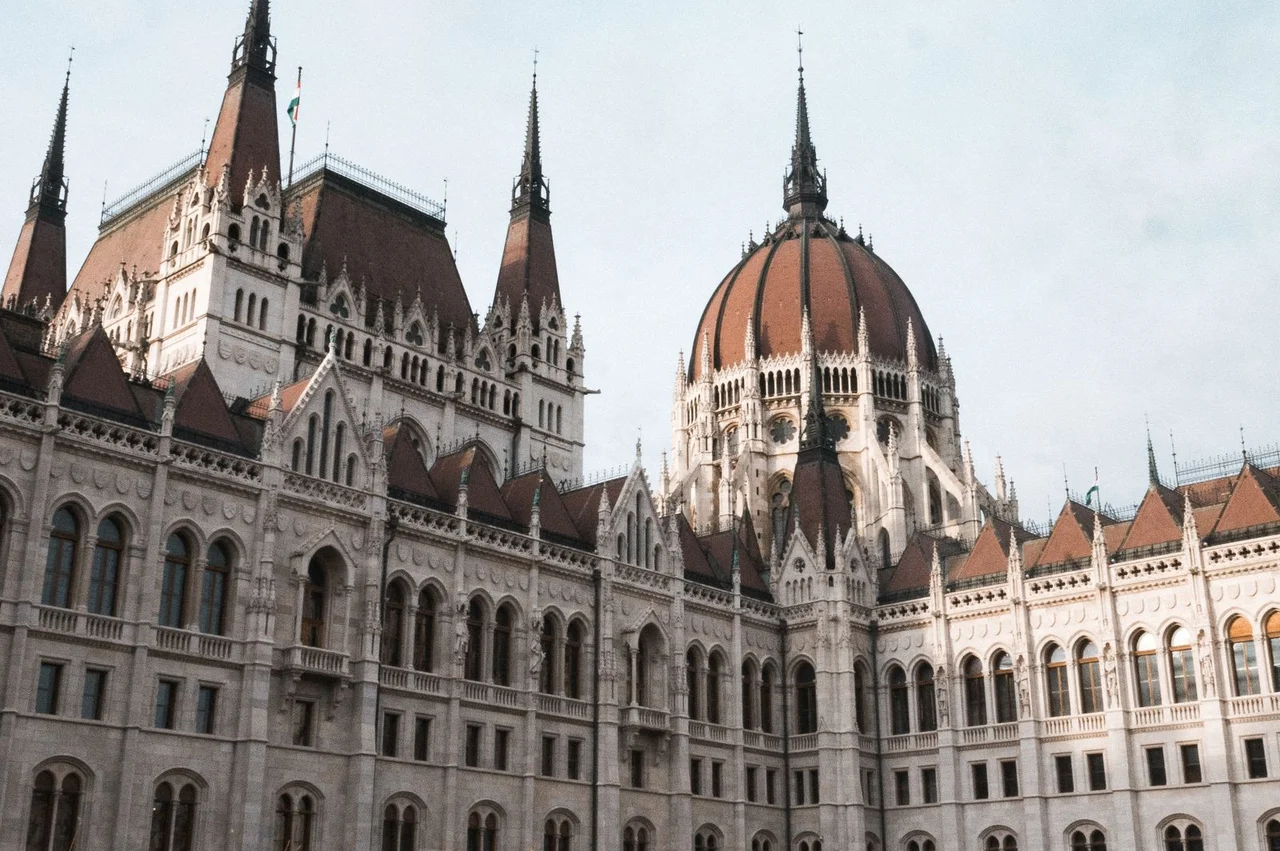
At first glance, these are countries from different worlds. Portugal - Europe's Atlantic West, ocean, surfing, vintage Lisbon trams and a reputation as one of the nicest places to live in the EU. Hungary is the central European heart of the continent, Budapest with thermal baths, a continental climate and a reputation for extremely low taxes. But that is precisely why it is useful to compare them: an investor who chooses a European residence permit usually decides not “where is more beautiful”, but “where is more profitable in terms of money, taxes and time to obtain a passport.”
Both countries are full members of the European Union and the Schengen zone, and this makes them equal in the main thing: both residence permits open freedom of movement within Schengen, access to European medicine and education, and a basis for life in the EU. Then the differences begin - and they are fundamental. Hungary relies on cheap entry and low taxes, Portugal on quality of life and a mature service infrastructure for expats.
Both programs underwent reforms in 2025-2026, and old articles on the Internet are often misleading. Therefore, below is the current picture for 2026, without outdated figures, with fair reservations where the rules have recently become stricter.
Investor residence permit: €250,000 in Hungary versus €500,000 in Portugal
The most noticeable difference is the cost of entry. Hungary relaunched its investment program called the Guest Investor Program in 2024. The main route is the purchase of shares of a regulated real estate fund in the amount of €250,000. An important detail that is often confused: the direct purchase of an apartment under this program was removed at the beginning of 2025, leaving only an investment in fund shares (at least 40% of the assets of which are invested in residential real estate in Hungary) with a retention period of about 5 years. An alternative is a non-refundable donation to a public fund from €1,000,000, but this is an option for only a few.
Portugal took a different path. Following the Mais Habitacao reform in October 2023, real estate purchases and simple capital transfers were excluded from its Golden Visa (ARI). Today, the main investment route is an investment of €500,000 or more in a regulated investment fund (venture or private equity, under the supervision of CMVM). There are also cheaper options - for example, support for cultural heritage from 250,000 € - but the “working” path for most investors is precisely half a million funds.
| Parameter | Portugal | Hungary |
|---|---|---|
| Minimum threshold | from 500,000 € (investment fund) | from €250,000 (real estate fund shares) |
| Buying home ownership | Canceled from October 2023 | Canceled January 2025 |
| Investment retention period | Fund life (approximately 5-8 years) | About 5 years |
| Validity period of the residence permit | Residence permit with extension, permanent residence after 5 years | Up to 10 years, extension for another 10 |
The conclusion regarding money is clear: entry to Hungary is half the price. But cheaper does not always mean better - then let’s look at taxes, citizenship periods and quality of life, where the situation changes. We keep details of the Portuguese route in Portugal Golden Visa guide.
How long do you need to live in the country: requirements for presence
For an investor who is not planning to move immediately, the critical question is: how many days a year should one actually spend in the country in order not to lose one’s status? And here the two programs have different philosophies.
The Portuguese Golden Visa has historically been famous for its minimum presence requirements - about 7 days in the first year and about 14 days for each subsequent two years. In fact, this is the status “for those who currently live elsewhere”: you can keep a residence permit, business and family outside of Portugal and visit for just a couple of weeks. It is this flexibility that has made the program popular with those who want “European insurance” without moving immediately.
- Portugal (Golden Visa) - about 7 days in the first year, then about 14 days for each two-year period; actual relocation is not required to maintain a residence permit.
- Hungary (Guest Investor) - A residence permit allows you to live and work in the country, but does not oblige you to have a permanent physical presence; status is focused on flexible use.
An important caveat: the minimum presence is sufficient to maintain a residence permit, but not to obtain citizenship. Naturalization in both countries requires actual residence and, critically, a learned language. That is, you can “live on raids” for the sake of resident status, but not for the sake of a passport. More about this below.
Taxes: where Hungary wins and where there are pitfalls
Taxes are perhaps the main selling point for Hungary. There is a flat income tax of 15% - one of the lowest in the European Union, and without progression: both those who earn 20,000 € and those who earn 200,000 € pay the same rate. Corporate tax is 9%, which is generally the lowest rate in the entire EU (for comparison, the Union average is closer to 20-21%). For an entrepreneur who runs a real business, this is a significant difference.
Portugal is structured differently. Basic income tax (IRS) is progressive, with a top rate of up to 48% for high incomes. That's a lot. The special IFICI regime (called “NHR 2.0”), which replaced the NHR regime closed since 2024, softens the picture: it gives a flat 20% on qualified income and exemption of part of foreign income for 10 years. But the conditions are narrow - the regime is designed for specialists in science, technology, R&D and innovation sectors, and pensions are no longer covered by it. Corporation tax in Portugal is about 21% of the base rate.
| Tax | Portugal | Hungary |
|---|---|---|
| Income (standard) | Progression up to 48% | Flat 15% |
| Preferential treatment | IFICI - 20% (narrow conditions, 10 years) | Not required - the rate is already low |
| Corporate | about 21% (base) | 9% (lowest in the EU) |
The pitfall of Hungary is social contributions. Dividends and distributed profits in excess of income tax are subject to social payments, and the effective burden on profits taken out of business turns out to be noticeably higher than the “showcase” 9% and 15%. That is, low rates are real, but you need to consider the full picture of contributions. About the Portuguese tax regimes in detail - in the material about tax regime of NHR and IFICI in Portugal.
“When a client comes with the question “Portugal or Hungary,” the first thing I ask is not to name the budget, but to answer why he needs European status at all. If the goal is tax optimization of an active business, Hungary with its flat 15% and corporate 9% is almost always more profitable, and the entry threshold is half as low. But if your plans are to actually move with your family, a mild climate and a foreseeable path to a passport, Portugal, despite the 10-year requirement and the threshold of 500,000 €, turns out to be more comfortable: Portuguese A2 is studied, and Hungarian stops many people from taking the exam. I always consider the full model for 8-10 years in advance, and not just the price of the share at the start - it is in taxes that the real difference between countries is hidden.”
We will help you choose the right programme
We compare timelines, amounts and requirements for your family and tell you which option works best.
Citizenship: deadlines, language and fair clauses 2026
If the goal is not just a residence permit, but a European passport, the situation changes again. Here again, both countries have tightened rules in recent years, so outdated data is especially dangerous.
Hungary. Naturalization usually requires about 8 years of legal residence, and most importantly, passing an exam in the Hungarian language. And here is the fundamental difficulty: Hungarian is considered one of the most difficult European languages. It does not belong to the Indo-European family, it has a very complex grammar with dozens of case forms, and learning it to exam level from scratch is a task that takes years of hard work. For many, it is the language, and not the deadline, that becomes the real barrier.
Portugal. Here, the 2025-2026 reform raised the naturalization qualification: for most foreigners it is now 10 years (previously it was 5), for citizens of CPLP countries - 7 years. The language required is at level A2 (elementary) - this is many times easier than the Hungarian exam and achievable by most adults in a reasonable time. Important: the reform provides for the protection of applications already submitted, and the deadline is usually counted from the moment the application is paid for or the residence permit card is issued - the exact interpretation for a specific situation must be checked individually.
| Criterion | Portugal | Hungary |
|---|---|---|
| Time before naturalization | 10 years (7 years for CPLP) | Usually around 8 years |
| Language | A2 (elementary, feasible) | Hungarian (one of the most difficult) |
| Main barrier | Long stay | Complexity of language |
The result is paradoxical: formally the period in Hungary is shorter, but the language barrier makes the actual path to a passport more difficult. In Portugal the term is longer, but the language is feasible. Detailed analysis - in the guide Portuguese citizenship.
Schengen and freedom of movement: there is parity here
The point at which countries are equal and where both are strong. Both Portugal and Hungary are full members of both the European Union and the Schengen area. This means that a residence permit for any of them opens up free visa-free entry into all Schengen countries for short-term trips - without stamps and border queues inside the zone.
What does this give to the residence permit holder in practice:
- Free travel within Schengen - up to 90 days within every 180 days in other countries of the zone, without separate visas.
- Access to European infrastructure - medicine, banks, education in the country of residence.
- Base for life in the EU - after obtaining citizenship of any country, complete freedom to live and work in any country of the European Union opens.
It is important here not to confuse the two levels. The residence permit itself gives the right to live in the country that issued it and to freely travel around Schengen as a tourist. But the right to move and work, say, in Germany or France is given by EU citizenship, and not a residence permit. Therefore, for those who plan to live in another country of the Union, the ultimate goal is a passport - and here we again return to the difference in terms and language from the previous section.
The advantage of membership in Schengen is how both countries compare favorably with, for example, Cyprus, which is part of the EU, but is not yet fully integrated into Schengen.
Expert's opinion: common mistakes when choosing between countries
Over the years of practice, I see that investors stumble not on complex legal details, but on several typical misconceptions. We'll sort them out so you don't lose money and time.
- Comparison only by entry threshold. “Hungary is half the price” - and the man has already decided. But over 5-10 years, the difference in taxes or the cost of failed adaptation easily covers the savings at the start. The entire model needs to be considered.
- Ignoring the language barrier. Hungarian on naturalization is a real wall. Those who have been planning a passport for 8 years often find that the language is not passed, and the period is extended indefinitely.
- Reliance on outdated data. “In Portugal, citizenship in 5 years”, “in Hungary you can buy an apartment” - both statements are no longer true. The 2023-2026 reforms changed the rules in both countries.
- Confusion between residence permit and citizenship. The minimum presence is enough for resident status, but not for a passport - for naturalization you need real residence and language.
The right choice begins not with the price of the share, but with a answer to the question “why do I need this”: tax optimization, real relocation, passport for children or European insurance. The answer determines whose scales will tip.
Bottom line: so Portugal or Hungary
There is no direct answer “this one is better” - and anyone who gives it without analyzing your situation is disingenuous. But it is possible to formulate a guideline.
Choose Hungary if your priority is a minimum entry threshold (€250,000 vs. €500,000) and low taxes on active income (flat 15% and corporate 9% - the best in the EU), and the complex Hungarian language and continental climate do not scare you. This is a strong option for an entrepreneur with a Central European focus who is not chasing a quick passport.
Choose Portugal if quality of life is more important to you - a mild ocean climate, an English-speaking environment, infrastructure for expats - and the availability of flexible budget routes (D7 and D8) in addition to an expensive fund. Yes, the citizenship requirement has increased to 10 years, but the Portuguese A2 is incomparably stronger than the Hungarian exam.
Both countries provide the main thing - membership in the EU and Schengen, freedom of movement and a base for life in Europe. Then everything is decided by your numbers: type of income, budget, family composition and planning horizon. Current requirements should be checked on the official portal Government of Portugal (gov.pt), and for a specific situation - count individually. Material about NHR and IFICI mode.
We will calculate the budget for your family
A full estimate: contributions, fees and our work for your family.
Climate and Environment: Portugal's Ocean vs. Hungary's Continental
Quality of life begins with climate, and here the difference is greatest. Portugal has a mild coastal climate on the Atlantic coast: warm winters, cool summers moderated by the ocean, and more than 280 sunny days a year in the south, in the Algarve. In winter, temperatures rarely drop to unpleasant levels; snow is exotic. For many, it is the climate that becomes the decisive argument: after the northern winter, the mild Portuguese weather is perceived as a change in the quality of life.
Hungary has a classic continental climate in the center of Europe. Summers are warm, sometimes hot, and winters are real, with sub-zero temperatures, snow and gray, cloudy months. Budapest is beautiful, the thermal baths compensate for the cold, but it is not year-round warmth. For those who are fleeing precisely from the cold, Hungary offers little.
- Portugal - ocean climate, mild winters, lots of sun, access to the Atlantic, developed culture of surfing and beach holidays.
- Hungary - continental climate with real winter; compensation in the form of thermal springs, but without year-round heat and without the sea (the country is landlocked).
A separate factor is the environment for expats. In Portugal, especially in Lisbon, Porto and Algarve, a large international community has developed, English is widely spoken in services and business, and infrastructure for foreigners is developed. In Hungary there is also an English-speaking environment, but outside the center of Budapest it is more difficult without Hungarian. For a family with children and a long-term move, these everyday little things add up to a noticeable difference.
Cost of living and real estate: comparable, with nuances
A common myth is that Hungary is radically cheaper. In reality the picture is more complicated. In many everyday situations - food, transport, restaurants - Central European Hungary and peripheral Portugal are comparable, both are noticeably more affordable than Western Europe. Budapest and Lisbon are closer to each other in terms of spending levels than to Paris or Munich.
Where the differences are most noticeable:
- Rental housing. In Lisbon and Porto, rents have risen strongly in recent years due to the influx of expats and tourism; in the provinces of Portugal it is noticeably cheaper. In Budapest, rent is on average more affordable than in large Portuguese cities, but in the center of the capital it is also not cheap.
- Real estate for purchase. Prices are comparable and highly dependent on location; In both cases, the capital and resort areas are more expensive than the periphery.
- Tax savings. The real difference in the wallet is often created not by the price of bread, but by the tax burden - and here, as we have seen, Hungary has an advantage for active income.
Important: neither Portugal nor Hungary no longer provide residence permits for the direct purchase of an apartment - this route is closed in both countries. Therefore, real estate is now a matter of personal comfort and residence, and not a tool for obtaining status. A detailed analysis of the budget for living in Portugal is in the material about cost of living in Portugal.
Not only investments: routes D7 and D8 in Portugal
A separate advantage of Portugal, which the Hungarian program in this form does not have, is the availability of inexpensive visa routes for those who do not have half a million to fund, but have a stable income.
These are two ways for passive income and remote workers:
- D7 (passive income visa) - for rentiers and pensioners. You need a stable passive income (pension, rent, dividends) from approximately 870 € per month plus housing in Portugal. No major investment - just proven regular income. Leads to permanent residence and then to citizenship on a general basis.
- D8 (Digital Nomad Visa) - for those who work remotely for a foreign employer or as a freelancer. An income of about four times the minimum salary is required, that is, about 3,480 € per month.
These routes make Portugal accessible not only to large investors, but also to the middle class with a good income - pensioners, remote professionals, freelancers. The Hungarian Guest Investor Program does not have such a “budget” analogue for passive income: there the main entrance is an investment of 250,000 €. Details of the most accessible route are in the guide D7 visa in Portugal.
Who is Hungary suitable for?
We will put together a profile of the ideal candidate for the Hungarian route - so that you can try it on for yourself.
Hungary is your option if:
- The investment budget is limited. 250,000 € versus 500,000 € is half the entry threshold, and for many this is the decisive argument.
- Taxes are a key factor. If you run an active business or have a high earned income, the flat 15% income and 9% corporate provides real savings compared to the Portuguese progression of up to 48%.
- A Central European location is important to you. Budapest - a few hours from Vienna, Prague, Bratislava; convenient for businesses focused on Central and Eastern Europe.
- You're not looking for a quick passport and are ready to either stay on a residence permit or actually learn Hungarian for citizenship.
Hungary is less suitable for those whose priorities are climate, ocean, English-speaking environment and a relatively feasible path to citizenship. The language barrier to naturalization here is a serious and “but” that cannot be underestimated.
Who is Portugal suitable for?
Now the mirror profile is for the Portuguese route.
Portugal is your choice if:
- Quality of life is more important than saving on input. The mild climate, ocean, developed expat infrastructure and large international community outweigh the higher investment threshold.
- Are you planning a real move? - including with family and children. An English-speaking environment, international schools and mature service make adaptation smoother.
- You don't need 500,000 €. Routes D7 and D8 open the country to pensioners, rentiers and remote workers with a proven income - without a large investment.
- Language for citizenship should not be torture. The Portuguese A2 exam is incomparably more accessible than the Hungarian exam, even if the naturalization period itself has increased to 10 years.
Portugal is less suitable for those for whom tax savings on active income are critical (progression up to 48% is a lot, and preferential IFICI is available only to a narrow circle) and who want a minimum entry threshold. If your goal is cheap entry and low taxes, the scales tip towards Hungary.
We will send a document checklist for your case
Leave your details: we will put together documents and timelines for your family.
Summary table: Portugal vs Hungary in 2026
Let's summarize all the comparisons into one final checklist. This is a framework for a solution - but remember that depending on a specific situation (source of income, family composition, plans to move), the alignment may shift, so it is better to make the final choice after an individual calculation.
| Criterion | Portugal | Hungary |
|---|---|---|
| Membership in the EU and Schengen | Yes (EU + Schengen) | Yes (EU + Schengen) |
| Investment threshold | from €500,000 (fund) | from €250,000 (fund shares) |
| Budget routes | Yes (D7 from ~870 €/month, D8) | There is no analogue for passive income |
| Income tax | up to 48% (IFICI - 20%) | flat 15% |
| Corporate tax | about 21% | 9% (lowest in the EU) |
| Time to citizenship | 10 years (7 for CPLP) | usually around 8 years |
| Language for citizenship | A2 (feasible) | Hungarian (difficult) |
| Climate | soft, ocean | continental, real winter |
| Requirements for presence (residence permit) | minimal (about 7-14 days) | flexible, without mandatory permanent residence |
| Buying a home as a route | canceled | canceled |
To simplify it into one phrase: Hungary is about cheap entry and low taxes, Portugal is about quality of life, flexible routes and a feasible language. There is no universally “best” country - there is one that more accurately fits your situation.
Frequently asked
Questions people ask before deciding
01What is cheaper - a residence permit in Hungary or Portugal in 2026?
Cheaper Hungary. Entry through shares of a real estate fund starts from 250,000 €, while the Portuguese Golden Visa through an investment fund requires from 500,000 €. This is half the threshold. But Portugal has more affordable routes D7 and D8, which do not require a large investment - they open the country to rentiers, retirees and remote workers.
02Where are taxes lower - in Hungary or Portugal?
In Hungary. There is a flat income tax of 15% and corporate tax of 9% - the lowest in the EU. In Portugal, the income tax is progressive, up to 48%, although there is a preferential IFICI regime with 20% for a narrow circle of specialists. An important caveat: in Hungary, dividends and withdrawn profits are subject to social contributions, so the effective burden is higher than window rates.
03Are both countries included in Schengen?
Yes. Both Portugal and Hungary are full members of both the European Union and the Schengen area. A residence permit of any of them gives freedom of visa-free travel within Schengen for up to 90 days within every 180 days. This distinguishes them favorably, for example, from Cyprus, which is in the EU but has not yet been fully integrated into Schengen.
04Where is the fastest way to get citizenship?
Formally, the period is shorter in Hungary - about 8 years versus 10 years in Portugal (for citizens of CPLP countries in Portugal - 7 years). But the real path in Hungary is more difficult due to the Hungarian language exam, which is considered one of the most difficult in Europe. In Portugal, the language is required at a feasible A2 level.
05Is it possible to obtain a residence permit for purchasing an apartment in these countries?
No, neither there nor there. Portugal removed property purchases from the Golden Visa in October 2023, and Hungary removed direct home purchases from the Guest Investor Program in January 2025. Now in both countries the investment route is investing in a regulated fund, rather than buying an apartment as a property.
06How difficult is the Hungarian language for citizenship?
Very complicated. Hungarian does not belong to the Indo-European family; it has a complicated grammar with a large number of case forms and a logic unusual for Europeans. Learning it from scratch to exam level is a task that will take years. For many, it is the language, and not the length of residence, that becomes the real barrier to obtaining a Hungarian passport.
07What is more profitable for a remote worker or a freelancer?
Rather, Portugal - thanks to the D8 digital nomad visa, which is designed specifically for remote workers with an income of about 3,480 € per month. The Hungarian program does not have a direct analogue for remote work without a large investment. At the same time, in terms of taxes on active income, Hungary, with its flat 15%, may turn out to be more profitable - it is worth considering individually.
08Where is the climate more comfortable?
Portugal is more comfortable for most: a mild ocean climate, warm winters, a lot of sun, especially in the south in the Algarve. Hungary has a continental climate with real winter, sub-zero temperatures and snow, and is landlocked. If year-round warmth and the ocean are key, Portugal wins by a wide margin.
09Is it true that Hungary is radically cheaper to live in?
This is a simplification. In terms of household expenses - groceries, transport, restaurants - Budapest and Lisbon are comparable, both countries are more affordable than Western Europe. Rents in major Portuguese cities have risen due to the influx of expats, but are cheaper in the provinces. The real difference in your wallet is often made by the tax burden, rather than the prices in the store.
10How long do you need to live in the country to maintain a residence permit?
To maintain a residence permit, the requirements are lenient. Portuguese Golden Visa - about 7 days in the first year and about 14 days for every two subsequent years. The Hungarian Guest Investor also does not require permanent presence. But this is not enough for citizenship: naturalization in both countries requires real residence and language.
11Has the duration of Portuguese citizenship changed in 2026?
Yes. The 2025-26 citizenship law reform raised the naturalization requirement for most foreigners from 5 to 10 years, and for citizens of CPLP countries to 7 years. The reform provides for the protection of applications already submitted, and the deadline is usually counted from the moment the application is paid for or a residence permit card is issued - the exact interpretation must be checked individually.
12What is best for an entrepreneur with an active business?
More often Hungary - due to corporate tax of 9% (the lowest in the EU) and flat income tax of 15%. For businesses focused on Central and Eastern Europe, the Budapest location is also convenient. But when withdrawing profits, social contributions are added to dividends, so you need to consider the effective rate, not the nominal rate. Participation is open to investors from Russia and the CIS strictly within the law, with enhanced compliance and verification of the source of funds.
Transparency
How this material was prepared
- Author
- Dmitry Nagy, international Tax Consultant, BRIDGES
- Terms and costs last verified
- June 2026
- Sources
- official government authorities of the relevant country and state publications
- Methodology
- government minimum requirements are stated separately from due diligence charges, state fees, legal and banking costs
Sources and methodology
Figures, terms and timelines are checked against official sources as of June 2026. Link availability verified in August 2026. Third-party blogs and agent websites are not used as a source of programme terms.
- [1]Agência para a Integração, Migrações e Asilo (AIMA)Residence permits and how to applyaima.gov.pt/en
- [2]Portal das FinançasTax regimes and obligations of residentswww.portaldasfinancas.gov.pt
Methodology: tables and charts state government minimum investment requirements; due diligence charges, state fees, legal, banking and other costs are calculated separately and are not included in the minimum thresholds.
About the author
Related materials
What to read next
 ArticlePortuguese citizenship by descent in 2026: by parents, grandparents and birth
 ComparisonResidence permit for investment in 2026: Greece, Portugal or UAE - what to choose
 AnalysisWhat is due diligence and why the Caribbean is rejecting applications
Personal programme selection is conducted by Anna Kovalevskaya, Head of Legal, BRIDGES.
Tax residency in Portugal: how it is determined
When tax residency arises, how double taxation is avoided and what the tax authority checks.